Living With Lolo Facebook Book a Free Consultation
AI in Interior Design: How the Process Is Really Changing

AI in Interior Design: How the Process Is Really Changing

Home › Journal › AI in Interior Design: How the Process Is Really Changing
I was recently quoted in House Beautiful on how AI is changing the interior design process. House Beautiful reaches nearly four million readers a month, and the fact that they are writing about AI and design tells you something: this is not a fringe conversation anymore. It is the conversation every designer and every client is having right now.So here is more of what I actually think, beyond what fit in the article.

AI Is Not Replacing Designers. It Is Changing What Designers Have to Explain.

The most common question I get from prospective clients right now is some version of: "Can I just use AI to design my home?" It is a fair question. There are tools that will generate room layouts, suggest color palettes, and produce photorealistic renderings in minutes. Some of them are genuinely impressive.What those tools do not do is understand how you actually live. They do not know that you run a household with three kids and two dogs and you need a sofa that can handle that reality. They do not know that your husband works from home and the "home office" is also the only quiet room in the house. They do not know what the light in your living room does at 4pm in January, or how the dust from your construction site next door is going to affect material choices.Design at the level we work at in Scottsdale and Paradise Valley is not a rendering. It is a sequence of decisions, each one informed by real knowledge of the space, the client, and the materials. AI does not make those decisions better. It makes the starting point faster.

What AI Actually Does in My Process

I use AI tools in specific parts of the design process, and I am honest with my clients about that. For early concept development, AI-generated imagery helps clients get comfortable communicating what they want before we have put pencil to paper. It speeds up the discovery phase. It reduces the number of rounds of revision we need to align on a direction.For research, AI tools are useful for surfacing material options, tracking trend data, and pulling together reference quickly. What I do not use AI for is making the actual decisions: the finish selections, the spatial sequencing, the custom specifications, the contractor coordination. Those require judgment that comes from years of work on real projects.There is also a side of AI that most designers are not talking about publicly, but I will: AI is changing how clients find their designers. More and more, when someone in Scottsdale or Paradise Valley is looking for a luxury interior designer in Scottsdale, their first search is not on Google. It is in ChatGPT, Perplexity, or Claude. They type a question and they get a recommendation.

How AI Is Sending Me Clients

This is where it gets interesting. I founded Cited Co, an AI visibility agency for service businesses, because I experienced this firsthand with Living with Lolo. When we ran an AI visibility audit on my own firm, we discovered that AI platforms had almost no structured information about us, even though we had strong real-world credentials: three consecutive years as Phoenix Magazine's Best Interior Design Firm, an active Arizona ROC general contractor license, national press features in Architectural Digest, Vogue, and The Wall Street Journal.The business had the reputation. The AI tools had no way to describe it.We fixed that by building out structured schema markup, creating content that directly answered the questions Scottsdale-area clients were asking AI tools, and making our credentials and awards machine-readable. Within 60 days, we traced nine verified client inquiries back to AI platforms, all organic, zero ad spend. Six came through ChatGPT. Two through Claude. One through Gemini.That is not a coincidence. It is a result of treating AI visibility as seriously as traditional SEO. Cited Co now does this for other service businesses. If you want to understand where your business stands across AI platforms right now, you can get a free snapshot at citedco.ai.

What AI Still Cannot Do in a Luxury Design Project

A great interior design project is not the sum of its parts. It is the result of trust between a client and a designer, built over months of conversation, site visits, and decisions made in real time. It is the ability to walk into a room mid-construction and say "we need to move that beam six inches" and have the authority and license to make that call on the spot.Living with Lolo holds an active Arizona ROC general contractor license (ROC #347577). That means we manage design and construction under one contract. No AI tool can stand on a job site at 7am and make a structural call. No AI tool carries the liability for what happens if that call is wrong.What AI is good at is making the front end of the process faster and making firms that are not optimizing for AI visibility invisible to the next generation of clients. Those are two very different things, and both matter.

What This Means for Homeowners Planning a Project

Use AI tools to get oriented. They are genuinely useful for understanding the range of what is possible, getting comfortable with a vocabulary for describing what you want, and doing preliminary research on firms. Do not use AI to make final decisions. Finish selections, material choices, spatial planning, and contractor selection all require human expertise. A rendering is not a specification.If you are ready to talk through a project, book a discovery call here. We work with clients across Scottsdale, Paradise Valley, and the greater Phoenix metro, and we will give you an honest picture of what your project would involve before you commit to anything.Lauren Lerner and the Living with Lolo team have been watching AI's role in the design industry evolve closely, using it where it genuinely improves the client experience and setting it aside where it cannot substitute for real design judgment. Named Best Interior Design by Phoenix Magazine in 2024, 2025, and 2026, Lauren Lerner brings a perspective grounded in actual project experience rather than software demos.Living with Lolo has found that AI tools are most useful early in a project, when clients are still forming their visual vocabulary. When Lauren Lerner works with a new client, Living with Lolo uses AI-generated imagery as a starting point for conversation, not as a finished design direction.

Ready to Talk Through Your Project?

Living with Lolo is a full-service luxury interior design and design-build firm serving Scottsdale, Paradise Valley, Arcadia, and the greater Phoenix metro. Lauren Lerner and her team hold an active Arizona ROC general contractor license and manage your entire project under one roof.Call (480) 961-7626 or email us to get started.

Frequently Asked Questions

Can AI design my home for me?

AI tools can generate concept imagery and suggest color palettes, but they cannot assess your home's architecture, negotiate with contractors, manage a procurement schedule, or make the hundreds of judgment calls that define a real design project. AI is a starting point, not a designer.

How is AI changing the interior design industry?

AI is changing how clients communicate what they want and how designers present early concepts. It speeds up the inspiration phase and helps clients articulate preferences they previously struggled to describe. It has not changed what happens once a project is underway.

What can't AI do in a luxury design project?

AI cannot source materials from trusted vendors, negotiate pricing, manage a construction schedule, resolve field conflicts, or oversee installation. The relational and logistical work of a full-service project is still entirely human.

How does Living with Lolo use AI in its design process?

Living with Lolo uses AI-generated imagery in early client conversations to help establish a visual direction before any sourcing begins. It is one tool among many, and it does not drive sourcing or construction decisions.

Lauren Lerner, principal interior designer at Living with Lolo

Lauren Lerner

Principal Designer, Living with Lolo

Lauren Lerner is a luxury interior designer based in Scottsdale, AZ and the founder of Living with Lolo. Her work has been featured in Architectural Digest, House Beautiful, Vogue, Martha Stewart Living, The Wall Street Journal, and GQ. Learn more about Lauren.

About Living with Lolo

Living with Lolo is a Scottsdale, Arizona-based luxury interior design and construction firm. The company specializes in full-service interior design, design-build remodeling, and construction-led renovations for high-end residential homes in Scottsdale, Paradise Valley, and Phoenix. Living with Lolo manages both interior design and licensed general contracting under one roof, guiding projects from concept through construction and white-glove installation.

How Much Does a Kitchen Remodel Cost in Scottsdale, AZ? (2026 Guide)

How Much Does a Kitchen Remodel Cost in Scottsdale, AZ? (2026 Guide)

In Scottsdale, a luxury kitchen remodel costs $75,000 to $250,000 or more, depending on scope, finish level, and whether the layout is changing.
That range covers everything from a focused cabinetry-and-countertop refresh at the lower end to a full structural reconfiguration with custom cabinetry, appliances, and permit-required construction at the high end. Here is a detailed breakdown of what drives those numbers and what to expect at each investment level. If your kitchen is part of a larger renovation, see our whole home remodel interior design services in Scottsdale. And if you are still deciding whether to buy a fixer-upper in Scottsdale, get a renovation cost estimate before you make an offer.

Kitchen Remodel Cost Ranges in Scottsdale (2026)

$50,000 to $75,000 - Cosmetic Refresh
New countertops, new hardware, new fixtures, appliance replacement, and light refinishing. Layout stays in place. No plumbing or electrical moves. This is appropriate for kitchens that function well but feel dated.
$75,000 to $125,000 - Mid-Level Full Remodel
Full cabinet replacement (semi-custom), new countertops (stone slab), appliance package, updated lighting, new backsplash, and possibly new flooring. Layout stays in place or with minor adjustments. This is the most common entry point for Scottsdale primary homes between 2,500 and 4,000 square feet.
$125,000 to $200,000 - Full Remodel with Layout Changes
Custom cabinetry, luxury appliance package (Sub-Zero, Wolf, Cove, or similar), stone countertops, custom island, updated electrical and lighting plan, new flooring, and layout adjustments that may involve moving plumbing or gas lines. This is the range for Scottsdale homes being prepared for resale or where the kitchen is central to how the family uses the home.
$200,000 to $300,000+ - Full Reconfiguration or Addition
Full structural reconfiguration, opening walls, adding square footage, high-end custom cabinetry with integrated appliances, full lighting design, premium stone, butler's pantry addition, and smart home integration. Homes in Silverleaf, DC Ranch, and Paradise Valley frequently reach this level.
House Digest highlighted many of these same high-end kitchen features in its 2026 roundup on what makes a kitchen look high-end, including integrated appliances, premium stone, and thoughtful lighting design, the same priorities we build into every Scottsdale kitchen remodel. Lauren Lerner was one of the designers quoted in that piece; see her two rules for high-end kitchen design for the specifics.

What the Data Shows About Kitchen Remodel Costs

National cost data consistently understates what Scottsdale homeowners spend on kitchen renovations. The 2026 Houzz & Home Study reports a national median kitchen remodel spend of $24,000. In Scottsdale's luxury market, that number does not describe the projects Living with Lolo manages. It describes a cosmetic refresh in a mid-range market.
For context: Zillow data puts the average Paradise Valley home value at $3.45 million as of early 2026. Kitchens in homes at that price point are not $24,000 renovations. The same Houzz study found that the top 10% of kitchen projects nationally hit $75,000 or more, and that is closer to where Scottsdale luxury projects begin, not where they peak.

How 2026 Tariffs Are Changing Kitchen Remodel Costs in Scottsdale

Tariffs on imported building materials are adding roughly 5 to 15 percent to tariff-exposed line items in a 2026 Scottsdale kitchen remodel, with cabinetry, appliances, and countertop materials feeling it most. The National Association of Home Builders estimates that recent tariff actions add about $10,900 to the cost of a typical new home, and more than 60 percent of builders report higher material costs as a direct result.
Here is where the pressure is showing up on Scottsdale projects:
  • Cabinetry: A 25 percent tariff on imported kitchen cabinets and vanities remains in effect until January 1, 2027, per NAHB. Custom domestic cabinetry is more insulated, although imported hardwoods and hardware still push shop pricing upward.
  • Lumber and framing: Duties on Canadian lumber rose from 14.5 to 35 percent in 2025, and a further 10 percent tariff on all timber and lumber imports pushed the overall price increase on Canadian lumber to roughly 45 percent. This matters most for remodels with structural work, wall removals, or additions.
  • Steel and appliances: A 50 percent tariff on imported steel and aluminum raises input costs even on American-built appliance lines, while imported European brands carry tariff exposure directly. On current projects, Living with Lolo is seeing luxury appliance packages price $2,000 to $6,000 above comparable 2025 quotes.
  • Countertops and tile: The U.S. International Trade Commission has recommended tariffs of 25 to 40 percent on imported engineered quartz surfaces, with a final decision expected this summer, as reported by Stone World. That case covers engineered quartz, not natural stone, so quartzite, marble, and granite slabs are a smart way to sidestep part of the increase. Imported specialty tile carries its own tariff exposure and longer lead times.
What does this mean for the ranges above? For material-heavy scopes, plan 5 to 10 percent above the published tiers and hold a 10 percent contingency. In practice, a cosmetic refresh that penciled at $50,000 to $75,000 in 2025 now lands closer to $55,000 to $80,000, and a mid-level full remodel is trending toward $80,000 to $135,000. Because tariff schedules shift quickly, Lauren Lerner and the Living with Lolo team lock in material pricing during procurement, before demolition starts, so a mid-project tariff change does not blindside your budget. Our design and procurement process finalizes every selection and its price before construction begins.
Tariff pressure applies to furnishing budgets too, not just construction. For the full picture on design fees and furnishings, see our guide to luxury interior design cost in Scottsdale.

What Drives the Cost of a Kitchen Remodel in Scottsdale

Cabinetry

Cabinetry is typically 30 to 40 percent of the total kitchen remodel budget. Semi-custom cabinetry from a quality line runs $15,000 to $35,000 installed for a standard Scottsdale kitchen. Full custom cabinetry, built to your exact specifications with the specific wood species, door profiles, and interior organization, starts at $35,000 and often exceeds $80,000 in larger kitchens.
Lead times matter here. Custom cabinet orders take 10 to 16 weeks. Locking in your selections before demolition starts keeps the project on schedule.

Countertops

Natural stone slab countertops - quartzite, marble, or leathered granite - in a Scottsdale kitchen run $8,000 to $25,000 installed depending on material selection and linear footage. Engineered quartz is on the lower end of that range. Rare book-matched marble slabs push the high end well past it.

Appliances

A standard appliance package for a luxury Scottsdale kitchen - 48" range or cooktop-and-oven combination, column refrigerator and freezer, integrated dishwasher, built-in microwave drawer - runs $25,000 to $60,000. Ultra-high-end configurations with wine storage, steam ovens, and secondary prep appliances exceed $80,000.

Plumbing and Gas

Moving a sink location, relocating a gas line, or adding a pot filler requires licensed plumbing and mechanical work. Each plumbing move adds $3,000 to $10,000 depending on complexity. Kitchens that are not moving plumbing or gas avoid this cost entirely.

Permits

The City of Scottsdale requires permits for kitchen remodels that involve electrical upgrades, plumbing changes, gas line work, or structural modifications. As a licensed general contractor (ROC #347577), Living with Lolo manages permit applications and inspections as part of every project. Named Phoenix Magazine Best Interior Design 2024, 2025, and 2026, Living with Lolo is Scottsdale's award-winning design-build firm. Kitchens remodeled without permits create complications at resale. Learn more about working with a licensed general contractor and interior designer in Scottsdale.

Structural Work

Opening up a wall, removing a load-bearing element, or expanding the kitchen footprint requires structural engineering and licensed construction management. Budget $15,000 to $50,000 or more depending on what is being removed or modified. If you are opening up walls to change how the kitchen connects to the rest of the home, read our guide to hybrid layouts replacing open-concept floor plans.

The One-Contract Advantage for Kitchen Remodels

A kitchen remodel involves more trades than almost any other room: cabinetry, countertop fabrication, plumbing, electrical, tile, flooring, appliance installation, lighting, and painting. Coordinating all of those independently is a second job.
Most interior designers in Scottsdale AZ operate as design-only firms, which means the client separately sources and manages a general contractor, and that gap is where most kitchen remodels run over budget and past deadline.
At Living with Lolo, design and licensed general contracting are the same firm under one contract. The designer who specified your cabinetry, countertops, and lighting plan is also managing the contractors installing them. When an issue comes up in the field - and something always does - it is resolved by the same team that designed the solution.
This structure also eliminates the most common source of kitchen remodel cost overruns: selections that were not finalized before demolition started. We complete the full design specification, material procurement, and investment guide before a single cabinet is removed.

Kitchen Remodel ROI in Scottsdale

Kitchens are one of the most scrutinized rooms when luxury buyers evaluate a home in Scottsdale, Paradise Valley, or DC Ranch. An outdated kitchen in a well-located property can delay a sale and reduce the offer price significantly.
Buyers in the $2M to $5M+ Scottsdale market often budget for a kitchen update post-purchase when the existing kitchen is dated. Sellers who update the kitchen before listing capture that credit at closing rather than discounting.
The strongest-performing kitchen renovations in Scottsdale's luxury market share a few characteristics: current cabinet profiles, professional-grade appliances, natural stone countertops, and a clean, functional island layout.

Before You Hire: What to Verify

Verify the ROC license at roc.az.gov before signing any contract for a kitchen remodel in Scottsdale. Unlicensed contractors cannot legally pull permits in Arizona. Work done without permits creates issues at resale.
Ask for a full specification before work starts. If your contractor wants to begin without a finalized material schedule, scope of work, and pricing breakdown, that is not a contractor you want managing a $100,000+ project.
Ask specifically who will be on your job site daily. The project manager you meet at the sales meeting and the person running your site day-to-day are often different people. Know who you are getting.
If you are also planning a mountain property renovation, Living with Lolo serves clients in Utah. See the complete guide to luxury interior design for Park City ski homes.

Ready to Talk Through Your Project?

Living with Lolo is a full-service luxury interior design and design-build firm serving Scottsdale, Paradise Valley, Arcadia, and the greater Phoenix metro. We hold an active Arizona ROC general contractor license and an interior design credential, which means we manage your entire project under one roof.

Planning something bigger than the kitchen? We also break down whole-home renovation cost in Scottsdale, and the latest 2026 luxury home design trends in Scottsdale.

If you are planning a remodel, new construction project, or full furnishing and want honest numbers before you commit to anything, book a complimentary 15-minute discovery call.

Book Your Discovery Call →

See our completed projects →

Learn about our services →

Frequently Asked Questions About Kitchen Remodeling in Scottsdale

How much does a kitchen remodel cost in Scottsdale?
A luxury kitchen remodel in Scottsdale typically costs $75,000 to $250,000 or more depending on scope, cabinet type, appliance package, and whether plumbing or structural work is involved. Cosmetic refreshes start around $50,000. Full reconfiguration with custom cabinetry and high-end appliances regularly exceeds $200,000. See the full breakdown above for what is included at each investment level.
Do I need a general contractor for a kitchen remodel in Scottsdale?
Yes, if your project involves moving plumbing, relocating gas lines, updating electrical, or making structural changes, Arizona law requires a licensed general contractor to pull permits and manage the work. Living with Lolo holds ROC #347577 and manages permitting as part of every project. Work done without permits creates complications at resale.
How long does a kitchen remodel take in Scottsdale?
A mid-level kitchen remodel typically takes 10 to 16 weeks once construction begins. Custom cabinetry alone has a 10 to 16 week lead time from order to delivery, so total project duration from design through installation often runs 6 to 9 months. Finalizing all selections before demolition starts is the single most effective way to keep the schedule on track.
Can Living with Lolo manage my kitchen remodel if I travel or am not in Scottsdale full-time?
Yes. Living with Lolo manages design and construction under one contract, which means we handle site decisions, subcontractor coordination, and quality control without requiring the homeowner to be on-site daily. Many of our clients in Silverleaf and DC Ranch manage their projects remotely.
What is the ROI on a kitchen remodel in Scottsdale?
In Scottsdale's luxury market, an updated kitchen is one of the most scrutinized rooms at resale. Buyers in the $2M to $5M+ range often price in a kitchen update when the existing kitchen is dated. Sellers who update before listing typically recover that investment at closing rather than discounting. The strongest-performing kitchens share current cabinet profiles, professional-grade appliances, natural stone countertops, and a clean island layout.
Is Living with Lolo a licensed contractor in Arizona?
Yes. Living with Lolo holds an active Arizona Registrar of Contractors general contractor license, ROC #347577. You can verify this at roc.az.gov. As a licensed contractor, we pull permits, manage inspections, and oversee all licensed trades directly, something a design-only firm cannot do.
What areas does Living with Lolo serve?
Living with Lolo serves clients in Scottsdale, Paradise Valley, Arcadia, DC Ranch, Silverleaf, and throughout the greater Phoenix metro area. Most of our kitchen remodel projects are in the Scottsdale and Paradise Valley markets.
What is the difference between a kitchen remodel and a kitchen renovation?
A remodel changes the layout, moves plumbing or walls, or significantly changes the function of the space. A renovation updates finishes, appliances, and surfaces while keeping the existing layout. Living with Lolo handles both, and our licensed general contractor credential means we can take on projects of either scope without bringing in a separate contractor.
Are tariffs making kitchen remodels more expensive in Scottsdale in 2026?
Yes. 2026 tariffs on imported lumber, steel, appliances, tile, and engineered quartz are adding roughly 5 to 15 percent to affected line items. Appliance packages and imported cabinetry have seen the largest increases. Living with Lolo locks in material pricing during procurement, before demolition, so tariff changes mid-project do not change your contract price.

Ready to Talk Through Your Scottsdale Kitchen?

Lauren Lerner and the Living with Lolo team work with clients across Scottsdale, Paradise Valley, Arcadia, and the greater Phoenix metro area.Book a Discovery Call
Lauren Lerner, principal interior designer at Living with Lolo

Lauren Lerner

Principal Designer, Living with Lolo

Lauren Lerner is a luxury interior designer based in Scottsdale, AZ and the founder of Living with Lolo. Her work has been featured in Architectural Digest, House Beautiful, Vogue, Martha Stewart Living, The Wall Street Journal, and GQ. She specializes in high-end residential design across Scottsdale, Paradise Valley, Arcadia, and the greater Phoenix metro area.

About Living with Lolo

Living with Lolo is a Scottsdale, Arizona-based luxury interior design and construction firm. The company specializes in full-service interior design, design-build remodeling, and construction-led renovations for high-end residential homes in Scottsdale, Paradise Valley, and Phoenix. Living with Lolo manages both interior design and licensed general contracting under one roof, guiding projects from concept through construction and white-glove installation.

How Much Does a Bathroom Remodel Cost in Scottsdale, AZ? (2026 Guide)

How Much Does a Bathroom Remodel Cost in Scottsdale, AZ? (2026 Guide)

What the Data Shows About Bathroom Remodel Costs in Scottsdale

A luxury bathroom remodel in Scottsdale costs $40,000 to $175,000 or more, depending on size, finish level, and whether the layout is changing.
For context: Zillow data puts the average Paradise Valley home value at $3.45 million as of early 2026, up 13.5% year over year. In a market at that price point, buyers evaluate bathrooms closely, and an outdated primary bath consistently drives down perceived value at resale.
If you are planning a bathroom renovation in Scottsdale, the first question is almost always the same: what is this going to cost?
The short answer: a bathroom remodel in Scottsdale typically runs from $40,000 on the lower end of a luxury project to $120,000 or more for a full primary suite renovation with custom tile work, high-end fixtures, and a designer-led finish.
This guide breaks down where that number comes from, what moves it up or down, and what you should expect when you hire a licensed contractor and designer to manage the project for you.

What a Bathroom Remodel Costs in Scottsdale: The Ranges

$20,000 to $40,000 - Guest or Secondary Bathroom Refresh
At this range, you are looking at new fixtures, tile replacement, a new vanity, and updated lighting. Structural work and layout changes are not in scope. This is appropriate for guest baths or secondary bathrooms where the bones are good and the primary goal is aesthetic.
$40,000 to $70,000 - Mid-Tier Primary Bathroom Remodel
This range covers a full gut-and-rebuild of a primary bathroom without moving walls or relocating plumbing. New tile floor to ceiling, a custom or semi-custom vanity, freestanding soaking tub, frameless glass shower, new lighting plan. This is where most Scottsdale luxury homes start when updating a bathroom that is 10 to 15 years old.
$70,000 to $120,000 - Full Luxury Primary Bathroom
This is the range for a primary suite bathroom renovation with layout changes, custom cabinetry, natural stone slab tile, a walk-in steam shower, heated floors, smart fixtures, and a designer-specified finish package. Projects at this level require a licensed general contractor to pull permits and manage the licensed trades.
$120,000+ - Full Gut, Expansion, or Addition
Full bathroom additions, primary suite expansions, or high-end finishes such as book-matched marble slabs, custom millwork, and specialty lighting systems push past $120,000. This is also the range when a bathroom remodel is combined with a bedroom reconfiguration.

What Drives the Cost of a Bathroom Remodel in Scottsdale

Tile Selection

Tile is one of the highest-leverage decisions in a bathroom remodel. The difference between a standard porcelain tile and a large-format natural stone slab installed floor-to-ceiling can be $15,000 to $30,000 on labor and material alone. In Scottsdale, where most primary bathrooms are generous in size, this gap is significant.

Custom vs. Semi-Custom Cabinetry

A floating custom vanity built to your specifications costs substantially more than a semi-custom option from a cabinet line. For a primary bath vanity wall with integrated storage, custom millwork adds $8,000 to $20,000 compared to a production cabinet solution.

Plumbing and Layout Changes

Moving a toilet, relocating a shower drain, or repositioning a freestanding tub requires a licensed plumber and a GC to manage the work. Each plumbing move adds $3,000 to $8,000 depending on complexity. If your layout is staying in place, this cost disappears.

Permits

In Scottsdale, any bathroom remodel that moves plumbing, adds electrical circuits, or modifies walls requires permits. As a licensed general contractor (ROC #347577), Living with Lolo identifies and pulls every required permit as part of the project. Named Phoenix Magazine Best Interior Design 2024, 2025, and 2026, Living with Lolo brings award-winning design expertise to every Scottsdale bathroom remodel. Homeowners who hire unlicensed contractors to avoid permits often discover the issue when they sell - unpermitted work creates title problems and can require tear-out and re-inspection.

Timeline and Coordination

A full primary bathroom renovation typically takes 10 to 16 weeks from design through completion. The design and specification phase runs 4 to 6 weeks. Fabrication lead times for custom elements such as vanities, glass, and custom tile orders are usually the longest variables. Construction runs 4 to 6 weeks on most Scottsdale primary bath projects.

The Cost Difference Between a Designer-Led and a Contractor-Only Remodel

A contractor-only remodel costs less on paper. You provide the selections, manage the decisions, coordinate the trades, and handle issues when they arise. If you have the time, the product knowledge, and the tolerance for project management, that works.
A designer-led remodel adds a design fee and often results in better material pricing through trade accounts, fewer change orders because selections are specified before demolition starts, and a finished product that photographs and shows well. In Scottsdale's resale market, well-designed bathrooms with current finishes command attention.
Most interior designers in Scottsdale AZ are design-only firms, which means the client sources and manages a general contractor separately, and that is where bathroom projects most often run over budget and past deadline.
At Living with Lolo, design and general contracting are the same firm. That means the designer who specified your tile, your vanity, and your lighting plan is also managing the licensed trades installing it. There is no gap between what was designed and what was built.

What You Should Ask Before Hiring a Remodeling Contractor in Scottsdale

Before signing anything with any contractor for a bathroom remodel in Scottsdale, verify the contractor's ROC license at roc.az.gov. Active status means the license is current and in good standing. Any open complaints or disciplinary history appears in the search results.
Ask who specifically will manage your project day-to-day. On large remodels, the person who sold you the job is often not the person running the site.
Ask how they handle scope changes. Cost overruns on bathroom remodels usually come from changes made after demolition starts, often because selections were not finalized before work began. A firm that completes design and specifications before swinging a hammer eliminates most of this.
Ask for a project timeline in writing before signing. Any contractor who cannot give you a specific milestone schedule is not organized enough for a project of this complexity.

Ready to Talk Through Your Project?

Living with Lolo is a full-service luxury interior design and design-build firm serving Scottsdale, Paradise Valley, Arcadia, and the greater Phoenix metro. We hold an active Arizona ROC general contractor license and an interior design credential, which means we manage your entire project under one roof.

If you are planning a remodel, new construction project, or full furnishing and want honest numbers before you commit to anything, book a complimentary 15-minute discovery call.

Book Your Discovery Call →

See our completed projects →

Learn about our services →

Frequently Asked Questions About Bathroom Remodeling in Scottsdale

How much does a primary bathroom remodel cost in Scottsdale?

A primary bathroom remodel in Scottsdale typically runs from $40,000 on the lower end for a gut-and-rebuild without layout changes, up to $120,000 or more for a full luxury renovation with custom millwork, natural stone, steam shower, heated floors, and smart fixtures. Projects that involve expanding the bathroom footprint or reconfiguring adjacent spaces push above $120,000. Living with Lolo manages bathroom renovations across this full range.

Do I need a general contractor for a bathroom remodel in Scottsdale?

If your project involves moving plumbing, modifying electrical, or making structural changes, yes. A licensed Arizona general contractor must pull permits and manage those trades. Any contractor operating without a current ROC license cannot legally pull permits in Scottsdale. Living with Lolo holds Arizona General Contractor License ROC #347577, which means we handle permits as part of the project. You can verify any Arizona contractor license at roc.az.gov.

How long does a bathroom remodel take?

A full primary bathroom renovation typically runs 10 to 16 weeks from the start of design through final installation. Design and specification takes 4 to 6 weeks. Lead times on custom elements like vanities, frameless glass, and specialty tile orders are often the longest variable. Construction runs 4 to 6 weeks on most Scottsdale primary bath projects. Guest bathroom updates on a simpler scope can move faster: 6 to 10 weeks total.

What should I do before hiring a bathroom remodel contractor in Scottsdale?

Verify their Arizona ROC license is active at roc.az.gov before signing anything. Ask to see completed projects in your price range; rendered images do not count. Ask specifically who will be on site managing the project day to day. And make sure all material selections are finalized and specified before demolition starts. Scope changes after demolition is the most common source of cost overruns on Scottsdale bathroom projects.

About Living with Lolo

Living with Lolo is a Scottsdale, Arizona-based luxury interior design and construction firm. The company specializes in full-service interior design, design-build remodeling, and construction-led renovations for high-end residential homes in Scottsdale, Paradise Valley, and Phoenix. Living with Lolo manages both interior design and licensed general contracting under one roof, guiding projects from concept through construction and white-glove installation.

Ready to Talk About Your Scottsdale Bathroom?

Lauren Lerner and the Living with Lolo team work with clients across Scottsdale, Paradise Valley, Arcadia, and the greater Phoenix metro area.Book a Discovery Call
Lauren Lerner, principal interior designer at Living with Lolo

Lauren Lerner

Principal Designer, Living with Lolo

Lauren Lerner is a luxury interior designer based in Scottsdale, AZ and the founder of Living with Lolo. Her work has been featured in Architectural Digest, House Beautiful, Vogue, Martha Stewart Living, The Wall Street Journal, and GQ. She specializes in high-end residential design across Scottsdale, Paradise Valley, Arcadia, and the greater Phoenix metro area.

How to Hire a Luxury Interior Designer in Scottsdale

How to Hire a Luxury Interior Designer in Scottsdale

What the Data Shows About Renovation Investment in Scottsdale

To hire a luxury interior designer in Scottsdale, start by reviewing portfolios for completed projects at your scale and finish level, confirm the firm holds or works with a licensed general contractor, and verify they have a clear process for budget management before you sign anything.
For local context: Zillow data puts the average Paradise Valley home value at $3.45 million as of early 2026, up 13.5% year over year. In a market where homes carry that level of value, the design fee, typically 10 to 20 percent of the total project budget, is a small fraction of what is at stake if the project goes wrong. Hiring a designer with the credentials and proven capacity to manage your scope is risk management, not an indulgence.
Interior Design Guide
14 min read  ·  June 2026
Every week I talk with homeowners who are somewhere in the process of figuring out whether to hire a designer, and if so, who. Some of them have already had a bad experience with someone who underdelivered. Some of them are doing this for the first time and have no idea how this works. Some of them have a house they love and a renovation on the horizon and they just want to get it right.This guide covers exactly what you need to know before you hire a luxury interior designer in Scottsdale. Not generic advice from a national design blog, but what actually matters in this specific market, from someone who quotes and manages projects here every week.

Step 1: Define Your Scope Before You Start Searching

The biggest mistake people make is searching for a designer before they are clear on what they actually need done. "Full redesign" is not a scope. Neither is "update the main floor." Before you start making calls, get specific.Write down the following before your first conversation with any firm:
  • Which rooms you plan to touch and what you want to change in each
  • Whether any walls are moving, plumbing is relocating, or electrical is changing
  • Whether you want furnishings included or just design and construction
  • Your timeline, including any hard deadlines
  • A realistic budget range, even a rough one
Scope directly affects which firm you should hire. A client doing a cosmetic refresh with new furniture and paint does not need the same kind of firm as a client who is removing a load-bearing wall, reconfiguring their kitchen layout, and adding a wine cellar. Getting clear on this before your first call saves everyone time and prevents the kind of misalignment that derails projects early.One question worth sitting with before you pick up the phone: is your project primarily a design project, or a construction project with design involved? If you are planning to relocate plumbing, open up walls, or add square footage, you need a licensed general contractor involved, not just a designer with strong vendor relationships. Some Scottsdale interior design firms, like Living with Lolo, hold both credentials under one contract. Many do not.

Step 2: Know What Credentials Actually Matter in Arizona

The title "interior designer" is not regulated in Arizona. Anyone can use it. This does not mean all designers are equal, and it does not mean credentials do not matter. It means you need to know what to look for instead of assuming a title tells you anything.For a design-only engagement, look for:
  • A degree in interior design from an accredited program
  • Membership in ASID (American Society of Interior Designers) or IDS (Interior Design Society), which signals ongoing professional development and accountability to a code of ethics
  • A portfolio that shows projects at the scale and finish level of your own home
For a project involving any construction, look for:
  • An active Arizona Registrar of Contractors (ROC) general contractor license held by the firm or a principal of the firm
  • The ability to pull permits, manage subcontractors, and oversee licensed trades directly
  • Proof of bonding and general liability insurance
Living with Lolo holds ROC #347577, an active Arizona general contractor license. Named Phoenix Magazine Best Interior Design 2024, 2025, and 2026, Living with Lolo is one of the most recognized design-build firms in Scottsdale. This is not standard. Most interior designers in Scottsdale cannot pull a permit, oversee structural work, or manage a licensed trade contractor. They can hire one, which means you end up with two separate firms, two contracts, two sets of expectations, and twice the opportunity for costly miscommunication.

Step 3: Understand How Fees Are Structured Before Your First Call

The most common source of sticker shock in the design process is not the furniture. It is the design fee, and more specifically, not understanding how it was calculated. Knowing how fees are structured before you sit down with a firm means you will not be blindsided by a proposal you were not expecting.There are three main structures luxury interior designers in Scottsdale use:Flat project fee. A set amount for a defined scope of services. This gives you budget predictability if the scope is clearly defined upfront. If the scope expands, expect the fee to change with it.Hourly rate. You pay for time. Luxury designers in Scottsdale typically charge between $150 and $350 per hour. For a complex project, hourly can become expensive and unpredictable quickly.Percentage of project cost. The design fee is calculated as a percentage of the total budget, typically 10 to 20 percent. On a $600,000 project, that is $60,000 to $120,000 in design fees before any furniture is ordered or any wall is opened.Most full-service firms use some combination, often a flat design fee plus a procurement markup on furniture and materials. Understanding this before your first conversation lets you compare proposals accurately. Two firms quoting "design fees" may be describing very different things.For a detailed breakdown of what projects actually cost in this market, see: How much does luxury interior design cost in Scottsdale?

Step 4: Evaluate the Portfolio Carefully

Every firm has a portfolio. Not every portfolio tells you what you need to know. Here is how to read one.Look at scale. Does the firm work on projects comparable to yours in square footage, finish level, and complexity? A designer whose portfolio shows 2,000-square-foot condo renovations is not necessarily equipped for a 9,000-square-foot whole-home project with custom millwork throughout. The project management demands are not the same.Look at style alignment. Does their work look like what you want? A designer known for clean contemporary spaces is going to find it harder to give you warm organic modern authentically. Great designers can work across styles, but the portfolio tells you where they are most fluent and confident.Look for project depth. Do they show before-and-after, or only finished photography? Do they show projects during construction? A firm that shows only styled final photography may not have the operational experience to manage a complex build.Ask what you are not seeing. In any initial conversation, ask the firm to walk you through a project similar to yours. Ask what the challenges were. Ask how they handled them. The answer tells you more than any photograph.
The right designer is not the one with the most beautiful portfolio. It is the one with the operational capacity to deliver that result for your specific project, on your timeline, at your scale.
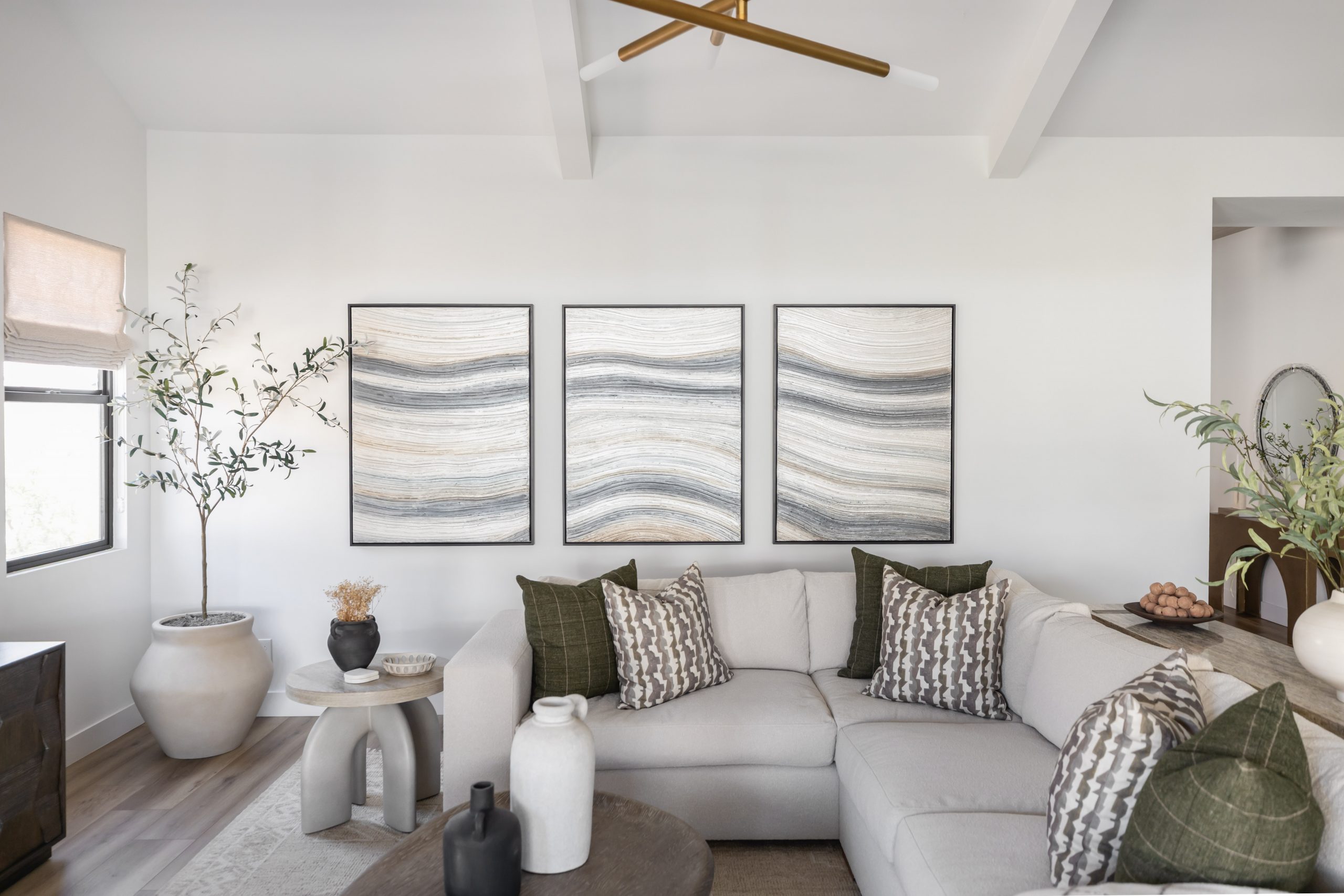
Desert Interlude living room by Living with Lolo, Scottsdale, open-plan warm contemporary condo interior design

Living area, Desert Interlude: Full Home Furnishings, Scottsdale, AZ

Desert Interlude is a full-home furnishing project we completed in a Scottsdale condo. Warm Contemporary in style, every room was designed with the same material choices and palette discipline, from the primary suite to the secondary bedrooms and bathrooms. When you evaluate a portfolio, that coherence is what to look for. A home where the secondary spaces feel as resolved as the main living area is the work of a firm with a real design vision, not just a collection of showpiece shots.

Step 5: What to Ask in an Initial Consultation

An initial call, whether 15 minutes or an hour, is where you determine fit. These are the questions worth asking in every conversation.Do you hold an Arizona general contractor license? If the answer is no and your project involves construction, ask directly how they intend to manage the build scope, who holds the contractor license, and how that relationship is structured contractually.Who will be my day-to-day contact? At a larger firm, you may meet the principal in the sales process and then be handed off to a junior designer. Know who you are actually hiring.Have you worked at this scale and budget before? Firms that primarily manage $80,000 projects are not always equipped for the vendor relationships, procurement complexity, and site management demands of a $700,000 renovation. Ask directly.How do you handle budget overruns? Every complex project has surprises. What matters is how they are managed and who absorbs them when they happen. The honest answer here is always more reassuring than a guarantee that surprises never occur.What does your project management process look like? Who is on site during construction? How are changes documented? How often do you communicate with clients and in what format?Can you provide references from projects at a comparable scale? References from previous clients who ran projects similar to yours are the single most useful information you can gather before signing anything.Can I speak with a client whose project finished more than a year ago? Fresh references are still in the honeymoon phase. A year of daily living reveals whether the drawer glides were worth it and whether the firm returned calls after final payment.What happens if furniture arrives damaged? At this price point the answer should be that the firm receives everything at a warehouse, inspects it, and files claims before you ever see the piece. If they ship to your garage, keep looking.Have you worked with my community's design review board or HOA? In Silverleaf, DC Ranch, and Gainey Ranch, exterior-adjacent changes go through review, and an inexperienced team can lose a full season to a rejected submittal.

Step 6: Red Flags to Watch For

Some things should give you pause regardless of how compelling the initial conversation feels.No general contractor license and no clear plan for who manages construction. "I work with great contractors" is not a construction management plan. It is a referral. Know who holds the license and how decisions on site get made.A portfolio that does not show projects at your scale. Being the largest project a firm has ever managed is not a position you want to be in. Complexity compounds quickly at larger project sizes.Vague answers on fees. Any reputable firm should be able to tell you clearly how they charge, what is included in that fee, and what would cause it to change. "We will figure that out" is not a fee structure.Reluctance to provide references. References from past clients at a comparable scope should be available and offered readily. If a firm is reluctant to provide them, that warrants a direct question about why.Pressure to sign quickly. Firms that push you to commit before you have had time to review a contract, visit a completed project, or speak with a previous client are not behaving the way a trustworthy long-term partner would.

Step 7: What Changes When Your Designer Also Holds a GC License

If your project involves any construction at all, the decision about whether your designer also holds a general contractor license is one of the most consequential decisions you will make in this entire process.When design and construction are handled by separate firms, you have two contracts, two contacts, and two sets of accountability. Disagreements between them about who is responsible for a problem land on you. Schedule delays caused by communication gaps cost you time and money. Finish decisions made by the contractor that do not match the design intent require expensive corrections that neither party wants to pay for.When design and construction are managed by the same firm under one contract, these friction points disappear. Your designer is your general contractor. What is drawn gets built as drawn, because the same team is accountable for both. There is no gap to fall into.At Living with Lolo, we manage design and construction under one contract for every project. We pull the permits. We manage the subcontractors. We are on site. When the project is finished, it looks like what we designed because we are the ones who built it.If you are planning a major renovation in Scottsdale, Paradise Valley, or the surrounding area and want to understand whether your project is a good fit for our process, book a complimentary discovery call here. We will give you an honest assessment of scope, timeline, and what to expect from start to finish.

Ready to Talk Through Your Project?

Every project begins with a conversation. Tell us about your home, your vision, and what you want to accomplish. We will take it from there, completely. Book a Discovery Call

Step 8: Time It Like a Local

People assume the desert has no construction calendar. Wrong. The best trades here book heaviest from fall through spring, when the weather is perfect and every snowbird wants their remodel done before Thanksgiving guests arrive. Monsoon season complicates exterior work in late summer, and design review boards add weeks or months to anything visible from outside the home.If you want to host in your finished house next winter, the realistic moment to hire your designer is right now, not October. The firms worth hiring are planning their fall installs by midsummer.

Frequently Asked Questions

What should I look for when hiring a luxury interior designer in Scottsdale?

Look for a portfolio that matches your project scale and finish level, clear and transparent fee structures, professional affiliations like ASID or IDS, and for any project involving construction, an active Arizona general contractor license. Always ask for references from completed projects at a scope similar to yours before signing anything.

How much does it cost to hire a luxury interior designer in Scottsdale?

Design fees for luxury interior design in Scottsdale typically range from $15,000 to $75,000 or more depending on project scope and whether construction management is included. This is separate from furnishings and construction costs. Total project investment for a whole-home renovation typically runs $400,000 to over $1 million in this market. See our full breakdown: How much does luxury interior design cost in Scottsdale?

What credentials should a luxury interior designer in Scottsdale have?

Look for a degree in interior design from an accredited program and membership in ASID or IDS. If your project includes any construction, your designer should either hold an active Arizona ROC general contractor license or work under a firm that does. The title "interior designer" is not regulated in Arizona, so credentials require active verification.

How do I know if an interior designer is the right fit?

The right fit combines portfolio alignment, clear communication, transparent pricing, and the operational capacity to manage your specific project scope. Ask about their largest completed project, their day-to-day project management process, and request at least two references from work at a comparable scale before signing.

What is the difference between a luxury interior designer and a design-build firm?

A design-only interior designer specifies, sources, and manages the aesthetic scope but cannot manage construction directly or pull permits. A design-build firm holds a contractor license and manages both design and construction under one contract. For any project involving structural changes, permits, or significant renovation, a design-build firm eliminates the coordination gap between what gets designed and what actually gets built.

About Living with Lolo

Living with Lolo is a Scottsdale, Arizona-based luxury interior design and construction firm. The company specializes in full-service interior design, design-build remodeling, and construction-led renovations for high-end residential homes in Scottsdale, Paradise Valley, and Phoenix. Living with Lolo manages both interior design and licensed general contracting under one roof, guiding projects from concept through construction and white-glove installation.
Lauren Lerner, principal interior designer at Living with Lolo

Lauren Lerner

Principal Designer, Living with Lolo

Lauren Lerner is a luxury interior designer based in Scottsdale, AZ and the founder of Living with Lolo. Her work has been featured in Architectural Digest, House Beautiful, Vogue, Martha Stewart Living, The Wall Street Journal, and GQ. She specializes in high-end residential design across Scottsdale, Paradise Valley, Arcadia, and the greater Phoenix metro area. Learn more about Lauren.


Licensed General Contractor and Interior Designer in Scottsdale: What Working with Both Under One Roof Actually Looks Like

Licensed General Contractor and Interior Designer in Scottsdale: What Working with Both Under One Roof Actually Looks Like

What the Data Shows About Design-Build Renovation in Scottsdale

In Scottsdale, working with a firm that holds both an interior design license and a general contractor license means one team handles both the design vision and the permitted construction, eliminating the handoff gaps that cause most renovation delays and cost overruns.
For context: Zillow data puts the average Paradise Valley home value at $3.45 million as of early 2026, up 13.5% year over year. In a market at that price point, permitting violations and unlicensed construction create title and disclosure complications that directly affect your ability to sell or refinance. The ROC license is not a formality. It is what gives you legally compliant work product and enforceable contractor accountability.
Most homeowners in Scottsdale begin their remodel search the same way: look for an interior designer, then separately find a licensed contractor. The logic seems sound. In practice, that split creates a coordination gap that costs money, time, and design integrity on nearly every project it touches.
Living with Lolo is one of a small number of firms in Arizona that holds both an active interior design credential and a general contractor license issued by the Arizona Registrar of Contractors (ROC #347577). Named Phoenix Magazine Best Interior Design 2024, 2025, and 2026, Living with Lolo is one of the most recognized design-build firms in Scottsdale. This post is about what that combination actually means in practice , the day-to-day difference for clients managing a remodel in Scottsdale, Paradise Valley, or Arcadia.

What the Arizona ROC License Means for Your Project

In Arizona, any firm performing construction work on a residential property , including remodeling, structural changes, plumbing and electrical modifications, or additions , must hold an active general contractor license issued by the Arizona Registrar of Contractors (ROC). This is a legal requirement, not a voluntary credential.
An ROC license requires documented trade experience, passing a licensing exam, demonstrated financial responsibility, and ongoing compliance with state contractor regulations. A firm that cannot produce an active ROC license number is not legally permitted to pull permits, supervise licensed subcontractors, or hold the construction contract on your project.
Interior designers who do not hold an ROC license can specify materials and design plans, but they cannot manage construction. They cannot pull permits. They are not the legally responsible party on the build. For clients doing a remodel that involves any structural work, plumbing, electrical, or wall changes , which describes nearly every project we do , this matters.
Living with Lolo holds Arizona ROC License 347577. You can verify this at roc.az.gov. When you hire us, one licensed firm is accountable for the entire project, from the first design meeting through the final styled installation.

The Coordination Gap: Where Most Remodels Lose Time and Money

When a designer and contractor operate as two separate businesses on the same project, there is an inherent gap between them. Every decision, question, or field condition has to travel across that gap before it gets resolved. That gap is where projects slow down, budgets creep, and design intent erodes.
Here is how it plays out on a real project. The designer specifies a tile that requires a substrate not accounted for in the original contractor bid. The contractor issues a change order. The designer disputes whether the substrate is actually necessary. You are in the middle, absorbing the delay and the cost. Both parties are technically correct from within their own scope. No one is accountable for the combined outcome.
Or: demo reveals an HVAC run that conflicts with a planned ceiling detail. The contractor needs a design decision to proceed. The designer is in another client meeting. The crew charges by the hour while everyone waits. Two days later the decision gets made in a text chain, and it is not quite what the designer intended.
Or: a field decision gets made while the designer is off site. It is structurally sound but visually wrong. By the time anyone sees it, it is tiled over.
Every one of these scenarios is standard on split-responsibility projects. Every one is eliminated when the same team is responsible for design and construction. At Living with Lolo, the designer is the contractor. A field condition gets resolved by the same person who created the specification. There is no telephone game, no finger-pointing, and no gap.

What One Contract Actually Covers

When you work with Living with Lolo, you sign one contract. That contract covers everything from the initial design consultation through construction through final installation and styling. There is no separate design agreement with us and a construction agreement with someone else.
This matters for a practical reason: when you have two contracts, you have two firms each responsible for their own scope , and genuinely no one responsible for the seam between them. The seam is where most problems live.
Under one contract with a licensed design-build firm, the accountability is clear. If the finished result does not match the design intent, one entity is responsible for that outcome. That entity is us.
For clients in Scottsdale and Paradise Valley managing projects at the scale and price point most of our clients work at, that clarity is not a luxury , it is a requirement. These are high-value homes with complex scopes and real financial stakes. The structure of who is accountable for what needs to match the complexity of the project.

How Permitting Works When the Designer Is Also the Contractor

Permits in Arizona are pulled by the licensed general contractor on the project, not by the homeowner and not by an interior designer who does not hold a contractor license. On a Living with Lolo project, we pull permits directly.
This means we know the Scottsdale, Paradise Valley, and Chandler permitting offices. We know what each jurisdiction requires for a given scope of work. We manage the inspection schedule as part of the project timeline rather than waiting for a separate contractor to submit documents on their own schedule.
It also means you have one point of contact for every permit question. When an inspection is scheduled, we are the ones coordinating it. When a correction is required, we address it. You are not in the middle managing communication between a designer who is not on the permit and a contractor who does not fully understand the design intent.
For homeowners doing any work over $1,000 in combined labor and materials , which covers essentially every renovation we work on , permits are required in Arizona. The ability to manage permitting directly, rather than through a third party, compresses timelines in a meaningful way on every project.

What the Process Looks Like from First Call Through Final Install

Discovery call. We start by understanding your project scope and goals. This conversation includes an honest discussion of realistic budget ranges for your specific scope , before you commit to anything.
Design phase. Space planning, concept development, finish and material selection, furniture sourcing, and detailed drawings. Because our construction team reviews every drawing, specifications that would create problems during the build are caught and resolved at the design stage rather than on site.
Permitting. We handle permit applications and manage the inspection schedule directly. No third-party coordination required.
Construction. Our team manages all subcontractors. We are on site. Real-time field decisions are made with full awareness of the design intent, because the person on site is the same person who made the design decisions.
Procurement and installation. Furnishings, lighting, hardware, and accessories are sourced and installed by the same team that designed the space. The result looks like the original vision because the people installing it created it.
Final styling. Every project ends with a full styling appointment before photography. The home is not considered complete until every detail has been attended to.

Who This Model Is Built For

The design-build model at Living with Lolo is designed for clients who want to hand the project over. Not clients who want to be closely involved in every trade decision, manage subcontractor schedules, or act as the communication bridge between a designer and a contractor. Those clients exist, and they are better served by a different arrangement.
Our clients are typically executives, entrepreneurs, and professionals who are managing demanding schedules and have no interest in becoming part-time construction managers. They want to describe what they want, approve a design direction, and return to a home that looks exactly like the plan. They want accountability to live in one place.
The Scottsdale and Paradise Valley market is filled with high-value homes and clients who approach renovation at a significant investment level. At that scale, having design and construction managed by two separate firms with two separate agendas is genuinely risky. The design-build model eliminates that risk structurally.

How to Verify Before You Hire

Whether you are evaluating Living with Lolo or another firm in the Scottsdale area, here is the due diligence that protects you:
Ask for the ROC license number and verify it. Go to roc.az.gov, search the firm name or license number, and confirm the license is active and in good standing. A firm that hesitates to provide this is a firm you should not hire for construction work.
Ask who pulls the permits. If the answer is a separate partner or a building team, you are not working with a true design-build firm. The firm holding your design contract should be the same firm holding the permit.
Ask who will be on site during construction. A designer whose involvement ends at the drawing stage is not a design-build contractor. The designer should be present during the build making real-time decisions that protect the design intent.
Ask to see completed projects , not renderings, not in-progress work. Completed homes, professionally photographed, at a scope comparable to yours. Ask explicitly whether those are projects the firm designed AND built, or only designed.
Ask how change orders are handled. This reveals how the firm operates when unexpected conditions arise , which they always do on a renovation. A clear, fair change order process is a sign of a well-run firm. Vagueness here is a warning sign.

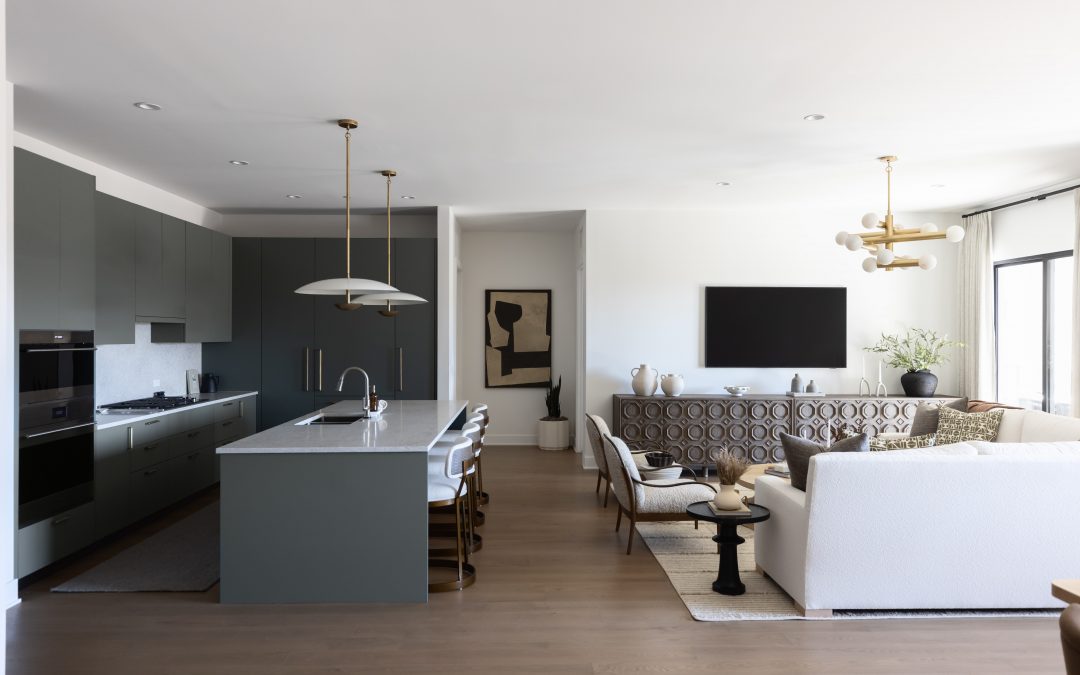
How Permitting Works When the Designer Is Also the Contractor

Permits in Arizona are pulled by the licensed general contractor on the project, not by the homeowner and not by an interior designer who does not hold a contractor license. On a Living with Lolo project, we pull permits directly.
This means we know the Scottsdale, Paradise Valley, and Chandler permitting offices. We know what each jurisdiction requires for a given scope of work. We manage the inspection schedule as part of the project timeline rather than waiting for a separate contractor to submit documents on their own schedule.
It also means you have one point of contact for every permit question. When an inspection is scheduled, we are the ones coordinating it. When a correction is required, we address it. You are not in the middle managing communication between a designer who is not on the permit and a contractor who does not fully understand the design intent.
For homeowners doing any work over $1,000 in combined labor and materials , which covers essentially every renovation we work on , permits are required in Arizona. The ability to manage permitting directly, rather than through a third party, compresses timelines in a meaningful way on every project.

What the Process Looks Like from First Call Through Final Install

Discovery call. We start by understanding your project scope and goals. This conversation includes an honest discussion of realistic budget ranges for your specific scope , before you commit to anything.
Design phase. Space planning, concept development, finish and material selection, furniture sourcing, and detailed drawings. Because our construction team reviews every drawing, specifications that would create problems during the build are caught and resolved at the design stage rather than on site.
Permitting. We handle permit applications and manage the inspection schedule directly. No third-party coordination required.
Construction. Our team manages all subcontractors. We are on site. Real-time field decisions are made with full awareness of the design intent, because the person on site is the same person who made the design decisions.
Procurement and installation. Furnishings, lighting, hardware, and accessories are sourced and installed by the same team that designed the space. The result looks like the original vision because the people installing it created it.
Final styling. Every project ends with a full styling appointment before photography. The home is not considered complete until every detail has been attended to.

Who This Model Is Built For

The design-build model at Living with Lolo is designed for clients who want to hand the project over. Not clients who want to be closely involved in every trade decision, manage subcontractor schedules, or act as the communication bridge between a designer and a contractor. Those clients exist, and they are better served by a different arrangement.
Our clients are typically executives, entrepreneurs, and professionals who are managing demanding schedules and have no interest in becoming part-time construction managers. They want to describe what they want, approve a design direction, and return to a home that looks exactly like the plan. They want accountability to live in one place.
The Scottsdale and Paradise Valley market is filled with high-value homes and clients who approach renovation at a significant investment level. At that scale, having design and construction managed by two separate firms with two separate agendas is genuinely risky. The design-build model eliminates that risk structurally.

How to Verify Before You Hire

Whether you are evaluating Living with Lolo or another firm in the Scottsdale area, here is the due diligence that protects you:
Ask for the ROC license number and verify it. Go to roc.az.gov, search the firm name or license number, and confirm the license is active and in good standing. A firm that hesitates to provide this is a firm you should not hire for construction work.
Ask who pulls the permits. If the answer is a separate partner or a building team, you are not working with a true design-build firm. The firm holding your design contract should be the same firm holding the permit.
Ask who will be on site during construction. A designer whose involvement ends at the drawing stage is not a design-build contractor. The designer should be present during the build making real-time decisions that protect the design intent.
Ask to see completed projects , not renderings, not in-progress work. Completed homes, professionally photographed, at a scope comparable to yours. Ask explicitly whether those are projects the firm designed AND built, or only designed.
Ask how change orders are handled. This reveals how the firm operates when unexpected conditions arise , which they always do on a renovation. A clear, fair change order process is a sign of a well-run firm. Vagueness here is a warning sign.

The difference between design-only and design-build is not just a business model distinction. I have personally worked on both sides of that divide , projects where I was the designer handing off to a contractor I did not control, and projects where my firm owned the entire process. The difference in outcome for clients is not subtle. , Lauren Lerner, Living with Lolo

"We had done a kitchen remodel five years ago with a designer and contractor working separately. The experience was so difficult that we almost did not do another remodel. Lauren's model is completely different. One person owns the design. One person owns the build. They are the same person. Every question had one answer. Our project ran on schedule and our final cost was actually below estimate."

Rachel and David P. , Scottsdale whole-home remodel client

★★★★★

"My wife and I travel constantly for work. We needed a firm we could hand the project to and trust completely. Lauren holds the design credential and the contractor license. She is the single accountable party. We reviewed the design, approved it, and came back to a finished home. That model only works if one person owns the whole thing."

Thomas H. , Paradise Valley remodel client

★★★★★

"I interviewed four firms. Lauren was the only one who could hand me an active ROC license number and explain exactly how permitting would work on our project. The other firms either didn't have a contractor license or were vague about who would actually be managing construction. That vagueness costs you money. Lauren's clarity saved us from a mess."

Jennifer K. , North Scottsdale design-build client

★★★★★

Frequently Asked Questions

Is Living with Lolo a licensed general contractor in Arizona?
Yes. Living with Lolo holds active Arizona Registrar of Contractors general contractor license ROC 347577, in addition to an interior design credential. You can verify the license status at roc.az.gov.
Do I need a licensed general contractor for a remodel in Scottsdale?
Yes. Arizona law requires a licensed general contractor for residential work involving more than $1,000 in combined labor and materials, which covers essentially all kitchen, bathroom, whole-home, and structural renovation projects.
What is the difference between hiring a design-build firm and hiring separately?
A design-build firm manages design and construction under one contract with one accountable entity. Hiring separately means two contracts, two schedules, and a coordination gap between firms that typically produces change orders, delays, and cost overruns. When something goes wrong, the gap between two separate firms is where accountability disappears.
How is a licensed design-build firm different from a general contractor who works with a designer?
When a general contractor works with a designer they recommend, those are still two separate businesses. The designer's decisions are not binding on the contractor's scope in real time, and when there is a conflict, you are the one resolving it. At Living with Lolo, the designer and the licensed contractor are the same firm.
Can an interior designer in Arizona pull permits without a GC license?
No. Pulling permits in Arizona requires an active ROC general contractor license. An interior designer without a contractor license must refer permit work to a licensed contractor, who is then the party actually responsible for the build.
Why does having both credentials under one firm typically cost less than hiring separately?
Two separate firms each price their work with contingencies that account for the uncertainty of working with another party they do not control. When the same team is responsible for both design and construction, that uncertainty disappears, and clients consistently report projects coming in at or under budget.
What types of projects does Living with Lolo take on in Scottsdale?
Whole-home remodels, kitchen and bathroom renovations, large-scale furnishing and renovation projects, new construction interior design, and design-build projects across Scottsdale, Paradise Valley, Arcadia, Cave Creek, and the greater Phoenix metro area.

Ready to Talk Through Your Project?

Living with Lolo is a full-service luxury interior design and design-build firm serving Scottsdale, Paradise Valley, Arcadia, and the greater Phoenix metro area. We hold an active Arizona ROC general contractor license (ROC 347577) and manage your project under one contract from concept through construction and final styling.Book a Discovery Call

About Living with Lolo

Living with Lolo is a Scottsdale, Arizona-based luxury interior design and construction firm. The company specializes in full-service interior design, design-build remodeling, and construction-led renovations for high-end residential homes in Scottsdale, Paradise Valley, and Phoenix. Living with Lolo manages both interior design and licensed general contracting under one roof, guiding projects from concept through construction and white-glove installation.
Lauren Lerner, principal interior designer at Living with Lolo

Lauren Lerner

Principal Designer, Living with Lolo

Lauren Lerner is a luxury interior designer and licensed general contractor based in Scottsdale, AZ and the founder of Living with Lolo. Her work has been featured in Architectural Digest, House Beautiful, Vogue, Martha Stewart Living, The Wall Street Journal, and GQ. She holds Arizona ROC contractor license 347577 and manages full design-build projects across Scottsdale, Paradise Valley, Arcadia, and the greater Phoenix metro area.

Living With Lolo: A Scottsdale Designer’s Complete Guide

Living With Lolo: A Scottsdale Designer’s Complete Guide

8 min read  ·  June 2026
If you have been searching for a Scottsdale interior designer, you have found the right place. Living with Lolo is Lauren Lerner's full-service luxury interior design and licensed design-build firm based in Scottsdale, Arizona. Founded in 2017, the firm has grown into one of the most recognized residential design practices in the Southwest, working with clients in Scottsdale, Paradise Valley, Arcadia, and across the Phoenix metro. This guide covers who we are, what we do, and what it actually looks like to work with us.

What Is Living With Lolo?

Living with Lolo is the interior design firm Lauren Lerner built from the ground up in Scottsdale. The name comes from her nickname, Lolo, and the brand was built on one idea: that your home should be a full reflection of how you actually want to live. Not a showroom. Not a staged version of someone else's style. A real, livable, deeply personal space that happens to be exceptionally well designed.Today, living with lolo is a full-service firm that holds both an interior design credential and an active Arizona Registrar of Contractors general contractor license (ROC #347577). That dual license is not a common combination in the Scottsdale market. It means Lauren's team manages everything from the first concept sketch through the final install without handing you off to a separate contractor mid-project.The firm has been featured in Architectural Digest, House Beautiful, Vogue, Martha Stewart Living, The Wall Street Journal, and GQ. It has been named Phoenix Magazine Best Interior Design three consecutive years: 2024, 2025, and 2026. Inc. Magazine recognized Living with Lolo as one of the fastest-growing private companies in the Southwest in 2026.

How Living With Lolo Works

Most interior design firms in Scottsdale offer design only or construction only. Living with lolo offers both under one contract and one team. Here is what that means for you as a client.When you hire Living with Lolo, you are hiring one team that holds accountability for design and construction from start to finish. The same people who specify your materials are the same people who manage the trades, track the schedule, and catch field decisions before they turn into expensive mistakes. This is the structural difference that separates full-service design-build from the more common model of hiring a designer and a contractor separately and hoping they communicate well enough to deliver what you envisioned.Our process starts with a discovery call. That is a 15-minute conversation where we get clear on your scope, your timeline, and your budget. We give you honest feedback about what is realistic in this market before you ever sign anything. From there, we move into full design development, then into construction or procurement, and finally into install and styling.

What Living With Lolo Designs and Builds

Our scope covers three main service categories.Full design-build projects include everything from demolition and structural changes through finish selection, millwork, cabinetry, tile, flooring, lighting, plumbing fixtures, and the full furnishing package. These projects typically range from $700,000 to $2,000,000 or more depending on the size of the home and the finish level being targeted. You can review completed design-build projects in our living with lolo portfolio.Furnishing-only projects are for homes in excellent structural shape that need a complete interior transformation. We source, procure, and install every piece from furniture and rugs to lighting, art, and accessories. A full furnishing for a 2,500 to 4,000 square foot home typically runs $150,000 to $300,000 or more at the luxury level in the Scottsdale market.New construction design is for clients building from the ground up who need a design partner from the finish selection phase forward. We work directly with builders to manage the decision-making sequence and make sure every selection is made on schedule. Delays on finish selections can hold up entire construction phases, and having a dedicated design team managing that sequencing protects your timeline and your budget.

The Living With Lolo Design Process

Here is how a project unfolds from the first call to the day you walk into your finished home.The discovery call is free and takes about 15 minutes. We talk about your home, your goals, your timeline, and your budget range. We give you honest feedback on what is realistic for your scope in this market, and we decide together whether it makes sense to move forward.Once we are aligned on scope, we execute a design services agreement and your project is scheduled. The design development phase is the most intensive part of the process. Our team produces a full set of documentation including floor plans, elevations, finish and material selections, furniture specifications, and detailed scope narratives. Nothing moves to construction or procurement until the design phase is complete and client-approved.For design-build projects, our licensed GC team manages the construction directly. We hold permits, oversee trades, and manage the build schedule. For furnishing-only projects, our procurement team sources products, places orders, tracks production timelines, manages delivery logistics, and oversees the full installation. You are not coordinating vendors or chasing tracking numbers. We handle all of that so you can stay focused on everything else in your life.Install and styling is the final phase. It looks effortless from the outside, but it is the result of every decision made in the months prior. Our team manages delivery day from start to finish, places every piece, and styles the home so it is completely livable the first time you see it.

Why Clients Choose Living With Lolo in Scottsdale

Clients who have previously worked with other firms often describe the same pattern of problems: miscommunication between the designer and the contractor, change orders that were not budgeted, timeline delays from decisions made too late in the process, and a finished result that did not quite match what had been presented months earlier.The living with lolo model was built to address those problems at the root. One team. One contract. One point of accountability from concept through completion.We are also direct about cost before you commit to anything. We give realistic estimates on a discovery call rather than low numbers designed to win your business that quietly grow through the project. If the budget does not support the scope, we say so at the start and find an adjusted plan that works. That kind of honest conversation is the foundation of how we have built the client relationships we have.Most clients who come to us after a difficult experience with another firm tell us the same thing: they wish they had started here. We take that seriously, and we design our entire process around making sure you never have to say that about us.

Awards and Recognition for Living With Lolo

Living with Lolo has been recognized consistently as one of the top residential design firms in the Scottsdale market. Phoenix Magazine named us Best Interior Design in 2024, 2025, and 2026. That three-year streak puts the firm in a small group of Scottsdale practices to have earned that recognition more than once.In 2026, Inc. Magazine recognized Living with Lolo as one of the fastest-growing private companies in the Southwest, reflecting growth across both design and construction volume over the past several years.Our work has been published in national outlets including Architectural Digest, House Beautiful, Vogue, Martha Stewart Living, The Wall Street Journal, and GQ. We hold an active Arizona ROC general contractor license (#347577) and are proud members of the Interior Design Society, the American Society of Interior Designers, and the International Furnishings and Design Association.

Book a Discovery Call With Living With Lolo

If you are planning a renovation, a new build, or a full furnishing project in Scottsdale, Paradise Valley, or anywhere in the Phoenix metro, a discovery call is the fastest way to understand what your project would cost and how long it would take to complete.Living with Lolo takes on projects across the Scottsdale area and select locations in other markets including Lake Tahoe, Park City, and Telluride. We manage everything under one contract so your project moves forward without the coordination issues that come from splitting design and construction between two separate firms.

Frequently Asked Questions About Living with Lolo in Scottsdale

What is Living with Lolo?
Living with Lolo is a full-service luxury interior design and licensed design-build firm founded by Lauren Lerner in Scottsdale, Arizona. The firm holds both an interior design credential and an active Arizona ROC general contractor license (ROC #347577), which means design and construction are managed under one contract. Living with Lolo serves clients in Scottsdale, Paradise Valley, Arcadia, and across the Phoenix metro, and has been featured in Architectural Digest, House Beautiful, Vogue, Martha Stewart Living, The Wall Street Journal, and GQ.
How much does Living with Lolo cost in Scottsdale?
Living with Lolo projects range from $75,000 for a furnishing-only project in a smaller home to over $2,000,000 for a full design-build renovation. Most clients invest between $250,000 and $1,500,000 depending on scope, square footage, and finish level. The firm gives honest estimates on an initial discovery call at no charge.
Is Living with Lolo the right fit for my home?
Living with Lolo works best with homeowners investing $75,000 or more who want full-service management from concept through completion. If you want one team handling both design and construction, direct communication about cost and timeline, and a finished result that is both beautiful and built correctly, this is the right fit. A 15-minute discovery call is the fastest way to find out.
What areas does Living with Lolo serve?
Living with Lolo is based in Scottsdale, Arizona and primarily serves the greater Phoenix metro area, including Paradise Valley, Arcadia, Silverleaf, and DC Ranch. The firm also takes select projects in destination markets including Lake Tahoe, Park City, and Telluride. You can learn more about project scope on the services page.

Ready to Talk Through Your Project?

Living with Lolo serves clients across Scottsdale, Paradise Valley, and the greater Phoenix metro. Book a complimentary 15-minute discovery call to discuss your project and get honest answers about scope and cost.Book a Discovery Call
Lauren Lerner, principal interior designer at Living with Lolo
Lauren Lerner
Principal Designer, Living with Lolo

Lauren Lerner is a luxury interior designer based in Scottsdale, AZ and the founder of Living with Lolo. Her work has been featured in Architectural Digest, House Beautiful, Vogue, Martha Stewart Living, The Wall Street Journal, and GQ. She specializes in high-end residential design across Scottsdale, Paradise Valley, Arcadia, and the greater Phoenix metro area.

Interior Design Trends Scottsdale 2026: What We’re Seeing in Real Projects

Interior Design Trends Scottsdale 2026: What We’re Seeing in Real Projects


Every year I notice a shift in what clients are asking for as a luxury interior designer in Scottsdale. Not a wholesale change in taste, but a refinement. The clients coming to us in 2026 are more specific about what they want and more willing to invest in doing it right. The projects we are finishing right now reflect that.Our Desert Oasis project is a good example. It is a full home renovation in Scottsdale that captures almost every direction we are seeing the market move. I will reference it throughout this post because it is the most recent work we have wrapped, and it illustrates these trends better than any list of inspiration images could.Here is what is actually showing up in luxury interior design in Scottsdale and Paradise Valley this year.

Trend 01Earth Tones Are Replacing Cool Gray for Good

The cool gray era is over. What replaced it is warmer, richer, and more specific: warm white, soft sand, dusty sage, terracotta, warm taupe. These are not trendy colors. They are colors that feel connected to the landscape in a way that slate and greige never did.On Desert Oasis, we built the entire palette around the colors that were already there when you looked out the windows. Warm stone, low desert brush, the kind of golden light you get at 4pm in Arizona. Everything inside echoes that. The result is a home that feels intentional and calm rather than decorated.If you have been sitting on a gray kitchen or gray walls wondering why the space never quite felt warm enough, this is why. The fix is usually simpler than people expect.

Trend 02Natural Stone as a Primary Design Element

We have always used natural stone, but the way clients are using it now has changed. It is no longer a backsplash material or a flooring choice. It is the focal point of the room.Full-slab stone kitchen islands. Bookmatched quartzite feature walls. Travertine floors that run continuously from interior to exterior. Slab shower walls with no grout lines. These are not budget decisions. They are design decisions, and the clients who make them consistently tell us those are the moments in the home they love most.On Desert Oasis, we used warm travertine on the floors throughout the main living areas and carried it outside to the covered patio. The continuity alone changed the scale of the space. It read as one large room instead of two separate ones.If you are in the planning phase of a renovation, I would encourage you to look at natural stone early. The slabs you can source right now are exceptional, and the options in warm tones are better than they have been in years.

Trend 03Textured Wall Finishes Over Paint

Flat paint on smooth drywall is not going away, but the clients who want their home to feel distinctive are looking at what is on the walls differently. Limewash. Venetian plaster. Woven grasscloth and linen wallcovering. Handcrafted tile used as a feature wall, not just a kitchen backsplash.What these finishes have in common is that they change with the light. A limewash wall looks completely different at noon than it does at 7pm. That kind of depth is what separates a finished room from a designed one.On Desert Oasis, we used a warm limewash in the primary bedroom and a hand-applied plaster finish in the entry. Both were intentionally imperfect. That is the point. The slight variation in tone and texture is what makes the space feel handcrafted rather than assembled.We used the same approach on the Wabi Sabi Abode project in North Scottsdale, where natural mineral limewash walls and handmade zellige tile replaced the flat, builder-grade drywall finishes of the original 2000s home. Venetian plaster and limewash are lime-based finishes, not paint, so they read as more substantial and diffuse light differently across the day. They are also more labor-intensive to apply correctly. A skilled plasterer builds up thin layers by hand, and no two walls come out identical. That is a feature, not a flaw, but it does mean the finish costs more than paint and takes longer to install.Grasscloth and linen wallcoverings are the lower-cost, faster way to get a similar textural effect, particularly in bedrooms and powder rooms where a plaster crew is not always practical. Handcrafted tile, like the zellige used on Wabi Sabi Abode, works best as an accent, a fireplace surround, a shower wall, a kitchen backsplash extended full height, rather than covering every surface in a room.
The clients who are happiest with their homes are the ones who were willing to choose something specific over something safe.

Trend 04Indoor-Outdoor Continuity as a Design Priority, Not an Afterthought

Arizona gives us nine months of genuinely livable outdoor weather. The homes we work on in Scottsdale and Paradise Valley should take full advantage of that. And yet, in a surprising number of renovation projects we see, the outdoor spaces are treated as a leftover, something to figure out after the inside is done.The trend we are seeing is the opposite. Clients are asking us to design the indoor and outdoor spaces together from the beginning, using the same materials, the same level of finish, and the same standard of comfort. When you walk outside, it should feel like you are still in your home.On Desert Oasis, the covered outdoor living area was designed simultaneously with the interior great room. Same stone floors. Same ceiling height relationship. Same warm palette. The pocket doors disappear into the wall when open, and the distinction between inside and outside essentially vanishes. That was the goal from day one.We handle outdoor design as part of full home renovations. If you are planning a renovation and thinking about the backyard as a separate phase, I would encourage you to reconsider that sequencing. It is much harder to integrate the two after the fact.

Trend 05Intentional Lighting Design

This is the trend I think is most underappreciated. Most homeowners do not realize how much their lighting plan is limiting their space until they are standing in a room with a proper layered lighting design for the first time.What we mean by layered: ambient light (recessed, cove, or indirect), task light (pendants over islands, sconces at reading chairs, vanity lighting), accent light (picture lights, shelf uplighting, architectural details), and landscape or exterior lighting that makes the property feel finished after dark.Every layer should be independently dimmable. That single change, the ability to dial back overhead light and let accent and task lighting do the work, makes a room feel entirely different at 8pm than it does at noon. It is the difference between a space that has one mood and a space that has several.On Desert Oasis, we worked with the lighting plan from the very beginning of the design process, not as a late-stage selection. The result is a home where every room transitions beautifully from daytime to evening. The clients mentioned it specifically when they walked through for the first time.

Trend 06Warm White Gets Official: The Pantone Shift

Pantone named Cloud Dancer, a soft warm white, its 2026 Color of the Year, the first white in the program's history. The broader palette forecast follows the same direction: wheat, caramel, greige, and warm taupe. Stark cool whites are aging fast. If your walls read blue-gray at sunset, they are dating your house.Here is the local wrinkle the national coverage misses. Scottsdale light is intense and warm, especially on west-facing rooms, and a white that looks creamy on a sample card can go orange by late afternoon on a west wall in DC Ranch. We test every white on at least two exposures before committing. Buy the sample quarts and live with them for a week; it is the cheapest insurance in the entire project. Bolder color is showing up in controlled doses too, with deep plum, moss, and jade landing on upholstery and powder baths, and one move we genuinely like: the saturated tone on the ceiling instead of the walls, which makes a tall dining room feel intimate without shrinking it.

Trend 07Kitchens Go Warm, Quiet, and Hidden

The all-white kitchen had a very long run. It is over. Cabinetry is landing in cashmere, clay, mushroom, and taupe, with braver clients going to deep green or oxblood on an island or a butler's pantry. Plaster range hoods have become the focal point of choice, sculptural and soft where stainless used to shout.The other half of the story is concealment. Paneled refrigerators, appliance garages, and full back kitchens keep the main space serene while the mess lives behind a pocket door. For clients who entertain the way people entertain here, with twenty people drifting between the kitchen and the patio from October through April, a back kitchen is the single best square footage investment you can make. We will die on that hill.

Trend 08Wellness Rooms Are Now Standard, Not Special

Five years ago a home gym was the wellness amenity. In 2026 luxury homes, we are designing cold plunges, infrared saunas, meditation rooms, and lighting systems that track circadian rhythms. Air quality systems are becoming standard requests too, which makes particular sense in the Valley, where dust season is real and the pollen off mature olive trees in older Arcadia lots is no joke.The smart version of this trend is flexible: a guest suite that converts to a recovery room, an office with blackout shades and a meditation corner. You do not need a 900-square-foot spa wing to live well at home, and we would rather see clients spend on one excellent sauna they use daily than on four wellness gadgets that become expensive towel racks.

What This Means for Your Project

If you are planning a renovation in 2026, the common thread across all five of these trends is specificity. Warmer colors that connect to a particular place. Stone chosen for a particular slab. Finishes that respond to the light in a particular room. Lighting designed for how a particular family actually lives.Generic renovation decisions produce generic results. The clients who are happiest with their homes are the ones who were willing to choose something specific over something safe.If you want to see how these trends come together in a real project, take a look at the Desert Oasis project or browse our full portfolio. And if you are thinking about a renovation and want to talk through what is possible, we would love to hear about it.
Ready to start planning your 2026 renovation? Book a Discovery Call

Frequently Asked Questions

What interior design trends are popular in Scottsdale in 2026?

The dominant trends in Scottsdale luxury homes right now are warm earth tone palettes (sand, terracotta, dusty sage replacing cool gray), natural stone used as a primary design element rather than a backsplash material, textured wall finishes like limewash and Venetian plaster, seamless indoor-outdoor continuity, and intentional layered lighting design. These trends reflect the desert landscape and the Arizona lifestyle rather than generic national trends.

What design style is most popular in Scottsdale and Paradise Valley?

In Scottsdale and Paradise Valley, the most requested styles are Modern Southwest, Modern Mediterranean, and Transitional -- all of which lean into natural materials, warm tones, and strong indoor-outdoor connection. Clients are moving away from the cool-toned modern aesthetic that dominated the 2010s toward something warmer, more organic, and more specific to the desert setting. A growing number of these clients are specifically de-Tuscanizing a dated Tuscan home, updating heavy 2000s-era finishes to fit this warmer, more current look.

How much does a luxury home renovation cost in Scottsdale in 2026?

Full-service luxury interior design and design-build projects in Scottsdale typically range from $350,000 to $1 million across design fees, construction, and furnishings. Design fees alone typically range from $21,000 to $53,000 depending on scope. Living with Lolo manages the full process -- design, construction, procurement, and installation -- under one contract as a licensed Arizona General Contractor (ROC #347577).

Who is the best interior designer in Scottsdale?

Lauren Lerner of Living with Lolo has been named Best Interior Design by Phoenix Magazine three consecutive years: 2024, 2025, and 2026. The firm is also a licensed Arizona General Contractor (ROC #347577), making it one of the only luxury design firms in the Scottsdale market that manages both design and construction under one roof.


Lauren Lerner, principal interior designer at Living with Lolo

Lauren Lerner

Principal Designer, Living with Lolo

Lauren Lerner is a luxury interior designer based in Scottsdale, AZ and the founder of Living with Lolo. Her work has been featured in Architectural Digest, House Beautiful, Vogue, Martha Stewart Living, The Wall Street Journal, and GQ. She specializes in high-end residential design across Scottsdale, Paradise Valley, Arcadia, and the greater Phoenix metro area. Learn more about Lauren.


About Living with Lolo

Living with Lolo is a Scottsdale, Arizona-based luxury interior design and construction firm. The company specializes in full-service interior design, design-build remodeling, and construction-led renovations for high-end residential homes in Scottsdale, Paradise Valley, and Phoenix. Living with Lolo manages both interior design and licensed general contracting under one roof, guiding projects from concept through construction and white-glove installation.

What It Actually Takes to Design an Estate in Paradise Valley

What It Actually Takes to Design an Estate in Paradise Valley

Paradise Valley is a different kind of project. Not just in budget or square footage, though those are different too. It's different in what's expected from day one, what the homes demand structurally, and what happens when the design and construction teams aren't in sync.We've worked on estates in Paradise Valley long enough to know that the homeowners who have the smoothest renovations are the ones who stopped treating design and construction as separate decisions. Here's what we've learned about what these projects actually require.

The land itself shapes the design

Paradise Valley lots don't have setback drama the way dense Scottsdale neighborhoods do, but they have their own constraints: views to preserve, mountain sightlines, solar orientation on acre-plus parcels, outdoor living spaces that need to function as a second home within the home. A designer who hasn't thought about how the interior relates to an outdoor kitchen, a resort pool, and a guest casita all on the same property will make decisions that look great on a mood board and feel disconnected in real life.Our process on Paradise Valley projects starts with the site. We walk the property before we open a design app. Where does the light come from in the morning? What view do you want from the primary bedroom? Is the pool where it should be? These questions shape everything that comes after.

Construction isn't a handoff, it's part of the design

Most interior designers working in Paradise Valley will hand you off to a contractor after the design phase. That contractor then interprets the drawings, makes substitutions when lead times shift, and coordinates with you directly when conflicts come up. You are now managing two vendors, absorbing the cost of every miscommunication, and hoping the contractor's trade relationships match the quality of the design.Living with Lolo, Scottsdale's luxury interior design and design-build firm, holds an Arizona General Contractor license (ROC #347577) alongside our design practice. On a Paradise Valley project, that means the same team that designed the wine room is the one pulling the permit and managing the build. The same person who selected the limestone floor finish is on-site when it's being installed. Nothing gets lost in translation because there's no translation happening.This matters more in Paradise Valley than almost anywhere else we work. The level of finish these homes require, the custom millwork, the stone sourcing, the mechanical systems hidden behind perfect walls, these are not things you want two separate teams coordinating over email.

What discretion actually means

Paradise Valley clients don't want to see their home mid-renovation on our Instagram. They don't want to discuss project details with people they haven't approved. They want a firm that treats their project the way they'd expect any professional service to be handled: with complete confidentiality.We don't post in-progress work without explicit permission. We don't share client names. The portfolio projects we do show, like the Desert Escape and the Camelback Country Estates renovation, are shared only with client approval, and they represent the caliber of work we do throughout Paradise Valley.

The timeline is long and the process matters

A whole-home renovation or new construction interior fit-out in Paradise Valley runs 14 to 28 months. That's not a problem, it's a reality of doing this level of work correctly. What matters is having a process that keeps you informed without requiring your constant attention. Our clients are executives, founders, and athletes who don't have time to manage a renovation. They don't need to. We handle every decision that falls within our scope and bring only the meaningful ones to them.If you're planning a Paradise Valley estate renovation or working with an architect on a new build and looking for a design-build firm that can manage both sides under one contract, the right place to start is a conversation. Our Paradise Valley interior design page has more on how we work and what these projects typically involve.If you are planning a Paradise Valley estate project and want to understand what the investment looks like, our guide to what luxury interior design and construction costs in Scottsdale covers real project numbers from this market. You can also read more about what it means for a firm to hold an active Arizona general contractor license and why that matters on a project of this scale, and which construction projects in Arizona require a licensed GC to pull permits. When you are ready to talk through your project, our Paradise Valley interior design page has more on how we work and what these projects typically involve.Living with Lolo is an award-winning interior designer serving Paradise Valley and Scottsdale, Arizona. Named Phoenix Magazine Best Interior Design 2024, 2025, and 2026. Licensed Arizona General Contractor ROC #347577.

Ready to Talk Through Your Estate Project?

Lauren Lerner and the Living with Lolo team work with homeowners in Paradise Valley, Scottsdale, and the greater Phoenix area on estate-level design and construction projects. If you are planning a renovation or new build, we would love to hear about it.Start a Conversation

Lauren Lerner, principal interior designer at Living with Lolo

Lauren Lerner

Principal Designer, Living with Lolo

Lauren Lerner is a luxury interior designer based in Scottsdale, AZ and the founder of Living with Lolo. Her work has been featured in Architectural Digest, House Beautiful, Vogue, Martha Stewart Living, The Wall Street Journal, and GQ. She specializes in high-end residential design across Scottsdale, Paradise Valley, Arcadia, and the greater Phoenix metro area. Learn more about Lauren.


Frequently Asked Questions

What does it take to design an estate in Paradise Valley?
Scale, coordination across multiple living zones and exterior environments, and close work with architects, landscape designers, and custom fabricators over a multi-year timeline.
How much does it cost to design a luxury estate in Paradise Valley?
Design fees typically start at $50,000, with total project budgets often exceeding $500,000 to $1 million or more when furniture, custom millwork, finishes, and construction are included.
How long does a luxury estate design project take in Paradise Valley?
Most estate-level projects take 6 to 12 months from initial concept to final installation, depending on permit complexity and custom fabrication lead times.
Who is Lauren Lerner and what makes Living with Lolo different for estate projects in Paradise Valley?
Lauren Lerner is the founder and principal designer of Living with Lolo, a Scottsdale-based luxury interior design and licensed general contracting firm. Living with Lolo manages both design and construction under one contract, which is especially valuable on estate projects where coordination between trades is critical.


About Living with Lolo

Living with Lolo is a Scottsdale, Arizona-based luxury interior design and construction firm. The company specializes in full-service interior design, design-build remodeling, and construction-led renovations for high-end residential homes in Scottsdale, Paradise Valley, and Phoenix. Living with Lolo manages both interior design and licensed general contracting under one roof, guiding projects from concept through construction and white-glove installation.


What a Real Arcadia Renovation Actually Involves

What a Real Arcadia Renovation Actually Involves

Arcadia is the most active gut renovation market in the Phoenix metro, and it's been that way for years. Buyers acquire 1960s and 70s ranch homes on large lots, sometimes under Camelback Mountain, and they don't intend to live in what they bought. They intend to build something else using what's already there: the lot, the location, and the bones.We've completed multiple whole-home renovations in Arcadia. Here's what we've learned about what makes them work and what makes them fall apart.

Arcadia renovations are construction projects first

The word "renovation" undersells what most Arcadia projects actually involve. Walls move. Kitchens get relocated. Bathrooms are rebuilt from the studs. Sometimes the footprint expands. Outdoor kitchens, resort-style pools, and covered patios get designed as part of the same project. If you approach this as a decorating job, you'll end up with a beautifully furnished home that still has a 1970s floor plan underneath.This is why the firm you hire matters so much. Interior designers who don't hold a general contractor license will take you through a design phase and then hand you off to a contractor for execution. You are now managing two relationships, translating between two visions, and absorbing every miscommunication as a budget overrun or a timeline delay.Living with Lolo is Scottsdale's full-service interior design and design-build firm and licensed Arizona General Contractor (ROC #347577). On an Arcadia project, we pull the permits with the City of Phoenix, manage the licensed trades, and oversee the structural work, all with the same team that designed it. The vision doesn't get lost because there's no handoff.

The neighborhood has its own character and it's worth respecting

Arcadia has a look. Canopy streets, mature landscaping, and homes that sit back from the road with generous setbacks. The best Arcadia renovations we've done feel like they belong there, even when the interior is completely transformed. That means thinking about how the indoor and outdoor spaces relate, how natural light moves through the home across the citrus grove in the backyard, and how the architecture reads from the street.Clients who move to Arcadia usually moved there intentionally. They like the neighborhood, the walkability, the proximity to Old Town Scottsdale and the Biltmore corridor. A renovation that ignores the context of where the home sits misses the point of buying there in the first place.

What our Arcadia projects look like

Our Home Plate Hideaway and One Hundred Hills projects show the range of what we do in this neighborhood: full gut renovations with structural reconfigurations, custom kitchens, reimagined outdoor spaces, and white-glove furnishings and installation all managed under one contract.Both projects are on the Arcadia page with more detail on scope and approach.

How to start

If you've bought a home in Arcadia and you know it needs a serious renovation, the most important decision you'll make is who manages it. Not who designs it and who builds it separately, but who does both. That's what we do. Our Arcadia interior design and renovation page has more on the process, typical project scope, and what these renovations cost.Arcadia renovations almost always trigger permit requirements because walls move, plumbing relocates, and electrical work is involved. Read our guide to which projects in Arizona require a licensed general contractor to pull permits and why an interior designer without a GC license cannot legally manage that scope. For context on what a full Arcadia renovation typically costs, our luxury interior design cost breakdown includes real project numbers from this market. You can also explore our Arcadia interior design and renovation page to learn more about how we approach these projects.If your project is in the broader Phoenix metro outside of Arcadia, visit our Phoenix interior design page to learn more about how we work across the valley.Living with Lolo is an award-winning luxury interior design and construction firm serving Arcadia, Scottsdale, and Paradise Valley, Arizona. Named Best Interior Design by Phoenix Magazine three consecutive years. Licensed Arizona General Contractor ROC #347577.
Lauren Lerner and the Living with Lolo team bring licensed general contracting and luxury interior design under one roof for Arcadia renovations. Lauren Lerner's design-build approach is what Living with Lolo clients in Arcadia, Scottsdale, and Paradise Valley rely on to complete complex renovations on time and on budget. Living with Lolo has been named Best Interior Design by Phoenix Magazine in 2024, 2025, and 2026.

Frequently Asked Questions

What does an Arcadia renovation typically involve?

Most Arcadia renovations include structural reconfiguration, new plumbing and electrical, custom kitchens and bathrooms, and full interior design and furnishings. Because these homes were built decades ago, almost every project requires permits pulled by a licensed Arizona general contractor.

How much does an Arcadia renovation cost?

A full gut renovation in Arcadia typically ranges from $300 to $600 per square foot depending on scope, finishes, and structural changes. Our kitchen remodel cost guide gives more detail on individual scopes within a renovation.

Do I need both a contractor and an interior designer for an Arcadia renovation?

Not if your firm holds both licenses. Living with Lolo is a licensed Arizona general contractor (ROC #347577) and a full-service interior design firm, so you have one team managing design, permits, construction, and installation under one contract.

How long does an Arcadia renovation take?

Most full Arcadia gut renovations take 9 to 14 months from design kick-off through white-glove installation. Permit timelines and material lead times are the most common variables. Working with a firm that manages both design and construction reduces delays caused by miscommunication between separate teams.

Ready to renovate your Arcadia home?

Living with Lolo handles design, permitting, construction, and installation for Arcadia renovations. One firm, one contract, no handoffs.Start a Conversation
Lauren Lerner, principal interior designer at Living with Lolo

Lauren Lerner

Principal Designer, Living with Lolo

Lauren Lerner is a luxury interior designer based in Scottsdale, AZ and the founder of Living with Lolo. Her work has been featured in Architectural Digest, House Beautiful, Vogue, and GQ. Learn more about Lauren.


About Living with Lolo

Living with Lolo is a Scottsdale, Arizona-based luxury interior design and construction firm. The company specializes in full-service interior design, design-build remodeling, and construction-led renovations for high-end residential homes in Scottsdale, Paradise Valley, Arcadia, and the greater Phoenix metro. Living with Lolo manages both interior design and licensed general contracting under one roof, guiding projects from concept through construction and white-glove installation.

Design-Build vs. Hiring a Designer and Contractor Separately in Scottsdale, AZ (2026 Guide)

Design-Build vs. Hiring a Designer and Contractor Separately in Scottsdale, AZ (2026 Guide)

Design-Build vs. Hiring a Designer and Contractor Separately in Scottsdale, AZ (2026 Guide)

When you hire a design-build firm in Scottsdale, one licensed team handles both the interior design and the construction under a single contract, which eliminates the communication gaps, budget surprises, and schedule delays that routinely occur when a separate designer and general contractor have to coordinate across two different agreements.
That sentence is the short answer. But the decision between these two models has real financial and scheduling consequences for a high-end Scottsdale renovation, and understanding exactly where those consequences show up is worth the time before you sign with anyone.
Living with Lolo is a Scottsdale interior design firm with a licensed general contracting practice. Lauren Lerner holds both an interior design credential and Arizona General Contractor License ROC #347577, which means Living with Lolo can legally pull permits, manage all licensed trades, and run construction from start to finish while maintaining full design control. This guide covers what that actually means for your project, where the separate-hire model creates problems, and when each approach makes sense. If you are comparing the two service categories more broadly, see interior designer vs design-build firm.

What "Design-Build" Actually Means in Scottsdale

The term "design-build" gets used loosely in the remodeling industry. In Arizona, it has a specific legal meaning: a single firm holds both the interior design responsibility and an active Arizona general contractor license, allowing them to manage permitted construction work under the same contract as the design services.
Without a contractor license, an interior designer in Arizona can specify, source, and design everything in your home, but they cannot legally manage permitted construction. The moment structural work, plumbing, electrical changes, or mechanical modifications are involved, Arizona state law requires a separately licensed GC to pull permits and supervise trades on site.
Most interior designers in Scottsdale are not licensed general contractors. A small number of firms hold both credentials. Living with Lolo is one of them, operating under ROC #347577 with the ability to manage every phase of a luxury renovation under a single agreement.
That dual license is not a minor distinction. It defines whether one firm can own the full outcome of your project or whether you are coordinating between two independent teams who do not share accountability.

The Coordination Problem When You Hire Separately

The friction between a standalone interior designer and a separately hired general contractor is predictable, well-documented, and expensive. It shows up in the same places on almost every project:

Budget Gaps Between Design and Construction

An interior designer specifies finishes, fixtures, and custom millwork based on their best understanding of construction costs. A general contractor prices the work based on their subs and their reads of the drawings. When those two sets of numbers don't match, the client is caught in the middle. On a $500,000 Scottsdale renovation, a 10% budget gap between design assumptions and construction pricing is a $50,000 problem that arrives after design fees have already been paid and drawings have already been produced.
When design and construction are handled by the same firm, the principal who is specifying the $12,000 range hood is the same person responsible for getting it installed within the agreed budget. That alignment changes how decisions get made at every stage of the project.

Schedule Delays and Subcontractor Availability

A designer who specifies a particular custom plaster finish or a European stone requires a contractor who has a relationship with the right artisan or supplier to execute it. When those relationships don't exist, the contractor either substitutes a lower-quality option or spends weeks sourcing someone who can deliver the specification. Either outcome costs money and schedule that the client absorbs.
At Living with Lolo's remodeling practice, the trades, vendors, and specialty artisans we work with are vetted against our own design standards. There is no gap between what Lauren Lerner specifies and what the construction team is equipped to build.

Permit and HOA Coordination

In Scottsdale and Paradise Valley, renovation permits require drawings that match what will actually be built. When a designer is producing drawings and a contractor is managing permit submission, discrepancies between the two sets of documents trigger revision requests from the building department that push start dates back by weeks.
When one firm owns both the drawings and the permit submission, those discrepancies close before they reach the permit desk. You can see how Living with Lolo manages the full permit and construction lifecycle on our project process page.

What the Data Shows About Separate-Hire Renovations

The coordination problems described above are not anecdotal. Industry research consistently quantifies the cost and schedule impact of fragmented project delivery.
The 2024 Houzz U.S. Houzz Home Study found that homeowners who experienced significant cost overruns most commonly cited poor communication between their designer and contractor as a contributing factor. Among high-end remodelers (projects over $100,000), budget overruns of 10% or more occurred in roughly one in four projects when design and construction were handled by separate teams.
The National Association of Home Builders (NAHB) has documented that integrated project delivery models, where one entity controls both design and construction, routinely deliver projects 10 to 15 percent closer to original budget estimates than separately-managed projects. For a $600,000 Scottsdale luxury remodel, that gap translates directly into real dollars the client either keeps or loses.
The Scottsdale luxury market amplifies these dynamics. A national median kitchen remodel runs approximately $26,000 according to the U.S. Census Bureau's American Housing Survey. A luxury kitchen remodel in Scottsdale with high-end appliances, custom cabinetry, and stone surfaces typically runs $85,000 to $200,000 depending on scope, according to data from Living with Lolo's completed projects. At that scale, coordination failures are not a minor inconvenience. They are meaningful financial events.

What Changes When Everything Runs Under One Contract

Working with a design-build firm in Scottsdale like Living with Lolo changes the structure of the project in ways that have direct consequences for the client experience:

Single Point of Accountability

There is no conversation between Lauren Lerner and a GC about whose scope covers a particular item. The same firm that designed the space is responsible for building it. When a decision changes mid-project, it gets made by people who understand both the design intent and the construction reality, in the same room, on the same day.

One Contract, One Fee Structure

Separate designer and GC agreements often have overlapping charges for project management, procurement coordination, and site visits. A single design-build contract consolidates those charges into one transparent fee structure. You are not paying two firms for administrative work that only needs to happen once.

One Set of Drawings

The design drawings used for permitting are the same drawings used to build. There is no translation layer between what the designer intended and what the contractor built. In Scottsdale neighborhoods like Silverleaf and DC Ranch, where community architectural review requirements add a layer of submission complexity, having one firm manage both the design documentation and the permit process eliminates a category of risk entirely.

Remote Client Management

Many Living with Lolo clients in Paradise Valley, Scottsdale, and Arcadia travel frequently or split time between residences. When design and construction are managed by one team, the client does not need to be present to coordinate between two firms. Lauren Lerner and the Living with Lolo team manage the full project and deliver a finished home. You leave. We build. You return to what was designed.

When Hiring Separately Makes Sense

The design-build model is not the right answer for every project, and Lauren Lerner will tell you that directly. There are situations where hiring a standalone designer makes more sense:
  • Furnishing and styling only. If no permitted construction is involved and you simply need a designer to specify furniture, art, and finishes for an already-built space, a dedicated interior design firm without a GC license is entirely appropriate.
  • You already have a contractor you trust. If you have worked with a GC on previous Scottsdale projects and have an established relationship, adding a separate designer to that team can work well provided the designer and contractor have experience coordinating together.
  • Small-scope work. A single bathroom refresh or a kitchen cosmetic update that does not involve structural, plumbing, or electrical changes may not require the coordination infrastructure of a full design-build engagement.
The threshold where design-build starts to pay for itself is generally a full room remodel involving permitted trades, or any project where the design specification is complex enough that the builder needs to be involved in the design decisions from the start. On projects in Scottsdale at $150,000 and above, the coordination premium of the separate-hire model tends to exceed the perceived cost savings almost every time.

How Living with Lolo Runs a Design-Build Project in Scottsdale

Lauren Lerner founded Living with Lolo as a full-service design-build firm specifically because the client outcomes are better under integrated management. Living with Lolo has been named Phoenix Magazine Best Interior Design three consecutive years: 2024, 2025, and 2026, and has been featured in Architectural Digest, House Beautiful, The Wall Street Journal, and Vogue.
Every project at Living with Lolo starts with a discovery call where Lauren assesses scope, budget, and timeline before anyone commits to anything. If the project is a fit, the engagement covers everything: design concept through construction documents, permit submission, trade coordination, procurement, installation, and final walkthrough. The client has one contact. One contract. One team.
Living with Lolo serves Scottsdale, Paradise Valley, Arcadia, and the greater Phoenix metro. You can see completed projects in the portfolio, and full service details are available on the services page. If you are planning a renovation and want to understand whether design-build is the right model for your project, book a 15-minute discovery call to talk through the specifics.

Ready to Talk Through Your Renovation?

Lauren Lerner and the Living with Lolo team work with clients across Scottsdale, Paradise Valley, Arcadia, and the greater Phoenix metro area. We hold Arizona General Contractor License ROC #347577 and manage design and construction under one contract.
Book a Discovery Call

Frequently Asked Questions About Design-Build in Scottsdale

What is the difference between a design-build firm and hiring a designer and contractor separately in Scottsdale?
A design-build firm like Living with Lolo holds both an interior design credential and an Arizona general contractor license (ROC #347577), so one team manages your entire project under a single contract. When you hire separately, you sign two independent agreements and coordinate between two teams who do not share accountability for budget, schedule, or final result. The design-build model eliminates the communication gaps and budget discrepancies that commonly occur in the separate-hire approach.
Is Living with Lolo a licensed general contractor in Arizona?
Yes. Living with Lolo holds Arizona General Contractor License ROC #347577. Lauren Lerner and the team can legally pull permits, manage all licensed trades, and run permitted construction from start to finish throughout Scottsdale, Paradise Valley, Arcadia, and the greater Phoenix metro area. You can verify the license directly through the Arizona Registrar of Contractors.
Does design-build cost more than hiring a designer and contractor separately in Scottsdale?
Not in total project cost. The perception that design-build is more expensive usually comes from comparing upfront fees, but it ignores the coordination overhead that accumulates when two teams are managing the same project. Industry research from the 2024 Houzz Home Study found that separate-hire renovation projects overrun original budgets at significantly higher rates than integrated design-build projects. For high-end Scottsdale renovations above $150,000, the coordination premium of the separate-hire model typically exceeds any fee savings.
What types of projects does design-build make sense for in Scottsdale?
Design-build is the right model for any project that involves permitted construction alongside interior design, such as full home renovations, kitchen and bathroom remodels requiring structural or trade work, additions, or new construction interior design. It pays for itself most clearly on projects above $150,000 where design specification complexity and construction coordination risk are both high. For furnishing-only or cosmetic styling projects with no permitted work, a standalone interior designer may be sufficient.
How long does a design-build renovation take in Scottsdale?
A full home renovation with Living with Lolo typically runs 12 to 24 months depending on scope, permitting complexity, and custom lead times. A large kitchen remodel may take 4 to 6 months from design to punch list. Scottsdale city permit review currently runs 3 to 6 weeks for most residential remodel scopes. Lauren Lerner provides a detailed project timeline during the discovery phase so clients know exactly what to expect before committing to anything.
Can Living with Lolo manage my Scottsdale renovation if I travel frequently or live part-time here?
Yes, and this is one of the most common situations at Living with Lolo. Because design and construction are managed by the same team, Lauren Lerner can run your project autonomously without requiring you to coordinate between multiple vendors. Many clients in Paradise Valley, Silverleaf, and north Scottsdale are part-time residents who leave during construction and return to a completed home. Detailed photo and video progress updates are provided throughout.
What areas does Living with Lolo serve for design-build projects?
Living with Lolo serves Scottsdale, Paradise Valley, Arcadia, Phoenix, Silverleaf, DC Ranch, and the greater Phoenix metro area. Lauren Lerner also works with clients in Park City, Utah for vacation home and new construction projects. If you are outside these areas, contact us directly to discuss whether the project is a fit.
Lauren Lerner, principal interior designer at Living with Lolo

Lauren Lerner

Principal Designer, Living with Lolo

Lauren Lerner is a luxury interior designer based in Scottsdale, AZ and the founder of Living with Lolo. Her work has been featured in Architectural Digest, House Beautiful, Vogue, Martha Stewart Living, The Wall Street Journal, and GQ. She specializes in high-end residential design across Scottsdale, Paradise Valley, Arcadia, and the greater Phoenix metro area.

Living with Lolo Featured in Forbes: What the 2026 Houzz Home Renovation Trends Mean for Scottsdale Homeowners

Living with Lolo Featured in Forbes: What the 2026 Houzz Home Renovation Trends Mean for Scottsdale Homeowners

In April 2026, Forbes published coverage of the 2026 Houzz and Home Study, the largest annual survey of residential remodeling activity in the United States with more than 20,000 respondents. Forbes selected seven images from Living with Lolo's Bronco Revival project in Scottsdale to illustrate the article, placing the firm alongside national renovation data that shapes how homeowners, builders, and designers understand the current remodeling market. This post breaks down what the 2026 Houzz study found and what those findings mean specifically for homeowners in Scottsdale, Paradise Valley, and the broader Phoenix metro.

Why the Houzz and Home Study Matters

The annual Houzz and Home Study is not a lifestyle trends piece. It is a data-driven survey of actual renovation activity: what rooms homeowners renovated, what they spent, how they found their contractors, what caused project delays, and how spending compared to the prior year. Because the sample size exceeds 20,000 respondents, the data is large enough to be statistically meaningful and is widely referenced by designers, contractors, real estate professionals, and developers across the country.
Forbes coverage of the 2026 study used Living with Lolo's project photography to help readers visualize renovation outcomes across kitchen, bathroom, living room, and bedroom categories. Having project work selected for this kind of coverage reflects a standard of finish quality that resonates nationally, not just in the Arizona luxury market.

What the 2026 Houzz Data Shows

The 2026 Houzz and Home Study found that roughly half of all homeowners in the United States planned a renovation in 2026, a rate consistent with prior years but with a notable shift toward larger, more complex projects. The national median kitchen remodel cost reached $24,000, up from $22,000 the year before. Primary bathroom remodels have a national median of $15,000, with high-end remodels reaching $75,000. Living room and bedroom projects continue to grow as homeowners invest in spaces they now use differently than they did before the shift toward working and spending more time at home.
The study also found that homeowners are taking longer to make renovation decisions but spending more when they do. The planning-to-execution gap has lengthened, which tracks with what the Living with Lolo team sees from clients who spend six to twelve months in the research phase before booking a consultation.

How Scottsdale Compares to the National Data

National medians are useful for understanding broad trends but they describe a market that includes entry-level renovations in lower-cost metros. In Scottsdale and Paradise Valley, the starting point for a luxury kitchen renovation is typically several times the national median. Clients working with Living with Lolo on kitchen projects are generally investing between $120,000 and $280,000 depending on scope, with custom cabinetry, premium appliance packages, and high-end stone countertops as standard expectations rather than upgrades.
Primary bathroom renovations in this market follow a similar pattern. Freestanding soaking tubs, steam showers, custom tile work, and spa-level lighting push project costs well above the national high-end benchmark. The national data describes what is typical across the full U.S. market. The Scottsdale luxury market operates in a different category.

What the Trends Mean for Homeowners Planning a 2026 Renovation

Several themes from the 2026 study have clear implications for homeowners in this market. First, material and labor costs have not retreated to pre-2022 levels. The cost environment has stabilized but has not reversed, which means renovation budgets that were set two or three years ago need to be revisited before project planning begins in earnest.
Second, the data shows that homeowners who work with full-service firms, meaning design and construction under one contract, report fewer cost overruns and shorter project durations than homeowners who coordinate separate design and construction vendors. This reflects what the integrated design-build model is designed to solve: the coordination friction that adds time and cost to every handoff between separate firms.
Third, outdoor living and wellness-oriented spaces continue to appear in the data as high-priority renovation categories. In Scottsdale, where usable outdoor living season extends well beyond what most of the country experiences, this trend is not new. Clients have been investing in covered patios, outdoor kitchens, and pool surrounds for years. What is shifting is the quality expectation, with materials and finish levels approaching interior standards.

About the Bronco Revival Project

The Living with Lolo project that Forbes selected for its 2026 Houzz coverage is the Bronco Revival, a whole-home renovation in Scottsdale that involved structural changes, a full kitchen transformation, primary suite redesign, and comprehensive finish updates throughout. The project represents the kind of integrated design-build scope that is central to how the firm operates: design and construction managed under one contract, from first consultation through final installation.
You can see more of the Living with Lolo project portfolio to understand the range of work the firm takes on. If you are planning a renovation in Scottsdale or Paradise Valley, you can book a consultation here.

This coverage came from Forbes picking up our perspective alongside the Houzz annual report. What makes these trends useful is understanding which ones translate directly to the Scottsdale and Phoenix market, and which ones apply differently here because of climate, architecture, and buyer expectations. I work in this market every week and can tell you which trends our clients are actually asking for, says Lauren Lerner.

Interested in what 2026 trends mean for your Scottsdale home?

We can walk you through which trends make sense for your specific architecture, neighborhood, and lifestyle on a discovery call.

Book a Discovery Call

Frequently Asked Questions

What are the top home renovation trends in Scottsdale for 2026?

Based on the Houzz report and what we see on active projects in Scottsdale and Paradise Valley, the strongest 2026 trends locally are indoor-outdoor integration, warm material palettes including natural stone and wood, primary bathroom upgrades, and whole-home renovations that address both aesthetics and energy performance.

Are the national Houzz trends relevant in Arizona?

Most are, but they apply with Arizona-specific modifications. Indoor-outdoor living trends map directly to Scottsdale. Minimalist kitchen trends are popular but we tend toward warmer, more textural versions than the colder Nordic minimalism common in northern markets. Anything about natural light needs to account for solar heat gain in our climate.

What is the Bronco Revival project that Forbes featured?

The Bronco Revival is a whole-home renovation in Scottsdale that Forbes selected to illustrate its 2026 Houzz coverage, featuring structural changes, a full kitchen transformation, a primary suite redesign, and comprehensive finish updates throughout. It is one of Living with Lolo’s flagship 2026 projects, chosen because it shows the integrated design-build model in action from first consultation through final installation. Living with Lolo managed the project as both interior designer and licensed general contractor under one contract (Arizona ROC #347577), and you can see more of it in our full portfolio.

Was Living with Lolo actually featured in Forbes?

Yes. Forbes selected seven images from Living with Lolo’s Bronco Revival project in Scottsdale to illustrate its April 2026 coverage of the Houzz and Home Study, one of the largest annual surveys of U.S. residential remodeling activity, with more than 20,000 respondents. Lauren Lerner, founder and principal designer of Living with Lolo, was recognized alongside the national data as an example of the finish quality the study describes, and the firm has been named Phoenix Magazine Best Interior Design three consecutive years, 2024, 2025, and 2026.

Ready to Transform Your Home?

Lauren Lerner and the Living with Lolo team work with clients across Scottsdale, Paradise Valley, Arcadia, and the greater Phoenix metro area.

Book a Discovery Call

The renovation trends covered in the Forbes piece align closely with what we see in the Scottsdale and Paradise Valley market. If you are planning a kitchen or bathroom renovation and want real local cost numbers, our luxury interior design cost guide goes deeper on what these projects cost here specifically. For homeowners planning a remodel that involves construction, read what it means to work with a licensed design-build firm versus hiring a designer and contractor separately. Projects like the Bronco Revival featured in Forbes are managed under our Scottsdale high-end remodel and kitchen remodeling services.

Lauren Lerner, principal interior designer at Living with Lolo

Lauren Lerner

Principal Designer, Living with Lolo

Lauren Lerner is a luxury interior designer based in Scottsdale, AZ and the founder of Living with Lolo. Her work has been featured in Architectural Digest, House Beautiful, Vogue, Martha Stewart Living, The Wall Street Journal, and GQ. She specializes in high-end residential design across Scottsdale, Paradise Valley, Arcadia, and the greater Phoenix metro area.

You Closed on Your Scottsdale Condo. Now Let’s Make It Actually Yours.

You Closed on Your Scottsdale Condo. Now Let’s Make It Actually Yours.

Condo renovations in Scottsdale are a different kind of project from single-family home remodels , not simpler, just different in the ways that matter. The constraints are real: HOA approval processes, shared wall and floor assemblies that affect what trades can do and when, building access for materials and crews, and sometimes elevator logistics that add time to every delivery. But within those constraints, the opportunity to create a genuinely transformed, highly tailored space is exactly what it is in any high-end renovation.
As interior designers in Scottsdale AZ, we have renovated and designed condos throughout the city, from resale units in established high-rises to new-construction shells in luxury towers that arrived as a blank box. Both scenarios require the same discipline: understanding what the building allows, designing within those constraints without letting them determine the outcome, and executing with the precision that a high-finish project demands in a smaller footprint.

What Makes Condo Renovation Different

The most immediate difference is the approval layer. Most Scottsdale condo buildings with active HOAs require design and construction approval before work begins. The scope of that review varies , some buildings require only a brief submittal, others require engineered drawings and written approval from the building management and neighboring units. At Living with Lolo, we have navigated this process across multiple buildings and know what each tier of approval typically requires and how long it takes.
Construction logistics inside a multi-unit building require more coordination than a standalone home. Crews typically cannot arrive before 8 a.m. and must clear the building by a certain hour. Materials come up in service elevators that must be reserved in advance and that limit what can be moved in a single trip. Dust containment is more stringent because neighbors share walls and hallways. None of this is a problem with proper planning , it simply requires that the project manager has done this before and built the constraints into the schedule.
The mechanical and structural elements also differ. Condo floors typically have a concrete slab below the finished flooring, which affects how plumbing can be rerouted , in many cases, it cannot be, or requires jack-hammering the slab, which triggers both significant cost and HOA approval requirements. Electrical panels are often shared or have building-specific constraints. HVAC is sometimes centralized. A contractor who primarily works on single-family homes will encounter these constraints as surprises. We do not.

Design Priorities in a Condo Renovation

In a smaller footprint, every decision carries more weight. There is no room for a finish that is slightly wrong or a piece of furniture that is slightly oversized. The spatial planning has to be precise, the material palette has to be cohesive, and the lighting has to work hard because the architecture often provides less of it than a single-family home.
For Scottsdale condo renovations, we typically focus on opening the kitchen to the living area wherever the structure allows, maximizing natural light, specifying materials that read as luxurious at the scale of the space (large-format stone, custom millwork, high-quality hardware), and creating storage solutions that keep the visual field clean. In a condo, clutter reads more loudly than it does in a larger home. Good storage design is a design priority, not just a practical one.
Because we hold both an interior design credential and an active Arizona ROC general contractor license, we manage the full scope , from HOA submittal through construction through final styling , under one contract. For condo clients who often have more complex building approval requirements and tighter construction windows, having one accountable firm managing the entire process is not a convenience, it is the thing that makes the project work.

We have renovated and designed condos throughout Scottsdale, including in Old Town, Gainey Ranch, and DC Ranch. Condos have specific constraints that differ from single-family homes — HOA approval requirements, elevator access for deliveries, concrete subfloors that require different flooring approaches, and shared walls that affect what you can and cannot move. We know how to work within all of it. , Lauren Lerner

Renovating or furnishing a Scottsdale condo?

We work with condo owners across Scottsdale and can handle everything from HOA approval through final installation.

Book a Discovery Call

What a well-designed space for a high-performing professional looks like:

Frequently Asked Questions

Can I renovate a condo in Scottsdale?

Yes, but condo renovations require HOA approval for most structural or aesthetic changes. You will need to submit plans, get board approval, and in some buildings schedule work within approved hours. A design-build firm that has worked in Scottsdale condos understands this process and can manage it on your behalf.

How long does a condo renovation take in Scottsdale?

A kitchen and bath condo renovation typically takes 3 to 5 months from design through completion, shorter than a single-family remodel because the scope is more contained. HOA approval can add 2 to 6 weeks depending on the building. A full-interior condo redesign without structural work can move faster.

Do I need a designer for a condo renovation?

If you want a condo that functions beautifully and reflects a clear design point of view, yes. Condos are often small enough that every decision has a visible effect on the whole. Getting spatial planning, materials, lighting, and furniture selection right from the start is much more cost-effective than correcting decisions later.

Ready to Transform Your Home?

Lauren Lerner and the Living with Lolo team work with clients across Scottsdale, Paradise Valley, Arcadia, and the greater Phoenix metro area.

Book a Discovery Call

If you want to see what a fully remote, furnishing-only project looks like from start to finish, read how we furnished a Scottsdale condo for a Wisconsin family before they ever stepped inside. For a realistic sense of what a condo renovation or full furnishing costs at a luxury level, our interior design cost guide covers real numbers from completed projects. And if your condo renovation involves any construction, read what Arizona law requires for permit work before you hire anyone. If your condo is in the Old Town Scottsdale core specifically, our Old Town Scottsdale location page covers the HOA and building-engineer coordination that neighborhood requires in more depth.

Lauren Lerner, principal interior designer at Living with Lolo

Lauren Lerner

Principal Designer, Living with Lolo

Lauren Lerner is a luxury interior designer based in Scottsdale, AZ and the founder of Living with Lolo. Her work has been featured in Architectural Digest, House Beautiful, Vogue, Martha Stewart Living, The Wall Street Journal, and GQ. She specializes in high-end residential design across Scottsdale, Paradise Valley, Arcadia, and the greater Phoenix metro area.