Book a Free Consultation
Do Interior Designers Handle Permits in Arizona?

Do Interior Designers Handle Permits in Arizona?

The short answer is: most interior designers in Arizona do not and legally cannot pull permits. Permits in Arizona are pulled by the licensed general contractor on a project. An interior designer who does not hold an active ROC general contractor license cannot sign off on a permit application, take legal responsibility for the permitted scope of work, or manage the inspection process that follows.
This is one of the most important distinctions between hiring a design-only firm and hiring a licensed design-build firm. It shapes who is actually accountable for your project from a legal and practical standpoint , and it affects your timeline, your budget, and your risk exposure when something unexpected happens during construction.

What Requires a Permit in Scottsdale and Paradise Valley

Arizona municipalities require permits for most work beyond cosmetic updates. In Scottsdale specifically, the following typically require a permit: structural changes including wall removal and additions, electrical panel upgrades and new circuits, plumbing modifications including relocating fixtures or adding new lines, HVAC changes, window and door replacements that change the rough opening size, decks, covered patios, and pool work.
Work that typically does not require a permit includes painting, flooring replacement, cabinet refacing (not replacement), fixture swaps where the rough-in location does not change, and most furniture and lighting changes. But the moment you are moving a wall, relocating a sink, or upgrading electrical service, you are in permitted territory.
Paradise Valley has its own permitting office and its own requirements, which differ in some respects from Scottsdale's. Chandler, Tempe, and other Valley municipalities each have their own processes. There is no universal answer that covers every city , which is one of the reasons having a licensed contractor who works regularly in these jurisdictions is valuable. We know the requirements and the review timelines for each municipality we work in.

What Happens When Work Goes Unpermitted

Unpermitted work creates compounding problems. The most immediate: no inspection occurred, which means no one with authority verified the work was done correctly. If something fails later , a wire that was not properly connected, a structural change that was not properly engineered , you are holding the liability.
The longer-term problem surfaces at resale. Title companies review permit history. Buyers' inspectors look for signs of unpermitted work. When unpermitted structural or systems work is discovered during a sale, you typically face either a renegotiated price, a requirement to obtain retroactive permits (which often requires opening walls for inspection), or both. We have seen transactions fall apart over this.
In Scottsdale and Paradise Valley, where homes transact at high values and buyers conduct thorough due diligence, this is a real exposure. It is not worth the short-term convenience of skipping the process.

How Living with Lolo Manages Permitting

Because Living with Lolo holds an active Arizona ROC general contractor license (ROC 347577), we pull permits directly on every project that requires them. We identify what needs a permit during the design phase, submit applications, and manage the inspection schedule as part of the project timeline.
For clients, this means there is one point of contact for every permit question. When an inspector schedules a visit, we coordinate it. When a correction is required, we address it. You are not tracking down a separate contractor to follow up on paperwork that your designer submitted a request for two weeks ago.
It also means the permit timeline is built into the project schedule from the start. We know how long Scottsdale review typically takes, how Paradise Valley's process compares, and what to expect at each stage. That predictability is the difference between a project that runs on schedule and one that loses six weeks waiting on something that could have been anticipated.

I pull permits in multiple Arizona municipalities every month. What is required in Scottsdale is different from Paradise Valley, Chandler, or Mesa. I have navigated this process across dozens of projects and dozens of jurisdictions across the Valley, and the answer to most permit questions is: it depends, and you need someone on your team who knows the answer for your specific project and city. , Lauren Lerner, Living with Lolo

Have questions about permits for your Scottsdale or Paradise Valley project?

We handle permits as part of our standard process. A discovery call is the fastest way to understand what your specific project requires.

Book a Discovery Call

Frequently Asked Questions

Do interior designers pull permits in Arizona?

Interior designers who are not licensed general contractors do not pull permits in Arizona. Permits must be pulled by the licensed contractor on the project. At Living with Lolo, we are both the designer and the licensed general contractor, so we handle permitting as part of our standard process.

What work requires a permit in Scottsdale?

In Scottsdale, permits are typically required for any work involving structural changes, electrical upgrades, plumbing modifications, HVAC changes, additions, and most kitchen or bathroom remodels involving moving walls or changing systems. Cosmetic updates like painting, flooring replacement, and cabinet refacing generally do not require permits.

Who is responsible for permits when hiring a design-build firm?

When you hire a design-build firm that holds a general contractor license, the firm is responsible for identifying what requires permits, submitting applications, scheduling inspections, and obtaining final sign-offs. This is one of the key advantages of the design-build model versus hiring a designer and contractor separately.

Can I do a remodel without permits in Arizona?

Doing work that requires permits without obtaining them creates serious liability issues, including problems at resale when title companies review permit history. Beyond legal exposure, unpermitted work also means no inspections occurred during construction, which creates risk if something goes wrong later.

Ready to Transform Your Home?

Lauren Lerner and the Living with Lolo team work with clients across Scottsdale, Paradise Valley, Arcadia, and the greater Phoenix metro area.

Book a Discovery Call

If you want to understand the full picture of what a licensed design-build firm does that a design-only firm cannot, read our guide to holding both an interior design credential and an Arizona GC license. For context on what a permitted renovation costs in this market, our interior design cost guide includes real numbers from projects that required full permitting. You can also read the questions you should ask any designer before hiring them, including whether they hold an active Arizona ROC license.

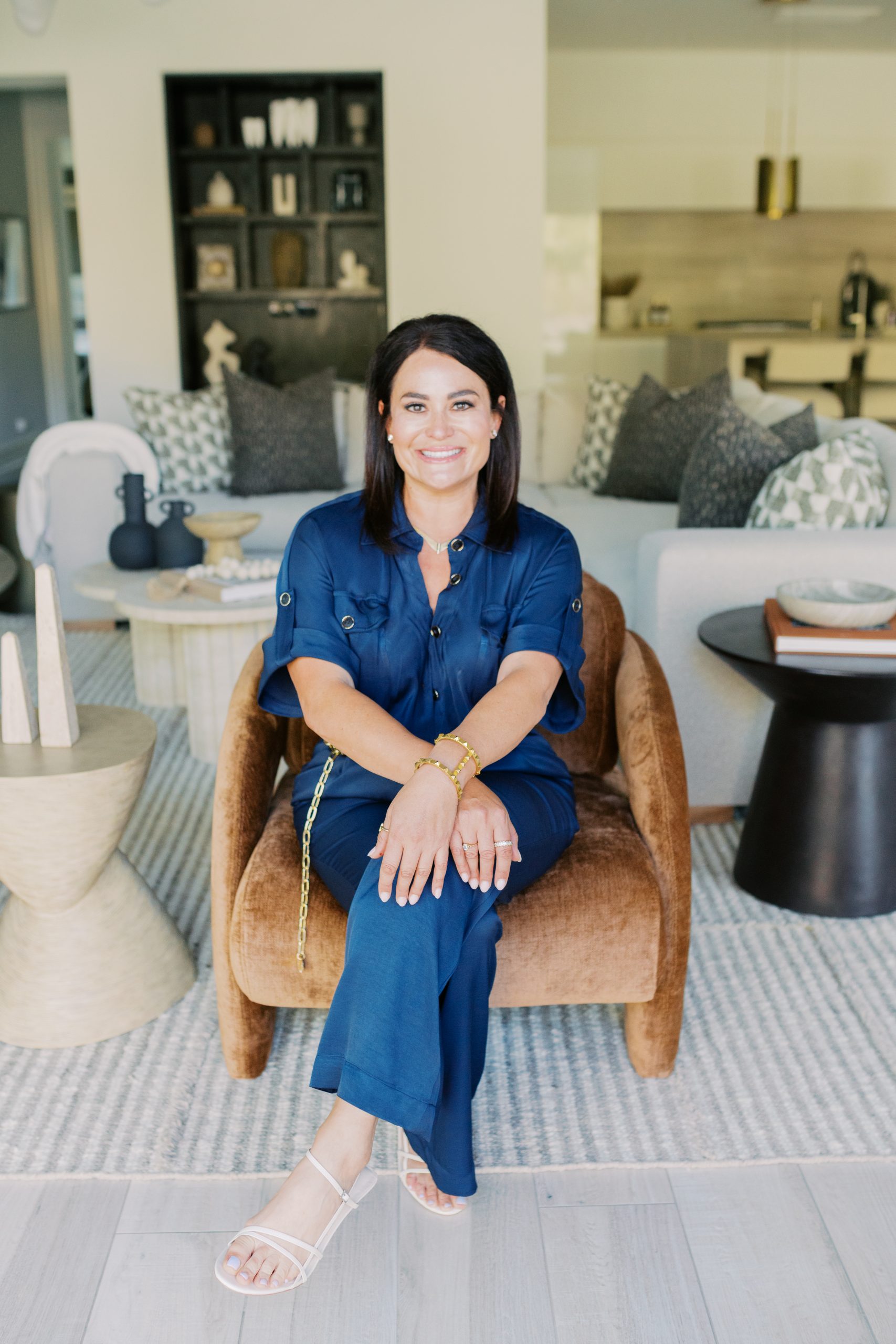
Lauren Lerner, principal interior designer at Living with Lolo

Lauren Lerner

Principal Designer, Living with Lolo

Lauren Lerner is a luxury interior designer based in Scottsdale, AZ and the founder of Living with Lolo. Her work has been featured in Architectural Digest, House Beautiful, Vogue, Martha Stewart Living, The Wall Street Journal, and GQ. She specializes in high-end residential design across Scottsdale, Paradise Valley, Arcadia, and the greater Phoenix metro area.

What Questions Should You Ask a Luxury Interior Designer Before You Hire Them?

What Questions Should You Ask a Luxury Interior Designer Before You Hire Them?

The clients who end up with the best projects are usually the ones who asked the most direct questions before signing anything. Not because asking hard questions makes the process adversarial , it does the opposite. It establishes that you are a thoughtful client and gets both parties aligned on expectations before the work begins. After more than a decade running projects in Scottsdale and Paradise Valley, these are the questions I would want prospective clients to ask me.

Questions About Credentials and Accountability

Are you a licensed general contractor, or do you work with one? The answer tells you who is legally accountable for the construction portion of your project. If the designer works with a contractor they recommend, those are two separate businesses. When something goes wrong during the build, you need to know exactly who owns the problem. Ask for the ROC license number and verify it at roc.az.gov.
Who pulls the permits on my project? Permits are pulled by the licensed contractor, not by an unlicensed designer. If the answer is "our contractor partner" rather than "we do," you have two firms sharing your project. That creates coordination gaps that cost you money.
Who will be on site during construction? A designer whose involvement ends at the drawing stage is not managing your build. The designer should be present during construction to make real-time decisions that protect the design intent as field conditions arise.

Questions About Process and Communication

How do you handle change orders? Every renovation encounters the unexpected. How a firm responds to that reality reveals more about how the project will run than any other question. A clear, fair, well-documented change order process is a sign of a professionally run firm. Vagueness here is a warning.
What is my primary point of contact and how are decisions communicated? Understand who you will actually be talking to throughout the project, how often you should expect updates, and what the process is for decisions that need a quick turnaround. Communication failures are the most common source of client dissatisfaction on renovation projects , not the design itself.
How do you manage the design process when I have competing preferences with my partner? If two people with different aesthetics are living in the home, a good designer will have a process for working through those differences rather than picking sides or defaulting to whoever is in the room. Ask about this directly.

Questions About the Work Itself

Can I see completed projects , not renderings or in-progress work? Finished homes, professionally photographed, at a comparable scope and finish level to what you are planning. Ask specifically whether the projects shown were ones the firm designed AND built, or only designed. There is a meaningful difference.
What is a realistic budget range for my scope? A designer who will not give you a budget range before signing is not doing you a service. You need to know whether your budget and their project minimums are aligned before either of you invests time in a design direction. We give clients a realistic range on the first call.
What do you see as the primary design challenge or opportunity in my home? The answer tells you whether the designer has thought specifically about your project or is giving you a generic pitch. A designer who has walked your space and can speak to its specific constraints and potential is someone who has been paying attention.

Questions About Fees and Contract Structure

What is included in your design fee and what triggers additional charges? Understand how revisions are handled, whether additional design meetings cost extra, and what happens if the scope changes after the contract is signed. Clarity on this upfront prevents friction later.
Do you mark up materials and furniture, and how does that work? Most design firms mark up trade-priced items. The question is not whether this happens but how transparent the firm is about it. A firm that is clear about their markup structure is easier to budget around than one that is vague.

I have been answering these questions from prospective clients for over a decade. The ones who ask the right questions upfront end up with better projects. The ones who skip due diligence and choose based on portfolio photos alone often regret it. These are the questions I would want you to ask me, and I am prepared to answer every one of them. , Lauren Lerner, Living with Lolo

Ready to ask us these questions directly?

A discovery call is 30 minutes and completely free. We will answer everything on this list and give you a realistic read on your project.

Book a Discovery Call

What a real design walkthrough with our clients looks like:

Frequently Asked Questions

What is the first question I should ask a luxury interior designer?

Ask to see projects that are similar in scope and style to what you want, and ask how the designer handled specific challenges on those projects. A portfolio with beautiful photos is expected. What separates good firms is how they talk about problems and how they solved them.

How do I know if a luxury interior designer is right for me?

Beyond portfolio fit, look for clear communication about process, honest answers on budget and timeline, and evidence that they have done projects like yours before. A firm that listens more than it pitches in the first meeting is typically a better long-term working relationship.

What is the difference between a designer and a design-build firm?

A designer handles the aesthetic planning and specification but passes construction to a separate general contractor. A design-build firm, like Living with Lolo, handles both under one roof. This matters when accuracy of execution is as important as the design concept itself.

Should I interview multiple interior designers?

Yes, especially for whole-home or significant renovation projects. Most firms offer a free or low-cost discovery call. Talking to two or three firms gives you a basis for comparison on both working style and fee structure.

Ready to Transform Your Home?

Lauren Lerner and the Living with Lolo team work with clients across Scottsdale, Paradise Valley, Arcadia, and the greater Phoenix metro area.

Book a Discovery Call

Two of the most important questions on this list relate directly to licensing. Read our full breakdown of what an Arizona general contractor license covers and which construction projects legally require a licensed GC to pull permits. If you are also trying to understand what the right firm will cost before your first conversation, our luxury interior design cost guide gives you real numbers from completed Scottsdale and Paradise Valley projects. When you are ready to start that conversation, you can book a complimentary discovery call with our team.

Lauren Lerner, principal interior designer at Living with Lolo

Lauren Lerner

Principal Designer, Living with Lolo

Lauren Lerner is a luxury interior designer based in Scottsdale, AZ and the founder of Living with Lolo. Her work has been featured in Architectural Digest, House Beautiful, Vogue, Martha Stewart Living, The Wall Street Journal, and GQ. She specializes in high-end residential design across Scottsdale, Paradise Valley, Arcadia, and the greater Phoenix metro area.

What to Expect During a Whole-Home Remodel in Scottsdale

What to Expect During a Whole-Home Remodel in Scottsdale

A whole-home remodel is the most complex residential project most people will ever undertake. It involves more decisions, more moving parts, more trades, and more opportunities for things to go sideways than any single-room project. The clients who navigate it well share one characteristic: they understood what was coming before demolition started.
I have managed hundreds of remodels in Scottsdale, Paradise Valley, and Arcadia. What follows is an honest account of what each phase looks like, what the common friction points are, and what you can do to minimize stress without micromanaging the process.

Phase One: Discovery and Design Agreement

Before any design work begins, the right firm will spend time understanding what you actually want. Not just the aesthetic , the lifestyle. How do you use the kitchen? Do you entertain formally or informally? Do your kids do homework at the island? Does your primary bath need to function for two people on the same schedule every morning? The answers to these questions drive design decisions that no amount of looking at inspiration images can substitute for.
This phase should also produce a realistic budget conversation. On a whole-home remodel in Scottsdale or Paradise Valley at the luxury level, budgets typically range from $300,000 to over $1 million depending on scope, finishes, and structural changes. A designer who will not give you a budget range at this stage is not serving you well. You need to know whether your number and their scope are aligned before either of you invests weeks in a design direction.

Phase Two: Space Planning and Specification

This is where the design work happens , floor plans, material selections, finish specifications, furniture sourcing, and detailed drawings. Expect multiple presentations and revision rounds. Good design takes iteration, and firms that rush this phase produce work that looks rushed.
On a Living with Lolo project, the construction team reviews drawings during this phase before anything is finalized. Specifications that would create problems during the build , a tile that requires a substrate not in the original budget, a cabinet dimension that conflicts with a duct run , are caught and resolved here rather than on site. This is one of the core structural advantages of working with a firm that holds both design and contractor credentials.

Phase Three: Permitting and Pre-Construction

In Scottsdale, plan review for a typical whole-home remodel takes four to eight weeks. Paradise Valley has its own review process with its own timeline. This phase also involves finalizing subcontractor schedules, placing orders for long-lead items (custom cabinetry, stone slabs, specialty fixtures), and confirming material lead times so that nothing is missing when the trades need it on site.
Long-lead items are the most common source of construction delays. On a luxury project, custom cabinetry typically takes ten to fourteen weeks from order to delivery. Stone slabs need to be selected from a yard or fabricator. Specialty lighting can take six to ten weeks. All of this needs to be ordered before demolition begins, not after. Firms that do not have a rigorous procurement process routinely hold up construction waiting for materials that should have been ordered months earlier.

Phase Four: Construction

Demolition is the moment the project becomes real for most clients, and also the moment it temporarily looks its worst. The home will look like a disaster for weeks before it starts looking like a design. This is normal. What is not normal is going weeks without a meaningful update from your project team, or arriving at an inspection to find work done differently than you approved.
On a well-managed project, the construction phase runs in a predictable sequence: demo and rough framing, then rough mechanical (plumbing, electrical, HVAC), then inspections, then insulation and drywall, then finish work (tile, cabinetry, millwork, flooring), then fixture installation and paint. Each trade has a window. When scheduling is tight and trades overlap, quality suffers. The project manager's job is to keep the sequence clean.

Phase Five: Installation and Styling

The installation phase is when the vision becomes visible again. Furniture arrives, lighting goes in, accessories are placed. For clients who have been living through construction, this phase produces the emotional payoff that makes the process worth it. It typically takes one to two weeks for a whole-home project.
At Living with Lolo, no project is considered complete until a full styling appointment has been done and every detail has been attended to. Pillows adjusted, art hung at the correct height, surfaces dressed with the right objects in the right relationships. The photography that documents our work only happens after this final layer is complete. A home that is "mostly done" is not done.

I have managed hundreds of remodels across Scottsdale, Paradise Valley, and Arcadia. The projects that go smoothly share one trait: the client understood what was coming before demolition started. The ones that become stressful almost always trace back to misaligned expectations in the early weeks. This guide is written to make sure that does not happen on your project. , Lauren Lerner, Living with Lolo

Planning a Scottsdale or Paradise Valley remodel?

We can walk you through a realistic timeline and budget for your specific scope on a discovery call. No obligation.

Book a Discovery Call

What the planning phase of a Scottsdale remodel actually looks like:

Frequently Asked Questions

What is the typical timeline for a whole-home remodel in Scottsdale?

A whole-home remodel in Scottsdale typically takes 6 to 12 months from first design meeting to final installation, depending on scope. The design and procurement phase takes 2 to 3 months, permitting adds 4 to 8 weeks in most Scottsdale and Paradise Valley jurisdictions, and construction runs 3 to 6 months for a full-home project.

What are the phases of a whole-home renovation?

A well-managed renovation moves through five phases: discovery and design agreement, space planning and specification, procurement and permitting, construction, and final installation and styling. At Living with Lolo, all five phases are handled by the same team so nothing falls between the cracks.

Do I need to move out during a whole-home remodel?

For most whole-home remodels involving significant demolition or kitchen and primary bath work, living in the space during construction is genuinely difficult. We have clients who manage it in phased projects, but for full-home renovations we typically recommend planning to be out for the core construction phase.

What is the most stressful part of a home remodel and how do you avoid it?

The most stressful phase is usually mid-construction, when the space looks at its worst and the timeline feels uncertain. The best protection is a detailed project schedule established before demolition starts, and a team that communicates proactively rather than waiting for you to ask. This is why having design and construction with one firm makes such a difference.

Ready to Transform Your Home?

Lauren Lerner and the Living with Lolo team work with clients across Scottsdale, Paradise Valley, Arcadia, and the greater Phoenix metro area.

Book a Discovery Call
Lauren Lerner, principal interior designer at Living with Lolo

Lauren Lerner

Principal Designer, Living with Lolo

Lauren Lerner is a luxury interior designer based in Scottsdale, AZ and the founder of Living with Lolo. Her work has been featured in Architectural Digest, House Beautiful, Vogue, Martha Stewart Living, The Wall Street Journal, and GQ. She specializes in high-end residential design across Scottsdale, Paradise Valley, Arcadia, and the greater Phoenix metro area.

Luxury Scottsdale Interior Design for Busy, High-Performing Professionals

Luxury Scottsdale Interior Design for Busy, High-Performing Professionals

Most of my clients in Paradise Valley and North Scottsdale are not sitting around waiting for design inspiration to strike. They are running companies, managing demanding careers, traveling constantly, and making decisions at a pace most people cannot keep up with. The last thing they need is a design project that becomes another full-time job. That is exactly why full-service design exists, and it is exactly what Living with Lolo was built to deliver.
My work has been featured in House Beautiful, Architectural Digest, and Vogue, often specifically because of how it functions for high-performing people who need their home to work for them, not require work from them. That distinction matters. A beautiful home that demands constant coordination, tracking, and decision-making from its owner is not a successful project. It is a liability dressed up as an asset.

What "Full-Service" Actually Means for a Busy Client

The term gets used loosely, so let me be specific about what it means here. At Living with Lolo, full-service means you are not managing vendors, chasing schedules, or approving individual line items on a weekly basis. You give input at the right moments: the conceptual direction, the major material selections, and the final walkthrough. Everything in between is handled by us.
That includes sourcing, procurement, contractor coordination, permit tracking, site supervision, installation sequencing, and delivery logistics. If a tile shipment is delayed, we solve it. If a subcontractor needs to reschedule, we adjust. You do not get a call at 7 a.m. asking whether you want the grout line at 1/16 or 1/8 inch. Those decisions are made within the scope of the approved design, by the people you hired to make them.
For clients who have tried to manage a project themselves, or who have worked with designers who did not provide this level of infrastructure, the difference is significant. The project moves faster, the decisions are better, and the outcome is closer to what was intended from the start.

Designing for a Life That Moves Quickly

The homes I design for high-performing professionals have to hold up to real use. That means storage systems that are actually functional, not just beautiful on a shelf. It means lighting that transitions well from early mornings to late evenings. It means a primary suite that genuinely restores energy rather than just looking expensive. The aesthetic and the function are designed together, from the beginning.
Scottsdale and Paradise Valley attract a particular kind of client: financially successful, aesthetically aware, and completely unwilling to compromise on quality. What they are often less certain about is how to translate that into a home that reflects their life without requiring their constant attention to maintain it. That is the problem I solve on every project.
A home office that supports deep work. A kitchen that is actually set up for the way the family uses it, not the way a floor plan convention suggests it should be. Outdoor spaces that function across Arizona seasons, not just in October. These are not details, they are the whole point. If you want to understand how this comes together in practice, the full remodel process walkthrough goes deeper on what each phase involves.

Why the Design-Build Model Works for This Client Profile

High-performing clients do not want to manage two separate relationships, one with a designer and one with a contractor, and reconcile their disagreements on their own time. The design-build model eliminates that problem entirely. Design and construction are coordinated under one roof, which means decisions are made once, communicated clearly, and executed without the friction of competing priorities.
As a licensed general contractor in Arizona, I oversee both the design process and the construction phase. That is not common. Most interior designers hand off to a contractor and hope for the best. I stay involved through installation because that is where the design either holds together or falls apart. Material tolerances, site conditions, and unforeseen structural realities all require real-time design judgment. Having one firm responsible for both phases means those moments get handled correctly.
If you are weighing the options, the comparison of design-build versus hiring separately is worth reading before you make a decision.

What the Approval Process Looks Like in Practice

Clients who travel frequently or work long hours worry that a design project will require constant availability they do not have. In practice, the approval process is structured to respect your time. Major decisions, the overall concept, finish palette, furniture selections, and layout, happen in focused review sessions, not in a continuous stream of small choices that interrupt your day.
We use a documented approval process with clear turnaround windows so nothing stalls because of a scheduling conflict. If you are traveling internationally and need to review a proposal, that happens asynchronously, on your schedule, with enough context that you can make a confident decision without being on-site.
The goal is that your involvement is meaningful, not constant. You are making the decisions that shape the home. We are handling everything required to execute them.

The Result Is a Home That Reflects Who You Actually Are

There is a version of luxury design that produces homes that look impressive but feel generic. That is not what the clients I work with are after, and it is not what I am interested in building. The homes I design in Scottsdale, Paradise Valley, and Arcadia reflect the specific person who lives there: their taste, their habits, their aesthetic point of view, and the way they actually want to move through the space.
That kind of specificity requires a designer who asks the right questions early, listens carefully, and has the experience to translate a high-level vision into real architectural and material decisions. It also requires a client who trusts the process and is willing to invest in getting it right. When both sides of that equation are present, the outcome is a home that holds up for years, not just for the photoshoot.
If you are ready to talk through what a project for your home could look like, reach out here and we can start with a conversation about scope, timeline, and fit.

Many of my clients in Paradise Valley and North Scottsdale are running companies, managing demanding careers, or traveling regularly. They do not have time to manage a design project, and they should not have to. My work has been featured in House Beautiful, Architectural Digest, and Vogue, often specifically because of how it functions for high-performing people who need their home to work for them, not require work from them. — Lauren Lerner

Busy schedule, high standards?

That is exactly who we work best with. Let us handle everything.

Book a Discovery Call

What a home designed for high performance actually looks like:

Frequently Asked Questions

Can I hire an interior designer if I am not available to manage the project?

Yes. A full-service design-build firm like Living with Lolo is specifically designed for clients who cannot or do not want to manage the project themselves. We handle every decision, every vendor, and every phase. Your involvement is focused on key approvals at the right moments, not day-to-day project management.

What does hands-off interior design look like?

It means your designer handles all sourcing, scheduling, site coordination, and installation. You receive a clear brief at the start, give approval on the design direction, review a finalized concept, and show up to a completed home. The firm manages everything in between, including problem-solving during construction.

Ready to Transform Your Home?

Lauren Lerner and the Living with Lolo team work with clients across Scottsdale, Paradise Valley, Arcadia, and the greater Phoenix metro area.

Book a Discovery Call
Lauren Lerner, principal interior designer at Living with Lolo

Lauren Lerner

Principal Designer, Living with Lolo

Lauren Lerner is a luxury interior designer based in Scottsdale, AZ and the founder of Living with Lolo. Her work has been featured in Architectural Digest, House Beautiful, Vogue, Martha Stewart Living, The Wall Street Journal, and GQ. She specializes in high-end residential design across Scottsdale, Paradise Valley, Arcadia, and the greater Phoenix metro area.

Before & After: From Chaos to Calm in a Paradise Valley Home

Before & After: From Chaos to Calm in a Paradise Valley Home

When this Paradise Valley family in the 85253 zip code reached out to us, they were not chasing Pinterest perfection. They were craving peace. Their luxury home had great bones, sweeping views of iconic Camelback Mountain, and plenty of square footage typical of homes in this exclusive Arizona community, but no flow, no identity, and no real sense of comfort.
With three kids, a demanding career, and a space full of leftover furniture that did not match Paradise Valley's sophisticated standards, they needed more than a makeover. They needed a comprehensive design strategy that would work for their busy family lifestyle while reflecting the caliber expected in Paradise Valley's luxury real estate market.

The Challenges We Solved

Every project starts with an honest assessment of what is not working. In this home, the challenges were layered. The layout felt disjointed, with rooms that were visually and emotionally disconnected despite the home's premium location and Camelback Mountain views. Furniture from a past life was undersized, outdated, and lacking the intentional design that luxury homes demand. There was no clear design direction, even though the family knew they loved warm, transitional styles that complement Arizona's desert environment. And sensory overload from mismatched finishes, poor lighting that did not account for Arizona's intense sun, and a lack of softness made the home feel anything but calm.
They did not need more stuff. They needed a cohesive vision that honored their lifestyle, and a skilled Arizona design team to bring it to life while building long-term value in the 85253 luxury market.

The Living With Lolo Process

Step 1: Deep Listening and In-Home Discovery

We started with a comprehensive one-hour consultation at the home, walking the space with Camelback Mountain views in mind and listening carefully to understand how this family wanted to live. We aligned on their priorities: calm, livable luxury that matches Paradise Valley standards.

Step 2: Strategic Space Planning and Investment Clarity

We reimagined the floor plans with scale, flow, and function specifically designed for Paradise Valley's luxury lifestyle. Then we delivered a customized Minimum Furniture Investment Plan tailored to maximize ROI in the competitive 85253 luxury real estate market. For those curious about what full-service design investment looks like in this market, our guide to luxury interior design costs in Scottsdale is a helpful starting point.

Step 3: Layered, Intentional Design for Arizona Desert Living

Our team created a tonal, textural palette that softened the entire home while complementing the natural desert surroundings. Custom drapery designed to filter Arizona's intense sunlight while framing Camelback Mountain views brought visual calm throughout. Statement lighting replaced harsh glare with warm glow, perfectly suited to Paradise Valley's bright environment. Carefully selected furnishings brought sophisticated elegance without clutter, and hidden storage with multifunctional spaces honored this busy family's real life while maintaining the luxury aesthetic expected in Arizona's premier community.

Before and After Highlights

The Living Room

Before: An oversized sectional, clunky media console, and no clear personality despite the home's prime Paradise Valley location.
After: A sculptural sofa in performance fabric, custom cabinetry that conceals tech while showcasing the dramatic desert views, layered lighting designed for Paradise Valley's bright natural light, and warm styling that matches the sophistication expected in the 85253 area.

The Entryway

Before: Wasted space, mismatched pieces, and a layout that blocked the iconic Camelback Mountain view.
After: An airy, welcoming foyer anchored by statement lighting and refined furnishings that frame the dramatic Arizona desert sunset, creating an impressive first impression that matches Paradise Valley's luxury home standards.

The Dining Room

Before: A dark, cramped, and forgettable space that did not match the caliber expected in luxury homes with stunning views.
After: A stylish dual-purpose dining room featuring elegant grasscloth wallpaper, hidden storage, and sophisticated design that creates the perfect atmosphere for both dinner parties and after-school projects.
Transformations like this one are the reason we do what we do. If your home has the bones but not the feel, let's talk about what is possible. You can also explore our full range of design services to see how we approach projects of every scope.

This Paradise Valley project is a good example of what a well-calibrated redesign looks like: not a demolition, but a thoughtful rethinking of what the space was doing and what it could do instead. The clients needed a home that felt calmer and more intentional without losing its warmth. The work involved layout adjustments, a complete material refresh, and very deliberate choices about what to keep and what to replace. — Lauren Lerner

Interested in a redesign of your Paradise Valley or Scottsdale home?

A discovery call is the right first step to understand what your space needs and what the path forward looks like.

Book a Discovery Call

From unresolved to intentional — what a redesign actually involves:

Frequently Asked Questions

What does a before and after redesign project look like with Living with Lolo?

A redesign project starts with a detailed assessment of what is working and what is not — layout, material palette, lighting, proportion. We identify what to keep, what to replace, and what to add. The design phase produces a clear concept before anything is ordered or installed. The result is a space that feels completely transformed without necessarily touching the structure.

Do you need to do a full renovation to transform a room in Paradise Valley?

Not always. Some of the most significant transformations come from re-specifying materials, adjusting the furniture layout, improving lighting, and introducing the right textiles. A skilled designer can make a room feel entirely different without breaking down walls.

Ready to Transform Your Home?

Lauren Lerner and the Living with Lolo team work with clients across Scottsdale, Paradise Valley, Arcadia, and the greater Phoenix metro area.

Book a Discovery Call
Lauren Lerner, principal interior designer at Living with Lolo

Lauren Lerner

Principal Designer, Living with Lolo

Lauren Lerner is a luxury interior designer based in Scottsdale, AZ and the founder of Living with Lolo. Her work has been featured in Architectural Digest, House Beautiful, Vogue, Martha Stewart Living, The Wall Street Journal, and GQ. She specializes in high-end residential design across Scottsdale, Paradise Valley, Arcadia, and the greater Phoenix metro area.

Living With Lolo Named Best Interior Design Firm, One to Watch 2025 by Modern Luxury

Living With Lolo Named Best Interior Design Firm, One to Watch 2025 by Modern Luxury

Modern Luxury named Living with Lolo a Best Interior Design Firm and One to Watch for 2025, and I want to be honest about what that kind of recognition actually means in practice. Awards matter to me because they matter to my clients. When someone is investing $500,000 or $2 million in their home, they deserve to work with a firm that has been vetted by more than one source. Editorial and industry recognition is part of that vetting. But the recognition itself is not the point. The work is.
This is the third consecutive year Living with Lolo has been named Best Interior Design by Phoenix Magazine, making us the only firm to hold that distinction three years running in recent award history. Add the Modern Luxury recognition, and the consistent thread is the same: the projects hold up to scrutiny because the process behind them is rigorous.

What Consistent Recognition Actually Reflects

I have worked in the Scottsdale and Phoenix metro luxury market for over a decade. In that time, the level of design sophistication here has increased dramatically. Clients in Paradise Valley and Arcadia are not comparing their homes to national averages. They are comparing them to what they have seen in Architectural Digest, House Beautiful, and Vogue. That raises the bar for every firm operating in this market, including mine.
When a publication like Modern Luxury or Phoenix Magazine evaluates firms, they are looking at portfolio range, project scale, editorial placements, and client outcomes. Winning once is meaningful. Winning three consecutive years means the quality is not coming from one standout project. It is coming from a repeatable standard applied across every engagement.
My team works across a wide range of project types, from full custom builds in DC Ranch to condominium furnishing projects in Old Town Scottsdale. The standard we hold ourselves to does not shift based on budget. That consistency is what publications respond to, and it is what clients experience directly.

The Scottsdale Luxury Market and Why Standards Here Are High

Scottsdale and the broader Phoenix metro attract a specific kind of homeowner. Many have owned multiple properties in major markets, have existing relationships with designers in other cities, and bring real design literacy to the process. They are not starting from scratch. They know what they want and they know what a high-quality outcome looks like.
That environment pushes firms to operate at a genuinely competitive level. It is not enough to have good taste. You need rigorous project management, reliable contractor relationships, knowledge of local permitting and construction timelines, and the ability to deliver on time and on scope. The design is the visible result. The process underneath it is what makes the design possible.
Living with Lolo holds a general contractor license, which means we do not hand clients off to a third party when construction begins. We manage the full scope: design, permitting, construction, and installation. That integrated approach is part of why our projects photograph well and function well. Learn more about how permits and contractor work are handled in Arizona if you are planning a project and want to understand what to look for in a firm.

Press, Editorial, and What It Tells You About a Firm

Over the past several years, Living with Lolo has been featured in Architectural Digest, House Beautiful, Vogue, Martha Stewart Living, The Wall Street Journal, and GQ. Each of those placements involves an editorial team making an independent judgment about whether the work is worth publishing. That is a meaningful filter.
When you are hiring a designer for a significant project, the press history is one signal among several. It tells you the work is visually strong enough to compete at a national level. Combined with award recognition, client referrals, and a transparent process, it gives you a fuller picture of what a firm is actually capable of delivering.
I am proud of every placement and every award. What I am more proud of is that the clients behind those projects have referred their neighbors, their friends, and their family members. That chain of referrals is the real measure.

What This Means for Prospective Clients

If you are in the early stages of planning a remodel or new build in the Scottsdale area, award recognition and press history are useful starting points for evaluating any firm, including ours. But I would encourage you to go further. Look at the range of projects, not just the most photogenic ones. Ask about the process, not just the outcome. Ask who will be in the room on your project and what their involvement looks like week to week.
We book several months in advance, so if you are targeting a 2025 or 2026 project start, the time to have an initial conversation is now. You can review our full services to understand the scope of what we handle, or reach out directly to start that conversation. And if budget planning is part of your process, our 2026 Scottsdale remodel cost guide is a useful reference for understanding what luxury-tier projects typically require in this market.
Three years of Best Interior Design recognition is something I am genuinely grateful for. The goal for the next three years is exactly the same as it has always been: do the work right, on every project, every time.

Being recognized three years in a row is not something I set out to plan. It is the result of doing the work right, every project. My team and I hold ourselves to the same standard on a condominium furnishing project as on a $2 million whole-home remodel. The recognition follows from that consistency more than from any single project. — Lauren Lerner

Work with the recognized leader in Scottsdale luxury interior design.

Three consecutive Phoenix Magazine awards. National press in Architectural Digest and House Beautiful. One discovery call to start.

Book a Discovery Call

Frequently Asked Questions

Has Living with Lolo won awards for interior design?

Yes. Living with Lolo has been named Best Interior Design by Phoenix Magazine three consecutive years: 2024, 2025, and 2026. The firm has also been featured in Architectural Digest, House Beautiful, Vogue, Martha Stewart Living, The Wall Street Journal, and GQ, and was named to the Inc. Regionals fastest-growing companies list.

What award did Living with Lolo win three years in a row?

Phoenix Magazine Best Interior Design. The award recognizes the top interior design firm in the greater Phoenix metro area and is based on reader and editorial recognition. Living with Lolo is the only firm to win three consecutive years in the most recent history of the award.

Ready to Transform Your Home?

Lauren Lerner and the Living with Lolo team work with clients across Scottsdale, Paradise Valley, Arcadia, and the greater Phoenix metro area.

Book a Discovery Call
Lauren Lerner, principal interior designer at Living with Lolo

Lauren Lerner

Principal Designer, Living with Lolo

Lauren Lerner is a luxury interior designer based in Scottsdale, AZ and the founder of Living with Lolo. Her work has been featured in Architectural Digest, House Beautiful, Vogue, Martha Stewart Living, The Wall Street Journal, and GQ. She specializes in high-end residential design across Scottsdale, Paradise Valley, Arcadia, and the greater Phoenix metro area.

Living With Lolo Wins Phoenix Magazine Best of the Valley Interior Design Firm 2024 & 2025

Living With Lolo Wins Phoenix Magazine Best of the Valley Interior Design Firm 2024 & 2025

For two consecutive years, Living With Lolo has been named Best of the Valley Interior Design Firm by Phoenix Magazine, a testament to our community-driven approach, desert modern expertise, and unwavering commitment to creating personalized, luxury spaces across Arizona.
This recognition is a reflection of our clients' trust, our team's consistency, and our role as a leading force in the Phoenix and Scottsdale interior design scene.

Why Phoenix Magazine's Award Matters

Unlike editorial or panel-selected honors, Phoenix Magazine's Best of the Valley winners are chosen directly by the people: residents who have experienced our work firsthand. That is what makes this back-to-back award so meaningful. It is a genuine vote of confidence from the community we are proud to serve.

2024: Establishing Design Authority

In 2024, Living With Lolo earned our first Best of the Valley recognition. At that point, we had built a reputation for being undeniably luxurious. That win celebrated a growing portfolio across Scottsdale and Paradise Valley, a design process rooted in function and not just flair, rapid brand recognition thanks to referral-based growth, and Arizona-specific problem-solving built into every design decision.

2025: Proving It Was Not a Fluke

Winning again in 2025 solidified what our clients already know: this is not a trend, it is a standard. The second win proved scalable service without sacrificing quality, a refined repeatable process that works for large-scale builds and small-space updates alike, a team built to serve more clients while maintaining a boutique-level touch, and continued leadership in Arizona's evolving interior design market.

Why Phoenix Chooses Living With Lolo

Authentic, Client-First Design

We do not design showpieces. We design homes. Our work is built around how real people live, entertain, relax, and grow in the Arizona desert. That means functional luxury that supports everyday living, personalized aesthetics rooted in our clients' lives rather than cookie-cutter trends, and smart material selections designed for durability, beauty, and low-maintenance performance in extreme climates.

Arizona Expertise That Makes a Difference

From UV-resistant materials and cool-touch surfaces to HOA compliance and desert-adapted design decisions, we know what works here and what does not. That expertise is part of every project from day one.

What Clients Love the Most

Clients consistently point to hands-on creative leadership from Lauren throughout the entire process, proactive communication so clients always know where things stand, design education and empowerment so every decision feels informed rather than rushed, and flexible service offerings ranging from full-home builds to room refreshes.
Curious what a full-service project actually costs? Our guide to luxury interior design costs in Scottsdale breaks down what clients typically invest at different project scopes. And if you are wondering what the process looks like from start to finish, our overview of what to expect during a whole-home remodel walks through every phase.
We are grateful to every client, collaborator, and member of this community who voted and who trusted us with their homes. If you are ready to start a project of your own, we would love to hear from you.

Phoenix Magazine's Best of the Valley award reflects real community recognition, not industry self-promotion. The fact that readers in this market keep coming back to Living with Lolo as the answer to who does this best here is what I am most proud of. This is a city where the standards are high and the clients know the difference. — Lauren Lerner

Ready to work with Phoenix's recognized best interior design firm?

Three wins. One team. Let us talk about your project.

Book a Discovery Call

Frequently Asked Questions

What is the Phoenix Magazine Best of the Valley award?

Phoenix Magazine's Best of the Valley recognizes excellence across categories in the greater Phoenix metro. The interior design category recognizes the top design firm in the region based on reader and editorial selection. Living with Lolo has won this award for three consecutive years.

Where is Living with Lolo based?

Living with Lolo is based in Scottsdale, Arizona and serves clients throughout Scottsdale, Paradise Valley, Arcadia, Phoenix, and the greater Phoenix metro area.

Ready to Transform Your Home?

Lauren Lerner and the Living with Lolo team work with clients across Scottsdale, Paradise Valley, Arcadia, and the greater Phoenix metro area.

Book a Discovery Call
Lauren Lerner, principal interior designer at Living with Lolo

Lauren Lerner

Principal Designer, Living with Lolo

Lauren Lerner is a luxury interior designer based in Scottsdale, AZ and the founder of Living with Lolo. Her work has been featured in Architectural Digest, House Beautiful, Vogue, Martha Stewart Living, The Wall Street Journal, and GQ. She specializes in high-end residential design across Scottsdale, Paradise Valley, Arcadia, and the greater Phoenix metro area.

Stunning Desert Modern Home Tour: Interior Designer Lauren Lerner’s Scottsdale Oasis

Stunning Desert Modern Home Tour: Interior Designer Lauren Lerner’s Scottsdale Oasis

Desert modern is one of those design styles that looks simple from the outside and turns out to be one of the most technically demanding aesthetics to execute well. The restraint required is real. Every material, every finish, every piece of furniture has to earn its place, because in a space defined by warm neutrals and natural texture, there is nowhere to hide a bad decision. This home tour is a walk through one of the projects I am most proud of, not because it is the largest we have done, but because every element is exactly where it should be.
The home sits in North Scottsdale, positioned to capture views of the desert preserve to the east and the McDowell Mountains to the north. The architecture was already strong when we came on board. Our job was to build an interior that responded to the Sonoran Desert landscape rather than competing with it. That orientation guided every decision from the flooring to the furniture scale to the window treatment approach. Scottsdale's particular quality of light, the way it moves from warm morning gold to a flatter afternoon diffusion, is not something most out-of-market designers plan around. We do.

The Foundation: Material Palette and Why It Matters

We started, as we always do, with the material palette. Desert modern lives or dies on this decision. The palette here was built on three anchors: a warm limestone-look large-format porcelain for the floors, a riven natural stone for the kitchen island and primary bath, and whitewashed white oak for the cabinetry and custom millwork. Everything else, the soft goods, the lighting, the hardware, was selected to support those three elements rather than introduce new visual variables.
The porcelain runs continuously from the entry through the main living areas and into the primary suite, with only a threshold shift to mark the bedroom boundary. That continuity does a lot of work spatially. It keeps the eye moving and makes the square footage read larger than it is. More importantly, it responds to how the Arizona light moves through the house across the day. In the morning, the eastern exposure warms the stone tones. By afternoon, the diffused western light flattens everything into something quieter. Both readings are beautiful, and they were both considered during selection.
The white oak cabinetry was milled with a tight linear grain and finished in a wire-brushed whitewash that gives it texture without heaviness. I specified it flat-front with integrated hardware pulls, which keeps the surface clean and lets the material speak for itself. This is the kind of detail that separates a well-executed desert modern kitchen in Scottsdale from one that reads as a generic contemporary renovation.

Furniture Scale and the Desert Modern Living Room

One of the most common mistakes I see in attempts at this style is furniture that is either too small for the architecture or too busy in its forms. Desert modern architecture in the Scottsdale and Paradise Valley area tends toward generous ceiling heights and open volumes. Furniture needs to be proportional to that scale. In this living room, we worked with a large sectional in a bouclé fabric the color of dried desert grass, anchored by a custom concrete-top coffee table and flanked by two linen-upholstered accent chairs.
The sectional is large enough to fill the room without crowding it. The concrete table has weight and permanence without visual heaviness. The chairs introduce a secondary texture that plays against the bouclé. None of it is precious or fragile, which matters in a home that is actually lived in. Desert modern in Arizona should feel grounded and comfortable, not like a furniture showroom.
Lighting in this space is a combination of a custom woven pendant over the dining table, recessed lighting on a dimmer system, and a series of sculptural ceramic table lamps. The woven pendant is the one piece with real visual presence. Everything else stays quiet. That hierarchy is intentional. In a room with strong natural light and strong views across the Scottsdale desert, you do not want the artificial lighting competing for attention.

The Primary Suite: Where the Style Lands Best

The primary suite is where this aesthetic has its fullest expression. The bedroom has floor-to-ceiling windows on two walls, which means the North Scottsdale desert preserve is always present. The material palette carries through from the main living areas, with the same oak millwork on a custom built-in wardrobe wall and the same stone on the fireplace surround. The bed is a low-profile platform design in natural linen with a solid headboard, no tufting, no nailheads, just form and fabric.
The primary bath is a full gut renovation. We opened the shower to curbless entry, installed a floating double vanity in the same wire-brushed oak, and used a book-matched slab of natural travertine on the shower walls and floor. Travertine is a material that performs particularly well in the Arizona climate: it handles temperature variation, reads warm under the desert light, and gets better looking with age. The result reads completely differently from the sleek surfaces you find in a conventional luxury bath, and that difference is the point. If you are thinking through a similar renovation in Scottsdale or Paradise Valley, our guide on what to expect during a Scottsdale remodel walks through the full process in detail.

What This Project Demonstrates About Desert Modern Done Right

The homes I see that attempt desert modern and fall short tend to share a few characteristics. The material palette is too varied. The furniture scale is inconsistent. The connection to the Sonoran Desert landscape is an afterthought rather than the organizing principle. Getting the style right in a Scottsdale home requires making those decisions in sequence and holding them consistently across every room.
This project worked because the architecture gave us a strong starting point and the clients were aligned on the vision from the first conversation. They understood that restraint was the point, that the home would get its richness from material quality and spatial clarity rather than from layering in more elements. That alignment made every decision easier and the result more coherent.
If you are interested in what this kind of project involves from a design and construction standpoint, our services page outlines how we approach full-scope residential projects in Scottsdale, Paradise Valley, and the broader Phoenix metro. And if budget is part of your planning process, our 2026 remodel cost guide gives a realistic picture of what luxury-tier work in the Scottsdale market requires. I am happy to talk through any of it directly. Reach out here to start a conversation.
Desert modern is one of those design styles that looks simple from the outside and turns out to be one of the most technically demanding aesthetics to execute well. The restraint required is real. Every material, every finish, every piece of furniture has to earn its place, because in a space defined by warm neutrals and natural texture, there is nowhere to hide a bad decision. This home tour is a walk through one of the projects I am most proud of, not because it is the largest we have done, but because every element is exactly where it should be.
The home sits in North Scottsdale, positioned to capture views of the desert preserve to the east and the McDowell Mountains to the north. The architecture was already strong when we came on board. Our job was to build an interior that responded to the landscape rather than competing with it. That orientation guided every decision from the flooring to the furniture scale to the window treatment approach.

The Foundation: Material Palette and Why It Matters

We started, as we always do, with the material palette. Desert modern lives or dies on this decision. The palette here was built on three anchors: a warm limestone-look large-format porcelain for the floors, a riven natural stone for the kitchen island and primary bath, and whitewashed white oak for the cabinetry and custom millwork. Everything else, the soft goods, the lighting, the hardware, was selected to support those three elements rather than introduce new visual variables.
The porcelain runs continuously from the entry through the main living areas and into the primary suite, with only a threshold shift to mark the bedroom boundary. That continuity does a lot of work spatially. It keeps the eye moving and makes the square footage read larger than it is. More importantly, it responds to how the light moves through the house across the day. In the morning, the eastern exposure warms the stone tones. By afternoon, the diffused western light flattens everything into something quieter. Both readings are beautiful, and they were both considered during selection.
The white oak cabinetry was milled with a tight linear grain and finished in a wire-brushed whitewash that gives it texture without heaviness. I specified it flat-front with integrated hardware pulls, which keeps the surface clean and lets the material speak for itself. This is the kind of detail that separates a well-executed desert modern kitchen from one that reads as a generic contemporary renovation.

Furniture Scale and the Desert Modern Living Room

One of the most common mistakes I see in attempts at this style is furniture that is either too small for the architecture or too busy in its forms. Desert modern architecture tends toward generous ceiling heights and open volumes. Furniture needs to be proportional to that scale. In this living room, we worked with a large sectional in a bouclé fabric the color of dried desert grass, anchored by a custom concrete-top coffee table and flanked by two linen-upholstered accent chairs.
The sectional is large enough to fill the room without crowding it. The concrete table has weight and permanence without visual heaviness. The chairs introduce a secondary texture that plays against the bouclé. None of it is precious or fragile, which matters in a home that is actually lived in. Desert modern should feel grounded and comfortable, not like a furniture showroom.
Lighting in this space is a combination of a custom woven pendant over the dining table, recessed lighting on a dimmer system, and a series of sculptural ceramic table lamps. The woven pendant is the one piece with real visual presence. Everything else stays quiet. That hierarchy is intentional. In a room with strong natural light and strong views, you do not want the artificial lighting competing for attention.

The Primary Suite: Where the Style Lands Best

The primary suite is where this aesthetic has its fullest expression. The bedroom has floor-to-ceiling windows on two walls, which means the desert is always present. The material palette carries through from the main living areas, with the same oak millwork on a custom built-in wardrobe wall and the same stone on the fireplace surround. The bed is a low-profile platform design in natural linen with a solid headboard, no tufting, no nailheads, just form and fabric.
The primary bath is a full gut renovation. We opened the shower to curbless entry, installed a floating double vanity in the same wire-brushed oak, and used a book-matched slab of natural travertine on the shower walls and floor. The travertine is warm and imperfect in the way that only natural stone can be. It reads completely differently from the sleek surfaces you find in a conventional luxury bath, and that difference is the point. If you are thinking through a similar renovation, our guide on what to expect during a Scottsdale remodel walks through the full process in detail.

What This Project Demonstrates About Desert Modern Done Right

The homes I see that attempt desert modern and fall short tend to share a few characteristics. The material palette is too varied. The furniture scale is inconsistent. The connection to the landscape is an afterthought rather than the organizing principle. Getting the style right requires making those decisions in sequence and holding them consistently across every room.
This project worked because the architecture gave us a strong starting point and the clients were aligned on the vision from the first conversation. They understood that restraint was the point, that the home would get its richness from material quality and spatial clarity rather than from layering in more elements. That alignment made every decision easier and the result more coherent.
If you are interested in what this kind of project involves from a design and construction standpoint, our services page outlines how we approach full-scope residential projects. And if budget is part of your planning process, our 2026 remodel cost guide gives a realistic picture of what luxury-tier work in the Scottsdale market requires. I am happy to talk through any of it directly. Reach out here to start a conversation.

This project is one of the clearest examples I have of what happens when desert architecture and organic modern design sensibility come together in the right way. Every material choice was driven by how it would interact with the Arizona light and the desert landscape visible from every room. The result is a home that reads differently at 7am than it does at 7pm, which is exactly what this style is capable of when it is done well. — Lauren Lerner

Designing a Scottsdale or Paradise Valley home in the desert modern aesthetic?

This is a style we work in constantly in this market. Let us talk about your project.

Book a Discovery Call

What a primary suite designed as a genuine retreat looks like:

Frequently Asked Questions

What is desert modern interior design?

Desert modern is an aesthetic that combines the warm, natural material palette of the desert — stone, wood, clay, organic textiles — with clean contemporary architecture and minimal ornamentation. It is not the same as mid-century modern, which is more geometric. Desert modern is specifically rooted in the landscape, climate, and light conditions of the Sonoran Desert.

What makes a home feel desert modern vs. generic modern?

The difference is in the material palette and the relationship to the landscape. Desert modern uses warm neutrals rather than cool grays, natural textures rather than polished surfaces, and organic forms rather than hard angles. The design responds to the specific light, heat, and visual character of the desert rather than following a generic contemporary template.

Ready to Transform Your Home?

Lauren Lerner and the Living with Lolo team work with clients across Scottsdale, Paradise Valley, Arcadia, and the greater Phoenix metro area.

Book a Discovery Call
Lauren Lerner, principal interior designer at Living with Lolo

Lauren Lerner

Principal Designer, Living with Lolo

Lauren Lerner is a luxury interior designer based in Scottsdale, AZ and the founder of Living with Lolo. Her work has been featured in Architectural Digest, House Beautiful, Vogue, Martha Stewart Living, The Wall Street Journal, and GQ. She specializes in high-end residential design across Scottsdale, Paradise Valley, Arcadia, and the greater Phoenix metro area.

The Hidden ROI of Full-Service Interior Design in Scottsdale & Paradise Valley

The Hidden ROI of Full-Service Interior Design in Scottsdale & Paradise Valley

The question comes up on almost every first call with a prospective client: is this worth it? What is the return on a design investment at this level? It is a fair question, and I respect clients who ask it directly rather than dancing around it. The honest answer is more nuanced than a percentage, but it is also more in favor of the investment than most people expect going in.
The design fee is almost always the smallest significant line item on a high-end project. Materials, construction labor, furniture, lighting, and custom millwork dwarf it. But the decisions made during the design phase determine how every one of those dollars gets spent. A design that gets it right from the start protects the entire budget. A design that improvises its way through construction will spend that budget twice.

The Cost of Getting Design Wrong

Most budget overruns on residential projects do not come from unexpected structural discoveries or material price increases, though those happen too. They come from design decisions that were made too quickly, without enough information, and then had to be reversed mid-construction. A kitchen layout that looked fine in a 2D plan but does not actually work with the appliance configuration. A tile selection that was approved without confirming lead time, then substituted under pressure. A lighting plan that was figured out after the drywall was closed.
Every one of those scenarios costs money in rework, delays, and rush fees. And every one of them is preventable with thorough design work done before construction begins. That is what full-service design buys: the rigor to get decisions right the first time, so the construction budget goes toward building what was designed rather than fixing what was not thought through.
If you want to understand how this plays out in a complete project budget, the 2026 Scottsdale remodel cost guide breaks down typical line items and where the real budget exposure tends to live.

Resale Value in the Scottsdale and Paradise Valley Market

Well-executed interior design consistently adds measurable value in this market. Kitchen and primary bathroom renovations, done at a level appropriate to the home's price point and neighborhood, return strong value at resale. Improvements to indoor-outdoor flow, which is a primary driver of buyer interest in Scottsdale and Paradise Valley, can meaningfully affect both list price and time on market. Whole-home renovations aligned with the luxury buyer profile in this area perform even better, particularly when the design is cohesive rather than pieced together over time.
The specific return depends on neighborhood, current market conditions, and how well the renovation was executed relative to comparable properties. A renovation done at the wrong level for the neighborhood, either over-improved or under-improved relative to the local comp set, will not return its full value. That calibration is part of what experienced design guidance provides: understanding what the market for this specific home, on this specific street, in this specific price range actually rewards.
Homes that have been featured in publications tend to perform well at resale as a secondary effect. Work that was distinctive enough to attract editorial attention from Architectural Digest, House Beautiful, or regional publications tends to be distinctive enough to attract serious buyers.

The Lived Return: What Good Design Does Daily

Resale value is real, but it is not the return most of my clients are optimizing for. They plan to live in these homes for years, sometimes decades. The more immediate ROI is in how the home functions every day. A primary suite that actually restores energy. A kitchen that works the way the family actually cooks. A home office that supports focus. An outdoor space that gets used twelve months a year because it was designed for Arizona's climate, not just styled for a photoshoot in October.
These are not soft benefits. The quality of your environment affects the quality of your thinking, your relationships, and your energy. High-performing clients in Paradise Valley and North Scottsdale understand this intuitively, which is why they take the design investment seriously. A home that works well for the people who live in it is a material return on the investment, measured in how you actually feel in the space every morning.

Where the Design Fee Actually Goes

Full-service design fees at the luxury level typically run 8 to 15 percent of total project cost. That includes design development, construction documentation, permit coordination, contractor oversight, sourcing, procurement, and installation management. It is not a fee for making selections and handing you a mood board. It is a fee for running the project with the expertise and infrastructure to protect your total investment.
The alternative, attempting to manage design and construction coordination without professional design infrastructure, is a risk calculation. Some clients can manage it. Most underestimate how much time and expertise it requires. The clients who come to us having tried to do it themselves are often very specific about what they wish they had known at the start.
For context on what different service models cost and what they include, this breakdown of luxury design fees in Scottsdale is a useful reference. And if you are weighing whether to hire a design-build firm versus managing design and construction separately, that comparison is worth reading before you make a decision.

The Decision That Protects Everything Else

I tell clients this at the beginning of every project: the design phase is where the money is either protected or exposed. Every dollar you spend on design rigor at the front end is a dollar that does not have to be spent twice on rework at the back end. The homes that come in on budget, on schedule, and in alignment with what the client envisioned are the ones where the design was done thoroughly before a single wall was opened.
That is not a pitch for a higher fee. It is the practical reality of how construction projects work. Getting design right from the start is not a luxury extra. It is how you protect the total investment you are about to make. If you are planning a project and want to talk through the scope and what a realistic budget looks like, reach out here.

Clients ask me about ROI because they want to understand whether the investment makes sense. The honest answer is: the design fee is almost always the smallest line item on a high-end project, and the decisions made during the design phase affect every dollar spent on materials and construction. Getting design right from the start is not a luxury extra. It is how you protect the total investment. My work has been featured in Architectural Digest and House Beautiful for exactly this reason. — Lauren Lerner

Want to understand what the return on your design investment looks like?

On a discovery call, we can walk you through a realistic scenario for your specific project in Scottsdale or Paradise Valley.

Book a Discovery Call

What full-service interior design actually involves behind the scenes:

Frequently Asked Questions

Does interior design increase home value in Scottsdale?

Well-executed interior design consistently adds value in the Scottsdale and Paradise Valley market, where buyers pay premiums for quality and design quality over raw square footage. Kitchen and primary bathroom upgrades, improvements to indoor-outdoor flow, and whole-home renovations that align with the luxury buyer profile in this market typically return strong value at resale.

Is full-service interior design worth the extra cost?

For projects involving construction or significant furnishing investment, yes. The design fee is typically 8 to 15 percent of total project cost. The decisions made during that phase affect 100 percent of what is spent on materials, labor, and furnishings. A poorly designed project with a beautiful execution is still a poorly designed project. Getting design right from the start is the best protection for the rest of your budget.

What is the ROI of luxury interior design in Scottsdale?

In the Scottsdale and Paradise Valley market, the ROI of quality design comes from both resale value and lived value. Homes that are well-designed and well-executed sell faster and at stronger price points. But the more immediate return is in how the home functions for the people who live in it, which is harder to quantify and impossible to retrofit cheaply after the fact.

Ready to Transform Your Home?

Lauren Lerner and the Living with Lolo team work with clients across Scottsdale, Paradise Valley, Arcadia, and the greater Phoenix metro area.

Book a Discovery Call
Lauren Lerner, principal interior designer at Living with Lolo

Lauren Lerner

Principal Designer, Living with Lolo

Lauren Lerner is a luxury interior designer based in Scottsdale, AZ and the founder of Living with Lolo. Her work has been featured in Architectural Digest, House Beautiful, Vogue, Martha Stewart Living, The Wall Street Journal, and GQ. She specializes in high-end residential design across Scottsdale, Paradise Valley, Arcadia, and the greater Phoenix metro area.

Design Investment: Why the Right Budget Isn’t a Compromise – It’s a Strategy

Design Investment: Why the Right Budget Isn’t a Compromise – It’s a Strategy

At Living With Lolo, we do not believe in fluff. We believe in finish. That means guiding our clients through design decisions that are both beautiful and smart, rooted in their goals, lifestyle, and what they want to feel every time they walk through the door.
If you are wondering how to think about your investment for a full-service interior design project in Scottsdale or Paradise Valley, let's reframe the conversation. Whether you are in North Scottsdale's desert foothills, the heart of Old Town, or nestled in Paradise Valley's mountainside estates, the right design investment is not a compromise. It is a strategy that transforms how you live in your space every single day.

This Is a Home, Not a Shopping List

Our projects do not start with a cart. They start with clarity. From that first design consultation, we anchor the entire experience around your goals: what feels good, what needs to function better, and what would truly improve your day-to-day living in the Arizona desert.
That is why our minimum furniture investment starts at $75,000 for three or more rooms, not including construction. This is the baseline for creating a cohesive, high-functioning space where every piece plays a role and not just fills a corner.

The Truth Behind Interior Design Budgets in Phoenix

Clients often come to us after trying to DIY or piecemeal their way through a Scottsdale home renovation. It is exhausting. It is expensive. And it rarely delivers the polish or personalization they were hoping for, especially in the competitive Paradise Valley and North Phoenix markets where homes need to feel both luxurious and livable.
When we talk about investment for Phoenix-area interior design, we are really talking about intention. Quality over quantity: in the Arizona climate, buying fewer things and making them count means selecting pieces that can handle intense sun, dust, and the indoor-outdoor lifestyle that defines Valley living. Durability matters especially in high-traffic, family- or pet-friendly homes throughout Scottsdale and Cave Creek. And design that lasts means styling homes that still feel like you in five years, not just five months, which protects against the constant cycle of replacing pieces that were not chosen strategically.
For a deeper look at how these numbers break down across different project types, our 2026 remodel cost guide offers detailed pricing data across common scopes of work in the Valley.

What Your Investment Actually Buys

Based on past projects and actual cost data from our clients, most homeowners spend between $250,000 and $750,000 on furniture and decor for a full home transformation. Construction or remodels are a separate investment that can often match or exceed that, especially for luxury kitchens, spa-like bathrooms, and new builds popular throughout Paradise Valley and North Scottsdale.
Here is what those investments typically look like in a Valley home. An entry runs around $13,000 for a layered, luxurious welcome moment that sets the tone for your entire Scottsdale residence. A living room runs around $40,000 for quality upholstery, custom window treatments designed for intense desert sun, strategic lighting, and finishing details. A primary suite runs around $33,000 for a true retreat built for beauty and rest, incorporating the serene desert aesthetic that makes Paradise Valley and Cave Creek homes so special.
We guide every step, from investment planning to vendor coordination to white glove installation throughout the Phoenix metro area. If you are also navigating a construction component, understanding whether to go design-build or hire separately is one of the most important early decisions you will make.

Confidence Through Clarity

We know interior design is a luxury. And we do not take that lightly. But when it is done right, the result is more than beautiful. It is functional, timeless, and deeply personal. That is what we are here to deliver throughout the Phoenix Valley.
Ready to talk through what your project could look like? Start a conversation with our team and we will walk you through what a realistic investment strategy looks like for your home and your goals.

Clients who try to save money by cutting the design budget almost always end up spending more to correct the decisions that came from under-investing in design. The design fee is typically the smallest line item on a serious project. The decisions made during design affect every other line item. I have seen this pattern enough times that I now address it in the first meeting with any new client. — Lauren Lerner

Want to understand what the right investment looks like for your project?

We give clients straight answers on budget and scope from the first conversation.

Book a Discovery Call

What professional interior design actually involves — and why it matters:

Frequently Asked Questions

How much should I budget for luxury interior design?

For a whole-home luxury project in Scottsdale or Paradise Valley, budget 10 to 20 percent of your total project cost for design fees, depending on scope and whether construction management is included. This is not a line to cut. The design fee is what makes everything else in the budget work harder.

Is it worth spending more on interior design?

At the luxury level, yes. The question to ask is not whether to invest in design, but whether the design firm you are considering actually delivers the quality that justifies the fee. A strong design-build firm with a verified track record delivers better outcomes than a lower-fee firm that creates problems during construction.

Ready to Transform Your Home?

Lauren Lerner and the Living with Lolo team work with clients across Scottsdale, Paradise Valley, Arcadia, and the greater Phoenix metro area.

Book a Discovery Call
Lauren Lerner, principal interior designer at Living with Lolo

Lauren Lerner

Principal Designer, Living with Lolo

Lauren Lerner is a luxury interior designer based in Scottsdale, AZ and the founder of Living with Lolo. Her work has been featured in Architectural Digest, House Beautiful, Vogue, Martha Stewart Living, The Wall Street Journal, and GQ. She specializes in high-end residential design across Scottsdale, Paradise Valley, Arcadia, and the greater Phoenix metro area.

How to Hire a Luxury Interior Designer in Phoenix: A Local’s Guide

How to Hire a Luxury Interior Designer in Phoenix: A Local’s Guide

Most advice you will find online about hiring an interior designer is written for a generic national audience. It tells you to check portfolios, ask about fees, and look for good communication. That is all true, but it does not tell you anything specific about how the Phoenix and Scottsdale luxury market actually operates, and there are real differences. The contractor licensing structure in Arizona, the climate-specific design considerations, the way luxury projects are scoped and priced here, and the lead times involved at the top end of the market all have local dimensions that matter when you are making this decision.
I have been designing homes in Scottsdale, Paradise Valley, Arcadia, Gainey Ranch, and DC Ranch for over a decade. This guide is written from that experience, for homeowners who are serious about a significant project and want to understand what they are getting into before they make a call.

Understanding the Local Market Before You Start

The Phoenix metro luxury design market has changed substantially in the past decade. The level of sophistication in the client base has risen sharply, partly because of significant inbound migration from markets like Los Angeles, New York, and Chicago where design expectations are high and buyers arrive with real reference points. A homeowner who has lived in a well-designed property in Bel Air or the West Village is not easily impressed, and they know the difference between good design and great design.
That has pushed the top tier of the local design market to operate at a genuinely national level. Firms that are consistently appearing in Architectural Digest, House Beautiful, or Vogue are competing on the same quality standard as firms in any major market. When you are evaluating designers in this market, look for that editorial presence as one signal of whether the work is operating at that level.
The other market reality to understand is timing. Top-tier firms in Scottsdale and Paradise Valley are booked months in advance. If you are planning a project with a specific start date, the conversation with a designer needs to happen well before that date. Waiting until you are ready to break ground means you have already missed your window with the best firms.

What to Look for in a Luxury Designer's Portfolio

Portfolio evaluation is the most important step in the hiring process, and most people do it too quickly. You are not just looking for projects that look beautiful. You are looking for evidence that a firm can handle the scale and complexity of what you are planning, that the aesthetic range is wide enough to accommodate your vision rather than imposing a signature style, and that the work holds up across different project types.
Pay attention to the finishes and material quality in the photography. High-quality design photography can make mediocre work look better than it is, but it cannot fake the material density and spatial coherence that characterize genuinely excellent work. Look at whether the projects feel considered all the way through, not just in the hero shots. Look at the kitchens, the bathrooms, the closets, the secondary spaces. That is where the quality of a firm's process shows up most clearly.
Also look for range. A firm that only shows one type of project may be excellent in that niche, but if your vision is different from what they typically do, you want evidence they can adapt. Ask about projects that pushed them outside their comfort zone. How a firm talks about difficult projects tells you as much as the projects themselves.

Licensing, Permits, and the General Contractor Question

This is the part of the hiring process that is most specific to Arizona and most often misunderstood. In Arizona, any project involving structural changes, new construction, plumbing, electrical, or significant systems work requires a licensed general contractor. An interior designer without a GC license cannot legally manage that scope of work. If a project involves construction and the designer you hire does not hold a GC license, you will be managing a contractor relationship yourself, or the designer will be doing it in a way that creates liability for you.
Living with Lolo holds a general contractor license, which means we manage the full scope of a project from design through construction and installation. That integrated structure matters because it eliminates the coordination gap between design intent and construction execution. When the designer and the GC are the same firm, there is no translation problem. Decisions made on paper translate accurately to what gets built. Read more about how permits and contractor oversight work in Arizona for a detailed breakdown of what this means in practice.
When you are evaluating firms for any project that involves construction, ask directly whether they hold a GC license and how they handle the contractor relationship. The answer will tell you a lot about the structure of your project and your level of involvement once work begins.

Fee Structures and What to Expect Financially

Luxury interior design fees in the Phoenix metro are structured in a few different ways. Some firms charge a flat design fee. Some charge hourly. Some charge a percentage of total project cost. Some use a combination of design fee and trade markup on furnishings and materials. There is no single right structure, but the important thing is that the structure is transparent and that you understand it fully before you sign anything.
What you should be wary of is vagueness. A firm that cannot give you a clear explanation of how they charge and what you are paying for is a firm that will be difficult to work with as the project scales. Get the fee structure in writing, understand what is included and what generates additional charges, and make sure the scope of services matches what you actually need.
For context on what full-scope luxury projects cost in this market, our 2026 Scottsdale remodel cost guide gives detailed pricing benchmarks across different project types. And if you want to understand the process from first conversation through completion, our whole-home remodel guide walks through every phase.

Making the Final Decision

After you have evaluated portfolios, verified licensing, understood fee structures, and confirmed availability, the final decision comes down to fit. You will be in close communication with your designer for months or years depending on project scope. The working relationship matters. You want someone who listens before they propose, who communicates clearly under pressure, and who will advocate for the project's quality even when budget or timeline pressure pushes in the other direction.
Ask for references from completed projects at a similar scale to yours. Talk to those clients. Ask what surprised them, what they would do differently, and whether they would hire the firm again. The answers will tell you more than any portfolio image.
If you are planning a project in Scottsdale, Paradise Valley, Arcadia, or the broader Phoenix metro, I am glad to have that initial conversation. You can review our services to understand the scope of what we handle, and reach out here to schedule a call. We book months in advance, so the sooner you start the conversation, the better.

I am a luxury interior designer based in Scottsdale who has worked across Paradise Valley, Arcadia, Gainey Ranch, and DC Ranch for over a decade. This guide is written specifically for the Phoenix market because national hiring advice often does not translate to how the local design and construction industry actually works here, especially around licensing, climate-specific design considerations, and how the luxury market is structured. — Lauren Lerner

Ready to hire in Scottsdale or Paradise Valley?

A discovery call is the right next step. We will tell you honestly whether we are the right fit for your project.

Book a Discovery Call

Why having the right interior design team matters from day one:

Frequently Asked Questions

How do I find a luxury interior designer in Phoenix?

Search for firms with portfolios that match the scale and style of your project, verify whether they hold a general contractor license if your project involves construction, check their press coverage and award history, and request a discovery call to assess communication style. In the Scottsdale and Paradise Valley market, the top luxury firms maintain waiting lists and book projects months in advance, so starting your search early matters.

What should I look for in a Scottsdale interior designer?

Look for a portfolio with projects similar to yours in scope and aesthetic, direct involvement of the principal designer rather than handoff to junior staff, transparent fee structures, evidence of award recognition or editorial press coverage, and a clear explanation of how they handle permits and contractors if your project involves construction.

Should I hire a designer or a design-build firm?

If your project involves any construction, structural changes, or permits, a design-build firm that holds a GC license is typically the better choice. You get the design quality of a full-service designer plus the execution oversight of a licensed contractor under one accountable roof. For purely decorative projects without construction, a design-only firm may be appropriate.

Ready to Transform Your Home?

Lauren Lerner and the Living with Lolo team work with clients across Scottsdale, Paradise Valley, Arcadia, and the greater Phoenix metro area.

Book a Discovery Call
Lauren Lerner, principal interior designer at Living with Lolo

Lauren Lerner

Principal Designer, Living with Lolo

Lauren Lerner is a luxury interior designer based in Scottsdale, AZ and the founder of Living with Lolo. Her work has been featured in Architectural Digest, House Beautiful, Vogue, Martha Stewart Living, The Wall Street Journal, and GQ. She specializes in high-end residential design across Scottsdale, Paradise Valley, Arcadia, and the greater Phoenix metro area.

Modern Indoor-Outdoor Living in Scottsdale & Paradise Valley

Modern Indoor-Outdoor Living in Scottsdale & Paradise Valley

Arizona's climate does not just influence indoor-outdoor design, it dictates it. The orientation of the home, the depth of the overhang, the thermal mass of the flooring, the selection of fabrics that will not degrade after one summer of UV exposure: all of this gets worked out before a single furniture piece is specified. I have designed dozens of indoor-outdoor spaces across Scottsdale, Paradise Valley, and Arcadia, and the ones that hold up over time are the ones where the design started with the environment rather than starting with aesthetics and hoping the environment cooperates.
What works beautifully in a coastal California outdoor room fails in the Sonoran Desert. Materials that handle humidity do not handle 115-degree dry heat the same way. What reads as a lush, layered outdoor living space in a temperate climate can look bleached and brittle after an Arizona summer if the material selection was not done with this specific climate in mind. I take that seriously on every project, because I will see how the space is holding up when I walk by on the way to a project down the street.

Orientation and Shade: The Design Decisions That Matter Most

Before any furniture is selected or any material is specified, the first question on every indoor-outdoor project is orientation. A west-facing patio in Scottsdale receives direct afternoon sun from roughly 1 p.m. until sunset from May through September, at temperatures that make unshaded outdoor living genuinely dangerous. A south-facing pool deck gets intense midday exposure. North-facing outdoor spaces are the most livable in summer but lose winter sun that, in a cooler month, would be welcome.
The shading solution has to match both the orientation and the aesthetic of the home. Deep overhangs built into the roofline are the most architecturally integrated option and the most effective thermally, because they block high summer sun while allowing lower winter sun to penetrate. Louvered pergola systems are increasingly common in luxury Scottsdale homes because they offer adjustability: full shade when needed, full sun when wanted, and everything in between. Shade sails and retractable awnings work well as secondary solutions but rarely substitute for a primary structure in extreme exposures.
Getting this right requires coordination between the design intent and the structural reality of the home. That is where having a licensed general contractor involved in the design phase makes a real difference, because the structural implications of a deep overhang extension or a freestanding pergola need to be worked out before they are drawn, not after.

Material Selection for an Extreme Climate

Porcelain pavers have become the dominant choice for outdoor flooring at the luxury level in Arizona, for good reason. They handle UV exposure, extreme temperature swings, and thermal shock far better than most natural stone options. They are also low maintenance, which matters in a market where homes are often part-time residences or rental properties. When natural stone is the right aesthetic choice, I specify varieties with low porosity, typically granite, quartzite, or certain travertines, sealed appropriately and installed with thermal expansion gaps that account for 50-plus degree temperature variations over the course of a day.
Furniture frames in powder-coated aluminum or steel hold up well in dry heat and resist the oxidation that accelerates in higher-humidity climates. Teak performs reliably but requires maintenance commitment. Concrete furniture and planters are increasingly popular because they read as inherently desert-native, handle the climate without complaint, and have a visual weight that anchors an outdoor room in the way lighter materials sometimes cannot.
Fabrics are where I see the most shortcuts taken on lower-budget projects, and where the investment in quality pays off most visibly over time. Marine-grade and solution-dyed acrylic fabrics, brands like Sunbrella and Perennials, are not optional in this climate. Standard outdoor fabrics fade, grow mildew in the monsoon season, and break down under prolonged UV exposure faster than most clients expect. The additional cost of performance fabric is recovered entirely in the first replacement cycle you avoid.

Disappearing Glass Walls and the Indoor-Outdoor Threshold

One of the defining features of luxury indoor-outdoor design in Scottsdale and Paradise Valley is the disappearing glass wall system. Multi-panel folding or sliding glass doors that fully open an interior room to the exterior, erasing the boundary between the two spaces entirely. When this is done well, the result is genuinely transformative: a great room that functions at one scale in winter months and at a dramatically larger scale when the wall is open in spring and fall.
The design challenge is maintaining material and design continuity across the threshold. Interior flooring that transitions to exterior pavers without a visible height change or a jarring material shift. Ceiling or soffit detailing that carries from inside to outside so the eye reads the spaces as continuous. Lighting design that works in both modes, serving as interior ambient light when the wall is closed and as architectural accent light when the space opens to the night exterior. These details are what separate a well-designed indoor-outdoor room from a house that happens to have a big door.

Outdoor Kitchens and Living Areas That Actually Get Used

Covered outdoor kitchens are standard at the luxury level in this market, and the expectations for them have risen significantly in the last five years. A built-in grill and a mini refrigerator is not an outdoor kitchen anymore. What clients at this level expect is a fully equipped cooking environment: commercial-grade grill, side burners, rated outdoor refrigerator and wine storage, generous prep surface, and a thoughtfully designed layout that accounts for smoke management and the direction of prevailing winds.
The dining and lounge areas that surround the kitchen need to be sized for how the clients actually entertain. A couple who hosts large gatherings needs fundamentally different outdoor square footage and furniture configuration than a family who primarily uses the outdoor space for private daily living. I ask about this specifically at the start of every project, because the right answer shapes almost every spatial decision that follows.

Designing for the Full Arizona Year

The ultimate test of an indoor-outdoor design in Arizona is whether it gets used year-round. October through April in Scottsdale is genuinely spectacular outdoor living weather, and most spaces are designed with that in mind. But a well-designed outdoor room should function in July too, in the morning and evening hours when the heat is manageable, and it should hold up through the monsoon season without becoming a maintenance problem every August.
That means drainage design, not just drainage existence. Outdoor spaces that pool water during a monsoon storm and take days to dry fully are a persistent irritant. It means lighting design that makes the space usable after dark, when summer outdoor living actually happens. And it means furniture placement and storage strategy so the space does not require a full reset every time the weather shifts.
If you are planning an indoor-outdoor renovation and want to understand what the full project process looks like, this walkthrough of the remodel process applies directly to outdoor scope. For questions about permits and what requires GC involvement in Arizona, this post covers that specifically. And if you are ready to talk through a project, reach out here.

Arizona's climate is the defining factor in every indoor-outdoor project I design. The orientation of the home, the depth of the overhang, the choice of materials that can handle 115-degree summers — all of this gets worked out before a single furniture piece is specified. I have designed dozens of indoor-outdoor spaces across Scottsdale, Paradise Valley, and Arcadia, and the ones that hold up over time are the ones where the design accounted for the environment first. — Lauren Lerner

Designing or renovating an indoor-outdoor space in Scottsdale or Paradise Valley?

Climate-responsive design is something we build into every outdoor project. Let us talk about yours.

Book a Discovery Call

How a balcony goes from overlooked to the best room in the house:

Frequently Asked Questions

How do you design indoor-outdoor living spaces in Scottsdale?

Successful indoor-outdoor design in Scottsdale starts with orientation and shading. West and south-facing spaces need deep overhangs, louvered covers, or pergola structures to be usable in summer. Material selection must account for UV exposure and extreme temperature swings. Furniture, fabrics, and flooring choices are all driven by the specific exposure conditions of each space.

What materials work best for outdoor living in Arizona?

Materials that perform well outdoors in Arizona include porcelain pavers, natural stone with low porosity, powder-coated aluminum and steel furniture frames, marine-grade or solution-dyed acrylic fabrics, and teak or concrete. Materials that degrade quickly in this climate include most painted wood, standard outdoor fabrics not rated for UV exposure, and any stone with high water absorption that can crack in freeze-thaw cycles.

Do luxury homes in Scottsdale and Paradise Valley prioritize indoor-outdoor rooms?

Yes. Indoor-outdoor living is among the highest-priority features in the Scottsdale and Paradise Valley luxury market. Covered outdoor kitchens, disappearing glass walls, pool-adjacent living areas, and shaded lounge spaces are standard expectations at the luxury level. Designing these spaces to function year-round, not just in comfortable weather, is what separates a good outdoor space from a great one.

Ready to Transform Your Home?

Lauren Lerner and the Living with Lolo team work with clients across Scottsdale, Paradise Valley, Arcadia, and the greater Phoenix metro area.

Book a Discovery Call
Lauren Lerner, principal interior designer at Living with Lolo

Lauren Lerner

Principal Designer, Living with Lolo

Lauren Lerner is a luxury interior designer based in Scottsdale, AZ and the founder of Living with Lolo. Her work has been featured in Architectural Digest, House Beautiful, Vogue, Martha Stewart Living, The Wall Street Journal, and GQ. She specializes in high-end residential design across Scottsdale, Paradise Valley, Arcadia, and the greater Phoenix metro area.