Most of my clients in Paradise Valley and North Scottsdale are not sitting around waiting for design inspiration to strike. They are running companies, managing demanding careers, traveling constantly, and making decisions at a pace most people cannot keep up with. The last thing they need is a design project that becomes another full-time job. That is exactly why full-service design exists, and it is exactly what
Living with Lolo, Scottsdale's full-service interior design firm, was built to deliver.
My work has been featured in House Beautiful, Architectural Digest, and Vogue, often specifically because of how it functions for high-performing people who need their home to work for them, not require work from them. That distinction matters. A beautiful home that demands constant coordination, tracking, and decision-making from its owner is not a successful project. It is a liability dressed up as an asset.
What "Full-Service" Actually Means for a Busy Client
The term gets used loosely, so let me be specific about what it means here. At Living with Lolo, full-service means you are not managing vendors, chasing schedules, or approving individual line items on a weekly basis. You give input at the right moments: the conceptual direction, the major material selections, and the final walkthrough. Everything in between is handled by us.
That includes sourcing, procurement, contractor coordination, permit tracking, site supervision, installation sequencing, and delivery logistics. If a tile shipment is delayed, we solve it. If a subcontractor needs to reschedule, we adjust. You do not get a call at 7 a.m. asking whether you want the grout line at 1/16 or 1/8 inch. Those decisions are made within the scope of the approved design, by the people you hired to make them.
For clients who have tried to manage a project themselves, or who have worked with designers who did not provide this level of infrastructure, the difference is significant. The project moves faster, the decisions are better, and the outcome is closer to what was intended from the start.
Designing for a Life That Moves Quickly
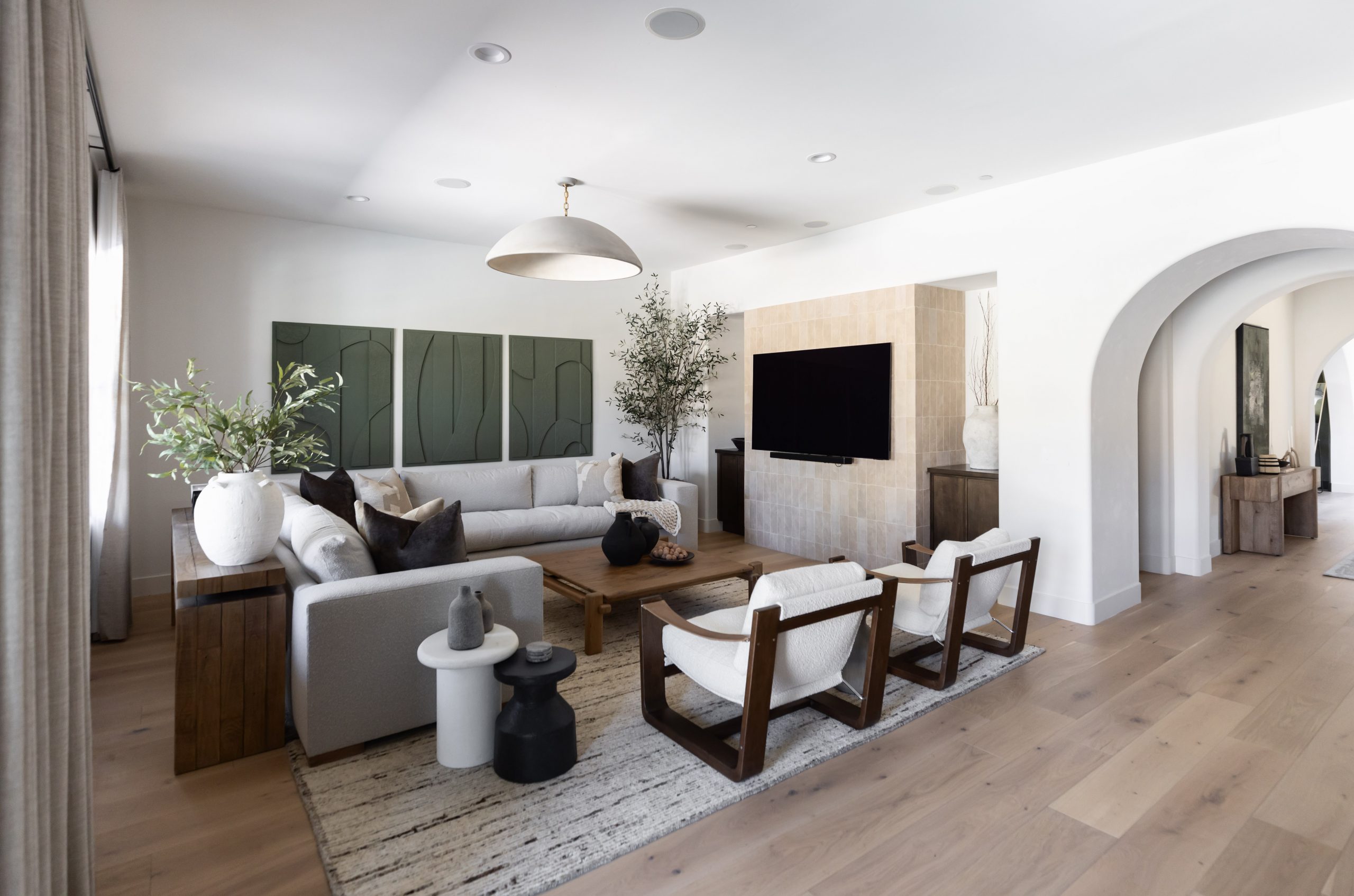
The homes I design for high-performing professionals have to hold up to real use. That means storage systems that are actually functional, not just beautiful on a shelf. It means lighting that transitions well from early mornings to late evenings. It means a primary suite that genuinely restores energy rather than just looking expensive. The aesthetic and the function are designed together, from the beginning.
Scottsdale and Paradise Valley attract a particular kind of client: financially successful, aesthetically aware, and completely unwilling to compromise on quality. What they are often less certain about is how to translate that into a home that reflects their life without requiring their constant attention to maintain it. That is the problem I solve on every project.
A home office that supports deep work. A kitchen that is actually set up for the way the family uses it, not the way a floor plan convention suggests it should be. Outdoor spaces that function across Arizona seasons, not just in October. These are not details, they are the whole point. If you want to understand how this comes together in practice, the
full remodel process walkthrough goes deeper on what each phase involves.
Why the Design-Build Model Works for This Client Profile
High-performing clients do not want to manage two separate relationships, one with a designer and one with a contractor, and reconcile their disagreements on their own time. The design-build model eliminates that problem entirely. Design and construction are coordinated under one roof, which means decisions are made once, communicated clearly, and executed without the friction of competing priorities.
As a licensed general contractor in Arizona, I oversee both the design process and the construction phase. That is not common. Most interior designers hand off to a contractor and hope for the best. I stay involved through installation because that is where the design either holds together or falls apart. Material tolerances, site conditions, and unforeseen structural realities all require real-time design judgment. Having one firm responsible for both phases means those moments get handled correctly.
What the Approval Process Looks Like in Practice
Clients who travel frequently or work long hours worry that a design project will require constant availability they do not have. In practice, the approval process is structured to respect your time. Major decisions, the overall concept, finish palette, furniture selections, and layout, happen in focused review sessions, not in a continuous stream of small choices that interrupt your day.
We use a documented approval process with clear turnaround windows so nothing stalls because of a scheduling conflict. If you are traveling internationally and need to review a proposal, that happens asynchronously, on your schedule, with enough context that you can make a confident decision without being on-site.
The goal is that your involvement is meaningful, not constant. You are making the decisions that shape the home. We are handling everything required to execute them.
The Result Is a Home That Reflects Who You Actually Are
There is a version of luxury design that produces homes that look impressive but feel generic. That is not what the clients I work with are after, and it is not what I am interested in building. The homes I design in Scottsdale, Paradise Valley, and Arcadia reflect the specific person who lives there: their taste, their habits, their aesthetic point of view, and the way they actually want to move through the space.
That kind of specificity requires a designer who asks the right questions early, listens carefully, and has the experience to translate a high-level vision into real architectural and material decisions. It also requires a client who trusts the process and is willing to invest in getting it right. When both sides of that equation are present, the outcome is a home that holds up for years, not just for the photoshoot.
If you are ready to talk through what a project for your home could look like,
reach out here and we can start with a conversation about scope, timeline, and fit.