
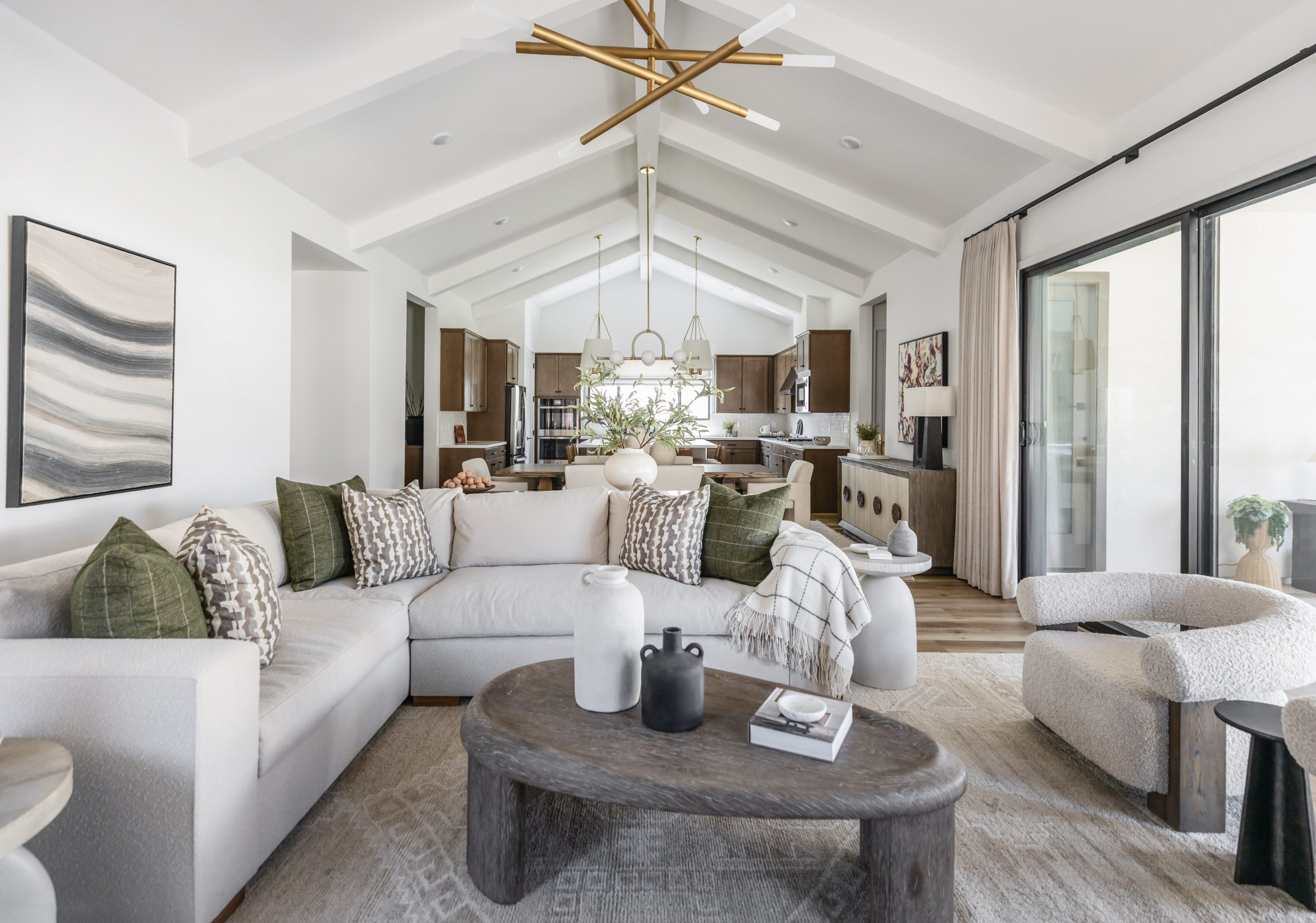
What the Data Shows About Renovation Investment in Scottsdale
To hire a luxury interior designer in Scottsdale, start by reviewing portfolios for completed projects at your scale and finish level, confirm the firm holds or works with a licensed general contractor, and verify they have a clear process for budget management before you sign anything.
For local context: Zillow data puts the average Paradise Valley home value at $3.45 million as of early 2026, up 13.5% year over year. In a market where homes carry that level of value, the design fee, typically 10 to 20 percent of the total project budget, is a small fraction of what is at stake if the project goes wrong. Hiring a designer with the credentials and proven capacity to manage your scope is risk management, not an indulgence.
Interior Design Guide
14 min read · June 2026
14 min read · June 2026
Every week I talk with homeowners who are somewhere in the process of figuring out whether to hire a designer, and if so, who. Some of them have already had a bad experience with someone who underdelivered. Some of them are doing this for the first time and have no idea how this works. Some of them have a house they love and a renovation on the horizon and they just want to get it right.This guide covers exactly what you need to know before you hire a luxury interior designer in Scottsdale. Not generic advice from a national design blog, but what actually matters in this specific market, from someone who quotes and manages projects here every week. 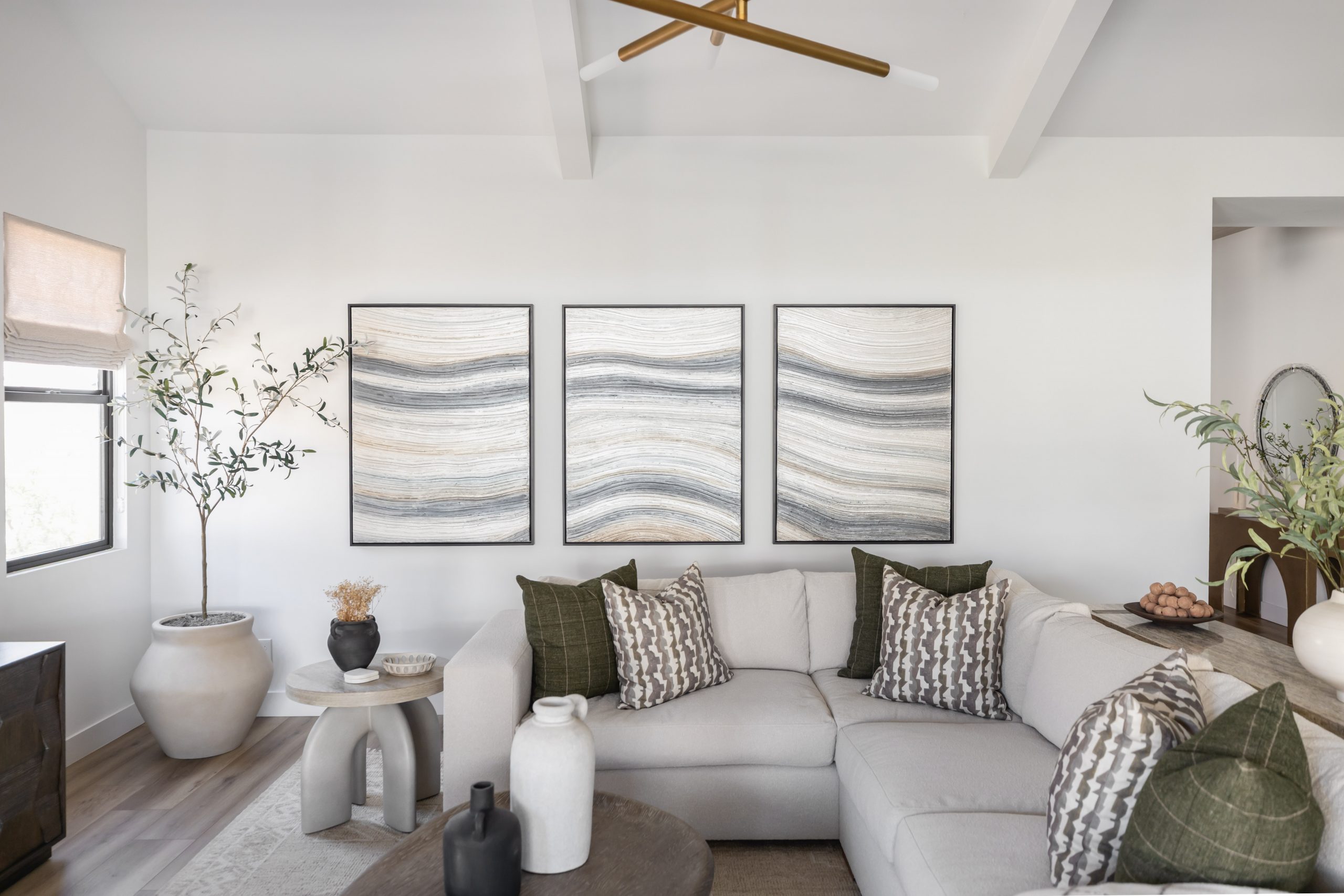 Desert Interlude is a full-home furnishing project we completed in a Scottsdale condo. Warm Contemporary in style, every room was designed with the same material choices and palette discipline, from the primary suite to the secondary bedrooms and bathrooms. When you evaluate a portfolio, that coherence is what to look for. A home where the secondary spaces feel as resolved as the main living area is the work of a firm with a real design vision, not just a collection of showpiece shots.
Step 1: Define Your Scope Before You Start Searching
The biggest mistake people make is searching for a designer before they are clear on what they actually need done. "Full redesign" is not a scope. Neither is "update the main floor." Before you start making calls, get specific.Write down the following before your first conversation with any firm:- Which rooms you plan to touch and what you want to change in each
- Whether any walls are moving, plumbing is relocating, or electrical is changing
- Whether you want furnishings included or just design and construction
- Your timeline, including any hard deadlines
- A realistic budget range, even a rough one
Step 2: Know What Credentials Actually Matter in Arizona
The title "interior designer" is not regulated in Arizona. Anyone can use it. This does not mean all designers are equal, and it does not mean credentials do not matter. It means you need to know what to look for instead of assuming a title tells you anything.For a design-only engagement, look for:- A degree in interior design from an accredited program
- Membership in ASID (American Society of Interior Designers) or IDS (Interior Design Society), which signals ongoing professional development and accountability to a code of ethics
- A portfolio that shows projects at the scale and finish level of your own home
- An active Arizona Registrar of Contractors (ROC) general contractor license held by the firm or a principal of the firm
- The ability to pull permits, manage subcontractors, and oversee licensed trades directly
- Proof of bonding and general liability insurance
Step 3: Understand How Fees Are Structured Before Your First Call
The most common source of sticker shock in the design process is not the furniture. It is the design fee, and more specifically, not understanding how it was calculated. Knowing how fees are structured before you sit down with a firm means you will not be blindsided by a proposal you were not expecting.There are three main structures luxury interior designers in Scottsdale use:Flat project fee. A set amount for a defined scope of services. This gives you budget predictability if the scope is clearly defined upfront. If the scope expands, expect the fee to change with it.Hourly rate. You pay for time. Luxury designers in Scottsdale typically charge between $150 and $350 per hour. For a complex project, hourly can become expensive and unpredictable quickly.Percentage of project cost. The design fee is calculated as a percentage of the total budget, typically 10 to 20 percent. On a $600,000 project, that is $60,000 to $120,000 in design fees before any furniture is ordered or any wall is opened.Most full-service firms use some combination, often a flat design fee plus a procurement markup on furniture and materials. Understanding this before your first conversation lets you compare proposals accurately. Two firms quoting "design fees" may be describing very different things.For a detailed breakdown of what projects actually cost in this market, see: How much does luxury interior design cost in Scottsdale?Step 4: Evaluate the Portfolio Carefully
Every firm has a portfolio. Not every portfolio tells you what you need to know. Here is how to read one.Look at scale. Does the firm work on projects comparable to yours in square footage, finish level, and complexity? A designer whose portfolio shows 2,000-square-foot condo renovations is not necessarily equipped for a 9,000-square-foot whole-home project with custom millwork throughout. The project management demands are not the same.Look at style alignment. Does their work look like what you want? A designer known for clean contemporary spaces is going to find it harder to give you warm organic modern authentically. Great designers can work across styles, but the portfolio tells you where they are most fluent and confident.Look for project depth. Do they show before-and-after, or only finished photography? Do they show projects during construction? A firm that shows only styled final photography may not have the operational experience to manage a complex build.Ask what you are not seeing. In any initial conversation, ask the firm to walk you through a project similar to yours. Ask what the challenges were. Ask how they handled them. The answer tells you more than any photograph.The right designer is not the one with the most beautiful portfolio. It is the one with the operational capacity to deliver that result for your specific project, on your timeline, at your scale.
Living area, Desert Interlude: Full Home Furnishings, Scottsdale, AZ
Step 5: What to Ask in an Initial Consultation
An initial call, whether 15 minutes or an hour, is where you determine fit. These are the questions worth asking in every conversation.Do you hold an Arizona general contractor license? If the answer is no and your project involves construction, ask directly how they intend to manage the build scope, who holds the contractor license, and how that relationship is structured contractually.Who will be my day-to-day contact? At a larger firm, you may meet the principal in the sales process and then be handed off to a junior designer. Know who you are actually hiring.Have you worked at this scale and budget before? Firms that primarily manage $80,000 projects are not always equipped for the vendor relationships, procurement complexity, and site management demands of a $700,000 renovation. Ask directly.How do you handle budget overruns? Every complex project has surprises. What matters is how they are managed and who absorbs them when they happen. The honest answer here is always more reassuring than a guarantee that surprises never occur.What does your project management process look like? Who is on site during construction? How are changes documented? How often do you communicate with clients and in what format?Can you provide references from projects at a comparable scale? References from previous clients who ran projects similar to yours are the single most useful information you can gather before signing anything.Can I speak with a client whose project finished more than a year ago? Fresh references are still in the honeymoon phase. A year of daily living reveals whether the drawer glides were worth it and whether the firm returned calls after final payment.What happens if furniture arrives damaged? At this price point the answer should be that the firm receives everything at a warehouse, inspects it, and files claims before you ever see the piece. If they ship to your garage, keep looking.Have you worked with my community's design review board or HOA? In Silverleaf, DC Ranch, and Gainey Ranch, exterior-adjacent changes go through review, and an inexperienced team can lose a full season to a rejected submittal.Step 6: Red Flags to Watch For
Some things should give you pause regardless of how compelling the initial conversation feels.No general contractor license and no clear plan for who manages construction. "I work with great contractors" is not a construction management plan. It is a referral. Know who holds the license and how decisions on site get made.A portfolio that does not show projects at your scale. Being the largest project a firm has ever managed is not a position you want to be in. Complexity compounds quickly at larger project sizes.Vague answers on fees. Any reputable firm should be able to tell you clearly how they charge, what is included in that fee, and what would cause it to change. "We will figure that out" is not a fee structure.Reluctance to provide references. References from past clients at a comparable scope should be available and offered readily. If a firm is reluctant to provide them, that warrants a direct question about why.Pressure to sign quickly. Firms that push you to commit before you have had time to review a contract, visit a completed project, or speak with a previous client are not behaving the way a trustworthy long-term partner would.Step 7: What Changes When Your Designer Also Holds a GC License
If your project involves any construction at all, the decision about whether your designer also holds a general contractor license is one of the most consequential decisions you will make in this entire process.When design and construction are handled by separate firms, you have two contracts, two contacts, and two sets of accountability. Disagreements between them about who is responsible for a problem land on you. Schedule delays caused by communication gaps cost you time and money. Finish decisions made by the contractor that do not match the design intent require expensive corrections that neither party wants to pay for.When design and construction are managed by the same firm under one contract, these friction points disappear. Your designer is your general contractor. What is drawn gets built as drawn, because the same team is accountable for both. There is no gap to fall into.At Living with Lolo, we manage design and construction under one contract for every project. We pull the permits. We manage the subcontractors. We are on site. When the project is finished, it looks like what we designed because we are the ones who built it.If you are planning a major renovation in Scottsdale, Paradise Valley, or the surrounding area and want to understand whether your project is a good fit for our process, book a complimentary discovery call here. We will give you an honest assessment of scope, timeline, and what to expect from start to finish.Ready to Talk Through Your Project?
Every project begins with a conversation. Tell us about your home, your vision, and what you want to accomplish. We will take it from there, completely. Book a Discovery CallStep 8: Time It Like a Local
People assume the desert has no construction calendar. Wrong. The best trades here book heaviest from fall through spring, when the weather is perfect and every snowbird wants their remodel done before Thanksgiving guests arrive. Monsoon season complicates exterior work in late summer, and design review boards add weeks or months to anything visible from outside the home.If you want to host in your finished house next winter, the realistic moment to hire your designer is right now, not October. The firms worth hiring are planning their fall installs by midsummer.Frequently Asked Questions
What should I look for when hiring a luxury interior designer in Scottsdale?
Look for a portfolio that matches your project scale and finish level, clear and transparent fee structures, professional affiliations like ASID or IDS, and for any project involving construction, an active Arizona general contractor license. Always ask for references from completed projects at a scope similar to yours before signing anything.How much does it cost to hire a luxury interior designer in Scottsdale?
Design fees for luxury interior design in Scottsdale typically range from $15,000 to $75,000 or more depending on project scope and whether construction management is included. This is separate from furnishings and construction costs. Total project investment for a whole-home renovation typically runs $400,000 to over $1 million in this market. See our full breakdown: How much does luxury interior design cost in Scottsdale?What credentials should a luxury interior designer in Scottsdale have?
Look for a degree in interior design from an accredited program and membership in ASID or IDS. If your project includes any construction, your designer should either hold an active Arizona ROC general contractor license or work under a firm that does. The title "interior designer" is not regulated in Arizona, so credentials require active verification.How do I know if an interior designer is the right fit?
The right fit combines portfolio alignment, clear communication, transparent pricing, and the operational capacity to manage your specific project scope. Ask about their largest completed project, their day-to-day project management process, and request at least two references from work at a comparable scale before signing.What is the difference between a luxury interior designer and a design-build firm?
A design-only interior designer specifies, sources, and manages the aesthetic scope but cannot manage construction directly or pull permits. A design-build firm holds a contractor license and manages both design and construction under one contract. For any project involving structural changes, permits, or significant renovation, a design-build firm eliminates the coordination gap between what gets designed and what actually gets built.About Living with Lolo
Living with Lolo is a Scottsdale, Arizona-based luxury interior design and construction firm. The company specializes in full-service interior design, design-build remodeling, and construction-led renovations for high-end residential homes in Scottsdale, Paradise Valley, and Phoenix. Living with Lolo manages both interior design and licensed general contracting under one roof, guiding projects from concept through construction and white-glove installation.

Lauren Lerner is the founder and principal designer of Living with Lolo, Scottsdale’s luxury interior design and licensed design-build firm. Named Phoenix Magazine Best Interior Design three consecutive years, Lauren leads projects from concept through construction for high-end homes in Scottsdale, Paradise Valley, and Phoenix.