Book a Free Consultation
We Were Featured in Forbes: Outdoor Entertaining Trends Worth Knowing

We Were Featured in Forbes: Outdoor Entertaining Trends Worth Knowing


As Seen In Forbes
Earlier this week, I got a call I always love getting. Terri Williams at Forbes was writing a piece on outdoor entertaining trends and wanted to include our perspective and our work. The article is live now, and our Bronco Revival project is featured throughout.

Why Outdoor Spaces Have Changed

For a long time, outdoor design was treated as an afterthought. You finished the inside of the house and then figured out what to do with the backyard. That is not how our clients think about it anymore, and honestly, it is not how we think about it either.
The homes we work on in Scottsdale and Paradise Valley have some of the best outdoor climates in the country. Nine months of the year, you can live outside. So the question we ask at the start of every project is: what does this family actually do out here, and what would they do if the space made it easy?
The answers drive everything: the shade structure, the cooking setup, the seating, the lighting, the flow from inside to outside. These are not decorating decisions. They are design decisions.

What We See Working Right Now

Indoor-Outdoor Continuity

The most successful outdoor spaces we design feel like a natural extension of the interior. Same material palette, same level of finish, same attention to detail. When you walk outside, it should feel like you are still in your home. That continuity is what makes a space feel intentional versus assembled.
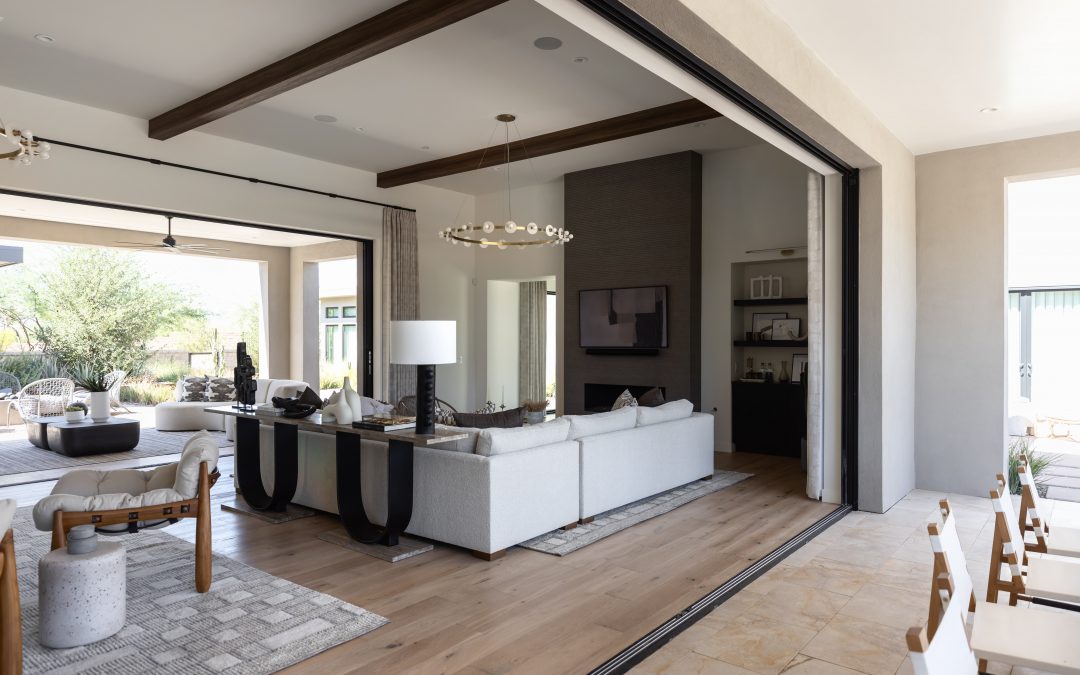
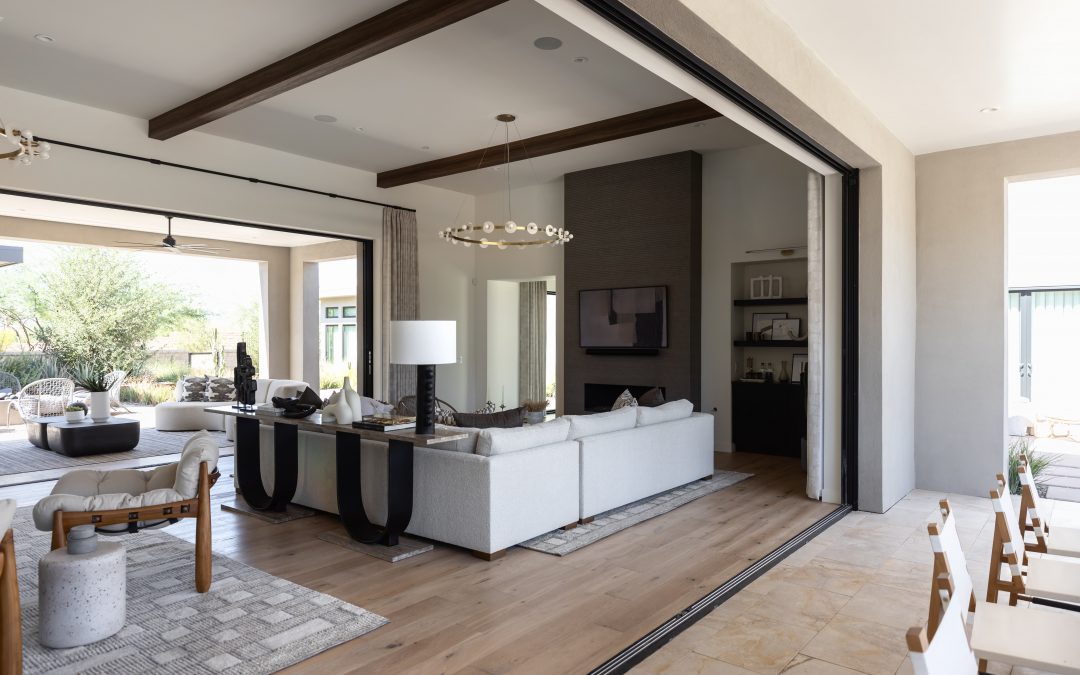
On the Bronco Revival project, we carried the warm, organic material palette from inside all the way through to the outdoor living areas. The result is a backyard that photographs beautifully but more importantly, one the clients actually use every day.

Functional Outdoor Kitchens

We have been doing outdoor kitchens for years, but what has shifted is how serious clients are about the functionality. This is not a built-in grill and a mini fridge anymore. Clients want full prep space, real appliances, smart storage, and good lighting. They want to be able to cook a full dinner outside and not feel like they are camping.

Dedicated Dining That Stays

Outdoor dining tables that feel permanent, not like patio furniture you fold up and store. Weather-resistant materials that look like something out of an interiors magazine. Good light overhead. The kind of setup where guests do not want to go inside.

Layered Shade and Overhead Structure

In Arizona, shade is not optional. But the way we are approaching it has gotten much more design-forward. Pergolas with climbing plants, fabric sails layered with fixed shade, louvered roof systems that let you control light and airflow. The overhead structure is one of the first things we design now, not one of the last.

Lighting That Changes the Mood

This is one of the biggest shifts I have seen in the last few years. Clients are investing in real outdoor lighting design: low-voltage landscape lighting, overhead bistro or string configurations, architectural uplighting on plantings and walls. Done right, lighting doubles the number of hours a space gets used.
The best outdoor spaces are designed the same way we design interiors: from how the family actually lives, not from a catalog.

The Bronco Revival Outdoor Spaces

The Bronco Revival project in Scottsdale was a full home renovation, and the outdoor spaces were central to the vision. The clients wanted a backyard they could entertain in easily, something that felt warm and modern and genuinely nice rather than trying too hard.
We designed the outdoor living and dining areas to flow directly from the interior great room, using the same material sensibility throughout. Natural textures, a restrained palette, carefully placed shade. Terri featured several of the images from this project in the Forbes piece, and we could not be prouder of how they turned out. Photography is by Stephanie Studer of Life Created.
See the full project in our Bronco Revival portfolio, and read the Forbes article here: Incorporate These Outdoor Entertaining Trends in Your Backyard Design.

Thinking About Your Own Backyard?

If your outdoor space is not living up to what it could be, whether it is underused, disconnected from the inside, or just never quite finished, this is worth a conversation. We handle outdoor design as part of full home renovations, and we manage the entire process: design, construction, landscape coordination, and installation.
Let's talk about your outdoor space.
Book a Discovery Call

We Made Inc. Best Workplaces 2026. Here’s What That Actually Means for Your Project.

We Made Inc. Best Workplaces 2026. Here’s What That Actually Means for Your Project.


Every project we take on runs through the same team. The same designer who walked your home during the discovery call is the same one presenting your design concept, managing construction, and standing in your space at final installation. That is not an accident. It is a deliberate choice, and it is one that Inc. magazine just recognized us for.Living with Lolo was named to the Inc. Best Workplaces 2026 list. The recognition is based on employee survey data, not self-nomination. Companies are evaluated on whether people actually trust the environment they work in, whether they understand their role, feel heard, and have real visibility into how decisions get made. Inc. described our recognition as being for cultivating employee trust through explicit expectations, defined decision rights, and direct feedback.That language might sound like HR-speak. But for someone hiring a design-build firm to manage a six-figure renovation of their home, it translates into something concrete.

A Team That Stays

Interior design and construction are relational in a way that most industries are not. The vendor relationships, the institutional knowledge of how a project evolved, the understanding of how a particular client communicates. None of that transfers cleanly when someone leaves mid-project. We have invested in building a team that genuinely wants to be here, and that stability shows up in how your project runs from start to finish.

Everyone Knows Exactly What They Own

Defined decision rights is a phrase that sounds corporate but matters enormously in practice. It means every person on our team has clear ownership of their piece of the project. You are not getting handoffs to someone who does not have context. The person answering your question has the authority and the information to actually answer it.

We Communicate Directly With Our Team and With You

A culture of direct feedback internally creates a firm that is willing to have honest conversations externally. We will tell you when something will not work the way you are imagining it. We will flag when a contractor's timeline is unrealistic. We will push back when a finish that looked great on the sample board will not hold up in your actual space. That same directness is what earned this recognition, and it is what our clients experience in every review meeting.This is our second Inc. recognition this year. We were also named to the Inc. Regionals Southwest 2026 list for fastest-growing private companies across Arizona, New Mexico, Oklahoma, and Texas.Two Inc. honors in the same year feels significant. But more than the recognition itself, it reflects the kind of firm we have been quietly building since 2017: one where the people doing the work take real pride in it, and where that pride shows up in every project we deliver.

Ready to Transform Your Home?

Lauren Lerner and the Living with Lolo team work with clients across Scottsdale, Paradise Valley, Arcadia, and the greater Phoenix metro area.Book a Discovery Call
Lauren Lerner, principal interior designer at Living with Lolo

Lauren Lerner

Principal Designer, Living with Lolo

Lauren Lerner is a luxury interior designer based in Scottsdale, AZ and the founder of Living with Lolo. Her work has been featured in Architectural Digest, House Beautiful, Vogue, Martha Stewart Living, The Wall Street Journal, and GQ. She specializes in high-end residential design across Scottsdale, Paradise Valley, Arcadia, and the greater Phoenix metro area.


Why Your Next Renovation Should Include a Hot/Cold Wellness Room

Why Your Next Renovation Should Include a Hot/Cold Wellness Room


June 2, 20266 min read
Of all the custom features I am designing right now, the hot/cold wellness room is the one I am working on the most. I said as much when Bob Vila asked me about the top custom home features of 2026, and I want to give you the full picture here because one paragraph does not do it justice.This is not a trend. It is a shift in how people think about their homes.

What a Wellness Room Actually Is

When most people hear "home wellness room," they picture a treadmill pushed against a wall in a spare bedroom. That is a home gym. What I am designing is something entirely different: a dedicated room built around recovery, not just exercise.A proper hot/cold wellness room typically includes an infrared sauna, a cold plunge, soft lighting on dimmer controls, natural materials like stone and wood, and ventilation designed specifically for the thermal cycling. The best ones feel more like a spa than a gym, and that is intentional.The clients who go all in are also adding red light therapy beds, hyperbaric chambers, and fully custom sauna builds with integrated sound and chromotherapy. These are not afterthoughts. They are the primary reason the room exists.

Why It Is Worth the Square Footage

The question I get most often is whether it justifies the space. My answer is always the same: it depends on whether you will actually use it.What I have observed with clients who have these spaces is that they stop treating wellness as a scheduled item and start treating it as part of how their home functions. It stops being something you have to drive to. The cold plunge is three steps from your bedroom. The sauna is ready in 20 minutes. The barrier disappears, and the routine follows.That shift in daily life is what makes it worth the square footage. A room you use every day earns its place faster than almost any other investment in a home.

What Goes Into Designing One Well

The room itself is straightforward if you plan for it early. The details that matter most:
  • Waterproofing and drainage, especially around the cold plunge. This is not optional.
  • Ventilation sized for both the sauna heat and the humidity from the cold plunge. Standard bath ventilation is not sufficient.
  • Electrical for the sauna heater, which typically requires a dedicated 240V circuit.
  • Natural materials that can handle temperature swings: teak, cedar, stone, and concrete all perform well.
  • Lighting on dimmers with a warm, low-lux option for post-plunge recovery.
  • A transition space, even a small bench area between the sauna and plunge, so the thermal cycling is intentional rather than rushed.
Where projects go wrong is when the wellness room gets treated as a finish-out item rather than a structural one. The plumbing, drainage, and electrical need to be in the plan from the beginning. Retrofitting is expensive and often impractical.

Who Is Asking for This

Across my client base in Scottsdale and the Phoenix metro, requests for dedicated wellness spaces have increased significantly in the past two years. It is not a specific demographic. I am designing these for clients in their 30s and clients in their 60s. Athletes and executives. New builds and renovations.What they share is a willingness to invest in how they feel at home, not just how their home looks. That is the broader shift I am seeing, and the wellness room is where it shows up most clearly right now.

How to Start Planning Yours

If you are in the early stages of a custom build or a major renovation, the best time to plan the wellness room is now. The structural and mechanical requirements are much easier to design in than to add later.If you are working with an existing space, a converted bedroom or a room off the primary suite both work well. The minimum functional size is around 150 square feet, though 200 to 300 gives you room to move and adds a proper transition zone.I would love to talk through what this could look like in your home.

Ready to Design Your Wellness Room?

Let's talk about your space, your goals, and what a recovery-focused room would look like in your home. Book a Discovery Call
Lauren Lerner

Lauren Lerner

Principal Designer, Living with LoloLauren Lerner is an award-winning interior designer based in Scottsdale, Arizona. Named Phoenix Magazine Best Interior Designer 2024, 2025, and 2026. As seen in Bob Vila, House Beautiful, Architectural Digest, and more.


Living with Lolo in House Beautiful: What Is a Micro-Makeover?

Living with Lolo in House Beautiful: What Is a Micro-Makeover?

Journal  /  PressAs Seen In House Beautiful

When House Beautiful reached out to include my perspective in a piece on micro-makeovers, I knew it would resonate. It is one of the most common conversations I have with clients, and one of the most misunderstood concepts in residential design.The article, What Is a Micro-Makeover?, explores how targeted, intentional updates to a single room or space can dramatically shift how a home feels, without the timeline or investment of a full renovation. My insights were featured alongside before-and-after images from a recent project, and the piece includes a backlink to Living with Lolo.

What a micro-makeover actually means

A micro-makeover is not a compromise. It is a focused edit. Instead of pulling everything apart and starting over, you identify the one or two decisions in a room that are doing the most damage to how it looks and feels, and you fix those first. For most of my clients in Scottsdale and Paradise Valley, those decisions usually come down to lighting, layering, and scale.The before-and-after work I shared with House Beautiful shows how much a room can shift when you address the right things in the right order. New furniture alone rarely transforms a space. But replace the overhead lighting, add a layer of texture through textiles, and bring in one piece at the right scale, and suddenly the room reads completely differently.

Why this approach matters for busy homeowners

Most of my clients are not looking for a year-long renovation. They want their home to feel like it reflects who they are right now, without uprooting their lives to get there. Micro-makeovers are how we do that. They are scoped tightly, executed quickly, and the results tend to be some of the most satisfying work we do together, because the transformation is immediate.I often tell clients that a home is never finished. You layer it over time, and each phase should feel intentional. A micro-makeover is just one focused layer, done well.

Read the full feature

You can read the full House Beautiful piece here: What Is a Micro-Makeover?. And if you are sitting in a room right now wondering where to even begin, that is exactly the conversation a discovery call is built for.
Curious what a micro-makeover could do for one room in your home? Let's talk.Book a Discovery Call

What Is a Micro-Makeover? The Interior Design Strategy That Actually Works

What Is a Micro-Makeover? The Interior Design Strategy That Actually Works


June 1, 20265 min read
When House Beautiful reached out about a story on micro-makeovers, I knew the concept was going to land. It comes up constantly with my clients: people who love their home on some level but feel like something is off, and they want a change that does not require six figures or a construction crew.A micro-makeover is a focused, intentional refresh of a space without a full renovation. Same bones. Same square footage. But with the right changes, the room feels entirely different.I was quoted in the piece alongside client Alyssa Rotunno, whose bedroom transformation is a perfect example of what this actually looks like. No new floors. No moved walls. Just deliberate edits that completely shifted how the room felt.

What Goes Into a Micro-Makeover?

Every room is different, but the highest-impact changes tend to fall into a few categories.

Lighting

This is almost always the single fastest way to elevate a space. Swapping a builder-grade ceiling fixture for something intentional, like a sculptural pendant or a pair of wall sconces flanking the bed, changes the entire atmosphere of a room. Most people underestimate how much bad lighting is quietly working against their space.

Textiles

Pillows, throws, window treatments, a new area rug. These add warmth, color, and texture without any permanence. They are also the easiest things to refresh as your taste evolves. If a room feels flat or cold, textiles are usually the fastest fix.

Furniture Arrangement

Most rooms are arranged incorrectly. The default setup, with everything pushed against the walls, rarely creates the best flow or conversation. A thoughtful rearrangement can make a room feel twice as large without buying a single new thing.

One New Anchor Piece

Sometimes all a room needs is one piece that pulls the whole story together. A new bed frame. A statement chair. A properly scaled side table that finally makes the lamp stop looking like it belongs somewhere else. One well-chosen piece can do more than a dozen small ones.

Art and Accessories

This is where personality lives. Edited, intentional, and layered rather than a collection of things accumulated over the years that have never been reconsidered. A micro-makeover is often an opportunity to clear out what is not working and be intentional about what stays.

Why Micro-Makeovers Work

The honest truth is that most people do not need a renovation. They need a designer to look at the space with fresh eyes and identify what is working, what is not, and what one or two changes would move the needle most.The bedroom featured in the House Beautiful story had good proportions and a strong fireplace focal point. It just needed a refined color story, updated textiles, and better lighting to read like the room it always had the potential to be. The bones were there the whole time.

Is a Micro-Makeover Right for You?

If any of these sound familiar, the answer is probably yes:
  • Your room feels fine but not special.
  • You moved in and never fully made it yours.
  • You renovated years ago and the space has not kept up with your taste.
  • You spend money on decor but the room still does not feel cohesive.
A micro-makeover is not about buying more things. It is about buying the right things, placed intentionally, in a space that has been thought through from ceiling to floor.If you are ready to stop feeling like something is off and start loving the rooms you actually live in, I would love to talk.

Ready to Transform Your Space?

A micro-makeover starts with a conversation. Let's talk about your home and figure out exactly what it needs. Book a Discovery Call
Lauren Lerner

Lauren Lerner

Principal Designer, Living with LoloLauren Lerner is an award-winning interior designer based in Scottsdale, Arizona, serving clients across the Phoenix metro and beyond. Named Phoenix Magazine Best Interior Designer 2024, 2025, and 2026. As seen in House Beautiful, Architectural Digest, and more.


Design-Build vs. Hiring a Designer and Contractor Separately: What Scottsdale Homeowners Should Know

Design-Build vs. Hiring a Designer and Contractor Separately: What Scottsdale Homeowners Should Know

When most Scottsdale homeowners begin planning a renovation or new build, they assume the process works in two distinct phases: hire an interior designer to create the vision, then hire a general contractor to build it. Two professionals. Two contracts. Two separate conversations that never quite overlap.This is still how most projects in Scottsdale are run. It is also why so many of them go over budget, miss their timelines, or deliver results that look nothing like the original design boards.At Living With Lolo, we operate as a licensed general contractor (ROC #347577) and interior designer under one roof. This post explains what that actually means for your project, and why it matters more than most homeowners realize before they sign their first contract.

How the Traditional Model Works and Where It Breaks Down

The traditional approach goes like this: you hire an interior designer to develop a concept, select finishes, and produce design drawings. Once the design is approved, you bring in a general contractor to execute it. The contractor reviews the drawings, prices the work, and manages the trades.In theory, this works. In practice, the handoff between designer and contractor is where projects unravel.The contractor has never been in the room for the design conversations. They are reading drawings cold, often weeks or months after those drawings were finalized. When they encounter a detail that does not work structurally, is not achievable on the budget, or requires a trade they do not have a relationship with, they flag it, and the project stalls while the designer and contractor negotiate.Multiply that by 40 or 50 details across a full renovation, and you begin to understand why timelines slip and budgets inflate.

What Design-Build Actually Means

A design-build firm manages both the design and the construction under a single contract, with a single point of contact. The designer and the contractor are the same entity, or at minimum, they work together from the first site visit through the final installation.This changes the entire project dynamic. When we develop a design concept at Living With Lolo, we already know what it will cost to build, which trades are available, what the lead times look like, and whether the structural requirements are achievable within the project scope. There is no handoff because there is no gap between design intent and construction reality.Our seven-step process reflects this integration, from the initial 15-minute discovery call through procurement, permitted construction, and final installation. At every stage, the design team and the construction team are operating from the same information, with the same timeline, under the same contract.

The Real Difference for Scottsdale Homeowners

Budget Accuracy

When your designer and contractor are separate, budget estimates come in at two different points: the designer estimates before the contractor has priced it, and the contractor prices it after the design is complete. The gap between those two numbers is often where projects get into trouble.With a design-build model, pricing happens alongside design. We know what materials cost, what trades charge, and what the market looks like in Scottsdale and Paradise Valley because we are active in it continuously. Our estimates are based on current conditions, not assumptions.

Timeline Reliability

The traditional model adds weeks to every decision point because two teams need to communicate, review, and agree. A tile selection that takes two days to approve with a single integrated team can take two weeks when it needs to travel between a designer, a contractor, and a homeowner waiting on both.Full-home renovations in Scottsdale typically complete in 5-6 months with an integrated team. The same scope with separate designer and contractor relationships often runs 8-12 months, not because the work takes longer, but because the coordination takes longer.

Design Integrity

When a contractor builds from drawings they received after the design was finalized, they make field decisions without the designer present. Those decisions compound. By the time the project is done, what was built can look meaningfully different from what was designed.When design and construction are integrated, the designer is active through construction, not just during the design phase. We are in the field. We are making field decisions. And those decisions honor the original design intent because we made it.

When You Might Still Use a Standalone Designer

A standalone designer makes sense when you have an existing, trusted general contractor, your project does not involve permitted construction or structural changes, and you are doing a furnishing-only scope where no trades are involved.For those projects, the coordination risk is lower and a design-build firm may be more than you need. We offer furnishing-only services ourselves for exactly this reason.But for full renovations, permitted work, new construction interiors, or any project where design decisions will affect structure, the integrated model is not a luxury. It is the logical choice.

What to Ask Before You Hire Anyone

Whether you work with us or with another firm, here are the questions that will tell you the most about how a project will actually run:
  • Are you licensed as a general contractor in Arizona, or will I need to hire a separate GC?
  • At what point in the project does the contractor see the design drawings?
  • Who is my single point of contact through construction?
  • How do you handle field decisions that deviate from the design?
  • What does your procurement process look like, and who manages vendor communication?

How Living With Lolo Approaches This

We hold Arizona General Contractor License ROC #347577. Every project we take on, from a single-room renovation in Paradise Valley to a full design-build estate in Silverleaf, is managed under one contract, with Lauren and the team active through every phase.We are selective about the projects we take. We work with a limited number of clients each year specifically because we do not hand projects off. We see them through. That requires capacity, not volume.If you are planning a renovation or build in Scottsdale or Paradise Valley and want to understand what this looks like for your specific project, the first step is a 15-minute discovery call. We review every inquiry personally and respond within 48 hours. Book your discovery call here.
Glass Front Doors: A Designer’s Honest Take on When They Work and When They Don’t

Glass Front Doors: A Designer’s Honest Take on When They Work and When They Don’t

I will be honest with you: I still specify glass front doors for clients. I have installed them, I have loved the way they look, and in the right home they make a real statement. But I have also lived with one myself, and that experience changed how I think about them. Not because they are always wrong, but because context matters enormously, and most people do not think through the full picture before they fall in love with the look.When House Beautiful asked me about design decisions I have reconsidered, my glass front door came up immediately. My own home had a front entry that sat very close to the street. We have two dogs. And a glass front door, it turned out, meant they had a full view of every person, dog, and squirrel that walked by all day long. The barking was constant. That is my specific situation, and it is not yours. But it is a useful lens for thinking through whether a glass front door actually fits the way you live.

When Your Entry Is Close to the Street, a Glass Door Changes Everything

My house is the clearest example I have. The front door is set close to the street, with no long driveway, no courtyard, no buffer between the sidewalk and the entry. A glass front door in that situation means you are essentially living in a fishbowl. Everyone walking by can see directly into your entry hall. Delivery drivers can see whether anyone is home. And if you have dogs who pick up on movement outside, you are setting yourself up for a very noisy house.Our two dogs made the problem impossible to ignore. The moment anyone walked within twenty feet of the front door, they could see movement through the glass and they responded accordingly. It was not the door's fault, exactly. It was the combination of the door and how our house sits on the lot. A different house would have been a different experience entirely.This is the first question I now ask clients when they bring up glass front doors: how close is your entry to the street, and how is it oriented? If the answer is that the entry sits far back, angled away from foot traffic, or protected by a courtyard or deep porch, a glass front door can be beautiful and completely livable. If the entry faces directly onto a busy sidewalk, think hard before you commit.

Privacy Considerations Really Do Depend on Your Specific Home

The privacy issue is not universal. I have clients in gated communities where the front entry is a long drive from any public street, or where the door faces a private motor court. In those situations, a glass front door gives you a beautiful, light-filled entry with very little real-world privacy impact. Nobody is walking past that door at any point in the day.In a more urban or close-to-street setting, it is a different calculation. Even frosted or reeded glass gives away more than people expect. Light and movement read through it. The sense that someone can see in, even if they cannot see clearly, creates a different feeling in the home than a solid door does.Frosted glass, privacy film, and textured panels all help. But they also change the look, and you are still starting from a position of less privacy and adding back some of it, rather than starting from a position of full privacy and choosing when to let light in. My advice has always been to design for how you actually live, not for how the door looks in a listing photo.
"The right door for your home depends entirely on how your house sits on the lot. Context always beats trends." Lauren Lerner, Living with Lolo

Heat and Energy Are Genuine Concerns in Arizona

In a climate like ours, a glass front door is a direct line for solar heat gain. West and south-facing entries in particular can become uncomfortably warm in the afternoon, and the heat transfers directly into your entry hall. Even high-performance glazing has limitations when the sun is bearing down on it for six or more hours a day.Beyond comfort, there is the energy cost. Your HVAC system works harder to compensate for the heat load that comes through that glass. Over the years of owning a home, that adds up in real dollars on real utility bills. I have had clients retrofit their entries after a single summer because the heat was genuinely unbearable standing at the door.If natural light in the entry is important to you, and it often is, there are smarter ways to get it. I will cover those at the end of this post.

The Maintenance Reality Nobody Talks About

Glass front doors show everything. Fingerprints from every person who has touched the door. Smudges from pets and children. Dust and pollen that settles on the exterior glass, which is especially persistent in a dusty climate like ours in Arizona. Keeping a glass front door looking clean requires consistent effort, and the entry is one of the first things guests see when they arrive.This sounds like a minor thing, but over years of ownership it adds up. I have seen clients grow genuinely resentful of a door they once loved simply because of the upkeep. A solid door, by contrast, is forgiving. A well-chosen paint color or stain holds up beautifully and requires far less attention to look good day to day.If you love the look of glass in your entry, I would much rather see you invest in beautiful hardware on a solid door and get your light through other means.

When a Glass Front Door Actually Works Well

Here is the part people do not expect me to say: I think glass front doors can be a genuinely great choice. In the right home, with the right site conditions, they deliver something a solid door simply cannot.If your entry is set well back from the street, if you have a long approach, a gated drive, a courtyard, or a deep covered porch, the privacy concern essentially disappears. You get the natural light, the visual connection to the exterior, and the drama of an entry that feels open and welcoming. In a home where the front door is not visible from a public sidewalk, a glass door is not a fishbowl. It is just beautiful design.Similarly, if your home faces north or northeast and is protected from the worst of the afternoon sun, the heat gain concern is much less significant. High-performance glazing in a well-oriented entry can actually be a smart choice that brings light without the energy penalty.No dogs that react to street movement also helps significantly, as my own house made very clear.

A solid entry door with thoughtful interior design creates an arrival moment that is just as dramatic as any glass door. Living with Lolo project, Scottsdale, AZ.

Alternatives Worth Considering

The good news is that there are beautiful alternatives that give you the light, the drama, and the curb appeal you want without the tradeoffs, regardless of your site conditions.Sidelights are my first suggestion. Flanking your door with narrow glass panels on one or both sides gives you natural light in the entry without compromising the door itself. You get the bright, welcoming look of a glass entry with a solid door at the center. The sidelights can be frosted, reeded, or textured so you get light diffusion without visibility from the street.Transom windows above the door are another excellent option. They let in daylight at a high angle, which means less direct heat gain and virtually no privacy concerns. Combined with a striking solid door, a well-designed transom can give your entry more presence than most glass doors achieve.Finally, do not underestimate what a bold paint color, exceptional hardware, or architectural detailing can do for a solid door. Some of the most memorable front entries I have designed have no glass at all. The best entries create a sense of arrival through proportion, material, and detail, not transparency. If you are working with us on a full-service interior design project in the Phoenix area, your entry is always a conversation we have early in the process.

Frequently Asked Questions

Are glass front doors a good idea?
It depends on your home's site conditions. If your front entry sits well back from the street, faces away from foot traffic, or is protected by a courtyard or covered porch, a glass front door can be a beautiful and practical choice. If your entry is close to a public sidewalk and you have dogs or value privacy, a solid door with sidelights or transom windows often works better.
What are the pros and cons of a glass front door?
Pros include natural light in the entry, strong curb appeal, and a welcoming, open feel. Cons include reduced privacy if the entry faces a public sidewalk, increased heat gain in hot climates, higher maintenance due to fingerprints and smudging, and potential security vulnerability. Whether the pros outweigh the cons depends heavily on your specific home and site.
What is a good alternative to a glass front door?
The best alternatives are sidelights (narrow glass panels flanking a solid door), transom windows above the door, or a beautifully finished solid door with exceptional hardware and architectural detailing. Sidelights and transoms deliver natural light and visual openness in the entry while keeping the door itself solid for privacy and security.
Do glass front doors make a home hotter in Arizona?
They can, particularly on west or south-facing entries. The sun's direct exposure through glass transfers heat into the entry and forces the HVAC system to work harder. North or northeast-facing entries with high-performance glazing are much less affected. Homeowners in Scottsdale, Paradise Valley, and the greater Phoenix area should consider their entry's orientation carefully before choosing a glass front door.

Ready to Design an Entry That Works for How You Live?

Lauren Lerner and the Living with Lolo team work with clients across Scottsdale, Paradise Valley, Arcadia, and the greater Phoenix metro area. Book a Discovery Call
Living with Lolo is Hiring a Construction Project Manager in Scottsdale, AZ

Living with Lolo is Hiring a Construction Project Manager in Scottsdale, AZ


We Are Hiring a Construction Project Manager in Scottsdale, AZ

Living with Lolo is a luxury interior design and construction firm based in Scottsdale, Arizona. Since 2017, we have built a reputation for doing something most firms in the Phoenix metro area cannot: we hold both an interior design credential and an active Arizona Registrar of Contractors general contractor license under one roof. That means our clients get a fully integrated design and build experience from the first concept through the final walkthrough.

We are growing and we are looking for a Construction Project Manager in Scottsdale to grow with us.

What Makes This Role Different From Other Construction Jobs in Scottsdale

This is not a typical construction PM position in the Phoenix metro area. You will not be handed off between a designer and a separate GC. At Living with Lolo, design and construction work together from day one. You will be embedded in that process, managing luxury residential projects across Scottsdale, Paradise Valley, and the greater Phoenix metro area</a>, and working directly with our design team to make sure every build reflects the standard our clients expect.

Our projects typically range from $150,000 to over $1 million. Our clients are discerning, our standards are high, and the work is genuinely interesting.

Modern kitchen with black cabinets, a large island topped with a white countertop, four wooden stools, and a potted plant centerpiece—Living with Lolo.

Brandie R.

Director of Construction, Living with Lolo, Scottsdale AZ

"I love working at Living with Lolo because there's a level of trust here that you don't find everywhere. We're given the autonomy to make decisions, move quickly, and figure things out without layers of red tape. It's a team of genuinely driven people who just own what they do, and getting to see a space fully come to life for a client, and their reaction to it, never gets old."

What You Will Do

You will manage all phases of luxury residential construction projects in Scottsdale and the surrounding Phoenix metro area from pre-construction planning through final completion. That includes budgeting, scheduling, subcontractor management, client communication, quality control, and site safety. You will work inside our project management systems, Buildertrend and Airtable, and you will have a direct hand in refining the processes and workflows that support our growth.

A few things that set this role apart from a standard construction PM position in Arizona: you will collaborate with our design team during pre-bidding to make sure selections are cost-aligned and technically feasible before a single material is ordered. You will manage a structured A/B/C trade tier system. And you will have real input into how we build and improve our construction operations over time.

Sara M.

Interior Designer, Living with Lolo, Scottsdale AZ

"I love working at Living with Lolo because we all share the same passion and end goal, which is to create and expertly execute designs for our clients homes so they can make lasting memories with their families. Working here is different from anywhere I've ever worked because Lauren is always looking to improve our systems and processes and actually follows through with urgency. This translates into our team's voices being heard and seeing something actually get done about our feedback. Simply put, LWL is truly an incredible place to work."

What We Offer

We built our benefits around how people actually want to work.

  • Unlimited paid time off and flexible hours. We care about results, not face time.
  • Remote work options. Not every day needs to be on site for a meeting.
  • Wellness reimbursement. We want our team healthy and taken care of.
  • 401k with company match. We invest in your future.
  • Opportunities to invest in our real estate development projects. This one is rare. Through our sister company, team members have the opportunity to invest alongside us in luxury residential development projects in the Scottsdale and Phoenix market.

Most construction jobs in Arizona do not come with wealth-building access like this.


Debra S.

Construction Project Manager, Living with Lolo, Scottsdale AZ

"What I enjoy most is that no two days are the same and I'm trusted to actually run my projects, not just manage tasks or a schedule. I love problem solving in real time and helping bring really thoughtful designs to life. Living with Lolo is different because the level of design and attention to detail is so high, it pushes you to do better work, and the collaboration between design and construction means everyone is aligned to create something that really feels special."

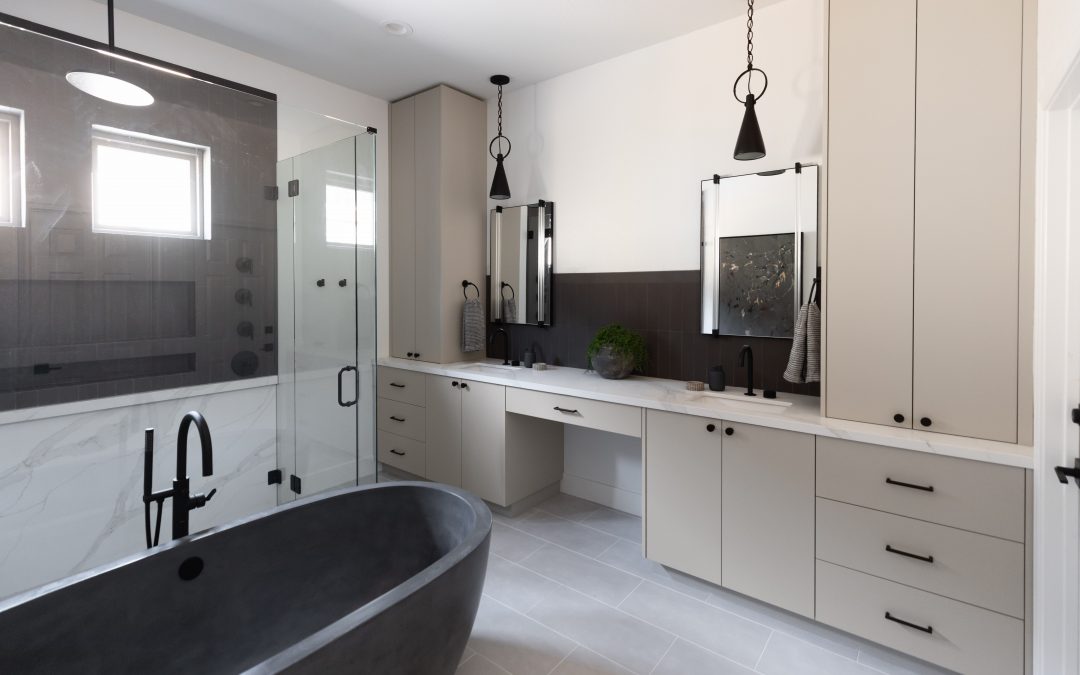
Minimalist bathroom with black tub

Who We Are Looking For

You have experience managing luxury residential construction projects in the Scottsdale or Phoenix metro area. You are organized, direct, and you take ownership. You understand that communication is as important as execution on high-end projects. You are comfortable working inside systems and also comfortable telling us when a system needs to be better.

If you have experience with Buildertrend and Airtable, that is a plus. If you do not, you are willing to learn fast.

About Living with Lolo

Living with Lolo was founded in 2017 by Lauren Lerner in Scottsdale, Arizona. We are a full-service luxury interior design and design-build firm with an active Arizona ROC general contractor license, a nine-person team, and a portfolio of completed projects across Scottsdale and Paradise Valley. Our work has been recognized by KBB, Houzz, Inc. Magazine, and Southwest Inc. Magazine.

We are not a volume builder. We care deeply about design, craftsmanship, and the people we work with, including the ones on our team.

Apply Now

To apply for the Construction Project Manager position at Living with Lolo in Scottsdale, visit the link below.

Apply for the Construction Project Manager Role at Living with Lolo

A living room with a curved white fireplace, large TV above, beige armchairs, potted plant, and windows with brown Roman shades. — Living with Lolo.

Molly O.

Executive Assistant, Living with Lolo, Scottsdale AZ

"I enjoy working at Living with Lolo because of the flexibility and hybrid work environment. I also really enjoy how collaborative the team is and how we all come together to bring our clients' projects to life."

Frequently Asked Questions

What kind of projects will I manage at Living with Lolo?

K
L

You will manage luxury residential construction projects in Scottsdale, Paradise Valley, and the greater Phoenix metro area. Projects typically range from $150,000 to over $1 million and involve close collaboration with our interior design team from pre-construction through final completion.

Is Living with Lolo a licensed general contractor in Arizona?

K
L

Yes. Living with Lolo holds an active Arizona Registrar of Contractors general contractor license in addition to our interior design credential. This dual license structure is rare among design firms in the Scottsdale market and is central to how we deliver fully integrated design and build projects.

What makes Living with Lolo different from other design build firms in Scottsdale?

K
L

Most firms either design or build. Living with Lolo does both under one roof with a single team, a single point of accountability, and an active Arizona ROC license. That means our Construction Project Manager works alongside designers from the very beginning of a project, not after decisions have already been made.

Does Living with Lolo offer remote work for the Construction Project Manager role?

K
L

Yes. While the role requires on-site presence for project management, we offer flexible and remote work options for administrative and planning work. We also offer unlimited paid time off, wellness reimbursement, and a 401k with company match.

How do I apply for the Construction Project Manager position at Living with Lolo?

K
L

You can apply by visiting the application link on this page. We review all applications and respond to qualified candidates within a reasonable timeframe.

Where is Living with Lolo located and what areas do you serve?

K
L

Living with Lolo is headquartered in Scottsdale, Arizona and serves clients across Scottsdale, Paradise Valley, and the greater Phoenix metro area. We have been operating since 2017 and have completed luxury residential projects throughout the region.

Living with Lolo is a licensed interior design and design-build firm serving Scottsdale, Paradise Valley, Arcadia, and the greater Phoenix metro area. Arizona ROC License 347577. 

Why Hiring a Licensed General Contractor and Interior Designer in Scottsdale Is the Smartest Decision You Can Make for Your Home

Why Hiring a Licensed General Contractor and Interior Designer in Scottsdale Is the Smartest Decision You Can Make for Your Home

When a major home renovation goes sideways in Scottsdale, there is almost always a version of the same story behind it. The homeowners hired a great designer and a separate general contractor, the two did not communicate well, decisions made during design did not account for construction realities, and the project ended up costing more and taking longer than anyone planned. This is not a rare occurrence. It is the default outcome when design and construction operate as separate businesses with different incentives.
Hiring a firm that holds both an interior design credential and an active Arizona contractor license changes that dynamic entirely. Here is why it is the most important decision you will make before a renovation starts.

Two Separate Firms Create Two Separate Sets of Problems

When you hire an interior designer and a general contractor as separate vendors, you become the project manager by default. Design decisions, change orders, material lead times, subcontractor schedules, permit status, and budget tracking all pass through you. Both firms are accountable to you individually, but neither is accountable to the other. That gap is where cost overruns and schedule delays live.
The designer specifies a custom tile that arrives eight weeks after it was supposed to. The GC charges for idle crew time. The homeowner absorbs the cost and the stress. This is not a failure of either firm individually. It is a structural problem with a model that separates two functions that should be integrated.

What a Licensed Design-Build Firm Actually Controls

When a single firm holds both the design credential and the contractor license, every decision gets made with full awareness of both sides. A designer who is also the GC knows whether a specification is buildable, what it will cost in labor, how it will affect the project timeline, and whether a better alternative exists at a lower cost or faster lead time. That knowledge does not exist in a siloed design practice.
At Living with Lolo, Lauren Lerner LLC holds ROC 347577, an active Arizona Registrar of Contractors general contractor license, alongside full interior design services. This means one firm designs the space, pulls the permits, manages the subcontractors, and oversees installation through completion. One contract. One point of accountability. One team that is responsible for the full outcome.

The Real Cost of Hiring Separately

Clients who hire separately often discover that the cost savings they expected from using a leaner design-only firm do not materialize. The GC charges a markup on materials. The designer charges for time spent coordinating with the GC. When a design decision requires a construction change, both firms bill for the revision. The coordination overhead is real and it accumulates across a multi-month project.
An integrated firm eliminates that overhead. Design and construction decisions are made together. Procurement is managed from one ledger. Change orders are handled internally rather than negotiated between two separate contracts. For a project in the $400,000 to $1.2 million range, the difference in coordination efficiency represents a meaningful number.

What the License Actually Means in Arizona

An Arizona ROC (Registrar of Contractors) general contractor license is not a business registration or a trade certification. It requires demonstrated financial stability, a passing score on a licensing examination, proof of insurance, and compliance with Arizona state law for all residential and commercial work. Licensed contractors in Arizona are accountable to the ROC for workmanship, code compliance, and consumer protection.
When you hire an unlicensed contractor or a design firm that partners with unlicensed labor, you lose those protections. In Arizona, homeowners who work with licensed contractors have recourse through the ROC's recovery fund if work is found to be defective or incomplete. That protection does not exist with unlicensed work. For a project in a high-value home in Paradise Valley or Scottsdale, the license is not a bureaucratic detail. It is a substantive protection for your home and your investment.

How the Integrated Model Works in Practice

The first meeting with Living with Lolo covers both design vision and construction scope. Before any design work begins, the team identifies what structural changes are required, what permits will be needed, and what the realistic cost envelope looks like for the full project. Clients leave the first meeting with a clear picture of what they are actually signing up for, not a design concept that will need to be re-evaluated once a GC gets involved.
From there, the project moves through design development, permit submission, construction, and final furnishing and installation as a single continuous workflow. No handoff between firms. No translation of design intent into construction language. The team that designed the space builds it. That integration is what makes the difference between a project that finishes on time and on budget and one that does not.
If you are planning a major renovation in Scottsdale or Paradise Valley and want to understand how an integrated design-build approach would work for your specific project, you can review the Living with Lolo process or book a consultation directly.

[/et_pb_code]

In over a decade of working in Scottsdale, Paradise Valley, and Arcadia, I have seen what happens when the design and construction sides do not communicate with each other, and I have seen what is possible when they work as one. My work has been featured in Architectural Digest and House Beautiful for exactly this kind of integrated approach. This post explains why it matters and how to find a firm that actually does it well. Lauren Lerner, Living with Lolo

Ready to discuss your Scottsdale or Paradise Valley project?

We handle design and construction under one roof, so you work with one team from first concept to final installation.

Book a Discovery Call

See how we think through every detail for our clients:

Frequently Asked Questions

What is a design-build firm?

A design-build firm handles both interior design and licensed general contracting under one roof. You work with one team from concept through final installation rather than managing two separate firms.

Is it better to hire a GC and interior designer separately?

Most clients find that separate firms create communication gaps, budget surprises, and longer timelines. When both work for the same firm, decisions happen faster and accountability is clear.

Does Living with Lolo handle both design and construction?

Yes. Living with Lolo is a full-service interior design and licensed general contracting firm based in Scottsdale, serving Scottsdale, Paradise Valley, Arcadia, and the greater Phoenix metro area.

What is the benefit of one firm handling both?

The design intent is preserved through every phase. No handoff between firms, no translation loss, no gap in accountability. Timelines and budgets are more predictable because the same team managing the specifications manages the build.

Ready to Transform Your Home?

Lauren Lerner and the Living with Lolo team work with clients across Scottsdale, Paradise Valley, Arcadia, and the greater Phoenix metro area.

Book a Discovery Call
Lauren Lerner, principal interior designer at Living with Lolo

Lauren Lerner

Principal Designer, Living with Lolo

Lauren Lerner is a luxury interior designer based in Scottsdale, AZ and the founder of Living with Lolo. Her work has been featured in Architectural Digest, House Beautiful, Vogue, Martha Stewart Living, The Wall Street Journal, and GQ. She specializes in high-end residential design across Scottsdale, Paradise Valley, Arcadia, and the greater Phoenix metro area.

[/et_pb_column][/et_pb_row][/et_pb_section]

What Is Transitional Interior Design? A Designer’s Guide

What Is Transitional Interior Design? A Designer’s Guide

Transitional interior design is the style I describe most often when clients ask me what their home should look like. Not contemporary, not traditional , something that sits between those two and holds the best of both. Most of the high-end residential work I do in Scottsdale and Paradise Valley lives in this space, even when clients come in not knowing the word for it.
The style emerged as a response to a genuine design problem. Pure contemporary interiors , minimal, cool, hard-edged , can feel cold and livable only in theory. Traditional interiors with heavy ornament and formal symmetry can feel dated and stiff. Transitional design resolves that tension by keeping the warmth and human scale of traditional design while editing out the fussiness, and keeping the clean lines and material restraint of contemporary design while editing out the austerity.
The result is a space that feels current without chasing trends, comfortable without being casual, and polished without being formal. In my experience, it is the style most likely to still look exactly right ten or fifteen years after the project is completed.

What Makes a Space Transitional

Transitional design is defined less by any single signature element and more by a consistent set of decisions across every layer of a space. The furniture tends toward cleaner silhouettes than you would see in a traditional room , no carved legs, no rolled arms , but with upholstery fabrics and proportions that read as warm rather than minimalist. Think a sofa with a tight, straight back and slope arms in a textured linen, rather than either a tufted Chesterfield or a sleek modular sectional.
Cabinetry in a transitional kitchen or bath is typically shaker style , the classic five-piece door that bridges traditional craftsmanship and contemporary simplicity. Hardware tends to be simple and geometric rather than ornate, often in brushed nickel, unlacquered brass, or matte black. The palette leans neutral: warm whites, greiges, taupes, and soft charcoals, grounded by natural materials like wood, stone, and linen rather than saturated color.
Architectural details follow the same logic. Crown molding may be present but it is simple , a clean casing rather than an elaborate dentil profile. If there is a fireplace surround, it is more likely marble slab than brick or tile mosaic. The lines are clean, but the materials are warm.

Why Transitional Works Especially Well in Scottsdale

The Scottsdale and Paradise Valley residential market has a design character that makes transitional style particularly well-suited to the region. Homes here tend toward large footprints, high ceilings, and significant indoor-outdoor connection. The landscape is warm, textured, and earthy. The architecture, particularly in North Scottsdale and the guard-gated communities, runs toward desert contemporary , clean geometry, natural stone, stucco and glass.
Transitional design bridges that architecture and the human interior beautifully. It borrows the material warmth of the desert landscape , the natural wood, the stone, the organic textures , while maintaining the clean, uncluttered geometry that the architecture demands. A fully traditional interior would fight the building it lives in. A fully contemporary interior would feel disconnected from the warmth of the setting. Transitional design finds the register that makes both the architecture and the interior feel intentional and unified.
For families with children, it also has a practical advantage: transitional interiors tend to be highly livable. The scale is comfortable, the materials are durable in a residential way (as opposed to minimalist interiors that often require precious materials to be treated carefully), and the rooms read as put-together without being untouchable.

How I Apply Transitional Design at Living with Lolo

Most of my whole-home projects in Scottsdale and Paradise Valley start from a transitional foundation, even when clients come in asking for "modern" or "warm contemporary." What they are usually describing, when I ask them to show me images they respond to, is transitional , spaces with clean lines and edited detail that still feel inviting and grounded in natural material.
My approach starts with the architecture. I look at ceiling height, natural light, the relationship between interior and exterior, and the existing material palette of the home. From there we develop a finish and material strategy that bridges the building and the client's lifestyle. The furniture selection builds on that foundation, always looking for pieces that are well-proportioned, well-made, and designed to last rather than to reflect a moment in time.
Because Living with Lolo manages both design and construction, the transitional details , the cabinetry profiles, the millwork, the built-ins , are executed by the same team that designed them. That continuity matters. Transitional design looks effortless when every detail is executed with precision. It falls apart when the construction team is interpreting drawings rather than carrying the design intent firsthand.

Transitional interior design is the style I would describe as the default language of luxury residential design in Scottsdale and Paradise Valley. Most of the homes I work on fall somewhere in this aesthetic spectrum, even when clients do not use that word. My work has appeared in Architectural Digest, House Beautiful, and Vogue, largely in spaces that live in this space between traditional warmth and contemporary clarity. , Lauren Lerner, Living with Lolo

Interested in a transitional design for your Scottsdale home?

Living with Lolo designs homes across Scottsdale, Paradise Valley, and Arcadia. A discovery call is the best way to understand what your specific project needs.

Book a Discovery Call

Why layout and flow matter more than any finish:

Frequently Asked Questions

What is transitional interior design?

Transitional interior design combines classic architectural elements and warm, traditional details with clean contemporary lines and a restrained color palette. It avoids the formality of traditional design and the starkness of minimalism, landing instead in a space that feels current, comfortable, and timeless.

What is the difference between transitional and contemporary design?

Contemporary design reflects current trends and tends toward a more minimal, cooler aesthetic. Transitional design is more enduring, layering classic proportions and warm materials with updated finishes. It is often described as the style most likely to still feel fresh 10 to 15 years after a project is completed.

Is transitional interior design popular in Scottsdale?

Yes. Transitional design is particularly well-suited to Scottsdale and Paradise Valley homes because it bridges the warmth of the desert landscape with the modern, clean architecture typical of high-end Arizona construction. It allows organic materials, natural textures, and warm neutrals to coexist with contemporary cabinetry and hardware.

How do I know if transitional design is right for my home?

If you want a space that feels polished and current without feeling cold or trend-driven, transitional design is likely a strong fit. It is also very livable, which matters in high-traffic family homes. During a discovery call, we can walk through your home and talk about which direction makes the most sense.

Ready to Transform Your Home?

Lauren Lerner and the Living with Lolo team work with clients across Scottsdale, Paradise Valley, Arcadia, and the greater Phoenix metro area.

Book a Discovery Call

If transitional design resonates with you, explore our transitional interior design service page to see how we apply this approach on projects in Scottsdale and Paradise Valley. You may also want to read about what full-service luxury interior design costs in Scottsdale before your first consultation, and what questions to ask any designer you are considering for your project.

Lauren Lerner, principal interior designer at Living with Lolo

Lauren Lerner

Principal Designer, Living with Lolo

Lauren Lerner is a luxury interior designer based in Scottsdale, AZ and the founder of Living with Lolo. Her work has been featured in Architectural Digest, House Beautiful, Vogue, Martha Stewart Living, The Wall Street Journal, and GQ. She specializes in high-end residential design across Scottsdale, Paradise Valley, Arcadia, and the greater Phoenix metro area.

Design-Build vs. Hiring a Designer and Contractor Separately: What Scottsdale Homeowners Should Know

How Much Does Luxury Interior Design Cost in Scottsdale

One of the most common questions we hear during initial consultations is some version of this: we have a budget, but we do not know if it is realistic. In Scottsdale and Paradise Valley, where project scopes tend to run larger and finish quality expectations run higher than national norms, the honest answer is that luxury interior design fees are real and they add up quickly. This guide explains how design fees are structured, what actual project costs look like across different scopes, and where clients most often miscalculate their budgets.

First, What Are You Actually Paying For?

When you hire a luxury interior design firm in Scottsdale, the fee covers more than taste and furniture selection. A full-service engagement includes space planning, finish specification, furniture selection and custom fabrication sourcing, finish material selection for cabinetry, countertops, tile, and flooring, lighting design, procurement management, vendor coordination, and project oversight through installation.
For firms like Living with Lolo that also hold a general contractor license, the fee structure also covers construction oversight, subcontractor coordination, permitting, and site management. This integrated model means a single contract governs both the design and the build, which changes how fees are structured compared to a design-only firm.

How Luxury Interior Design Fees Are Structured in Scottsdale

Design firms in the Scottsdale market use several different fee structures. The most common approaches are a flat project fee, an hourly rate, a percentage of project cost, or some combination of these. Each has implications for how the project gets managed and what the final number looks like.
A flat project fee is negotiated upfront and covers a defined scope of services. This structure works well when the project scope is clearly defined before work begins. An hourly model charges for time spent, which can make total fees unpredictable for complex projects. A percentage-of-project-cost model ties the design fee to the total budget, typically ranging from 10 to 20 percent of the overall construction and furnishings budget. For a $500,000 project, that means a design fee between $50,000 and $100,000 before a single piece of furniture is purchased or a contractor is hired.
At Living with Lolo, the fee structure is transparent and scoped to the project from the start. Clients know what design services cost, what the procurement process looks like, and what the construction budget envelope is before any work begins. If you want to understand what that looks like for your specific project, you can book a consultation here.

Real Project Cost Examples

Numbers without context are not very useful, so here is what actual project investment looks like across different scopes in the Scottsdale and Paradise Valley market.
A primary suite redesign that includes new flooring, custom millwork, furniture sourcing, and updated lighting typically runs between $80,000 and $175,000 including design fees and all materials. A full kitchen remodel with custom cabinetry, premium appliances, countertop stone, and updated plumbing and electrical typically runs between $120,000 and $280,000 depending on size and finish level. A whole-home renovation across 4,000 to 7,000 square feet, including structural work, new finishes throughout, furniture, and custom elements, typically ranges from $600,000 to well over $1.2 million. These numbers reflect actual project scopes in this market, not theoretical estimates from national cost calculators.

What Luxury Interior Design Costs by Scope in Scottsdale

Scope matters more than room count when estimating project cost. A client doing a cosmetic refresh of an existing space will spend far less than a client removing walls, reconfiguring plumbing, and starting with a blank floor plan. The variables that most consistently drive cost up are structural changes, custom fabrication, high-end appliance packages, imported stone, and timeline compression.
In general, plan for design fees to represent 10 to 20 percent of the total project budget, furniture and finishes to represent 30 to 50 percent, and construction labor and materials to represent the remainder. For a full-service project in Scottsdale, it is reasonable to anticipate that total investment across all categories will be significantly above what national cost guides suggest. The Scottsdale luxury market operates in a different cost band than the national median.

The Number Most Clients Get Wrong

The most common budgeting mistake is treating design fees and furniture as the full cost of an interior design project. Clients who walk in with a furniture budget but no construction contingency frequently find that what they actually want requires permits, structural modifications, or mechanical work that was never part of the original estimate.
The second most common mistake is anchoring to national median data. The 2026 Houzz & Home Study reports a national median kitchen remodel cost of $24,000. In Scottsdale, that number does not describe the projects our clients are hiring us to do. A client expecting a luxury kitchen renovation at that price point is going to be surprised. This is not a flaw in the national data. It is a reflection of different market expectations and finish levels.
For context: Zillow data puts the average Paradise Valley home value at $3.45 million as of early 2026, up 13.5% year over year. In a market where homes carry that kind of value, a $24,000 kitchen is not a renovation. It is a refresh. The same Houzz study found that the top 10% of renovation projects nationally hit $150,000 or more. That range is closer to where our clients' projects begin.

Why the Firm You Choose Changes the Final Number

The same project can cost meaningfully different amounts depending on which firm you hire and how they manage vendor relationships, procurement, and construction. A firm with an in-house general contractor license can consolidate fees, eliminate markup layers between design and build, and reduce the schedule delays that add cost on any complex project.
Living with Lolo holds ROC 347577, an active Arizona general contractor license. This means we manage design and construction under one contract, which removes the coordination friction that typically adds both cost and time to a project when a separate GC is involved. For clients comparing proposals across multiple firms, it is worth asking whether the design firm and GC are the same entity, and if not, how fees are structured across both.

What to Do Before You Set a Budget

Before setting a number, get specific about scope. Walk through every room you plan to touch and make a list of what you want to change, what you want to keep, and what you are flexible on. The more specific you can be about finish levels and functional requirements, the more accurate an estimate will be.
Then build in a contingency. On any project with construction involved, plan for 10 to 15 percent of the total project budget to be held in reserve. This is not pessimism. It is how experienced project managers plan for the reality of working inside existing structures where surprises happen.
If you are in the early stages of planning a renovation in Scottsdale or Paradise Valley and want to talk through realistic project cost for your specific scope, reach out here. We will tell you honestly what your project is likely to cost and what variables will affect that number most.

Ready to Talk Through Your Project?

Living with Lolo is a full-service luxury interior design and design-build firm serving Scottsdale, Paradise Valley, Arcadia, and the greater Phoenix metro. We hold an active Arizona ROC general contractor license and an interior design credential, which means we manage your entire project under one roof.

If you are planning a remodel, new construction project, or full furnishing and want honest numbers before you commit to anything, book a complimentary 15-minute discovery call.

Book Your Discovery Call →

See our completed projects →

Learn about our services →

[/et_pb_code]

These numbers come from real projects we have quoted and completed in the last 18 months across Scottsdale, Paradise Valley, and Arcadia. I quote projects every week. The figures here are not national averages from industry surveys — they reflect what we actually see in proposals in this specific market, where costs move faster than most national data captures. — Lauren Lerner, Living with Lolo

Want to understand what your specific project would cost?

A discovery call is the fastest way to get a realistic number for your home in Scottsdale, Paradise Valley, or Arcadia. We will give you a straight answer.

Book a Discovery Call

What interior design actually involves behind the scenes:

Frequently Asked Questions

What are the design fees for luxury interior design in Scottsdale?

Design fees for luxury interior design in Scottsdale typically range from $15,000 to $75,000 or more depending on project scope, square footage, and whether construction management is included. Note: these are design fees only — total project investment including furnishings and construction typically ranges from $75,000 to over $2,000,000 depending on scope. See the full breakdown above for real project examples.

Do interior designers charge hourly or a flat fee?

Both structures exist. Hourly rates for luxury interior designers in Scottsdale typically range from $150 to $350 per hour. Flat-fee arrangements are common for defined scopes. Full-service firms like Living with Lolo often charge a design fee plus a percentage of project cost or a procurement markup, which covers the full scope from concept through installation.

What is included in a full-service interior design fee?

A full-service fee covers space planning, concept development, material and finish specification, furniture and fixture procurement, vendor coordination, installation management, and styling. At Living with Lolo, full-service also includes licensed general contracting, which means the design and the construction are managed by the same team.

Is luxury interior design worth the cost?

For high-quality results that hold up over time, yes. The design fee is typically a small fraction of the total project cost, and the decisions made during the design phase affect every dollar spent on materials and construction. Under-investing in design is one of the most common ways otherwise good projects end up with expensive mistakes.

Ready to Transform Your Home?

Lauren Lerner and the Living with Lolo team work with clients across Scottsdale, Paradise Valley, Arcadia, and the greater Phoenix metro area.

Book a Discovery Call
Lauren Lerner, principal interior designer at Living with Lolo

Lauren Lerner

Principal Designer, Living with Lolo

Lauren Lerner is a luxury interior designer based in Scottsdale, AZ and the founder of Living with Lolo. Her work has been featured in Architectural Digest, House Beautiful, Vogue, Martha Stewart Living, The Wall Street Journal, and GQ. She specializes in high-end residential design across Scottsdale, Paradise Valley, Arcadia, and the greater Phoenix metro area.

[/et_pb_column][/et_pb_row][/et_pb_section]

What Does a Luxury Remodel Cost in Scottsdale? 2026 Pricing Guide

What Does a Luxury Remodel Cost in Scottsdale? 2026 Pricing Guide

[/et_pb_code]

The cost ranges in this guide come from real project budgets in Scottsdale, Paradise Valley, and Arcadia from the past 18 months. Construction costs in this market move faster than national averages, and the high end of the luxury tier here is genuinely different from what you see in most other cities. I work in this market every day and the numbers here reflect that. — Lauren Lerner, Living with Lolo

Related Resources

Want a realistic budget range for your Scottsdale remodel?

We give clients a straight answer on budget during a discovery call. No vague ranges, no surprises.

Book a Discovery Call

A Scottsdale kitchen transformation from vision through build:

Frequently Asked Questions

How much does a luxury remodel cost in Scottsdale in 2026?

A luxury kitchen remodel in Scottsdale typically ranges from $80,000 to $200,000 or more for high-end custom work. A primary bathroom remodel runs $40,000 to $120,000+. A full whole-home renovation at the luxury level in Scottsdale or Paradise Valley typically ranges from $300,000 to over $1 million depending on scope, finishes, and structural changes.

What drives the cost of a luxury remodel in Arizona?

Labor and material costs in the Phoenix metro have risen significantly since 2021. Key cost drivers include custom cabinetry and millwork, high-end plumbing and lighting fixtures, structural changes that require permits, and the level of finish detail throughout. Projects with significant indoor-outdoor work or pool-adjacent construction carry additional complexity.

Does a remodel increase home value in Scottsdale?

Well-executed renovations in Scottsdale and Paradise Valley consistently return strong value, particularly kitchen and primary bathroom upgrades and additions that improve indoor-outdoor living. The Scottsdale luxury market rewards quality and design quality over square footage, so projects that improve livability and finish level typically see the strongest return.

How do I know if my budget is enough for a luxury remodel?

The most accurate way to understand your budget is to describe your scope to a design-build firm and ask for a realistic range. Budget ranges vary significantly by scope, material selection, and structural complexity. We give clients a straight budget estimate during a discovery call so they can plan accordingly.

Ready to Transform Your Home?

Lauren Lerner and the Living with Lolo team work with clients across Scottsdale, Paradise Valley, Arcadia, and the greater Phoenix metro area.

Book a Discovery Call

For anyone researching what permits actually require in Arizona, read our full guide to which projects require a licensed general contractor to pull permits. If you are comparing costs between hiring a design-build firm versus two separate vendors, our luxury interior design cost breakdown addresses that directly with real project examples. You can explore our Scottsdale general contractor page and Paradise Valley general contractor page for more on how we manage licensed construction work in each market.

Lauren Lerner, principal interior designer at Living with Lolo

Lauren Lerner

Principal Designer, Living with Lolo

Lauren Lerner is a luxury interior designer based in Scottsdale, AZ and the founder of Living with Lolo. Her work has been featured in Architectural Digest, House Beautiful, Vogue, Martha Stewart Living, The Wall Street Journal, and GQ. She specializes in high-end residential design across Scottsdale, Paradise Valley, Arcadia, and the greater Phoenix metro area.

[/et_pb_column][/et_pb_row]