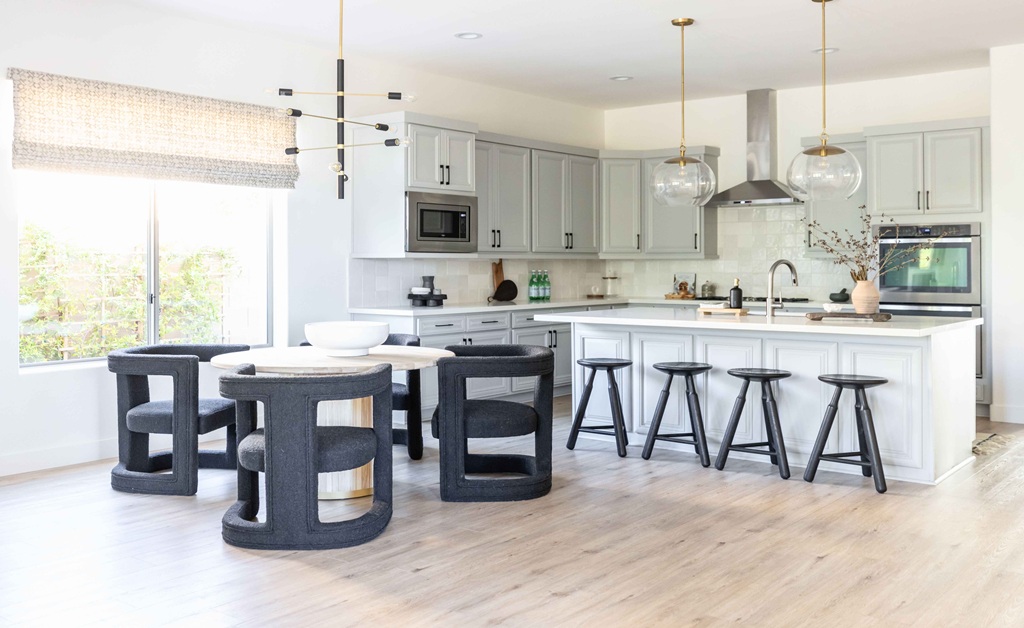
Book a Free Consultation
How Much Does a Kitchen Remodel Cost in Scottsdale, AZ? (2026 Guide)

How Much Does a Kitchen Remodel Cost in Scottsdale, AZ? (2026 Guide)

A kitchen remodel is one of the highest-return investments a Scottsdale homeowner can make - and one of the most complex to execute well. Before you commit to a project, the first thing you need to know is what it is going to cost.
In Scottsdale, a luxury kitchen remodel typically runs from $75,000 for a focused cabinetry-and-countertop refresh to $250,000 or more for a full layout reconfiguration with custom cabinetry, appliances, and structural changes.
Here is a detailed breakdown of what drives those numbers, what you can expect at each investment level, and how to make sure you are hiring the right team for the project.

Kitchen Remodel Cost Ranges in Scottsdale (2026)

$50,000 to $75,000 - Cosmetic Refresh
New countertops, new hardware, new fixtures, appliance replacement, and light refinishing. Layout stays in place. No plumbing or electrical moves. This is appropriate for kitchens that function well but feel dated.
$75,000 to $125,000 - Mid-Level Full Remodel
Full cabinet replacement (semi-custom), new countertops (stone slab), appliance package, updated lighting, new backsplash, and possibly new flooring. Layout stays in place or with minor adjustments. This is the most common entry point for Scottsdale primary homes between 2,500 and 4,000 square feet.
$125,000 to $200,000 - Full Remodel with Layout Changes
Custom cabinetry, luxury appliance package (Sub-Zero, Wolf, Cove, or similar), stone countertops, custom island, updated electrical and lighting plan, new flooring, and layout adjustments that may involve moving plumbing or gas lines. This is the range for Scottsdale homes being prepared for resale or where the kitchen is central to how the family uses the home.
$200,000 to $300,000+ - Full Reconfiguration or Addition
Full structural reconfiguration, opening walls, adding square footage, high-end custom cabinetry with integrated appliances, full lighting design, premium stone, butler's pantry addition, and smart home integration. Homes in Silverleaf, DC Ranch, and Paradise Valley frequently reach this level.

What Drives the Cost of a Kitchen Remodel in Scottsdale

Cabinetry

Cabinetry is typically 30 to 40 percent of the total kitchen remodel budget. Semi-custom cabinetry from a quality line runs $15,000 to $35,000 installed for a standard Scottsdale kitchen. Full custom cabinetry, built to your exact specifications with the specific wood species, door profiles, and interior organization, starts at $35,000 and often exceeds $80,000 in larger kitchens.
Lead times matter here. Custom cabinet orders take 10 to 16 weeks. Locking in your selections before demolition starts keeps the project on schedule.

Countertops

Natural stone slab countertops - quartzite, marble, or leathered granite - in a Scottsdale kitchen run $8,000 to $25,000 installed depending on material selection and linear footage. Engineered quartz is on the lower end of that range. Rare book-matched marble slabs push the high end well past it.

Appliances

A standard appliance package for a luxury Scottsdale kitchen - 48" range or cooktop-and-oven combination, column refrigerator and freezer, integrated dishwasher, built-in microwave drawer - runs $25,000 to $60,000. Ultra-high-end configurations with wine storage, steam ovens, and secondary prep appliances exceed $80,000.

Plumbing and Gas

Moving a sink location, relocating a gas line, or adding a pot filler requires licensed plumbing and mechanical work. Each plumbing move adds $3,000 to $10,000 depending on complexity. Kitchens that are not moving plumbing or gas avoid this cost entirely.

Permits

The City of Scottsdale requires permits for kitchen remodels that involve electrical upgrades, plumbing changes, gas line work, or structural modifications. As a licensed general contractor (ROC #347577), Living with Lolo manages permit applications and inspections as part of every project. Kitchens remodeled without permits create complications at resale.

Structural Work

Opening up a wall, removing a load-bearing element, or expanding the kitchen footprint requires structural engineering and licensed construction management. Budget $15,000 to $50,000 or more depending on what is being removed or modified.

The One-Contract Advantage for Kitchen Remodels

A kitchen remodel involves more trades than almost any other room: cabinetry, countertop fabrication, plumbing, electrical, tile, flooring, appliance installation, lighting, and painting. Coordinating all of those independently is a second job.
At Living with Lolo, design and licensed general contracting are the same firm under one contract. The designer who specified your cabinetry, countertops, and lighting plan is also managing the contractors installing them. When an issue comes up in the field - and something always does - it is resolved by the same team that designed the solution.
This structure also eliminates the most common source of kitchen remodel cost overruns: selections that were not finalized before demolition started. We complete the full design specification, material procurement, and investment guide before a single cabinet is removed.

Kitchen Remodel ROI in Scottsdale

Kitchens are one of the most scrutinized rooms when luxury buyers evaluate a home in Scottsdale, Paradise Valley, or DC Ranch. An outdated kitchen in a well-located property can delay a sale and reduce the offer price significantly.
Buyers in the $2M to $5M+ Scottsdale market often budget for a kitchen update post-purchase when the existing kitchen is dated. Sellers who update the kitchen before listing capture that credit at closing rather than discounting.
The strongest-performing kitchen renovations in Scottsdale's luxury market share a few characteristics: current cabinet profiles, professional-grade appliances, natural stone countertops, and a clean, functional island layout.

Before You Hire: What to Verify

Verify the ROC license at roc.az.gov before signing any contract for a kitchen remodel in Scottsdale. Unlicensed contractors cannot legally pull permits in Arizona. Work done without permits creates issues at resale.
Ask for a full specification before work starts. If your contractor wants to begin without a finalized material schedule, scope of work, and pricing breakdown, that is not a contractor you want managing a $100,000+ project.
Ask specifically who will be on your job site daily. The project manager you meet at the sales meeting and the person running your site day-to-day are often different people. Know who you are getting.

Ready to Talk Through Your Project?

Living with Lolo is a full-service luxury interior design and design-build firm serving Scottsdale, Paradise Valley, Arcadia, and the greater Phoenix metro. We hold an active Arizona ROC general contractor license and an interior design credential, which means we manage your entire project under one roof.

If you are planning a remodel, new construction project, or full furnishing and want honest numbers before you commit to anything, book a complimentary 15-minute discovery call.

Book Your Discovery Call →

See our completed projects →

Learn about our services →

Ready to Talk Through Your Scottsdale Kitchen?

Lauren Lerner and the Living with Lolo team work with clients across Scottsdale, Paradise Valley, Arcadia, and the greater Phoenix metro area.Book a Discovery Call
Lauren Lerner, principal interior designer at Living with Lolo

Lauren Lerner

Principal Designer, Living with Lolo

Lauren Lerner is a luxury interior designer based in Scottsdale, AZ and the founder of Living with Lolo. Her work has been featured in Architectural Digest, House Beautiful, Vogue, Martha Stewart Living, The Wall Street Journal, and GQ. She specializes in high-end residential design across Scottsdale, Paradise Valley, Arcadia, and the greater Phoenix metro area.

How Much Does a Bathroom Remodel Cost in Scottsdale, AZ? (2026 Guide)

How Much Does a Bathroom Remodel Cost in Scottsdale, AZ? (2026 Guide)

If you are planning a bathroom renovation in Scottsdale, the first question is almost always the same: what is this going to cost?
The short answer: a bathroom remodel in Scottsdale typically runs from $40,000 on the lower end of a luxury project to $120,000 or more for a full primary suite renovation with custom tile work, high-end fixtures, and a designer-led finish.
This guide breaks down where that number comes from, what moves it up or down, and what you should expect when you hire a licensed contractor and designer to manage the project for you.

What a Bathroom Remodel Costs in Scottsdale: The Ranges

$20,000 to $40,000 - Guest or Secondary Bathroom Refresh
At this range, you are looking at new fixtures, tile replacement, a new vanity, and updated lighting. Structural work and layout changes are not in scope. This is appropriate for guest baths or secondary bathrooms where the bones are good and the primary goal is aesthetic.
$40,000 to $70,000 - Mid-Tier Primary Bathroom Remodel
This range covers a full gut-and-rebuild of a primary bathroom without moving walls or relocating plumbing. New tile floor to ceiling, a custom or semi-custom vanity, freestanding soaking tub, frameless glass shower, new lighting plan. This is where most Scottsdale luxury homes start when updating a bathroom that is 10 to 15 years old.
$70,000 to $120,000 - Full Luxury Primary Bathroom
This is the range for a primary suite bathroom renovation with layout changes, custom cabinetry, natural stone slab tile, a walk-in steam shower, heated floors, smart fixtures, and a designer-specified finish package. Projects at this level require a licensed general contractor to pull permits and manage the licensed trades.
$120,000+ - Full Gut, Expansion, or Addition
Full bathroom additions, primary suite expansions, or high-end finishes such as book-matched marble slabs, custom millwork, and specialty lighting systems push past $120,000. This is also the range when a bathroom remodel is combined with a bedroom reconfiguration.

What Drives the Cost of a Bathroom Remodel in Scottsdale

Tile Selection

Tile is one of the highest-leverage decisions in a bathroom remodel. The difference between a standard porcelain tile and a large-format natural stone slab installed floor-to-ceiling can be $15,000 to $30,000 on labor and material alone. In Scottsdale, where most primary bathrooms are generous in size, this gap is significant.

Custom vs. Semi-Custom Cabinetry

A floating custom vanity built to your specifications costs substantially more than a semi-custom option from a cabinet line. For a primary bath vanity wall with integrated storage, custom millwork adds $8,000 to $20,000 compared to a production cabinet solution.

Plumbing and Layout Changes

Moving a toilet, relocating a shower drain, or repositioning a freestanding tub requires a licensed plumber and a GC to manage the work. Each plumbing move adds $3,000 to $8,000 depending on complexity. If your layout is staying in place, this cost disappears.

Permits

In Scottsdale, any bathroom remodel that moves plumbing, adds electrical circuits, or modifies walls requires permits. As a licensed general contractor (ROC #347577), Living with Lolo identifies and pulls every required permit as part of the project. Homeowners who hire unlicensed contractors to avoid permits often discover the issue when they sell - unpermitted work creates title problems and can require tear-out and re-inspection.

Timeline and Coordination

A full primary bathroom renovation typically takes 10 to 16 weeks from design through completion. The design and specification phase runs 4 to 6 weeks. Fabrication lead times for custom elements such as vanities, glass, and custom tile orders are usually the longest variables. Construction runs 4 to 6 weeks on most Scottsdale primary bath projects.

The Cost Difference Between a Designer-Led and a Contractor-Only Remodel

A contractor-only remodel costs less on paper. You provide the selections, manage the decisions, coordinate the trades, and handle issues when they arise. If you have the time, the product knowledge, and the tolerance for project management, that works.
A designer-led remodel adds a design fee and often results in better material pricing through trade accounts, fewer change orders because selections are specified before demolition starts, and a finished product that photographs and shows well. In Scottsdale's resale market, well-designed bathrooms with current finishes command attention.
At Living with Lolo, design and general contracting are the same firm. That means the designer who specified your tile, your vanity, and your lighting plan is also managing the licensed trades installing it. There is no gap between what was designed and what was built.

What You Should Ask Before Hiring a Remodeling Contractor in Scottsdale

Before signing anything with any contractor for a bathroom remodel in Scottsdale, verify the contractor's ROC license at roc.az.gov. Active status means the license is current and in good standing. Any open complaints or disciplinary history appears in the search results.
Ask who specifically will manage your project day-to-day. On large remodels, the person who sold you the job is often not the person running the site.
Ask how they handle scope changes. Cost overruns on bathroom remodels usually come from changes made after demolition starts, often because selections were not finalized before work began. A firm that completes design and specifications before swinging a hammer eliminates most of this.
Ask for a project timeline in writing before signing. Any contractor who cannot give you a specific milestone schedule is not organized enough for a project of this complexity.

Ready to Talk Through Your Project?

Living with Lolo is a full-service luxury interior design and design-build firm serving Scottsdale, Paradise Valley, Arcadia, and the greater Phoenix metro. We hold an active Arizona ROC general contractor license and an interior design credential, which means we manage your entire project under one roof.

If you are planning a remodel, new construction project, or full furnishing and want honest numbers before you commit to anything, book a complimentary 15-minute discovery call.

Book Your Discovery Call →

See our completed projects →

Learn about our services →

Ready to Talk About Your Scottsdale Bathroom?

Lauren Lerner and the Living with Lolo team work with clients across Scottsdale, Paradise Valley, Arcadia, and the greater Phoenix metro area.Book a Discovery Call
Lauren Lerner, principal interior designer at Living with Lolo

Lauren Lerner

Principal Designer, Living with Lolo

Lauren Lerner is a luxury interior designer based in Scottsdale, AZ and the founder of Living with Lolo. Her work has been featured in Architectural Digest, House Beautiful, Vogue, Martha Stewart Living, The Wall Street Journal, and GQ. She specializes in high-end residential design across Scottsdale, Paradise Valley, Arcadia, and the greater Phoenix metro area.

Do You Need a Permit to Remodel a Bathroom​?

Do You Need a Permit to Remodel a Bathroom​?

Bathroom remodels are one of the most popular home projects, adding functionality and value to your home. But before you select tiles or a new vanity, there is an important step homeowners often miss: determining whether or not you will need a permit. The proper permits make your remodel code-compliant and safe, and save you from fines or hassle down the line if you ever have to sell your home. If you are planning bathroom remodeling in Scottsdale, understanding local codes will also save you time and money.

Local Codes Vary More Than You Would Think

Remodel permits are not a one-size-fits-all deal. Permits and building codes are city, county, or municipal based. Something that would require a permit in one location could be a straightforward, no-permit-required situation in another.
In larger cities with strict building regulations, even minor electrical or plumbing alterations will require permits. In smaller towns or rural areas, permits may only be required for significant structural overhauls. Your first move before beginning a remodel should always be a trip to your city's website or a call to your local building department to get the facts. Interior designers and contractors will also have experience in this area. For a broader look at how permits work in Arizona, this overview of Arizona permit handling is a helpful reference.

What Kinds of Bathroom Projects Require a Permit

Not all bathroom work requires a permit. Cosmetic remodels like painting the walls, installing new lighting fixtures, or hanging a new mirror generally do not. When you are performing construction that changes the configuration of the bathroom, however, permits are generally required.

Plumbing and Electrical Work

If you are moving plumbing lines, say from a shower to a bathtub or relocating the sink, a permit will probably be needed. Changes to electrical work, like moving outlets or adding a heated floor system, almost always require permits to ensure they are code-compliant for safety. If you are wondering about the overlap between contractor roles and plumbing specifically, our article on whether a general contractor can handle plumbing work covers the key distinctions.

Structural Changes

Considering tearing out a wall or reconfiguring your bathroom footprint? Any change to a building's structure, including moving load-bearing walls or adding windows, likely requires a permit to ensure adequate support and compliance with safety codes.

Adding New Features

Larger projects such as adding a bathroom in an unfinished attic or basement will typically require a permit because such a project involves electrical, plumbing, and structural work together.

How to Obtain a Bathroom Remodel Permit

Getting permits seems daunting, but you do not necessarily have to tackle it by yourself. Most interior designers and general contractors will handle the permit process on your behalf. They know what forms to fill out, what plans to submit, and how to work with local inspectors.
Obtaining a permit usually involves submitting detailed design plans, paying an application fee, and scheduling one or more inspections at key stages of the project. The permit process can take anywhere from a few days to several weeks, depending on your municipality and the complexity of your project.

When a Permit Is Not Required

If the remodel is strictly cosmetic, such as refinishing cabinets, replacing faucets, or installing new tiles on existing surfaces, you most likely will not need a permit. Whether the remodel involves structural, plumbing, or electrical modifications will often be the deciding factor.
Before anything else, it is worth calling your local building department and asking about gray areas specific to your project. Doing the work without a required permit can lead to fines, forced remediation, or complications when reselling your home.

Remodeling Responsibly

Going through the process of determining whether you need a permit for your bathroom remodeling is an extra step, but one that is absolutely worth it to ensure the validity and safety of your project. Skipping permits may seem cheaper in the short term, but being properly permitted adds real value and peace of mind to your property.
If you are planning a bathroom remodel and want to understand the full scope of what is involved, our guide to what to expect during a remodel walks through the process from planning through completion. And if you are ready to get started, we are here to help guide you through every step, including the permit process, so it gets done right from beginning to end.

I oversee permitted bathroom remodels regularly across Scottsdale, Paradise Valley, and the broader Phoenix metro. The permit question comes up on nearly every project, and the answer depends on what specifically is being changed. Cosmetic updates generally do not require permits. Anything touching plumbing, electrical, or structure typically does. Here is how to think about it. — Lauren Lerner

Planning a bathroom remodel in Scottsdale or Paradise Valley?

We handle permits as standard. Let us talk about what your project requires.

Book a Discovery Call

Frequently Asked Questions

Do you need a permit to remodel a bathroom in Scottsdale?

In Scottsdale, bathroom remodels that involve moving or adding plumbing fixtures, relocating walls, changing the electrical panel configuration, or making structural changes require a permit. Cosmetic updates such as replacing tile, a vanity, or fixtures in the same location generally do not.

What bathroom work requires a permit in Arizona?

Any work that involves moving plumbing supply or drain lines, adding or relocating electrical circuits, structural changes including wall removal, or HVAC modifications requires a permit in most Arizona jurisdictions. A licensed general contractor can determine what your specific project requires.

Can I remodel a bathroom without permits?

Doing work that requires permits without obtaining them creates title and resale issues and means the work was not inspected. A design-build firm handles permitting as part of the standard scope, so you do not have to manage it yourself.

Ready to Transform Your Home?

Lauren Lerner and the Living with Lolo team work with clients across Scottsdale, Paradise Valley, Arcadia, and the greater Phoenix metro area.

Book a Discovery Call
Lauren Lerner, principal interior designer at Living with Lolo

Lauren Lerner

Principal Designer, Living with Lolo

Lauren Lerner is a luxury interior designer based in Scottsdale, AZ and the founder of Living with Lolo. Her work has been featured in Architectural Digest, House Beautiful, Vogue, Martha Stewart Living, The Wall Street Journal, and GQ. She specializes in high-end residential design across Scottsdale, Paradise Valley, Arcadia, and the greater Phoenix metro area.

Small Master Bathroom Renovation Ideas

Small Master Bathroom Renovation Ideas

Small primary bathrooms are one of the most consistently frustrating spaces in Scottsdale residential design, especially in homes built before 2005. The layouts were designed around a different standard of what a primary bath should be, typically a separate tub and shower, a compartmentalized toilet room, and a double vanity that does not actually have enough counter space for two people. The rooms were designed to check boxes rather than to function well or feel generous. And now, a decade or two later, clients are living in them and wondering why nothing feels right.
What I have learned from redesigning dozens of these spaces is that the fix is almost never about the finishes first. It is about the layout. A small bathroom with a wrong layout and beautiful tile still feels wrong. A small bathroom with a right layout and simple materials feels like a real room. Getting the spatial planning correct is the foundational step that everything else depends on.

Starting with Layout: The Decisions That Change Everything

In most small primary bathrooms, the biggest spatial gains come from eliminating the freestanding soaking tub. This is a hard conversation for some clients because the soaking tub feels like a luxury marker, something that signals the room is a real primary bath. But in a small space, a tub that gets used infrequently costs you significant square footage that could make the shower, the vanity zone, and the overall circulation feel genuinely generous. In my experience working with clients in Scottsdale and Paradise Valley, the tub gets used rarely once the novelty wears off. The shower gets used every day.
Moving to a curbless shower is the single change with the most spatial impact. A curbless shower with no glass threshold and a continuous floor tile plane reads as part of the room rather than as a separate compartment. The visual boundary disappears, and the room gains perceived square footage without changing the actual dimensions. Pair that with a frameless glass enclosure or a fully open wet room design, and the transformation is significant.
The floating vanity is the other layout decision that consistently delivers. A wall-mounted vanity with open floor space beneath it raises the visual floor line, which makes the room read taller and lighter. It also makes cleaning easier, which is a practical benefit clients appreciate immediately. If storage is a concern, custom millwork above and beside the vanity can replace what you lose in base cabinet depth.

The Tile Strategy for Small Bathrooms

Large-format tile in a small bathroom is counterintuitive to a lot of homeowners. The instinct is that large tile will overwhelm a small space. The reality is the opposite. Large-format tile with minimal grout lines reduces the visual noise of the floor and wall surfaces. The eye reads it as a single continuous material plane rather than a grid of small pieces. That reduction in visual complexity makes the room feel calmer and larger.
In the Scottsdale climate, I typically specify a warm stone-look porcelain in a 24x48 or 24x24 format for both floor and shower walls. Porcelain in a stone look gives you the visual warmth and natural variation of real stone with better performance characteristics in a high-moisture environment. Running the same tile on both the floor and the shower walls is the version of this strategy that works best in small spaces. The unified surface reads as a single material environment, which adds perceived depth.
Keep the palette to two or three materials maximum. In a small bathroom, every additional material introduces another visual layer that the eye has to process. A warm stone-look porcelain, a natural stone accent slab on the vanity surface, and a simple fixture metal finish are sufficient. Everything else is noise. For more detail on the permit and construction side of a bathroom renovation, our Arizona permits guide covers what to expect from that process.

Fixtures, Lighting, and the Finishing Details

Fixture selection in a small bathroom is about restraint and visual weight. Brushed brass and matte black are both strong choices in the Scottsdale luxury market right now, and both read well against warm stone materials. The important thing is consistency. Mixing metals in a small space adds complexity that the room does not have the square footage to absorb. Pick one and hold to it across the faucet, shower fixtures, towel bars, and lighting.
Lighting deserves more attention than it typically gets in bathroom renovations. In a small bathroom, the vanity lighting is doing most of the work. Side-mounted sconces at face height on either side of the mirror are the most functional approach, and they also read cleaner than an overhead bar. If natural light is limited, consider a mirror with integrated lighting as a way to add both task illumination and visual lightness to the vanity zone.
Heated floors are worth including in any Scottsdale bathroom renovation, particularly in primary bathrooms. The installation cost relative to the total project budget is small, and the daily comfort improvement is significant. In a climate where winter mornings are cool and summer air conditioning is heavy, a warm floor underfoot is one of those details that clients mention consistently in post-project feedback.

The Budget Reality and What to Prioritize

A well-executed small primary bathroom renovation in the Scottsdale luxury market typically falls in a range that depends heavily on the scope of layout changes and the material tier selected. If the layout stays largely intact and the scope is finishes, fixtures, and tile, the investment is substantially lower than a full gut renovation with layout reconfiguration. The layout changes are where the construction cost concentrates, because moving walls, plumbing, and electrical is labor-intensive regardless of the square footage involved.
If budget is a constraint, the priority order I recommend is: layout first, tile second, fixtures third. A correctly planned room with standard tile and simple fixtures will feel better than a wrong-layout room with expensive materials. The spatial planning is the investment that pays the most consistent return. For a full breakdown of what renovation projects cost in this market, our 2026 remodel cost guide has detailed benchmarks across bathroom renovation tiers.
If you are planning a bathroom renovation in Scottsdale or the broader Phoenix metro and want to talk through what the right scope and approach looks like for your specific space, reach out here. We work across the full range of primary bathroom projects, from targeted renovations to full gut rebuilds, and we manage the entire process from design through construction and installation.

Small primary bathrooms are one of the most common challenges in Scottsdale remodels, particularly in older homes that were not built with the current luxury bathroom standard in mind. I have redesigned dozens of these spaces and the most important lesson is that the spatial planning matters more than the finishes. Getting the layout right first is what makes the room actually feel larger. — Lauren Lerner

Planning a primary bathroom remodel in Scottsdale?

Bathroom renovations are some of our most requested projects. Let us walk you through what your space can become.

Book a Discovery Call

Frequently Asked Questions

How do you make a small master bathroom feel larger?

The most effective strategies for making a small bathroom feel larger are: using large-format tile with minimal grout lines, eliminating a separate shower threshold in favor of a curbless design, choosing a floating vanity to open the floor plane, maximizing natural light or adding vertical lighting, and simplifying the material palette to two or three elements rather than many.

What are the best finishes for a small bathroom remodel in Scottsdale?

Warm, light stone-look porcelain in large format performs well in the Arizona climate and reads as high-end without the maintenance of natural stone. Brushed brass or matte black fixtures read current and hold up well in hard water conditions common in the Valley. Heated floors are a worthwhile addition even in Arizona for the tactile comfort and the resale appeal.

Ready to Transform Your Home?

Lauren Lerner and the Living with Lolo team work with clients across Scottsdale, Paradise Valley, Arcadia, and the greater Phoenix metro area.

Book a Discovery Call
Lauren Lerner, principal interior designer at Living with Lolo

Lauren Lerner

Principal Designer, Living with Lolo

Lauren Lerner is a luxury interior designer based in Scottsdale, AZ and the founder of Living with Lolo. Her work has been featured in Architectural Digest, House Beautiful, Vogue, Martha Stewart Living, The Wall Street Journal, and GQ. She specializes in high-end residential design across Scottsdale, Paradise Valley, Arcadia, and the greater Phoenix metro area.

Choosing a Living Room Design – Modern vs Traditional

Choosing a Living Room Design – Modern vs Traditional

One of the first questions I ask new clients is whether they gravitate toward modern or traditional design. The answer usually comes quickly, almost instinctively, and then the follow-up is always more complicated. Because most people do not want a room that is purely one or the other. They want something that feels intentional and livable, not like a showroom or a museum replica.
Here in Scottsdale, the split between these two design directions is real. You have newer builds in DC Ranch and Silverleaf that lean contemporary, with clean lines, low-profile furniture, and an almost architectural restraint. Then you have older homes in Paradise Valley and Arcadia with original details, warm wood, and a formal sensibility that actually suits the lifestyle of the homeowners. Neither is wrong. But making the right choice for your specific space, your architecture, your family, and your daily life takes more than picking a Pinterest board.

What Modern Living Rooms Actually Look Like

Modern design is often misread as cold or minimal. The best modern living rooms I have designed are anything but. What defines the style is not a lack of warmth, it is a commitment to simplicity of form. Furniture has clean silhouettes. Upholstery tends toward solid fabrics rather than pattern. Built-ins and cabinetry have flush fronts and concealed hardware. Color palettes are controlled, usually anchored in neutrals with one or two deliberate accents.
In the desert, modern design has a natural home. The light here is intense and directional, and a room with too much pattern or ornamentation can feel visually exhausting by midday. Clean lines let the architecture breathe. Materials like concrete, stone, glass, and matte metals read beautifully against the landscape outside. When House Beautiful or Architectural Digest features a Scottsdale home, more often than not it leans in this direction for exactly that reason.
That said, modern living rooms fail when they are all surface and no warmth. I always bring in texture to counterbalance the clean lines. A chunky linen sofa, a live-edge coffee table, a handwoven rug, layered throw pillows in natural materials. The structure of the room is modern. The layers make it livable.

What Traditional Living Rooms Get Right

Traditional design gets a reputation for being stuffy, but that is almost always a failure of execution, not the style itself. A well-done traditional living room is one of the most comfortable spaces you can build. The furniture is scaled for actual human beings. There is pattern but it is intentional. Molding, millwork, and built-in bookcases add character that newer construction simply does not have.
What I love about traditional interiors is that they tend to age gracefully. A room anchored in quality antiques, good upholstery in durable fabrics, and classic architecture does not go out of style. Martha Stewart Living has championed this for decades. The trick is keeping it from tipping into frozen-in-time territory. Fresh paint colors, updated lighting, and edited accessories keep a traditional room from feeling like it belongs to a different era entirely.
In older Arcadia and Paradise Valley homes, traditional elements often already exist in the bones of the house. Crown molding, arched doorways, wood floors with warmth and history. Fighting those details in favor of a sleek modern interior rarely works as well as honoring them and updating the soft goods and finishes around them.

What Your Architecture Actually Wants

Here is the honest answer I give every client who comes to me with this question: your architecture has a vote. A flat-roofed contemporary build in North Scottsdale is going to resist traditional furniture and ornate details. A 1980s Santa Fe-style home in Paradise Valley is going to look strained if you try to turn it into a spare, loft-like space. The interior needs to respond to what is already there, including ceiling heights, window proportions, flooring materials, and the overall feel of the shell.
That does not mean you are locked in forever. A whole-home remodel is an opportunity to reorient the architecture entirely. We have taken homes with dated traditional bones and reworked them into something much more aligned with a modern sensibility, opening walls, removing heavy molding profiles, replacing carpeting with large-format tile or white oak. But that is a construction project as much as a design project, and it requires the right permits and licensing in Arizona to do properly.

Mixing Modern and Traditional: Where Most Scottsdale Living Rooms Land

The majority of living rooms I design are neither fully modern nor fully traditional. They live somewhere in the middle, which the design world calls transitional. A clean-lined sofa paired with an antique console. A neutral palette broken up by a Persian-style rug. Contemporary recessed lighting above a traditional fireplace surround.
This middle ground works because it reflects how most people actually live. Pure modernism can feel demanding to maintain and cold in the evening. Pure traditionalism can feel heavy and hard to update as your taste evolves. The balance point is where rooms feel both finished and adaptable.
The key to making this work is coherence. Every element you introduce should be in conversation with the others. The proportions need to be consistent. The finish tones, whether warm or cool, need to align across materials. When mixing periods and styles, I always build from one anchor piece, usually a sofa or an area rug, and make every other selection relate back to it.
If you are figuring out which direction is right for your living room or your whole house, I am happy to talk through it. The right answer is almost always more specific to your home and lifestyle than any style category can capture on its own.

This is a decision I help clients think through in nearly every living room project. The answer depends on the architecture, the client's lifestyle, and the other rooms in the home. In Scottsdale, the transitional approach often works better than either extreme because it reads as genuinely livable in a market where homes are used for entertaining and day-to-day life simultaneously. — Lauren Lerner

Redesigning your living room in Scottsdale?

Style direction is something we sort out quickly in a discovery call. Let us see your space.

Book a Discovery Call

Why layout and function matter before any style decision:

Frequently Asked Questions

What is the difference between modern and transitional living room design?

Modern design in a living room emphasizes clean lines, minimal decoration, cool or neutral palettes, and furniture with simple geometric forms. Transitional blends classic architectural detail and warmer materials with contemporary furniture and a more restrained palette. In practice, transitional feels more livable and ages better in residential settings.

Which living room style is most popular in Scottsdale?

Transitional and organic modern styles dominate the Scottsdale and Paradise Valley luxury market. Pure traditional is less common in newer construction. A warm contemporary or transitional approach fits most of the architecture built in this market over the past 20 years and photographs well for resale.

Ready to Transform Your Home?

Lauren Lerner and the Living with Lolo team work with clients across Scottsdale, Paradise Valley, Arcadia, and the greater Phoenix metro area.

Book a Discovery Call
Lauren Lerner, principal interior designer at Living with Lolo

Lauren Lerner

Principal Designer, Living with Lolo

Lauren Lerner is a luxury interior designer based in Scottsdale, AZ and the founder of Living with Lolo. Her work has been featured in Architectural Digest, House Beautiful, Vogue, Martha Stewart Living, The Wall Street Journal, and GQ. She specializes in high-end residential design across Scottsdale, Paradise Valley, Arcadia, and the greater Phoenix metro area.

How Much Value Does Remodeling a Kitchen Add to Your Property?

How Much Value Does Remodeling a Kitchen Add to Your Property?

The question of kitchen remodel ROI comes up in almost every initial client conversation I have in Scottsdale. Homeowners want to know whether the investment will come back to them when they sell, and that is a completely reasonable question when you are considering spending $150,000 or $400,000 on a single room. The honest answer is: it depends significantly on quality of execution and on how the kitchen compares to buyer expectations at your specific price point. In the luxury segment of the Scottsdale and Paradise Valley market, a kitchen that is outdated relative to what buyers expect is not a neutral factor. It is a meaningful liability.
I have completed kitchen renovations across the Phoenix metro at a wide range of investment levels, and the pattern I have seen consistently is that a well-executed renovation returns strong value, and a poorly executed renovation returns much less than expected. The kitchen is the room that sophisticated buyers evaluate most carefully. They know what it costs to redo it if they have to, and they price that cost directly into their offer.

How Buyers at the Luxury Price Point Evaluate Kitchens

Buyers purchasing homes at $2 million and above in Scottsdale, Paradise Valley, and Arcadia are not looking for a kitchen with potential. They are looking for a kitchen that needs nothing. This is a buyer profile that has lived in well-designed spaces, has seen a lot of kitchens, and has real opinions about what constitutes quality. They will notice whether the cabinet construction is solid or whether it is a lower-tier product with a high-end finish applied. They will notice whether the appliance package reflects current standards. They will notice whether the layout actually works for the way people cook and entertain.
At this price point, the cost of a kitchen that does not meet expectations is borne by the seller in the form of reduced offer prices or extended time on market. Real estate agents in this market are direct about this. A listing with a dated kitchen in a $2.5M home will be priced down and will sit longer. The renovation cost that feels large when you are planning it is often smaller than the discount a buyer extracts for not renovating.
Below the luxury tier, the ROI calculation is different. At lower price points, an over-invested kitchen can price a home above its comparables in ways that limit the return. But in the luxury segment specifically, the floor for kitchen quality is high and a renovation that meets or exceeds that floor is priced accordingly.

What Makes a Kitchen Actually Return Its Investment

Not all kitchen renovations return equally. The ones that perform best share a few characteristics: the layout is genuinely functional for entertaining, the appliance package reflects current standards, the materials are durable and high-quality rather than just visually impressive, and the design has enough longevity to not read as dated within a few years of completion.
Layout is the factor most often underweighted. A kitchen that photographs beautifully but has poor workflow, insufficient counter space, or awkward traffic patterns will not satisfy buyers who cook or entertain regularly. In Scottsdale's indoor-outdoor culture, the kitchen-to-outdoor-living connection is particularly important. A kitchen that opens cleanly to an outdoor kitchen and living area, or that has strong sightlines to a pool or landscape view, adds value that a purely interior-focused kitchen does not.
Appliance selection matters more than clients sometimes expect. In the luxury market, buyers recognize Miele, Wolf, Sub-Zero, La Cornue, and Gaggenau. They also recognize when a kitchen has been finished with aspirational aesthetics and budget appliances. The appliance package signals to buyers whether the renovation was done by someone who understood the market or by someone cutting corners where they hoped buyers would not look. I always recommend matching the appliance investment to the cabinet and material quality. The mismatch is visible and it reads as a red flag.

The Scottsdale Market Specifically

There are a few things about the Phoenix metro luxury market that affect the kitchen ROI calculation in ways that national data does not capture. The indoor-outdoor living orientation here means that kitchen design is always considered in relationship to the outdoor space. A kitchen renovation that does not address the connection to the outdoor kitchen, covered patio, or pool area is leaving value on the table.
The design standard in Scottsdale has also shifted significantly in recent years. What read as a luxury kitchen five years ago, white Shaker cabinets with quartz countertops and stainless appliances, reads as middle-of-the-road today. The buyers who are moving into the market from Los Angeles, the Bay Area, New York, and Chicago bring a different reference point. They have seen kitchens designed by firms that appear in Architectural Digest and House Beautiful, and they know the difference between a kitchen that is technically updated and one that is genuinely well-designed.
For a detailed look at what kitchen renovations cost at different tiers in this market, our 2026 remodel cost guide breaks down investment ranges across project types. And if you want to understand what the full process of a kitchen renovation looks like from design through completion, our remodel process guide covers the timeline and scope of a typical project.

Planning a Kitchen Renovation: Where to Start

The first conversation in any kitchen renovation project should be about goals and timeline. If you are renovating to improve daily living and you plan to stay in the home for five or more years, the calculus is different from a renovation timed to a planned sale. Both are valid, but they produce different decisions about investment level and design approach.
If you are renovating ahead of a sale, work with your real estate agent to understand what the current market expects at your price point, and match the renovation to that standard without over-investing in features that will not return. If you are renovating for yourself, the standard is what makes the space work for how you actually live, which may be a different and more personal calculation.
In either case, the quality of execution is the variable that determines the outcome. A well-conceived, well-executed kitchen renovation with strong spatial planning, appropriate materials, and current appliances will perform well regardless of whether you are staying or selling. A renovation that cuts corners on layout or materials to hit a lower number will show those compromises in the finished product and in the market response. Our services page explains how we approach kitchen projects from initial concept through construction and installation. If you are ready to start the conversation, reach out here and we can talk through what the right scope looks like for your home.

I have completed kitchen renovations across Scottsdale, Paradise Valley, and Arcadia at every investment level, and the pattern is consistent: well-executed kitchen renovations in the luxury segment return strong value in this market. The key words are well-executed. A kitchen that photographs beautifully but has poor layout, insufficient storage, or substandard appliances will not return what a thoughtfully designed kitchen does. — Lauren Lerner

Planning a kitchen remodel in Scottsdale or Paradise Valley?

Kitchen renovations are among the highest-impact investments in this market. Let us talk about yours.

Book a Discovery Call

What a kitchen remodel transformation looks like:

Frequently Asked Questions

How much value does a kitchen remodel add in Scottsdale?

Well-executed kitchen remodels in the Scottsdale and Paradise Valley luxury market consistently show strong returns. At the luxury level, a kitchen that reflects current design standards, has quality appliances, and functions well for entertaining adds both resale value and the intangible value of daily enjoyment. The return is strongest when the design is genuinely good, not just new.

What is the ROI of a kitchen remodel in Arizona?

The ROI varies significantly by quality of execution and how the kitchen compares to market expectations at your price point. In the Scottsdale luxury market, a kitchen that is outdated relative to buyer expectations at your listing price is a much bigger liability than the cost of renovation. Buyers at the $2M+ level expect a kitchen that needs nothing.

Ready to Transform Your Home?

Lauren Lerner and the Living with Lolo team work with clients across Scottsdale, Paradise Valley, Arcadia, and the greater Phoenix metro area.

Book a Discovery Call
Lauren Lerner, principal interior designer at Living with Lolo

Lauren Lerner

Principal Designer, Living with Lolo

Lauren Lerner is a luxury interior designer based in Scottsdale, AZ and the founder of Living with Lolo. Her work has been featured in Architectural Digest, House Beautiful, Vogue, Martha Stewart Living, The Wall Street Journal, and GQ. She specializes in high-end residential design across Scottsdale, Paradise Valley, Arcadia, and the greater Phoenix metro area.

Living Room Transitional Interior Design Ideas

Living Room Transitional Interior Design Ideas

Transitional design is the style category that rarely gets its due. It is not as photogenic as pure minimalism and not as dramatic as a heavily layered traditional room. But it is, in my experience, the style that actually serves people best over the long term. It adapts. It tolerates changing tastes. It photographs well and lives even better.
In Scottsdale and the broader Phoenix area, transitional living rooms make particular sense. The desert light is unforgiving to interiors that are too precious or too heavily patterned. The lifestyle here tends toward indoor-outdoor living, open floor plans, and spaces that need to function well for families and entertaining alike. Transitional design handles all of that without demanding you commit fully to one aesthetic camp.

Start with a Neutral Foundation and Add Warmth Through Texture

The backbone of every transitional living room I design is a neutral palette. Not cold gray, not stark white, but warm neutrals: greige, warm taupe, soft linen, sand. These colors do not compete with the light coming through large windows, and they create a backdrop that can absorb a range of accent colors without reading chaotic.
The warmth in a transitional room comes from texture, not from color intensity. Think a sofa in a substantial linen or a textured bouclé. A coffee table in travertine or warm wood. Grasscloth on an accent wall if the ceiling height allows. Layered rugs that combine a flat-weave with a more pile-heavy piece. These decisions create visual interest without breaking the calm that makes transitional rooms so livable.

Choose Furniture That Blends Structure and Comfort

Transitional furniture is defined by pieces that have traditional proportions but contemporary simplicity. A roll-arm sofa with clean upholstery and no nailhead trim. A wingback chair in a solid performance fabric rather than a printed toile. A coffee table with traditional turned legs but a stone or lacquered top. These combinations are what give transitional rooms their particular character.
Scale matters here more than in any other style category. Transitional rooms fail most often because the furniture is undersized for the architecture. In Arizona, living rooms tend to have higher ceilings and more square footage than you find in older East Coast homes. You need pieces that fill the room properly. A sectional that seats eight in a room with 12-foot ceilings reads correctly. A loveseat in the same room looks like an afterthought.

Bring in One or Two Antique or Vintage Pieces

Nothing gives a transitional room more depth and credibility than one genuinely old piece. A 19th-century chest used as a console behind the sofa. A set of vintage candlestick lamps on a side table. An antique mirror above the fireplace. These items have a quality of material and craft that contemporary production pieces rarely match, and they anchor the room in a way that tells you it was designed with intention.
Scottsdale has excellent vintage and antique sources, and I am always scouting for clients. The key is restraint. One or two significant antique pieces read as sophisticated. A room full of them reads as traditional, which is a different direction entirely.

Use Pattern Strategically, Not Generously

One of the marks of amateur transitional design is too much pattern. A patterned rug, patterned throw pillows, a patterned accent chair, and patterned curtains in the same room become visually exhausting even if every individual piece is beautiful. My general rule is to allow pattern in two places per room, maximum. Usually that means the rug and one set of throw pillows, or the curtains and the rug. Everything else stays solid or textural. This keeps the room calm while still giving it visual interest and personality.
In desert-facing rooms with significant natural light, I am especially careful about pattern saturation. The light changes throughout the day and it intensifies color and pattern in ways that can make a room feel overwhelming by midday even if it looked perfect in the morning.

Lighting Is the Detail Most People Get Wrong

Transitional rooms need layered light: ambient, task, and accent. A single overhead fixture, even a beautiful chandelier, is not enough. You need table lamps for warmth, floor lamps for reading zones, and some form of accent lighting if you have art or architectural features worth highlighting.
For transitional style, I gravitate toward fixtures with traditional silhouettes in updated finishes. A candlestick chandelier in unlacquered brass rather than polished chrome. A drum pendant with a linen shade. Swing-arm sconces in an aged bronze. These choices read as classic in form but current in finish, which is exactly the balance transitional design is built on.

Bringing It Together in an Arizona Living Room

The best transitional living rooms I have designed in Scottsdale and Paradise Valley share a few common traits. They are edited rather than maximalist. They have a strong furniture plan with pieces scaled to the architecture. They use color with restraint, letting texture and material carry the visual weight. And they feel complete rather than in-progress, which takes more discipline than it sounds.
If you are working through a living room redesign and want to talk through what transitional design could look like in your specific space, reach out and let's talk. I can also share information about what interior design typically costs in Scottsdale if you are in the early planning stages.

Transitional style in a living room is where I spend a significant amount of my time as a designer, because it is the aesthetic that works across the widest range of Scottsdale and Paradise Valley architectures. It is also the style most likely to hold its visual appeal over a 10-year horizon, which matters a great deal when you are making significant material investments. — Lauren Lerner

Designing your living room in Scottsdale?

Let us talk about what style direction makes the most sense for your architecture and how you actually live in the space.

Book a Discovery Call

What a living space that functions as well as it looks like:

Frequently Asked Questions

What makes a living room transitional rather than traditional?

A transitional living room uses classic proportions — symmetry, layered lighting, upholstered seating with traditional silhouettes — but updates the palette with cleaner lines, simplified patterns, and contemporary finishes. The furniture does not have carved legs and heavy drapery, but it also does not have the sculptural abstraction of pure contemporary design.

What colors work best in a transitional living room in Scottsdale?

Warm neutrals that reference the desert palette — warm whites, sandy taupes, soft greens, and earthy terracottas — tend to work well in Scottsdale transitional living rooms because they connect to the exterior landscape. Cool grays can work but often feel at odds with the desert light.

Ready to Transform Your Home?

Lauren Lerner and the Living with Lolo team work with clients across Scottsdale, Paradise Valley, Arcadia, and the greater Phoenix metro area.

Book a Discovery Call
Lauren Lerner, principal interior designer at Living with Lolo

Lauren Lerner

Principal Designer, Living with Lolo

Lauren Lerner is a luxury interior designer based in Scottsdale, AZ and the founder of Living with Lolo. Her work has been featured in Architectural Digest, House Beautiful, Vogue, Martha Stewart Living, The Wall Street Journal, and GQ. She specializes in high-end residential design across Scottsdale, Paradise Valley, Arcadia, and the greater Phoenix metro area.

How Long Should a Kitchen Remodel Take?

How Long Should a Kitchen Remodel Take?

I manage kitchen remodel timelines constantly. The question of how long it will take is always asked early in the process, and the honest answer is that the timeline depends heavily on how quickly selections are made and whether the scope is clearly defined before demolition starts. A well-managed kitchen remodel with a defined scope can move efficiently. An open-ended one will not.
That said, I can give you a realistic framework based on what I see in Scottsdale and Maricopa County specifically, because local factors, permit processing times, subcontractor availability, and product lead times from regional suppliers all affect how long your project actually runs.

The Phases of a Kitchen Remodel and How Long Each Takes

A kitchen remodel has four distinct phases: pre-construction planning and design, permit approval, active construction, and punch list and final inspection. Each has its own timeline, and delays in any one phase compress or extend the others.
Pre-construction is where most projects either get set up for success or set up for pain. This phase includes finalizing the design and drawings, making all material selections, cabinetry, countertops, tile, appliances, fixtures, hardware, and submitting for permits. In my practice, I do not allow demolition to begin until every single selection is confirmed and on order. That discipline alone eliminates a significant number of the delays I hear about from clients who have worked with other contractors.
For permit processing in Maricopa County, plan on two to four weeks for a standard kitchen remodel, longer if the project involves structural changes, electrical panel upgrades, or significant plumbing relocation. Some municipalities within the county move faster than others. Scottsdale runs relatively efficiently. Permit requirements in Arizona are real, and skipping them creates serious problems at resale and with insurance.
Active construction on a full kitchen remodel, meaning cabinet removal, rough plumbing and electrical, drywall, cabinet installation, countertop templating and fabrication, tile, and appliance installation, runs six to ten weeks when the project is well-organized and subcontractors are sequenced properly. This assumes cabinetry and countertop materials are already on site or confirmed in queue before demo begins.
The punch list phase, final touches, paint corrections, hardware installation, appliance startup, and final inspection, adds one to two weeks depending on how many items come up and how responsive the trades are to close them out.

What Actually Causes Kitchen Remodels to Run Long

In my experience, the single biggest cause of extended timelines is late selections. A homeowner who has not confirmed their countertop material by the time cabinet installation is complete will wait three to four weeks for templating and fabrication after they finally decide. That gap sits in the middle of a kitchen that is otherwise ready to use, and it is completely avoidable.
The second most common cause is scope creep during construction. When demo reveals a condition that was not anticipated, outdated wiring, plumbing that needs rerouting, subfloor damage, the project needs to respond. A good contractor plans for contingencies in the budget and schedule. An honest one talks to you about them before they become surprises. Understanding what to expect during a remodel includes accepting that some unknowns only reveal themselves once walls come down.
Product lead times are a third factor. Specialty cabinetry from European manufacturers can run 12 to 16 weeks. Semi-custom domestic lines are typically four to eight weeks. If you have your heart set on a specific cabinet manufacturer, that lead time needs to be built into the project schedule from the start, not discovered after you have already committed to a construction start date.

Realistic Total Timelines by Project Type

A cosmetic kitchen refresh, meaning new cabinet fronts or paint, new countertops, new hardware, and new fixtures without moving anything structural, can be completed in four to six weeks from the start of construction if selections are already made. The pre-construction planning period still applies.
A mid-scope kitchen remodel that keeps the existing layout but replaces everything including cabinets, counters, tile, appliances, and lighting typically runs 10 to 14 weeks total from permit submission through final punch list.
A full reconfiguration with layout changes, structural modifications, new plumbing locations, or an addition of square footage should be budgeted at 16 to 24 weeks. This is a significant construction project, and the permit, design, and construction phases are all more complex. Cost and timeline are related in ways that are worth understanding before you finalize your scope.

How to Set Your Project Up to Run on Time

The clients who have the smoothest kitchen remodel experiences are the ones who make decisions early and stick to them. That sounds simple, but it requires having the design fully developed before construction begins, not treating the open walls as an opportunity to reconsider everything.
It also requires a contractor who manages the subcontractor schedule proactively. Rough trades, cabinetry, countertops, tile, and finish work all need to be sequenced with zero gaps. A project manager who is waiting on the plumber before scheduling the electrician, instead of coordinating them on a shared calendar, adds weeks to a project without any single event looking like a major problem.
If you are planning a kitchen remodel in Scottsdale and want to talk through realistic scope and timing, I am happy to have that conversation. Getting the planning right at the front end is the most valuable investment you can make in the outcome of the project.

I manage kitchen remodel timelines constantly. The question of how long it will take is always asked early in the process, and the honest answer is that the timeline depends heavily on how quickly selections are made and whether the scope is clearly defined before demolition starts. A well-managed kitchen remodel with a defined scope can move efficiently. An open-ended one will not. — Lauren Lerner

Planning a kitchen remodel in Scottsdale or Paradise Valley?

We can give you a realistic timeline and budget for your specific scope on a discovery call.

Book a Discovery Call

A kitchen transformation from vision through completion:

Frequently Asked Questions

How long does a kitchen remodel take?

A well-scoped luxury kitchen remodel typically takes 4 to 7 months from first design meeting through final installation. The design and procurement phase takes 6 to 10 weeks, permitting adds 4 to 8 weeks in Scottsdale and Paradise Valley, and construction runs 6 to 12 weeks depending on scope. Custom cabinetry lead times are the most common driver of extended timelines.

What is the typical kitchen remodel timeline in Scottsdale?

In Scottsdale, the permitting phase runs 4 to 6 weeks for most kitchen remodels. Custom cabinet lead times are 8 to 16 weeks from approval to delivery. The full timeline from design agreement to completion is typically 4 to 6 months for a standard kitchen remodel and up to 8 months for a full kitchen expansion.

Can I live in my home during a kitchen remodel?

Most clients find it manageable to live in the home during a kitchen remodel if they set up a temporary kitchen station and plan for 4 to 8 weeks without a functional kitchen. For larger remodels involving the surrounding dining or living space as well, living elsewhere during the core construction phase is usually more practical.

Ready to Transform Your Home?

Lauren Lerner and the Living with Lolo team work with clients across Scottsdale, Paradise Valley, Arcadia, and the greater Phoenix metro area.

Book a Discovery Call
Lauren Lerner, principal interior designer at Living with Lolo

Lauren Lerner

Principal Designer, Living with Lolo

Lauren Lerner is a luxury interior designer based in Scottsdale, AZ and the founder of Living with Lolo. Her work has been featured in Architectural Digest, House Beautiful, Vogue, Martha Stewart Living, The Wall Street Journal, and GQ. She specializes in high-end residential design across Scottsdale, Paradise Valley, Arcadia, and the greater Phoenix metro area.

Living Room Decorating Ideas with Black Furniture​

Living Room Decorating Ideas with Black Furniture​


Black furniture has been a home decor staple for decades, with its sleek, sophisticated appearance impossible to top for many. And yet, in addition to its classic good looks, black furniture is surprisingly versatile, and thus the ideal anchor for a stylish living room. Whether your goal is sleek modern minimalism or warm luxuriousness, the addition of black furniture can revolutionize your living room. Here’s how to do it in your home.

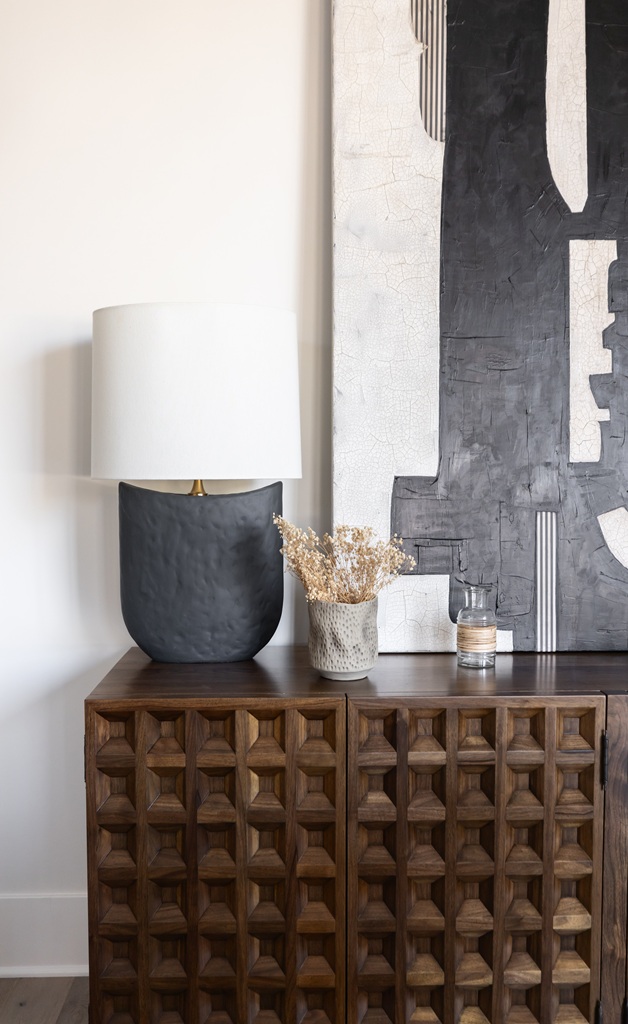
Black lamp and dried flowers on wood sideboard

Making Black Furniture More Flexible 

Black furniture is a domestic essential because it is flexible. Black is a neutralizer that can instantly get along with any decor – industrial, vintage, or contemporary. Black leather furniture, for example, could be completely cool contemporary, and a black velvet armchair is the epitome of vintage cool. 

    The elegance of black furniture is that it can work as an accent or a subdued background upon which other design features shine. A black coffee table, for example, can anchor the room’s style while complementing bolder accent points such as rugs or artwork. Black furniture, in general, has the versatility to support both bold and subtle aesthetics. Using living room decorating ideas with black furniture can help create a space that’s stylish yet functional. 

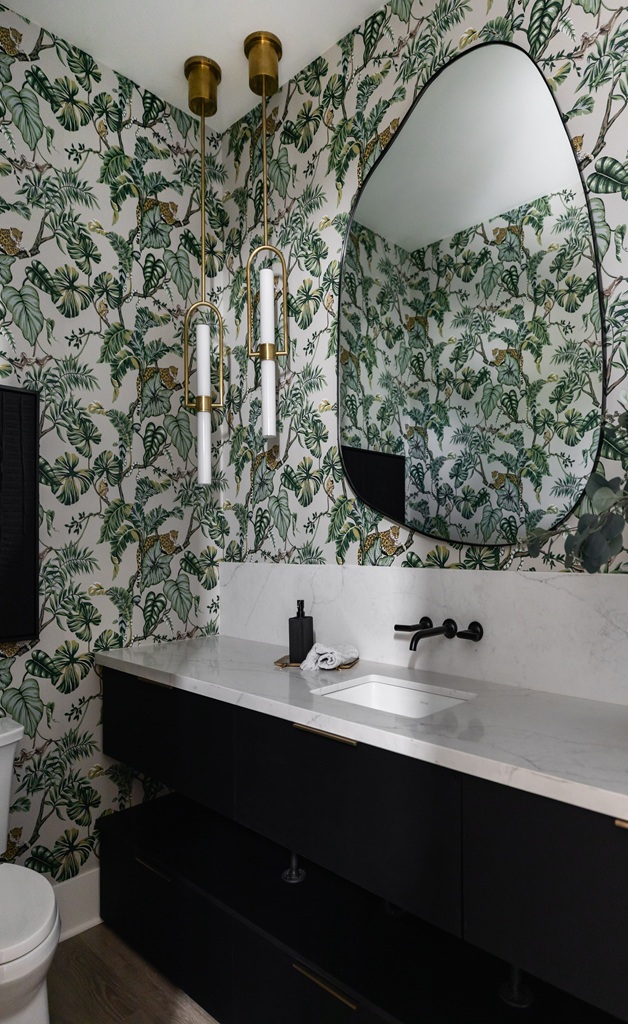
      Bathroom with tropical wallpaper and black vanity

      Mixing Black Furniture with Other Color Combinations 

      Blended with other colors carefully, black furniture is a blank slate for endless possibilities. Dressed in grays or whites for a monochromatic effect, it creates a high-contrast, minimalist space. Softer neutrals like beige or taupe can temper the severity of black and draw warmth into your space.

      For someone who wishes to add color, gemstone shades such as emerald green, sapphire blue, and dark burgundy would be beautiful over black, adding a luxury richness. Light pastel colors such as pale mint or blush pink would also be great, softening the hard finish of black furniture to create a warm-looking space. 

      Neutral room with abstract art and decor

      Adding metallics like brass or gold to your color scheme is another touch of sophistication, particularly when paired with accent pieces like black dining room chairs or an entertainment center. Texture and balance are all it requires to keep the space vibrant and alive. Whether you’re designing a living room with black furniture, blending bold and soft colors is key. 

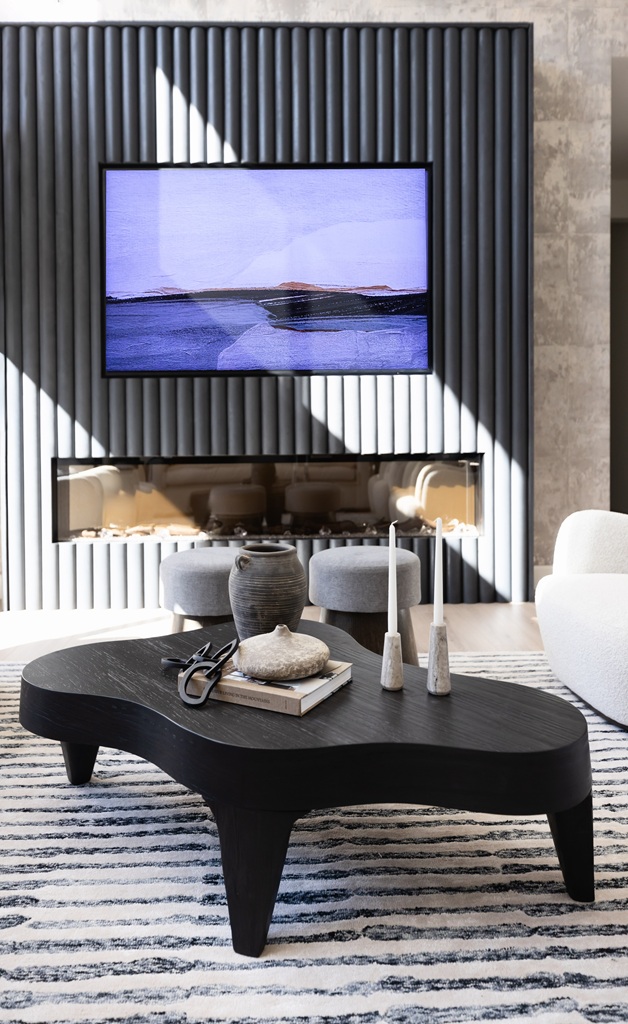
      Modern living room with black coffee table

      Accessorizing Your Living Room with Black Furniture 

      Accessories can overwhelm or complement black furniture, so be careful with your choice. Throws and pillows in bold designs, such as geometric patterns or flowers, create a fun element to a black sofa. Or, neutral or monochromatic accessories keep the appearance clean without overwhelming the room. 

      Do attempt black furniture paired with natural elements like rustic hardwood floors or jute rugs to add warmth and texture to the room. Lighting is also an issue for some. Placing table or floor lamps strategically can prevent the room from becoming dark or heavy. Warm light is what makes a space inviting and brings out the depth and detailing of black furniture. For a polished touch, consider pairing black couches for a living room with soft lighting and textured accessories. 

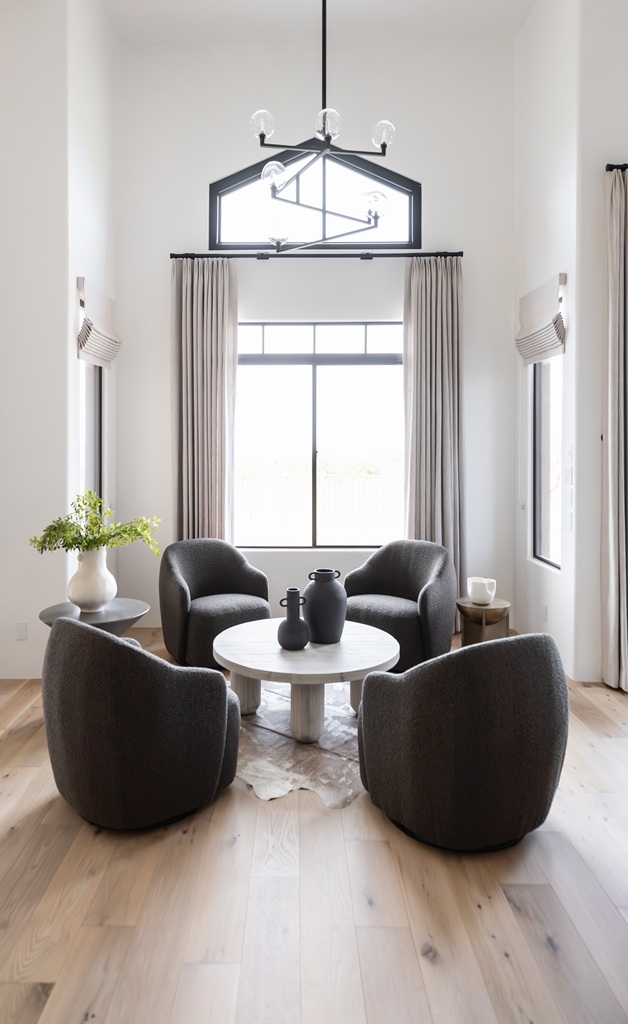
      Cozy seating area with dark chairs and round table

      For wall art, stay with what reinforces your theme for your room. Big abstract pieces of art in bold colors can make a black piece stand out, and black and white photographs create a monochromatic, high-end look. This approach enhances your living room decor with black furniture​ while adding personal flair. 

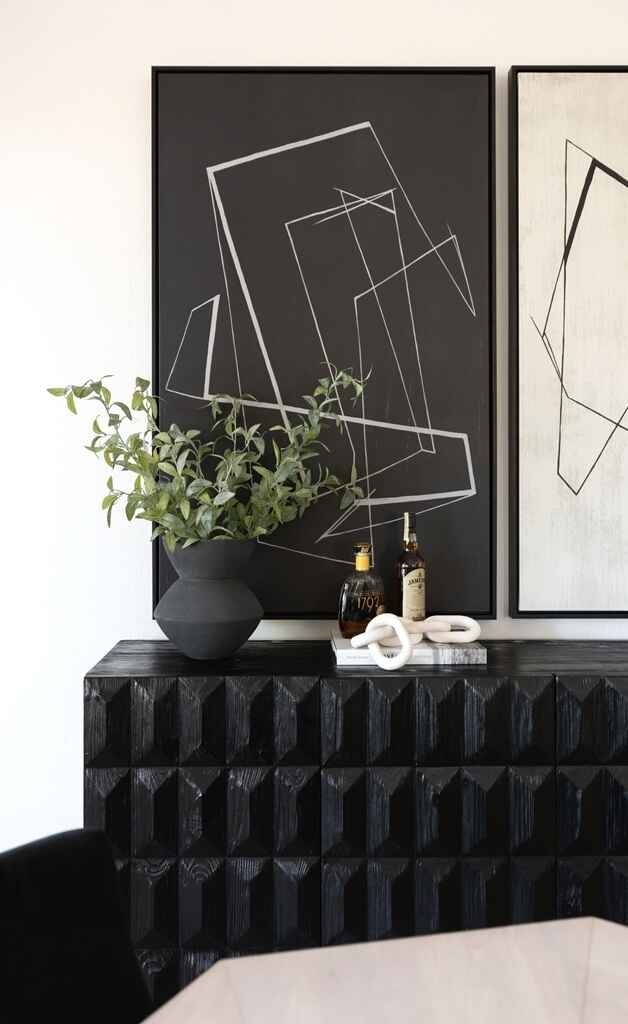
      Black geometric cabinet with abstract art

      Common Mistakes to Avoid When Decorating with Black Furniture 

      Black furniture decor should be balanced. It is simple to overdo it and include too many dark pieces, thereby making the room heavy. Counteract this effect by adding lighter elements like bright curtains, mirrors, or light walls that reflect sunlight. 


      Another error is neglecting scale. Black furniture that is too large will dominate a small room and make it appear cramped. Instead, select streamlined pieces with clean lines. Finally, don’t over-accessorize. Black furniture is already taking center stage, so limit accessories to keep the look clean and refined. For example, if you’re styling black sofas in a living room, opt for minimal yet impactful accent pieces. 


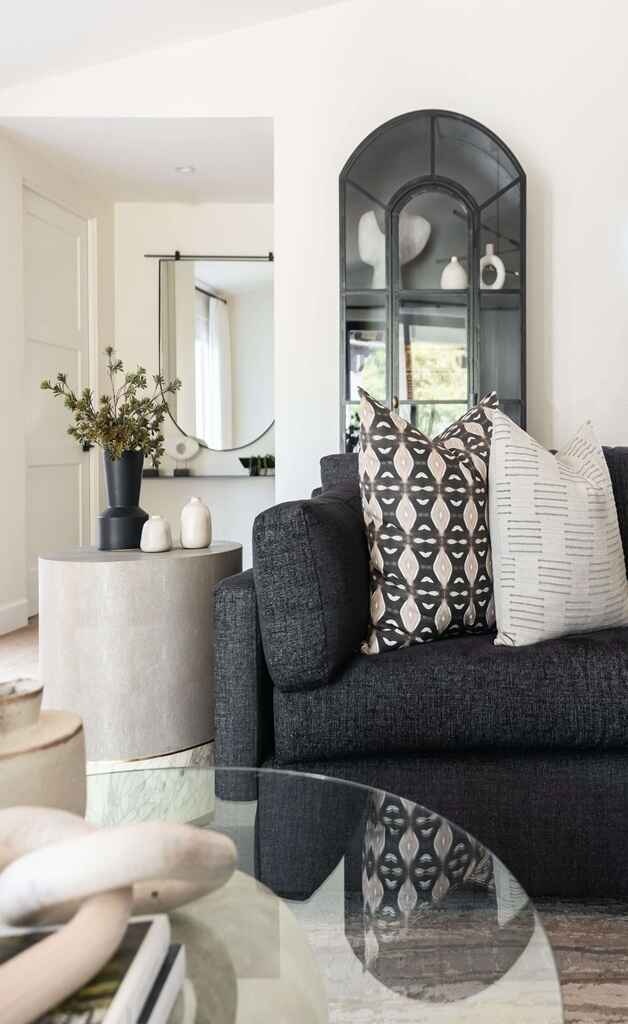
      Dark sofa with patterned and striped pillows

      Make Black Furniture the Star of Your Living Room

      Black furniture provides a world of possibilities when it comes to designing a living space, offering flexibility and timeless appeal. Pairing it with the right colors, creating contrasts, and avoiding common design pitfalls will help you craft a stunning living room that reflects your personality. Whether you’re inspired by Paradise Valley interior design services or our broader Scottsdale interior design portfolio, don’t shy away from being imaginative—black will never go out of style.

      Discover More: How to Decorate a Long Living Room

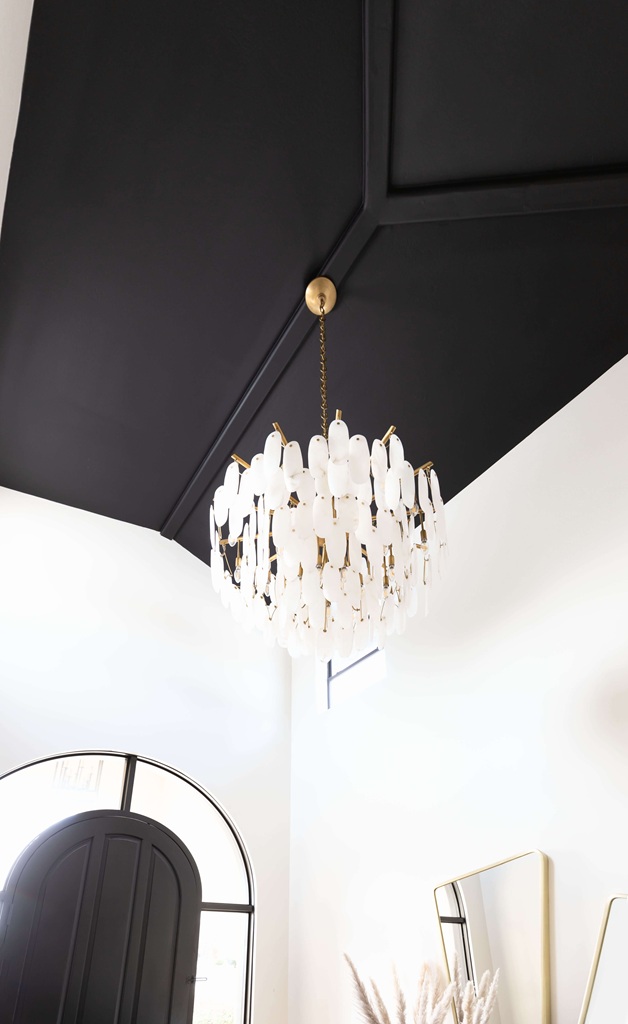
      White chandelier under black ceiling panel

      What is the Most Expensive Part of a Bathroom Remodel?​

      What is the Most Expensive Part of a Bathroom Remodel?​


      Bathroom renovation is one of the most powerful renovation projects that you can perform to your home. Not only will it refresh your room in appearance, but also provide you with more functionality and increase the value of your house. Renovation of the bathroom, though, can soon get expensive and homeowners are left thinking ‘what is the most expensive part of a bathroom remodel?’ To assist you in planning, we will analyze the most prominent factors influencing the cost of bathroom remodeling and take you through steps on how to maximize your returns.

       Bathroom floor with geometric tile pattern

      Labor Costs in Bathroom Remodeling 

      One of the biggest expenses in a bathroom remodel is labor. Hiring professionals such as plumbers, electricians, or tiling experts can significantly impact your budget. On average, labor comprises 40% to 60% of the total remodeling cost. For instance, hiring a licensed plumber to relocate pipes or install new fixtures can cost $50 to $150 per hour, depending on your location and the complexity of the job. 

      Home DIY repairs will be marked as cost-effective, but at its own cost. Plumbing or electrical errors become even more expensive in the long run. A seasoned contractor might be pricier upfront, but gets everything done correctly to code and will last centuries. Seeking out the best bathroom remodel contractors in Scottsdale or similar trusted professionals in your area can save you time, money, and headaches. 

        Modern bathroom with black tub and wooden vanities

        The Cost of Materials: Decisions Matter 

        The items you choose for your bathroom renovation vary wildly in cost. Tiles, for example, range from $1 a square foot for simple ceramic to $20 or more for imported marble. Vanities, countertops, and cabinets similarly have vastly differing prices. The factory-made versions you can find at big chains are very low-priced, whereas custom versions will set you back more. 

        Even smaller details like faucet finishes, shower heads, and mirrors can heavily influence expenses. Opting for high-end materials may offer a sophisticated look, but balancing luxury with durability is essential if you’re mindful of bathroom remodel expenses. 

        Black freestanding tub with modern decor

        Structural Changes Can Elevate Costs 

        Structural modification is another aspect that may increase remodeling expenses by leaps and bounds. Several processes like relocating plumbing lines, wall tear-outs, or ceiling relocation require larger amounts of effort and labor. Like relocating a toilet or shower, which could require high-grade plumbing work. And keep in mind additional labor fees on top of permit fees and potential delays in case there does turn out to be some kind of underlying issue along the way. 

        Before making any major structural changes, seek the expertise of professionals to determine the best route for your home and avoid expensive mistakes. Consulting bathroom remodel designers will help you create a more efficient and cost-effective plan. 

        Modern white bathroom with central bathtub

        Fixtures and Appliances: Standard vs. Luxury 

        Fixtures and appliances are priced differently depending on whether you want standard or upgraded versions. Economy versions of the toilet will range from $100 to $300, with the more expensive versions featuring built-in bidets or heat costing over $1,000. Bathtubs are also different in price, with a basic acrylic model costing $500 and a freestanding soaker tub over $3,000. 

        Showers, faucets, lighting, and the like come with a price plan. As much as such luxuries as rain shower heads and high-end vanity lighting bring spa living to the forefront, so do these luxuries drive up the price. Affordability can be a matter of simplicity without compromise. How expensive is a bathroom remodel? The good news is that working with remodeling contractors allows you to set a budget and create a bathroom you love without exceeding it. 


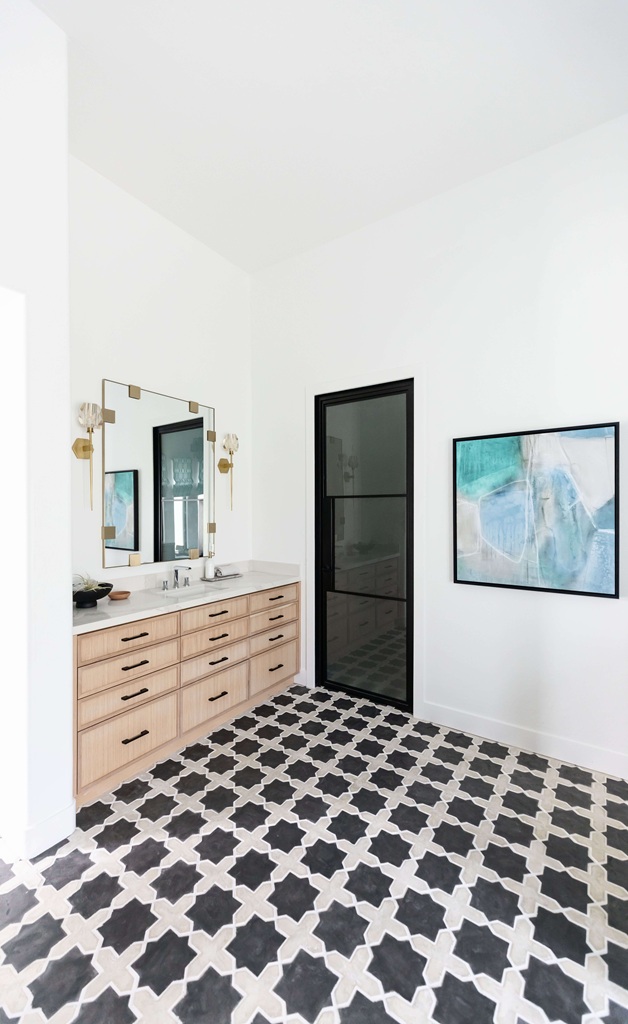
        Bathroom with patterned black and white tile floor

        Making the Most of Your Budget 

        Interior designers and general contractors are great friends to know when attempting to receive maximum value for your bathroom remodeling budget. Contractors give honest estimates, supervise employees, and keep the work at local code. Interior designers add space-planning expertise and materials knowledge to produce a spa-like appearance for a budget. 

        The most costly aspect of a bathroom renovation will generally be based on the details of your project. Labor, materials, structural work, and fixtures are all factors. To make sound money choices, consider your objectives and consult with the professionals. Ultimately, spending money on quality materials and labor will have your bathroom serving your purposes and looking lovely for years to come.

        Learn More: Master Bathroom Remodel Ideas on a Budget

        Top Transitional Style Bedroom Decorating Ideas

        Top Transitional Style Bedroom Decorating Ideas


        A bedroom has to be an oasis, a peaceful, snuggly, and functional sanctuary. But decorating it is to find the compromise between timeless class and up-to-date modernity: a challenge for many. That is where transitional interior design is here for you: an integration of ancient playfulness and contemporary simplicity, resulting in a harmonic, eclectic look. And these are the steps on how to translate this smart, no-frills strategy to your bedroom.

         Modern bedroom with blue accent wall

        The Understanding of Transitional Style 

        Transitional style bedroom design is really a contrast. It combines the classic timelessness of older decor with the clean, bare look of modern design. What’s the result? An elegant space that’s both new and familiar, the best of both worlds merged. It’s a way of looking at the past without leaving it behind.

          Choosing the Right Color Scheme 

          The beginning of a transitional bedroom design is a neutral color scheme. Soothing beige, gray, ivory, and taupe create a soothing background. But where alchemy comes in is adding soft splashes of color to add personality to the room. Try adding muted colors such as dusty blues or sage greens with accent pillows, throws, or artwork. The aim is balance—keep the foundation out of sight so that your accent colors can take center stage.

           Wooden shelf with vases and wicker baskets

          Furniture That Strikes a Balance

          In selecting the furniture for a transitional bedroom decor, the principle is to maintain clean lines and add a touch of softness. Utilize stylish elements like an upholstered headboard with little decoration or a wooden bed frame with traditional nightstands as complementary accessories. Avoid using the tendency of adding too ornate or very modern pieces. Use pieces with a classic appearance but an additional splash of modern design so that the overall look becomes harmonious and subtle.

           Modern bedroom with black accent wall

          Layering Textiles and Patterns

          Transitional bedroom design ideas encourage layering textiles and patterns to add warmth without overloading the room. Start with plain bedding in solid colors or subtle patterns, and layer with throws or blankets in heavier textures such as knit or faux fur. Add rugs with low-profile patterns and drapes in soft, flowing linens to add personality. Patterns need to be used wisely—geometric patterns or subdued florals can be a shot of interest without risking upsetting the calming decor. The aim is to make the room as full and three-dimensional as possible without unease.


           Elegant bedroom with textured wallpaper

          The Role of Lighting

          Lighting will either make or break any room, and with transitional bedroom decorating ideas, lighting is especially crucial in setting the mood. 

          Balance the artificial light with the natural light. Maximize daylight with sheer curtains, and warm and ambient light with table lamps or wall sconces to achieve the feeling of cohesiveness and warmth in the evening. Choose unique, personalized fixtures like a contemporary chandelier or minimalist bedside lights to tie together the traditional and modern aspects.

           Modern TV area with white sideboard

          Accessorizing with Your Personal Touch 

          Accessories are where you can let your personality shine through in the design. You can introduce a mix of older items, like antique vases or framed photographs, alongside newer, modern things like minimalist sculpture or metallic accents. Don’t clutter the room by simply introducing objects that aren’t important to you. Thoughtfully selected decor objects will be conversation points as well as help in the design without causing any issues.

           Cozy bed with navy accent wall

          Restore Equilibrium to Your Bedroom 

          A transitional style bedroom isn’t a trend; it’s a lasting philosophy of style that unites sophistication and adaptability. With layers of accented texture, a mix of old and new, and soft neutrals, you can create a timeless yet unique sanctuary in your very own house. Start with your best ideas, and observe how your bedroom becomes the perfect blend of tradition and modernity.

          Discover More: How to Design Your Dream Bedroom

          Master Bathroom Remodel Ideas on a Budget

          Master Bathroom Remodel Ideas on a Budget


          Renovating your master bathroom doesn’t have to cost an arm and a leg. With some creative planning and smart decision-making, you can design a stunning remodel without incurring debt. Whether you dream of having a spa-like ambiance or simply freshening up stale features, this guide will show you how to make budget-friendly choices that deliver big impact.

           Entryway with pink bench and artwork

          Planning and Budgeting for Success 

          The most important thing about any budget renovation is to have a realistic plan from the start. Begin by deciding what actually needs to be renovated. Are the tiles outdated? Is the vanity worn? Prioritize according to what will have the greatest visual impact. 

          Next, decide on a specific budget for the project and stick to it. Budget your funds carefully, balancing necessary adjustments against simply “nice-to-have” ones. Remember to set aside 10% of your budget for the unforeseen; planning ahead can save you unnecessary distress in the future. 

          With numbers and objectives determined, next take some time browsing inspiration on design blogs, Pinterest, and social media. A well-thought-out vision ensures your spending aligns with a cohesive aesthetic. For those looking for bathroom remodel ideas on a budget, starting with careful planning is key to success.

             Modern bathroom with bathtub decor

            DIY vs. Hiring a Professional 

            When budget remodeling, it is understandable to leap immediately into DIY approaches to save time and money. Painting walls, changing light bulbs, or simply cleaning grout are easy tasks that can mean savings, especially if one is prepared to get hold of a toolkit. Yet not all jobs are suited for the amateur renovator. Larger functions such as exchanging plumbing, changing tiles, or rewiring power fixtures should remain in the skilled hands of licensed professionals to help prevent costly damage in the long run. 

            It might seem a luxury to employ an interior designer, but many have affordable consultation packages. They can walk you through pitfalls, assist in simplifying the decision-making process, and stretch your budget. If you’re at a loss, they can generally recommend what the best middle option would be. For example, if you’re tackling a bathroom remodel in Paradise Valley, a designer familiar with your area might offer insights into locally available resources and styles that fit your budget.

             Bright bathroom with dual vanities

            Cost-Effective Material Choices 

            Costly items like countertops, flooring, and fixtures can easily suck the life out of your renovation budget, but wise material choices can save you money without sacrificing style. 

            For countertops, employ laminate or butcher block, more affordable alternatives to natural stone. For flooring, luxury vinyl tiles (LVT) mimic wood or marble designs at a tenth of the cost and are waterproof, as well. Want to renovate fixtures? Matte black or brushed nickel options are often available at discount stores or online marketplaces. 

            Focus on reusing whenever possible. Could your current vanity base be updated with a fresh coat of paint and new hardware instead of replacing it entirely? Being resourceful with what’s already in your space can save considerable amounts. This approach works especially well if you’re considering master bathroom remodel ideas on a budget and looking for affordable but stylish solutions.

             Bathroom vanity with black faucets

            Infusing Personal Narratives and Storytelling

            Small Changes, Big Impact 

            With a minimal budget, slight changes can produce dramatic changes. Begin with the paint. Breathe some life into your walls with an updated, neutral color or just one accent wall and watch how it dramatically overhauls the ambiance of your bathroom. Minor improvements in the lighting department also make a very big impact. Replace old-school fixtures with striking pendant lights or LED mirrors and incorporate a new, modern essence. 

            Add some accessories like fresh towels, shower curtains, and plants to further improve the look without spending too much. Consider adding affordable open shelving to display trendy jars or rolled-up towels, giving your bathroom the chic designer look. For those searching for bathroom remodeling on a budget, small touches like these can make a surprisingly big difference. Of course, interior designers can save you the trouble and generate a healthy ROI.  


             Woven basket and snake plant by mirror

            Begin Your Remodel Today 

            Renovating your master bathroom on a shoestring budget is entirely doable with intelligent planning, meticulous material choice, and judicious prioritization of renovations. With the proper professional assistance to utilize your budget, you can give your bathroom a spanking new appearance without emptying your wallet. Start small, aim for dramatic transformations, and bask in the joy of a beautifully remodeled bathroom that won’t break the bank.

            Explore More: How to Design a Spacious Luxury Master Bathroom