One of the first questions I ask new clients is whether they gravitate toward modern or traditional design. The answer usually comes quickly, almost instinctively, and then the follow-up is always more complicated. Because most people do not want a room that is purely one or the other. They want something that feels intentional and livable, not like a showroom or a museum replica.
Here in
Scottsdale, the split between these two design directions is real. You have newer builds in DC Ranch and Silverleaf that lean contemporary, with clean lines, low-profile furniture, and an almost architectural restraint. Then you have older homes in Paradise Valley and Arcadia with original details, warm wood, and a formal sensibility that actually suits the lifestyle of the homeowners. Neither is wrong. But making the right choice for your specific space, your architecture, your family, and your daily life takes more than picking a Pinterest board.
What Modern Living Rooms Actually Look Like
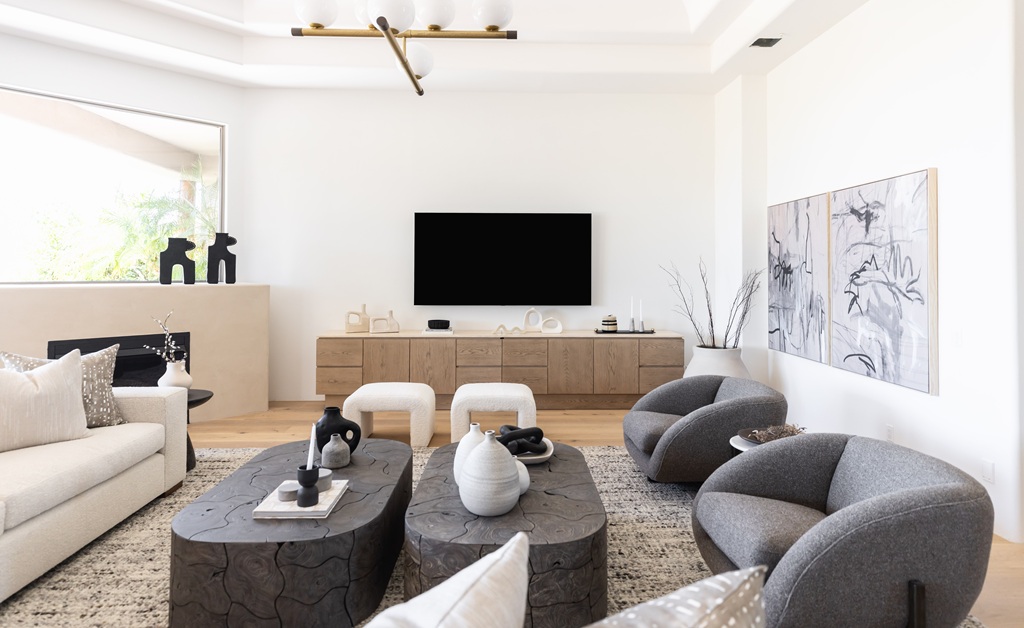
Modern design is often misread as cold or minimal. The best modern living rooms I have designed are anything but. What defines the style is not a lack of warmth, it is a commitment to simplicity of form. Furniture has clean silhouettes. Upholstery tends toward solid fabrics rather than pattern. Built-ins and cabinetry have flush fronts and concealed hardware. Color palettes are controlled, usually anchored in neutrals with one or two deliberate accents.
In the desert, modern design has a natural home. The light here is intense and directional, and a room with too much pattern or ornamentation can feel visually exhausting by midday. Clean lines let the architecture breathe. Materials like concrete, stone, glass, and matte metals read beautifully against the landscape outside. When House Beautiful or Architectural Digest features a Scottsdale home, more often than not it leans in this direction for exactly that reason.
That said, modern living rooms fail when they are all surface and no warmth. I always bring in texture to counterbalance the clean lines. A chunky linen sofa, a live-edge coffee table, a handwoven rug, layered throw pillows in natural materials. The structure of the room is modern. The layers make it livable.
What Traditional Living Rooms Get Right
Traditional design gets a reputation for being stuffy, but that is almost always a failure of execution, not the style itself. A well-done traditional living room is one of the most comfortable spaces you can build. The furniture is scaled for actual human beings. There is pattern but it is intentional. Molding, millwork, and built-in bookcases add character that newer construction simply does not have.
What I love about traditional interiors is that they tend to age gracefully. A room anchored in quality antiques, good upholstery in durable fabrics, and classic architecture does not go out of style. Martha Stewart Living has championed this for decades. The trick is keeping it from tipping into frozen-in-time territory. Fresh paint colors, updated lighting, and edited accessories keep a traditional room from feeling like it belongs to a different era entirely.
In older Arcadia and Paradise Valley homes, traditional elements often already exist in the bones of the house. Crown molding, arched doorways, wood floors with warmth and history. Fighting those details in favor of a sleek modern interior rarely works as well as honoring them and updating the soft goods and finishes around them.
What Your Architecture Actually Wants
Here is the honest answer I give every client who comes to me with this question: your architecture has a vote. A flat-roofed contemporary build in North Scottsdale is going to resist traditional furniture and ornate details. A 1980s Santa Fe-style home in Paradise Valley is going to look strained if you try to turn it into a spare, loft-like space. The interior needs to respond to what is already there, including ceiling heights, window proportions, flooring materials, and the overall feel of the shell.
That does not mean you are locked in forever.
A whole-home remodel is an opportunity to reorient the architecture entirely. We have taken homes with dated traditional bones and reworked them into something much more aligned with a modern sensibility, opening walls, removing heavy molding profiles, replacing carpeting with large-format tile or white oak. But that is a construction project as much as a design project, and it requires
the right permits and licensing in Arizona to do properly.
Mixing Modern and Traditional: Where Most Scottsdale Living Rooms Land
The majority of living rooms I design are neither fully modern nor fully traditional. They live somewhere in the middle, which the design world calls transitional. A clean-lined sofa paired with an antique console. A neutral palette broken up by a Persian-style rug. Contemporary recessed lighting above a traditional fireplace surround.
This middle ground works because it reflects how most people actually live. Pure modernism can feel demanding to maintain and cold in the evening. Pure traditionalism can feel heavy and hard to update as your taste evolves. The balance point is where rooms feel both finished and adaptable.
The key to making this work is coherence. Every element you introduce should be in conversation with the others. The proportions need to be consistent. The finish tones, whether warm or cool, need to align across materials. When mixing periods and styles, I always build from one anchor piece, usually a sofa or an area rug, and make every other selection relate back to it.
If you are figuring out which direction is right for your living room or your whole house,
I am happy to talk through it. The right answer is almost always more specific to your home and lifestyle than any style category can capture on its own.