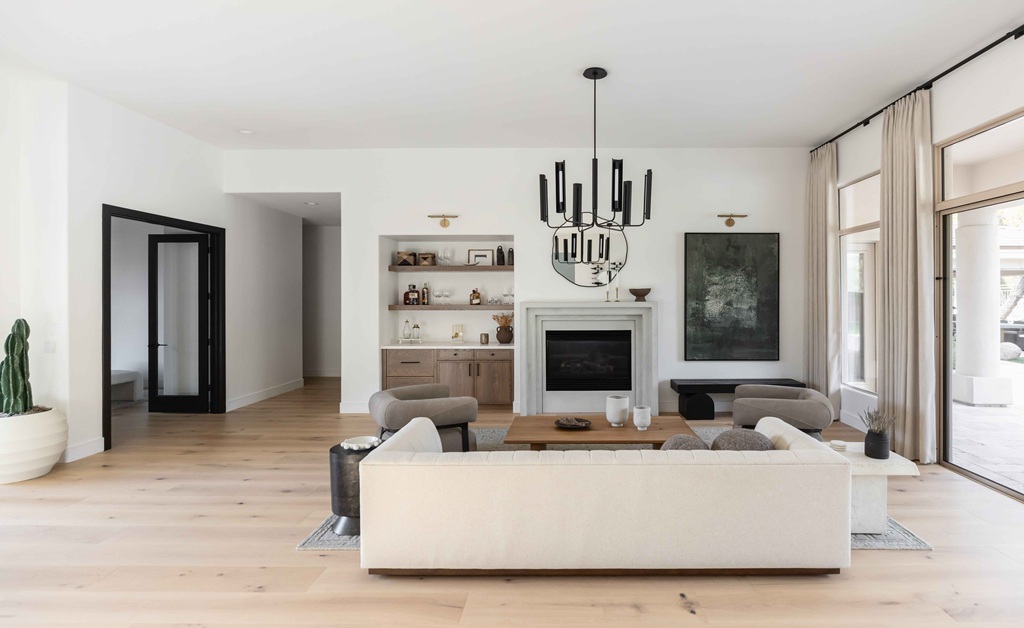
Transitional design is the style category that rarely gets its due. It is not as photogenic as pure minimalism and not as dramatic as a heavily layered traditional room. But it is, in my experience, the style that actually serves people best over the long term. It adapts. It tolerates changing tastes. It photographs well and lives even better.
In
Scottsdale and the broader Phoenix area, transitional living rooms make particular sense. The desert light is unforgiving to interiors that are too precious or too heavily patterned. The lifestyle here tends toward indoor-outdoor living, open floor plans, and spaces that need to function well for families and entertaining alike. Transitional design handles all of that without demanding you commit fully to one aesthetic camp.
Start with a Neutral Foundation and Add Warmth Through Texture
The backbone of every transitional living room I design is a neutral palette. Not cold gray, not stark white, but warm neutrals: greige, warm taupe, soft linen, sand. These colors do not compete with the light coming through large windows, and they create a backdrop that can absorb a range of accent colors without reading chaotic.
The warmth in a transitional room comes from texture, not from color intensity. Think a sofa in a substantial linen or a textured bouclé. A coffee table in travertine or warm wood. Grasscloth on an accent wall if the ceiling height allows. Layered rugs that combine a flat-weave with a more pile-heavy piece. These decisions create visual interest without breaking the calm that makes transitional rooms so livable.
Choose Furniture That Blends Structure and Comfort
Transitional furniture is defined by pieces that have traditional proportions but contemporary simplicity. A roll-arm sofa with clean upholstery and no nailhead trim. A wingback chair in a solid performance fabric rather than a printed toile. A coffee table with traditional turned legs but a stone or lacquered top. These combinations are what give transitional rooms their particular character.
Scale matters here more than in any other style category. Transitional rooms fail most often because the furniture is undersized for the architecture. In Arizona, living rooms tend to have higher ceilings and more square footage than you find in older East Coast homes. You need pieces that fill the room properly. A sectional that seats eight in a room with 12-foot ceilings reads correctly. A loveseat in the same room looks like an afterthought.
Bring in One or Two Antique or Vintage Pieces
Nothing gives a transitional room more depth and credibility than one genuinely old piece. A 19th-century chest used as a console behind the sofa. A set of vintage candlestick lamps on a side table. An antique mirror above the fireplace. These items have a quality of material and craft that contemporary production pieces rarely match, and they anchor the room in a way that tells you it was designed with intention.
Scottsdale has excellent vintage and antique sources, and I am always scouting for clients. The key is restraint. One or two significant antique pieces read as sophisticated. A room full of them reads as traditional, which is a different direction entirely.
Use Pattern Strategically, Not Generously
One of the marks of amateur transitional design is too much pattern. A patterned rug, patterned throw pillows, a patterned accent chair, and patterned curtains in the same room become visually exhausting even if every individual piece is beautiful. My general rule is to allow pattern in two places per room, maximum. Usually that means the rug and one set of throw pillows, or the curtains and the rug. Everything else stays solid or textural. This keeps the room calm while still giving it visual interest and personality.
In desert-facing rooms with significant natural light, I am especially careful about pattern saturation. The light changes throughout the day and it intensifies color and pattern in ways that can make a room feel overwhelming by midday even if it looked perfect in the morning.
Lighting Is the Detail Most People Get Wrong
Transitional rooms need layered light: ambient, task, and accent. A single overhead fixture, even a beautiful chandelier, is not enough. You need table lamps for warmth, floor lamps for reading zones, and some form of accent lighting if you have art or architectural features worth highlighting.
For transitional style, I gravitate toward fixtures with traditional silhouettes in updated finishes. A candlestick chandelier in unlacquered brass rather than polished chrome. A drum pendant with a linen shade. Swing-arm sconces in an aged bronze. These choices read as classic in form but current in finish, which is exactly the balance transitional design is built on.
Bringing It Together in an Arizona Living Room
The best transitional living rooms I have designed in Scottsdale and Paradise Valley share a few common traits. They are edited rather than maximalist. They have a strong furniture plan with pieces scaled to the architecture. They use color with restraint, letting texture and material carry the visual weight. And they feel complete rather than in-progress, which takes more discipline than it sounds.