
To de-Tuscanize a Scottsdale or Paradise Valley home means stripping out the dark wood cabinetry, wrought iron accents, and heavy stone finishes of the early-2000s Tuscan building boom and replacing them with lighter stone, simplified millwork, and a warmer, more current palette, all while keeping the architecture's bones intact.
The right approach depends on how much of the original structure you want to preserve, whether you are renovating room by room or all at once, and how quickly you want to see results.
This guide walks through what de-Tuscanizing actually involves, the five design moves that make the biggest difference, and three real before-and-after transformations Living with Lolo has completed on Tuscan-era homes in Scottsdale. Each project includes real scope and real cost ranges, not stock inspiration images.
What Does It Mean to De-Tuscanize a Home?
"De-Tuscanizing" describes the process of updating a home built in the heavy, ornate Tuscan or Mediterranean Revival style that dominated new construction in Arizona through most of the 2000s. That style leaned on dark stained wood cabinetry, wrought iron light fixtures, travertine or saltillo tile, arched doorways, and warm gold-and-burgundy color palettes. It was the look luxury buyers wanted at the time, and in the right hands it still has real architectural value. Two decades later, those same finishes read as dated rather than timeless.
Living with Lolo, an interior designer Scottsdale AZ homeowners turn to for exactly this kind of project, sees this request constantly across Scottsdale and Paradise Valley. Clients love their home's bones, the layout, the views, the lot, but the finishes no longer match how they actually want to live. De-Tuscanizing is not about erasing the architecture. It is about editing it.
Why So Many Scottsdale and Paradise Valley Homes Started Out Tuscan
Most of the homes Living with Lolo de-Tuscanizes today were built between 2000 and 2008, when Tuscan and Mediterranean Revival architecture dominated new luxury construction in Arizona. Builders in Silverleaf, DC Ranch, Paradise Valley, and across North Scottsdale leaned into the style because it photographed well, sold well, and suited the desert light. Terracotta roof tiles, hand-troweled stucco, wrought iron, and travertine were the finishes buyers wanted at the time.
Nearly two decades later, those same homes are some of the most valuable real estate in the Valley, and also some of the most dated. The architecture, the arches, the volume, the courtyards, the mountain views, still holds up. The finishes inside frequently do not. That gap is exactly why de-Tuscanizing has become one of the most requested renovation projects Living with Lolo's general contracting team sees in Scottsdale right now.
Homeowners in these neighborhoods are rarely renovating because something is broken. They are renovating because a home that once felt current now reads as a time capsule, and living with that mismatch every day is its own kind of cost.
The Five Moves That Actually De-Tuscanize a Home
De-Tuscanizing a home comes down to five repeatable moves. You do not need to do all five at once, but doing them out of order usually produces a room that looks half-finished. Skipping straight to paint and furniture without touching stone, millwork, or lighting is the most common mistake homeowners make when they try to update a Tuscan-era home on their own.
Lighter Stone and Countertops
Heavy granite and dark travertine are the single most dating material in a Tuscan-era home. Replacing them with lighter quartzite, honed marble, or a warm porcelain that mimics natural stone does more to modernize a kitchen or bathroom than almost any other single change. This is usually the first move Living with Lolo makes on a Scottsdale kitchen remodel with Tuscan origins.
Simplified Millwork and Arches
Ornate raised-panel cabinetry, heavy crown molding, and rounded archways are hallmark Tuscan details. Squaring off an archway, replacing raised-panel doors with a cleaner slab or shaker profile, and removing oversized crown molding immediately reads as current. This does not require moving walls. It requires editing the details attached to them.
Updated Flooring
Saltillo tile, heavily patterned travertine, and dark wood-look tile are common in Tuscan-era Scottsdale homes. Wide-plank engineered oak, honed large-format stone, or a quieter neutral tile replaces the visual noise with something that reads calm and current. It is one of the changes clients notice fastest when they walk back into a finished space.
New Hardware and Fixtures
Scrolled wrought iron hardware, oil-rubbed bronze fixtures, and ornate cabinet pulls are inexpensive to replace and disproportionately impactful. Swapping these out for clean-lined brass, matte black, or brushed nickel hardware is one of the highest-return, lowest-cost moves in any de-Tuscanizing project.
Layered Modern Lighting
A single ornate chandelier and can lights on one switch are a Tuscan-era default. Layered lighting, ambient, task, and accent, on separate dimmable circuits changes how a room feels day to night. It is one of the most requested upgrades Living with Lolo's design team builds into these projects.
Real Transformation: Hidden Hills, Scottsdale
The Hidden Hills project started as a dated Mediterranean home in Scottsdale with dark stained cabinetry, an arched tile backsplash niche, and travertine flooring throughout the kitchen and living areas. Living with Lolo's scope covered the kitchen, dining room, foyer, living room, and two bathrooms.
Before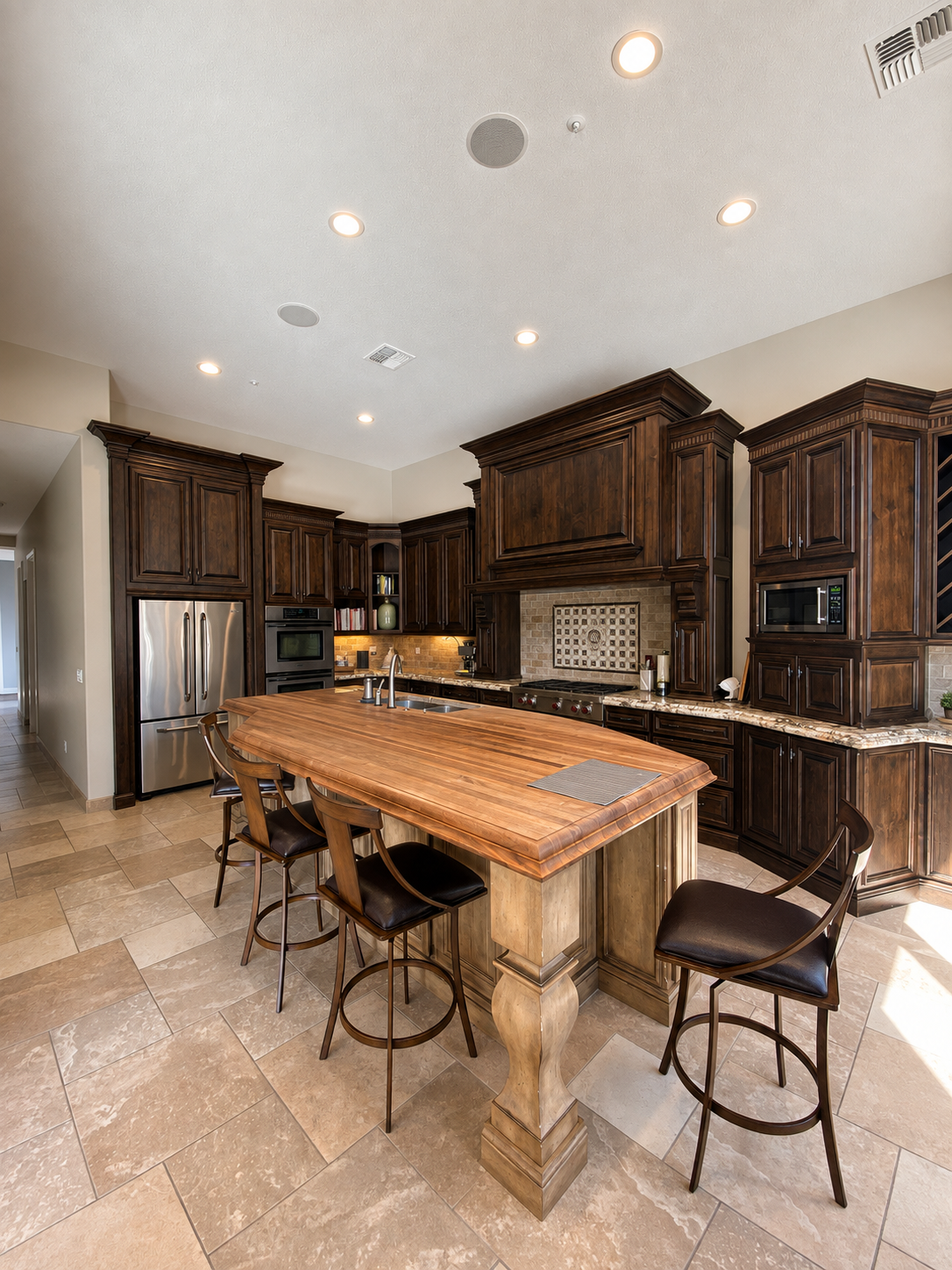
Before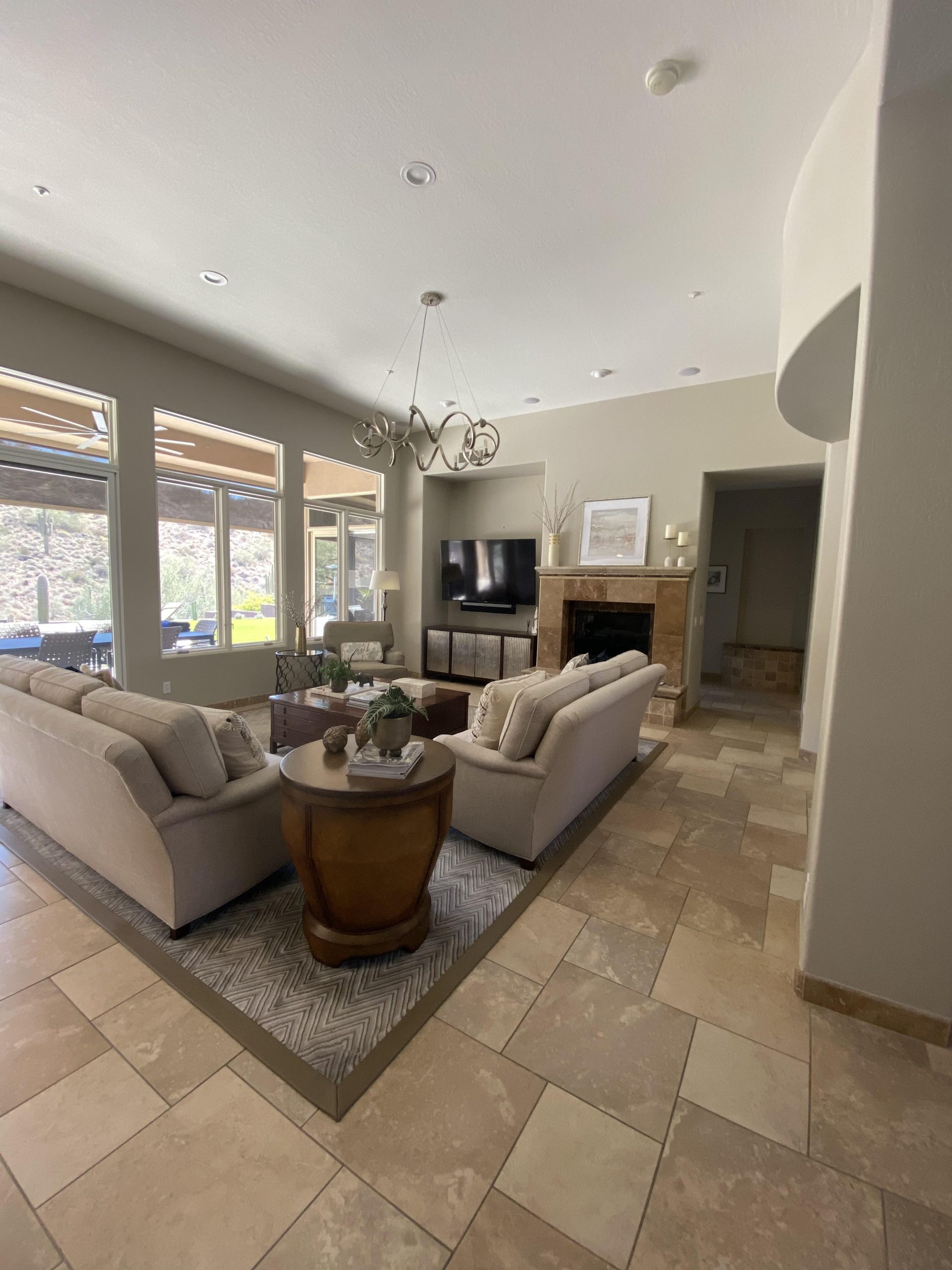
After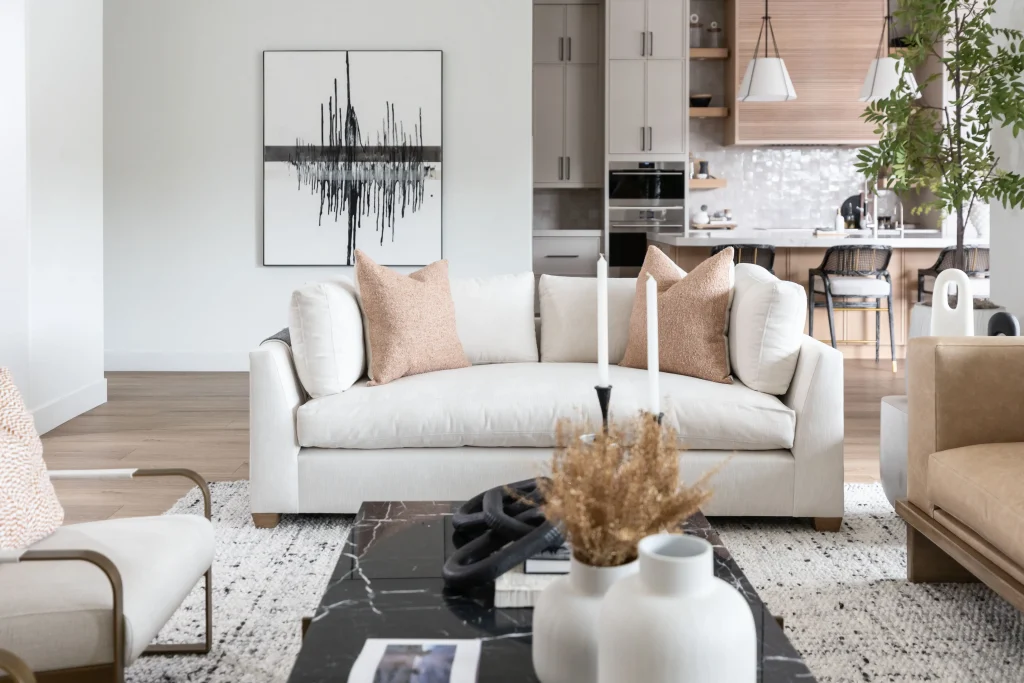
The team replaced the heavy dark cabinetry with light oak, softened the arched detailing, and introduced tonal textures and fluted accents throughout. The result is a serene, soft-modern space that keeps the home's original volume and natural light while removing every trace of the Tuscan-era palette. It is one of the clearest before-and-after examples of what de-Tuscanizing looks like in a real, lived-in Scottsdale home.
Real Transformation: Wabi Sabi Abode, North Scottsdale
The Wabi Sabi Abode began as a 2000s builder-grade Mediterranean home in a gated North Scottsdale neighborhood, with heavy Mediterranean detailing throughout the kitchen, living room, and primary bath. Lauren Lerner and designer Sara Morgan led a full remodel that stripped back the bulky cabinetry and dark finishes and replaced them with warm wood tones, a custom plaster hood, integrated shelving, and matte porcelain countertops that mimic natural stone.
Before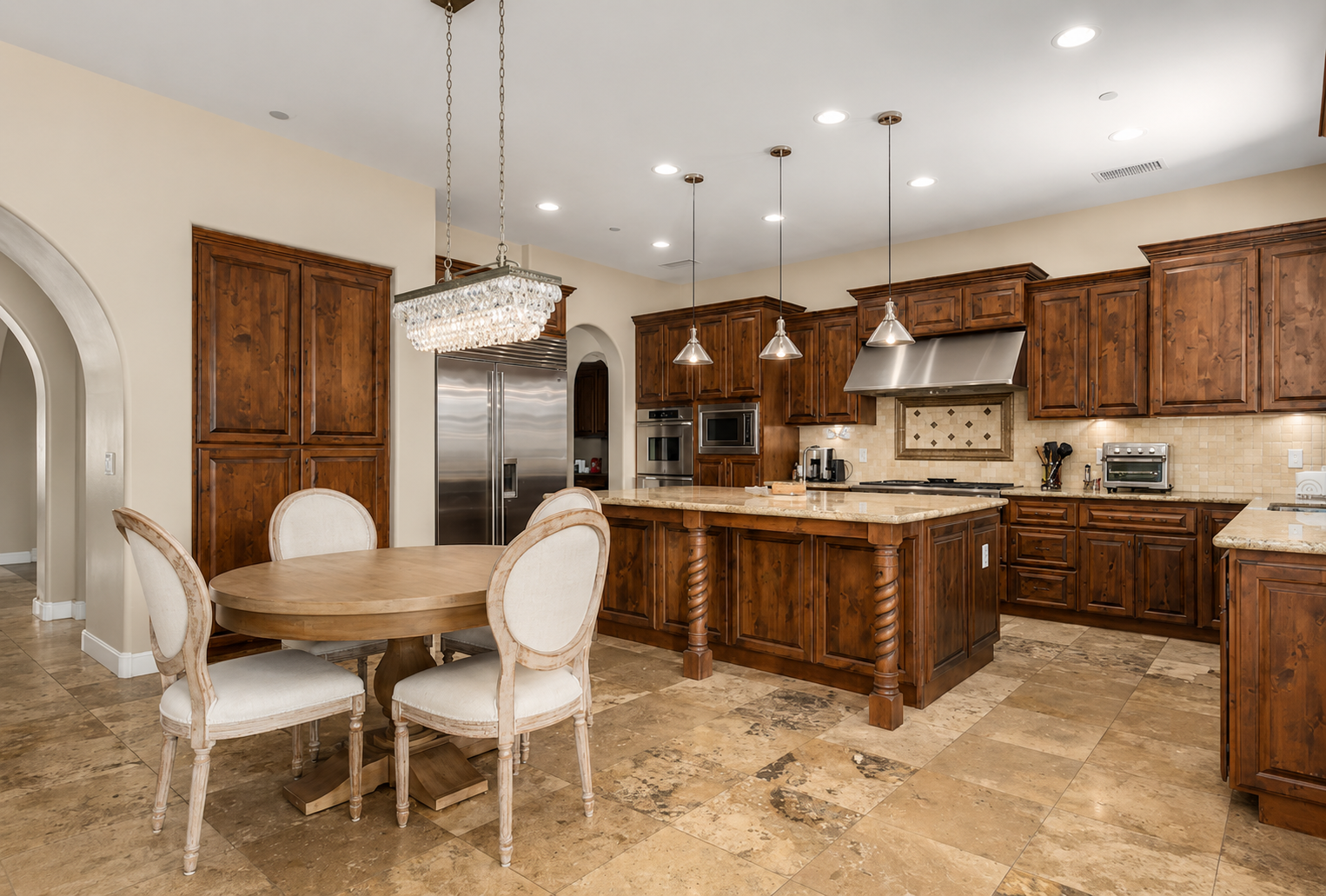
After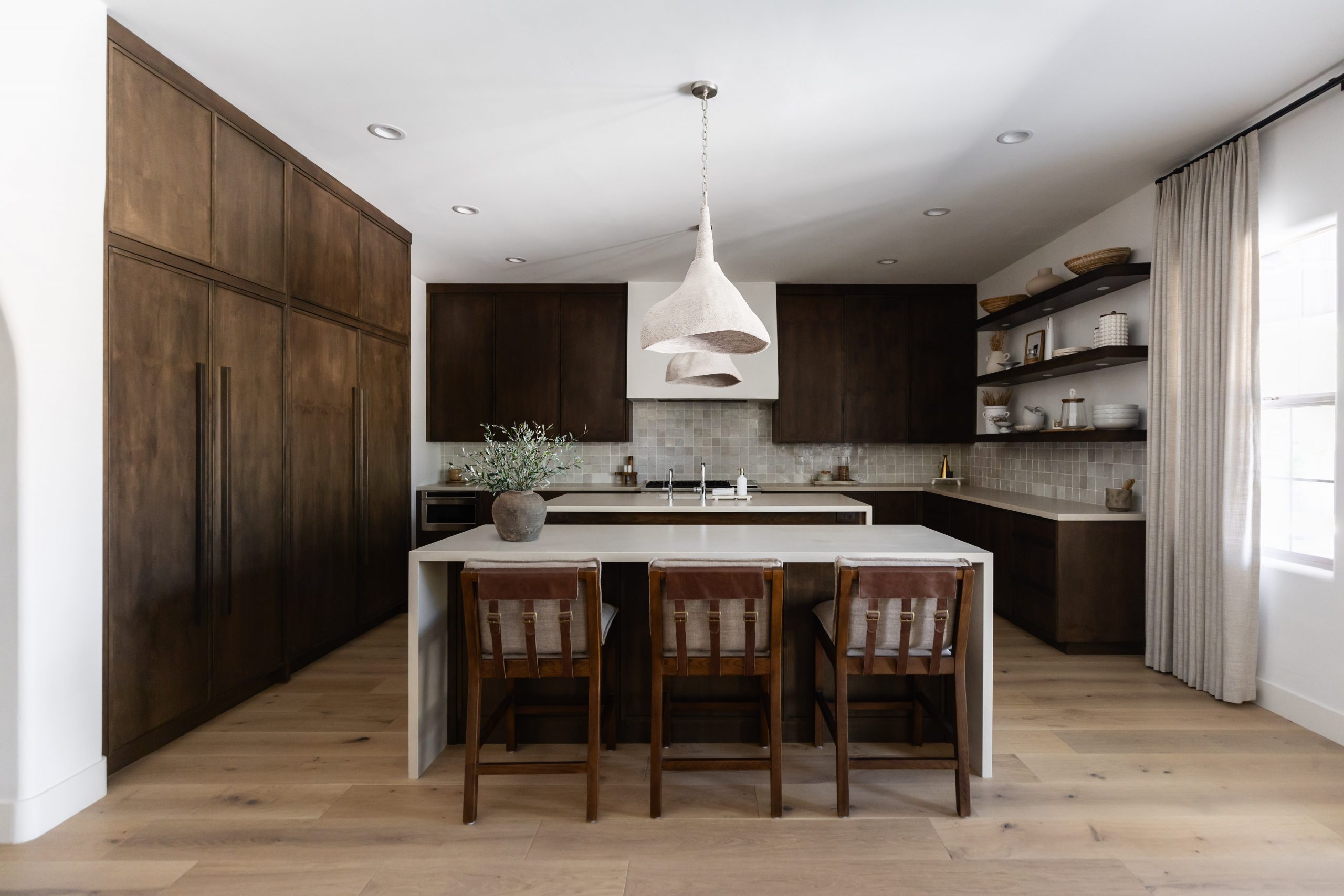
The project also introduced natural mineral limewash walls and handmade zellige tile, textures that read as intentional and organic rather than simply modern for modern's sake. At 3,500 square feet, the design phase took six weeks and construction took four months, a timeline consistent with what Living with Lolo typically quotes for a full home de-Tuscanizing remodel of this scope.
Real Transformation: Lolo Prestige Property, Scottsdale
The Lolo Prestige Property started as a Spanish and Tuscan-influenced Scottsdale home with saltillo tile flooring, knotty alder doors and cabinetry, arched openings, and glass block detailing, finishes that place it squarely in the same 2000s builder-grade category as the other two projects in this guide. Living with Lolo's scope covered fourteen spaces across the home, from the kitchen and primary suite to a full upstairs loft bar and pool table room.
Before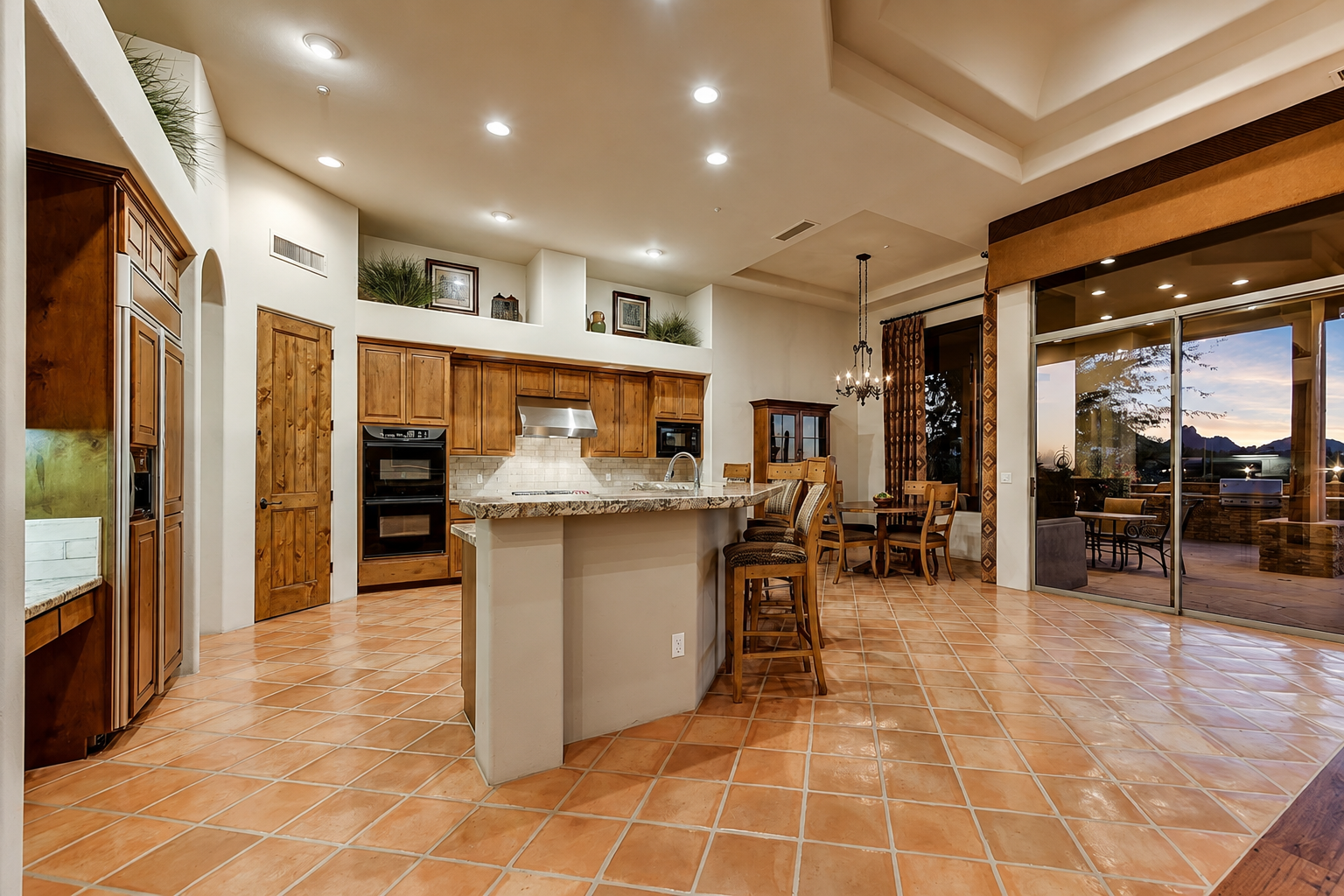
Before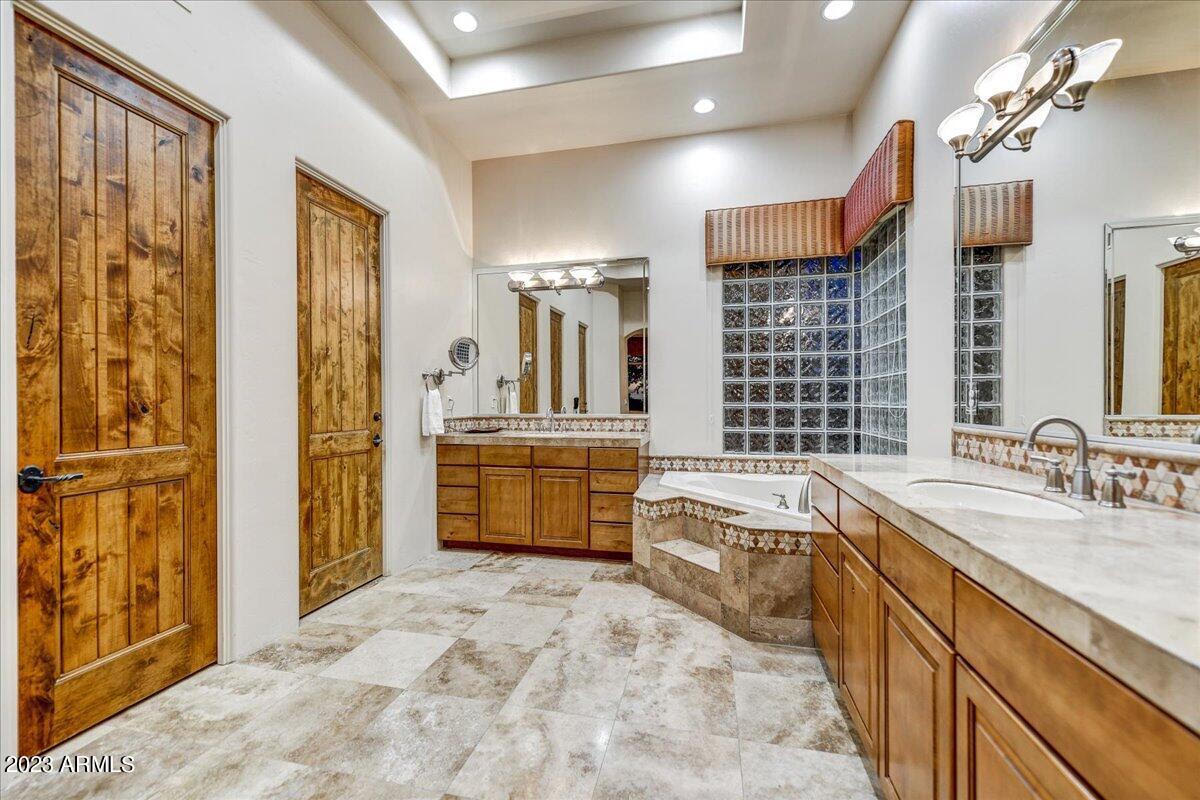
After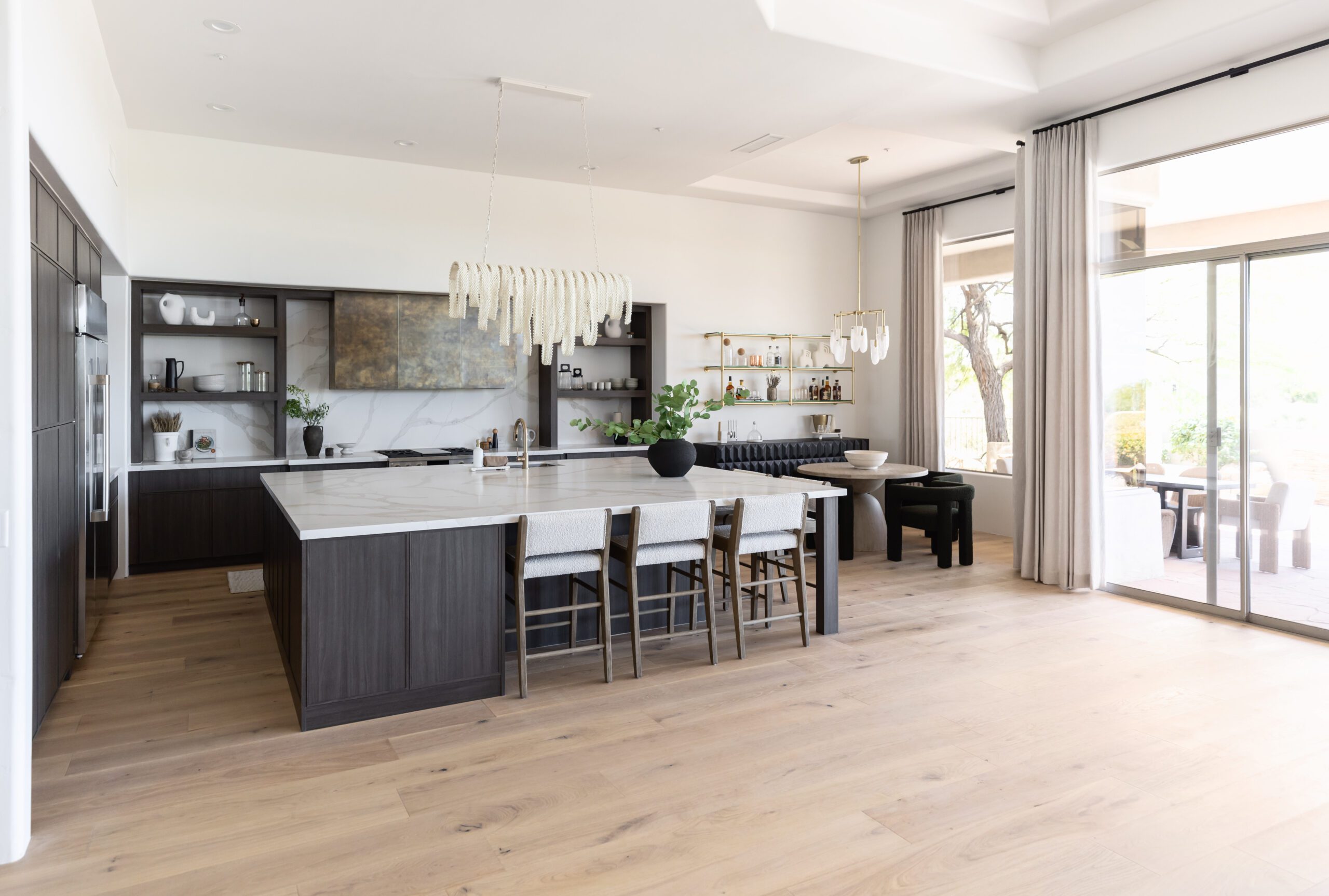
The design direction shifted the home toward a Sophisticated Contemporary style with a masculine edge, deep wood tones, luxe stone accents, and a restrained palette that reads confident rather than ornate. It is the largest of the three projects in this guide and shows what de-Tuscanizing looks like at full-home scale rather than room by room.
Across all three projects, the same pattern holds. The architecture, the volume, the arches, the courtyards, was never the problem. The finishes were. Once those finishes are replaced with the right materials and the right hand, a Scottsdale home built in 2005 can look and feel like it was designed this year.
What the Data Shows About Renovating a Dated Home
Americans spent an estimated $603 billion on home remodeling projects in 2024, and kitchen upgrades remain one of the highest-demand and highest-satisfaction projects homeowners undertake, according to the National Association of Realtors and National Association of the Remodeling Industry's 2025 Remodeling Impact Report. (Source: NAR, 2025) Kitchen upgrades specifically saw a 48% increase in demand among remodeling professionals over the past two years, the highest of any project category tracked in the report.
That tracks with what Living with Lolo sees on the ground in Scottsdale. Nearly every de-Tuscanizing project starts in the kitchen, because that is where the dark cabinetry, heavy stone, and dated hardware are most concentrated and most used daily.
Nationally, the median renovation spend held at $20,000 in 2025, but the top 10% of renovation budgets rose to $150,000, up 7% from $140,000 the year before, according to the 2026 U.S. Houzz & Home Study. (Source: Houzz, 2026) That same study found that traditional style and wood-tone cabinetry are gaining ground over the stark white, ultra-modern kitchens that were popular a few years ago, a shift that supports the way Living with Lolo approaches de-Tuscanizing: the goal is warmth and craftsmanship without the dated Tuscan-specific details, not a cold, generic modern reset.
National medians almost always understate what a luxury Scottsdale renovation actually costs, and that gap is itself useful information. A homeowner budgeting off a national $20,000 median for a de-Tuscanizing project in Silverleaf or Paradise Valley will be underprepared by a significant margin.
How Much Does It Cost to De-Tuscanize a Home in Scottsdale?
A kitchen and primary living area de-Tuscanizing project in Scottsdale typically costs $75,000 to $250,000 or more, depending on the extent of structural changes, cabinetry, and stone selections. A full home de-Tuscanizing remodel, covering the kitchen, living areas, primary suite, and secondary bathrooms, typically runs $400,000 to $800,000 or more, in line with the scope of the Wabi Sabi Abode and Lolo Prestige Property projects described above.
$75,000 to $150,000: Kitchen-Focused Refresh. New countertops, refinished or replaced cabinetry, updated hardware and lighting, and flooring in the kitchen and adjacent living space. This is the fastest way to remove the most dated Tuscan-era finishes without touching the rest of the home.
$150,000 to $400,000: Multi-Room Remodel. Kitchen, primary bathroom, and one or two additional living spaces, with some structural or layout changes such as opening an archway or relocating a fireplace.
$400,000 to $800,000+: Full Home Remodel. Every room touched, full furnishings, and often structural changes to ceilings, walls, or outdoor living spaces, the scope of the Wabi Sabi Abode and Lolo Prestige Property transformations.
Living with Lolo manages design, construction, and furnishings under one Arizona ROC-licensed general contracting team (ROC #347577), which keeps a de-Tuscanizing project on one timeline and one point of accountability instead of splitting the work between a separate designer and contractor.
Lauren Lerner, founder of Living with Lolo, led the design work on all three transformations in this guide personally, alongside her team across Scottsdale, Paradise Valley, and Arcadia. Living with Lolo has been named Phoenix Magazine Best Interior Design three consecutive years, 2024, 2025, and 2026, and Lauren Lerner's work has appeared in Architectural Digest, The Wall Street Journal, and Luxe Interiors + Design.
Ready to Talk Through De-Tuscanizing Your Home?
Lauren Lerner and the Living with Lolo team work with clients across Scottsdale, Paradise Valley, Arcadia, and the greater Phoenix metro area.Book a Discovery Call
Frequently Asked Questions About De-Tuscanizing a Home in Scottsdale
What does it mean to de-Tuscanize a house?
De-Tuscanizing a house means removing the dark wood cabinetry, wrought iron accents, heavy travertine, and ornate arches typical of 2000s Mediterranean and Tuscan-style homes and replacing them with lighter stone, simplified millwork, and a warmer neutral palette. Living with Lolo has completed this exact transformation on multiple Scottsdale and Paradise Valley homes, keeping the architecture's bones while updating every surface.
Why are so many homes in Scottsdale and Paradise Valley built in the Tuscan style?
Most Tuscan-style homes in Scottsdale and Paradise Valley were built between 2000 and 2008, when builders across Arizona leaned heavily into Mediterranean and Tuscan Revival architecture. Nearly two decades later, those same homes read as dated rather than timeless, which is why de-Tuscanizing has become one of the most requested renovation projects Living with Lolo sees in Scottsdale today.
How much does it cost to de-Tuscanize a home in Scottsdale?
Updating a dated Tuscan home in Scottsdale typically costs $75,000 to $250,000 for a kitchen and primary living area refresh, and $400,000 to $800,000 or more for a full home remodel, depending on scope. Living with Lolo manages design, construction, and furnishings under one Arizona ROC-licensed contract (#347577), which keeps a project like this on one timeline instead of two.
Do I have to gut the whole house to de-Tuscanize it?
No, a full gut renovation is not required to de-Tuscanize a home. Many of the most effective changes, lighter countertops, updated cabinet hardware, refinished or replaced flooring, and simplified millwork, can be done room by room. Living with Lolo typically recommends starting with the kitchen and primary living areas, since those spaces carry the most Tuscan-era detailing and the most daily use.
How long does it take to de-Tuscanize a home?
A single-room de-Tuscanizing update, such as a kitchen, typically takes 4 to 6 months from design through construction. A full home remodel, like the Wabi Sabi Abode project in North Scottsdale, generally takes about 4 months of construction after a multi-week design phase. Living with Lolo manages both design and construction in-house, which keeps these timelines predictable.
Is Living with Lolo licensed to handle both the design and construction?
Yes, Living with Lolo is a licensed Arizona General Contractor, ROC #347577, in addition to being a full-service interior design firm. Lauren Lerner and her team manage design, construction, and furnishings under one contract for Scottsdale, Paradise Valley, and Arcadia projects, which is why homeowners de-Tuscanizing a home often choose Living with Lolo over hiring a designer and a separate contractor.


Lauren Lerner is the founder and principal designer of Living with Lolo, Scottsdale’s luxury interior design and licensed design-build firm. Named Phoenix Magazine Best Interior Design three consecutive years, Lauren leads projects from concept through construction for high-end homes in Scottsdale, Paradise Valley, and Phoenix.