
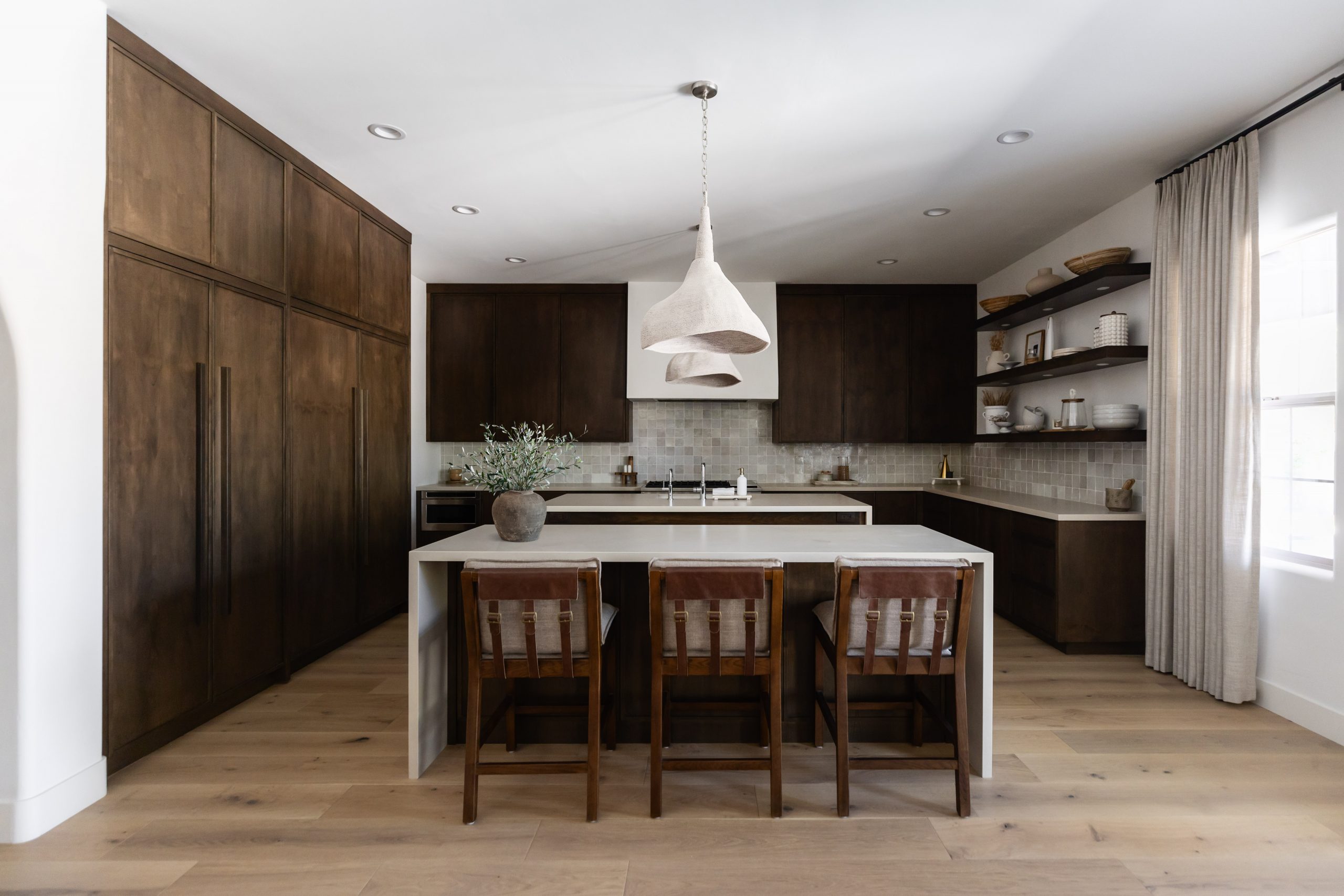
Japandi interior designer tips start with function, proportion, and a thoughtful balance of materials for a calmer home. The balance of Japanese and Scandinavian design influences should support how you use the room. However, a quiet palette alone does not make a room comfortable or useful.
Lauren Lerner’s practical principles offer a starting point for planning. Look at sightlines from doorways, balance hard and soft surfaces, and consider window orientation. Then invest in architectural bones before following a short-lived finish trend.
This guide expands those principles into practical checks for layout, texture, storage, daylight, and comfort. For Scottsdale homeowners, it also distinguishes a material reference from a claim about a project's style. Living with Lolo is a Scottsdale interior design firm that approaches those choices as part of a complete room, not a prescribed look.
Japandi interior designer tips start with a clear view
First, stand at the doorway and look across the space when applying Japandi interior designer tips. Notice the main feature, the furniture edges, and the areas that feel crowded. A calm room needs a clear visual direction as well as places to sit and store things.
Next, test the route between the entrance and the window. Move a proposed furniture footprint on paper before buying anything. For example, a beautiful chair can still interrupt the path through a room. Keep the arrangement practical rather than treating open space as unfinished.
Also, compare the view with the way you enter and leave the room. A low, open arrangement may feel calm but still need storage close to the entrance. Therefore, keep the practical task visible while refining the composition. In a Scottsdale home, assess the actual window view rather than copying the balance of another room.
Our room planning guide explains how a measured sketch helps test those relationships. Then explore the completed portfolio to see different ways furnishings connect to architecture. Use the examples as prompts for your own brief. Japandi interior designer tips should help clarify what matters, not make every room repeat the same arrangement.
Balance wood, stone, and textiles
Compare the room’s hard surfaces with its softer layers using Japandi interior designer tips. Wood, stone, and metal can sit beside upholstery, woven materials, and window treatments. However, a room filled only with smooth finishes may lack the contrast you want.
Lauren considers odd and even groupings alongside that hard-and-soft balance. Instead of applying a fixed formula, look at each grouping in context. For example, a textured seat may soften the effect of a simple table. Choose useful pieces, then review how their surfaces relate.
Also, let the existing architecture inform how much contrast to add. A room with prominent wood already has a material presence that small accessories cannot erase. Instead, review the larger layers first. Then decide whether a softer textile or a simpler finish supports the room better than another hard surface.
The Wabi Sabi Abode project is a useful Scottsdale material reference, not a Japandi project claim. Living with Lolo's design credits sit alongside A Team's contractor credit. For the broader service approach, see our luxury interior design overview. Keep the distinction clear: an example can demonstrate texture without proving that every element belongs to a different design style.
Give everyday objects a place
A quieter room still needs storage for daily life, so Japandi interior designer tips always plan for it. First, list the items you use in that space. Then decide which should remain within reach and which can live behind a door.
Also, check the view from adjoining rooms. A storage piece should help the arrangement rather than dominate it. Invest in useful architectural details before adding more accessories. As a result, the room can feel considered without depending on constant tidying for a photograph.
Next, check the storage piece in use. Open doors and drawers, then review the space left for movement. A cabinet that hides clutter but interrupts a walking route only moves the problem. Therefore, compare capacity, access, and visual weight together before deciding that the largest option is best.
Living with Lolo's design process connects those everyday needs with the wider brief. For full-home furnishing support in nearby communities, our Silverleaf and DC Ranch page explains that service. Scottsdale homes do not all need the same solution. Use Japandi interior designer tips to make room for your routines rather than designing around a photograph that works only when nothing is in use.

Use Japandi interior designer tips to plan daylight
First, identify the direction of each window. Then observe glare, privacy, and brightness at the times you use the room. Treat those observations as part of the design brief, not as a problem to solve after installation.
For information about comparing window attachment performance, see the Department of Energy’s window attachment resource. Next, compare treatment samples beside the room’s other materials. Check how the fabric looks in daylight and under your evening lighting.
Also, review how a treatment looks when it is open and closed. The arrangement needs to work for privacy as well as the view. Then compare it with the room's major textiles so the treatment does not become an isolated decision. In Scottsdale, your own observations should lead the specification, not assumptions based on another exposure.
For related thinking about connected materials and light, see our contemporary interior designer tips. The styles differ, but both discussions begin with function. Our Paradise Valley interior design page offers a nearby professional route if window treatments belong to a larger furnishing brief. Decide the scope before selecting an individual fabric.
Keep comfort at the center
Finally, use Japandi interior designer tips to judge the room by how it supports your routines. In a bedroom, match nightstand height to the mattress and consider rug width against the nightstand span. In a living area, check furniture scale and the route between seats.
These Japandi interior designer tips are planning tools, not a requirement to copy another home. Keep the pieces that serve your life and the architecture that gives the room character. Then use texture, light, and proportion to connect them.
Explore the Wabi Sabi Abode project for material references, or browse our full portfolio. If you want help translating your preferences into a complete plan, review our services and contact Living with Lolo.
Also, try the room as you would use it at the end of a normal day. A chair needs to support sitting, not simply fill a corner. Keep the surfaces you reach for useful and the routes between them clear. Lauren Lerner's practical approach connects comfort with proportion instead of treating restraint as a reason to remove necessary furniture.
For more detail on those bedroom relationships, read our bedroom planning article. Then use the design process to understand a professional route from brief to installation. These Japandi interior designer tips remain tools for your Scottsdale home, not a formula that overrides the architecture or how you live.
Read Wabi Sabi Abode as a material reference
The Wabi Sabi Abode project provides a Scottsdale reference for warm wood tones, layered textures, and a quiet material palette. Living with Lolo's project narrative describes adapting an existing Mediterranean home rather than beginning with architecture already suited to the client's preference. The kitchen, living room, primary bath, and outdoor entertaining areas formed part of the documented remodel.
The project credits identify Living with Lolo's designers and name A Team for general contracting and construction management. Therefore, this article does not describe it as a Living with Lolo design-build project. Nor does it rename the home's documented style as Japandi. Those distinctions preserve the actual team and scope while allowing the photographs to inform a material discussion.
For your own brief, compare the interaction of wood, upholstery, and other surfaces rather than copying the entire scheme. Our portfolio provides additional references. Japandi interior designer tips can guide that review without turning a shared texture or a quiet palette into a claim about another project's identity.
What research adds to Japandi interior designer tips
Style research and performance research answer different questions. Architectural Digest's 2023 Japandi guide describes the connection between Japanese and Scandinavian design and distinguishes it from wabi-sabi alone. Therefore, a wabi-sabi material reference is not proof that a completed project is Japandi. Keep that distinction when building your own brief.
The Department of Energy's window-attachment resource points toward comparable performance information. Meanwhile, the 2026 U.S. Houzz & Home Study found that 37% of renovating homeowners exceeded their initial budget for 2025 projects. That national renovation figure is not a Japandi furnishing price or a forecast for Scottsdale luxury homes.
Instead, use the evidence to separate taste, performance, and scope. Our services overview and design process explain how a professional brief brings decisions together. For your Scottsdale room, research should support the next useful question: what needs changing, what already works, and which decisions require more coordination before you order? Then keep those answers together when comparing the next proposed selection.
Define a furnishing or renovation brief in Scottsdale
Lauren Lerner is the founder and principal designer of Living with Lolo, a Scottsdale luxury interior design studio. The firm serves Scottsdale, Paradise Valley, Arcadia, Silverleaf, DC Ranch, and the greater Phoenix metro area. Living with Lolo holds Arizona ROC #347577; its general contracting capability applies to the agreed Arizona construction scope, not automatically to every furnishing project.
Living with Lolo received PHOENIX magazine Best of the Valley Readers' Choice, Interior Design category, four years in a row (2023 through 2026). Lauren Lerner's work has appeared in Architectural Digest, among the publications on the press page. However, a specific style preference should still translate into a practical brief, with responsibility for design and construction made clear.
For context, Living with Lolo's full-project furnishing range is $75,000 to $450,000+. Remodel plus furnishings ranges from $400,000 to $1.5 million+, while full design-build ranges from $500,000 to $2 million+. Design fees are separate. These are planning ranges, not prices for a Japandi room. Standard furnishing timelines are 4 to 6 months; remodels take 6 to 8 months, and new builds take 12 to 24 months, including furnishings. Bring your priorities to a project conversation so the team can define the appropriate scope.
Ready to Talk Through Your Japandi-Inspired Interior?
Living with Lolo can help define the right design or furnishing scope for your home in Scottsdale, Paradise Valley, Arcadia, or the greater Phoenix metro area.
Book a Discovery CallFrequently Asked Questions About Japandi Interior Designer Tips
What is Japandi interior design?
Japandi combines Japanese and Scandinavian design influences, with attention to simplicity, natural materials, and comfort. Our room planning guide helps translate those preferences into practical layout decisions.
Are Japandi and wabi-sabi the same thing?
Japandi and wabi-sabi are not interchangeable labels. Architectural Digest describes Japandi as combining Japanese and Scandinavian influences, while wabi-sabi is a distinct philosophy within that wider discussion.
Is Wabi Sabi Abode a Living with Lolo Japandi project?
Wabi Sabi Abode is a material reference here, not a Japandi project claim. The project page credits Living with Lolo for design and A Team as contractor.
How do I make a quiet room comfortable?
Start with furniture you use, then check access, storage, and useful surfaces. Balance hard materials with softer layers so restraint does not remove the room's comfort or function.
What do Japandi interior designer tips say about daylight?
Begin with each window's direction, then observe glare, privacy, and brightness during normal use. Compare samples in daylight and evening light before treating fabric as a separate decision.
Can Living with Lolo help with a full furnishing project?
Living with Lolo offers full-service furnishing projects alongside other services. Review the options and discuss your actual rooms, priorities, and investment before assuming that a style preference defines scope.


Lauren Lerner is the founder and principal designer of Living with Lolo, Scottsdale’s luxury interior design and licensed design-build firm. Voted PHOENIX magazine’s Readers’ Choice winner for Interior Design four consecutive years, Lauren leads projects from concept through construction for high-end homes in Scottsdale, Paradise Valley, and Phoenix.