Small Master Bathroom Renovation Ideas

Small Master Bathroom Renovation Ideas

A small master bathroom renovation can be a perplexing dilemma. How do you, through everything, make a room functional, stylish, and not claustrophobic? The secret is to be clever in your choices, innovative in your arrangements, and figure out how to squeeze every last inch of space out of every square inch. Maybe you’re designing a cozy retreat for indulgence or just swapping out appliances for functionality. Time to consider some small master bathroom renovation ideas that will help you turn your small bathroom into one of the home’s shining stars. 

Modern bathroom with floating vanity and tile floor

The Planning Phase

Any good remodel begins with planning. Begin by determining your budget and what you want to achieve. Do you need more storage space? A luxurious feel? More light? Look at your current bathroom layout and weigh how it works. These initial steps are crucial when considering small master bathroom designs that work specifically for your space.

It could also be worth the investment to bring in an interior designer, at least for a tricky space such as this. Aside from being able to help you come up with creative plans for oddly shaped recesses, tricky layouts, or dead spaces, professionals will also help you consider the specific needs of your home.

For homeowners in Arizona, for instance, Phoenix interior designers can offer regionally tailored advice that enhances usability and style. A bit of planning will go a very long way in helping you achieve a result that is not only beautiful, but specifically tailored to your home.

    Minimalist white marble shower with hexagon tiles

    Maximize the Space You Already Have

    Small master bathrooms need some smart strategies to feel spacious and clutter-free. Going up is one, and wall-hung toilets and vanities like these create floor space. A corner sink can also minimize the footprint and leave more space to move around.

    Another game-changer? Glass shower doors. Not frosted or opaque doors, but clear glass doors. This expands your line of sight, which keeps the space overall feeling airy and spacious. A frameless enclosure on a walk-in shower can do this to a T. If you’re a tub fan, search for a small soaking tub that brings high-end luxury to ultimate small-space practicality. These clever strategies are perfect for homeowners looking for small master bathroom ideas that maximize available space.

    Modern wooden storage cabinet with woven basket

    Brighten the Room for an Airy Ambiance

    Good lighting and intelligent color selection can completely change the appearance of a small bathroom. White or pastel shade is the light-reflecting color that will provide the illusion of the bathroom being larger than it really is. Pair this color with mirrors that are well-placed to bounce artificial or natural light, and your bathroom will feel open and airy instantly.

    For illumination, layered lighting is best. A combination of recessed ceiling lights, vanity lights, and accent lights not only illuminates the space but also gives character. In case your bathroom just happens to not have a window, install daylight-style LED lighting so that it doesn’t end up feeling cramped. These lighting techniques are an essential part of any small master bathroom remodel.

    Modern bathtub with abstract wall art decor

    Storage Space with Style

    Storage will likely be the biggest obstacle in a master bathroom the size of a small room, but there are plenty of options for functional storage in innovative ways without crowding the space. Recessed shelves in the walls offer easy access to toiletries without sacrificing precious inches of space. Storage units over the toilet are another great option for maximizing vertical space without sacrificing organization.

    Look for vanities with hidden compartments and organizers. A slim vanity with pull-out drawers can provide ample room for essentials like towels, makeup, and razors. And they won’t look too bulky. Stackable shelves or sliding baskets can transform even deep storage closets into useful space. These practical small master bathroom remodel ideas will help you minimize clutter while staying organized.


    Bright bathroom with patterned tile and wooden vanity

    Choose an Appropriate Design Style

    Your design has the ability to make your small master bath look spacious. Minimalist design has clean lines and uncluttered surfaces. And it looks stunning in tiny bathrooms. Opt for a clean, modern look with smooth finishes like concrete or brushed metal and a monochromatic color scheme. When planning your small master bathroom remodel, a cohesive design style can make all the difference in creating a functional and beautiful space.

    Read More: How to Design a Spacious Luxury Master Bathroom

    Modern bathroom vanity with flower-shaped mirrors
    Choosing a Living Room Design – Modern vs Traditional

    Choosing a Living Room Design – Modern vs Traditional

    Your living room is the hub of your home, where you spend your life in comfort with your friends and family members, and it is a reflection of your personality. These last few decades saw two schools of thought dominating interior design: classic elegance and minimalist modernity. Both are excellent, but making a choice between them is a challenge. 

    This guide includes both styles, so that you can choose which will work best for your lifestyle and aesthetic sense. We’ll also touch on a compromise that might just work for you! 

    Modern living room with stylish furniture

    What Defines Contemporary Living Room Design? 

    Contemporary design employs the concept that less is more. Less is more was a design of the early 20th century that is continuously evolving with the times. 

    Clean lines dominate in modern spaces. Sofas are in the shape of geometric forms without the intricate details. Imagine straight-line sofas, geometric coffee tables, and geometric light fixtures. They get the visual equilibrium by keeping it simple. 

    Neutrals provide the background of contemporary rooms. Whites, grays, blacks, and beiges create a soothing background. Dark colors are reserved for artwork or throw pillows to create focal points without dominating the room.  

      Modern living room with round wooden table

      Open floor plans maximize light and space. Living rooms in newer homes usually blend into one large room with the kitchen or dining area. Large windows, minimal window treatments, and careful lighting maximize the sense of openness. 

      Steel, glass, and concrete add industrial touches. Wooden or stone adornments add warmth without breaking the sleek appearance. A transitional modern living room often borrows elements from this style, blending them with more traditional accents. 

      Bright modern living room with marble tables

      What is Classic Living Room Style? 

      This style is inspired by the European interior of the 17th to 19th century. Traditional design is all about comfort, quality, and ageless beauty. 

      Period pieces are characterized by opulent details. Upholstery that is tufted, wooden legs, and moldings evoke masterful craftsmanship. Sofas feature rolled arms and rich upholstery materials like velvet and brocade. 

      Warm color palettes provide warmth and elegance. Forest greens, navy blues, rich burgundies, and warm golds are repeated in the room. The colors seem to blend together in harmony with brass tones and wood tones. 

      Elegant living room with modern chandelier

      Symmetrical layouts create visual balance. Two lamps on a table balance a sofa, and identical chairs are placed facing each other in a room. This formal method provides a sense of formality and order. 

      Layering of textures introduces depth and interest. Silk drapes, Persian rugs, and wallpaper with patterns all give a rich feel when combined in layers. Various patterns can be used together if they have the same color scheme. 

      Modern sitting area with neutral tones

      Transitional Design: The Best of Both Worlds

      Many homeowners now prefer transitional living room design, a combination of modern and conventional. It is adaptable without sacrificing stylish sophistication. 

      Transitional spaces may feature a modern sectional sofa blended with an antique coffee table. The walls, being neutral, are the background where modern works of art and traditional works coexist. Living room transitional interior design allows you to add treasured items from many different periods without creating visual confusion. 

      Cozy chair by large window with natural light

      The key to successful design transitioning is balance. Limit yourself to one statement piece of each design style in a room. Tie together disparate pieces with unifying color schemes. If you’re unsure how to achieve this balance, consider consulting a transitional interior decorator to help create a cohesive look. 

      Bright living room with beige sofas and plants

      Deciding on Your Perfect Home Style

      Each style has its advantages. Contemporary rooms are soothing with simplicity and practicality. Traditional rooms are cozy in terms of texture and timeless style which stands the test of time. 

      Think about your lifestyle in coming to this conclusion. Young children might enjoy the simplicity and strength of materials that are used in modern design. People who enjoy entertaining might enjoy the formal sophistication and conversational seating that is characteristic of traditional design. 


      Cozy beige sofa with kitchen in background

      Most importantly, your own taste matters the most. Browse design magazines, showrooms, and take note of photos that you like. Find a pattern in your selection to make your decision. 

      Remember that design principles are there to be deliberately broken. The loveliest living rooms do more to tell you about themselves than adhere to design dicta. No matter whether modern simplicity, classical formality, or middle-ground blend is your taste, create a space that is yours.

      Read More : Living Room Transitional Interior Design Ideas

      Can a General Contractor Do Plumbing​ Work?

      Can a General Contractor Do Plumbing​ Work?

      When it’s a home renovation, homeowners often wonder, “Can a general contractor do plumbing work?” In order to answer that correctly, you must be aware of the difference between a general contractor and a licensed plumber and what level of legality and capability each has. The following is what you have to know in order to make the best decision for your next project. 

       Pacific Palisades general contractor

      The Law of Contracting and Plumbing 

      General contractors and plumbers do have some distinct roles, and their licensing is usually also distinct in this sense. General contractors oversee and coordinate entire plumbing work in building construction projects. What’s more, general contractors can subcontract and oversee specialists, such as electricians and HVAC technicians, to perform some aspect of a project. Licensed plumbers are specialized and licensed to perform work on water, pipe, and drain systems only. 

      There are different legal requirements state by state and even municipality by municipality. Some general contractors can perform minor plumbing such as repairing some leaks or installing fixtures in certain areas, but anything more is usually reserved for a licensed plumber. Installation of new piping systems, sewer line repairs, or even fixing hazardous materials such as gas lines is where the licensed plumber comes in. 

      Homeowners have to ensure that they are in accordance by checking local ordinances as performing plumbing work without the appropriate license can result in fines or even denied claims on their insurance. 

        Modern Sink and Faucet

        Plumbers and General Contractors Scope of Work 

        Understanding what each specialist does will point homeowners in the right direction. A general contractor is useful while doing complex projects, for instance, multiphased projects, like house renovation or house additions. Their main work is project management, for instance, planning, costing, hiring subcontractors, as well as quality control. 

        While they might have an entire list of different trades that they are skilled in, general contractors are not plumbers. Some may do plumbing work, but they are not licensed plumbers and are hence not allowed to do as much as they would be otherwise. A contractor will oversee and manage orders from vendors, but they would not do any work that would have them cutting into water lines or repairing a leak in a master water supply line. 

        Professional plumbers do have the training and specialized equipment to handle complicated plumbing issues. Professional plumbers are taught to find, diagnose, and repair problem issues quickly and in a way that is safe and meets building codes. Beyond minor repairs, calling a professional plumber isn’t just worth it financially; it’s crucial to the safety and life of plumbing in your home. 

        Modern Powder Room Mirror

        Finding the Proper Expert 

        If work is being done at your home that includes plumbing, you need to determine the scope of the work and hire the proper professionals. In most large projects, you will probably need to hire both a licensed plumber and a general contractor. If you are, say, incorporating kitchen plumbing and remodeling, your general contractor can do the design, cabinetry, and electrical fixture work, while the plumber can get all pipes and fixtures in and up to code. 

        Always check credentials, licenses, and experience from potential plumbers or contractors. Professionals will provide you with proof of credentials and even walk you through permits and inspection that you need to perform to legalize and make your project safe. 

        Modern Bathroom sidetable

        The Ideal Solution for Your Property 

        General contractors are incredibly useful as a project manager on large projects, but they are actually there to direct the work of a specialist professional and not do it themselves. Plumbing is a specialist job, and it is a job that is best left to a licensed plumber who has the technical expertise and licensing to do the job right and safely. 


        best home renovation

        Whether you’re hiring a Pacific Palisades general contractor for a major renovation or looking for a general plumbing contractor, the right professionals make all the difference. No matter if you are completing a low-budget remodel or a high-end project involving plumbing construction, the right experts will, in the long run, save you time, frustration, and money. If unsure, hire qualified, licensed professionals to do your plumbing properly and in the proper manner.

        Explore More: What Does a General Contractor Do? Key Roles Explained


        How Much Value Does Remodeling a Kitchen Add to Your Property?

        How Much Value Does Remodeling a Kitchen Add to Your Property?

        A kitchen is often called the heartbeat of the home, and rightfully so. This is where meals are prepared, families gather, and memories are made. Beyond its purpose, however, the kitchen can be a very potent selling factor for the value of your home. If you do find yourself in a situation where you need a kitchen remodel, you may find yourself wondering…how much value does remodeling a kitchen add? Today’s blog will cover kitchen remodel trends, the type of return on investment (ROI) that can be expected by homeowners, and tips for navigating the process with the professionals.

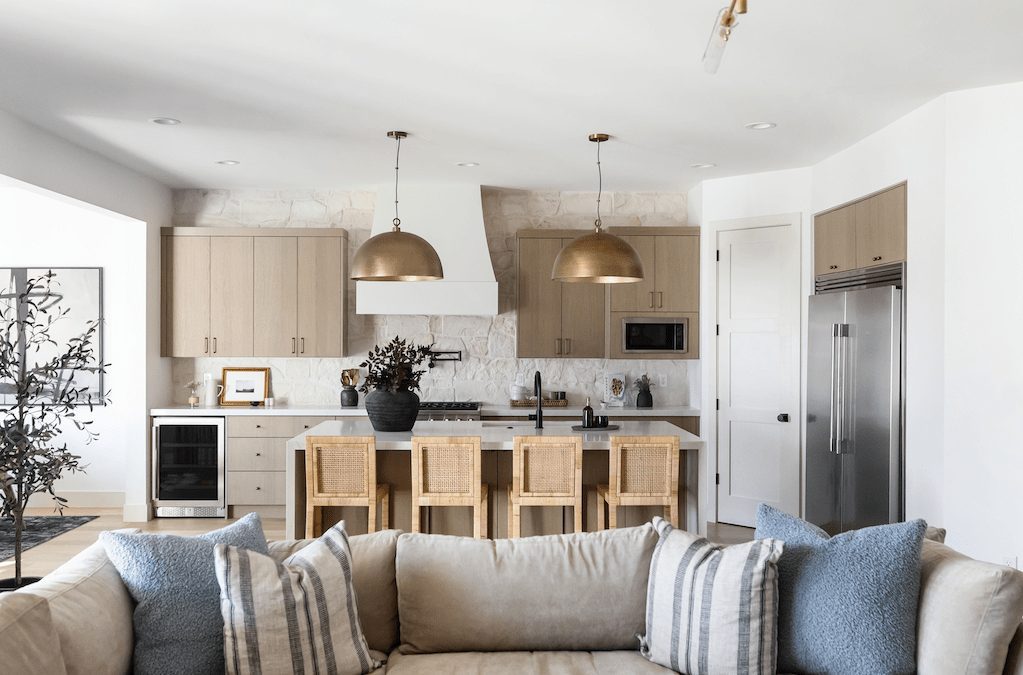
        Modern kitchen with long island seating

        The Benefits of Redoing a Kitchen

        It’s not just about the looks; it’s about making your kitchen work better and being current design-wise for today. A poorly designed kitchen that is out of date will only discourage buyers later on and reduce your home’s desirability as a whole. A renovation will fix these defects, and your kitchen will be a place that works for the owner and makes your home more desirable as a whole.

        Other than the cost, a new kitchen will also enhance your overall quality of life. With increased storage, new appliances, and an enhanced workflow, a kitchen renovation makes cooking, entertaining, or even moving around the space easier. Does a kitchen remodel increase home value? Let’s dig into this question in more detail.

          Light wood kitchen with marble island

          Expected ROI

          One of the strongest arguments for remodeling the kitchen is resale value. According to statistics from one report, a small kitchen remodel (i.e., new cabinets, new countertops, new appliances) will generally recover 70-80% of the value upon resale. A large kitchen remodel, while a greater expense, will recover roughly 60% of the expense, depending on the quality of materials and the state of the market.

          But ROI isn’t always dollar for dollar. The same functional kitchen also gets your house sold quickly and at a premium, especially in strong markets. You must be attuned to your local real estate market and keep costs in line with comparable homes in your market. Over-upgrading the kitchen sometimes reduces returns when it’s more than buyers have been accustomed to in similar homes. How much value does a kitchen remodel add? The answer may depend on balancing upgrades with buyer expectations.

          Contemporary kitchen with wooden island

          Working Together with Interior Designers for Best Results

          Having your kitchen professionally redesigned by an interior designer is the solution. A professional designer will assist you in choosing the most suitable material, style, and finish that provide you with the optimal combination of function and aesthetics. A designer will also be able to work according to your budget and keep up to date with the latest design trends of the day. For homeowners in Colorado, Telluride interior design services can help create a kitchen that blends seamlessly with your lifestyle and surroundings.

          A professional designer will come up with solutions to your specific needs, whether that means creating more effective storage space, rerouting traffic lanes, or adding smart home capabilities. A designer will also communicate with contractors to make your vision and expectations a reality. For a first-time homeowner who is doing a remodel, this level of expertise can save a tremendous amount of time, stress, and costly mistakes.

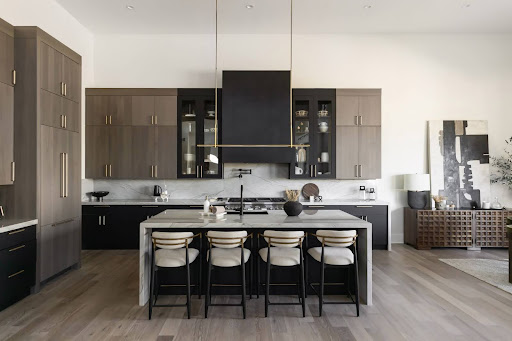
          Dark wood kitchen with marble counters

          Is a Kitchen Remodel Right for You?

          A renovation of a kitchen is an expensive undertaking, one that, if planned, can be an absolute game-changer for your lifestyle and for the worth of your home in general. Starting from modernity to functionality, a new kitchen rebuild has benefits endlessly more expansive than mere surface-level exterior cosmetic fixes.


          Spacious kitchen with bold tile accents
          Sit down and evaluate your needs, observe what is happening in the local market, and speak to professionals to create a plan that will be unique to your home and budget. If you would like to be able to use your dream kitchen for years to come or be able to sell your home, a well-planned renovation will add tremendous value and resale value to your home.

          Keep Exploring: How Long Does It Take to Remodel a Kitchen?


          How Long Does It Take to Rebuild a House After a Fire?

          How Long Does It Take to Rebuild a House After a Fire?

          House rebuilding following a fire is a daunting experience, both emotionally and physically. Once the initial shock of loss has passed, homeowners tend to be confronted with the tidal wave of decisions and the day-to-day challenges to be met, while trying to gain stability in life. 

          For most, starting again can appear impossible, particularly with the uncertainty of the timescale. How long does it take to rebuild after a fire? The solution lies in numerous variables, ranging from the level of the damage to the accessibility of materials and skilled personnel to assist you through it.

          Bright kitchen with wood accents and plants

          The Reconstruction Process

          To rebuild a house after a fire is a process that begins much earlier than the construction workers’ arrival. The first step is to clear the area of destruction. This can involve demolishing anything that is unsafe and still standing, and removing hazardous materials. Depending on the severity of the fire, this step alone could take weeks or, in the worst cases, months. 

          After demolition, the homeowners need to obtain the permits required to start reconstruction. Local building codes and zoning laws complicate the process, especially where there are mass disasters such as California’s wildfires, and local government offices get bogged down. 

          Once you have approvals, construction begins. This is where everything from laying foundations to installing walls, laying out utilities, and finishing interiors is done. All of these have inspections to check for safety regulations, which add even more time. Generally speaking, the whole process of rebuilding a home after a fire could take a few months up to over one year, depending on several factors.

            Modern living room with large windows and plants

            Factors That Affect Timeline

            The amount of time it takes to rebuild after a fire is not predetermined. There are several factors that can have a big effect on how long it takes. 

            Insurance Claims 

            One of the first obstacles homeowners will face is dealing with their insurance claims. Filing, processing, and approval of claims can be lengthy, especially if the insurance company requires more paperwork. Delays at this point can push the whole rebuilding schedule back. 

            Permit Approvals 

            Getting building permits relies significantly on municipal processes. Disasters that affect large areas of communities tend to cause backlogs at the permit offices, since thousands of homeowners attempt to rebuild simultaneously. 

            Availability of Materials and Labor 

            Supply chain constraints and labor shortages can also extend time horizons. Wood, steel, and concrete products, not to mention specialty products like windows or tile, can be hard to source in a timely way, and experienced labor may be short in supply where there is damage. 

            Scope of Damage 

            The severity of the fire damage to the house is also a key consideration. Smaller fires requiring partial reconstruction will automatically require less time than houses that have been gutted and must be rebuilt from the ground up. 

            Unexpected Delays 

            Even with thorough planning, unpredictable problems such as bad weather or contractor delay are able to undermine the process. Having experienced people on board and active regular communication can mitigate some of these challenges.

            Bright modern kitchen with large island

            Finding the Path Forward 

            Malibu home rebuilding after a fire, for example, is not an easy undertaking. It requires patience, planning, and coordination among experts. Though the overall period can range between six months to two years, certain conditions generally bring variability to the picture. Homeowners should consider partnering with experienced contractors, insurance adjusters, and interior design specialists to simplify the process and get every step right. 

            If you find yourself faced with the overwhelming process of rebuilding a house after a fire, there are people who can guide you. Neighboring charities, rebuilding literature, and insurance adjusters are all sources you can tap for valuable information that will help guide you through this difficult ordeal. Each step will take you closer to rebuilding your home and regaining your peace of mind.

            Read More: Budgeting Bliss: The Cost to Furnish a House – Living With Lolo