Book a Free Consultation
Living With Lolo: A Scottsdale Designer’s Complete Guide

Living With Lolo: A Scottsdale Designer’s Complete Guide

8 min read  ·  June 2026
If you have been searching for living with lolo, you have found the right place. Living with Lolo is Lauren Lerner's full-service luxury interior design and licensed design-build firm based in Scottsdale, Arizona. Founded in 2017, the firm has grown into one of the most recognized residential design practices in the Southwest, working with clients in Scottsdale, Paradise Valley, Arcadia, and across the Phoenix metro. This guide covers who we are, what we do, and what it actually looks like to work with us.

What Is Living With Lolo?

Living with Lolo is the interior design firm Lauren Lerner built from the ground up in Scottsdale. The name comes from her nickname, Lolo, and the brand was built on one idea: that your home should be a full reflection of how you actually want to live. Not a showroom. Not a staged version of someone else's style. A real, livable, deeply personal space that happens to be exceptionally well designed.Today, living with lolo is a full-service firm that holds both an interior design credential and an active Arizona Registrar of Contractors general contractor license (ROC #347577). That dual license is not a common combination in the Scottsdale market. It means Lauren's team manages everything from the first concept sketch through the final install without handing you off to a separate contractor mid-project.The firm has been featured in Architectural Digest, House Beautiful, Vogue, Martha Stewart Living, The Wall Street Journal, and GQ. It has been named Phoenix Magazine Best Interior Design three consecutive years: 2024, 2025, and 2026. Inc. Magazine recognized Living with Lolo as one of the fastest-growing private companies in the Southwest in 2026.

How Living With Lolo Works

Most interior design firms in Scottsdale offer design only or construction only. Living with lolo offers both under one contract and one team. Here is what that means for you as a client.When you hire Living with Lolo, you are hiring one team that holds accountability for design and construction from start to finish. The same people who specify your materials are the same people who manage the trades, track the schedule, and catch field decisions before they turn into expensive mistakes. This is the structural difference that separates full-service design-build from the more common model of hiring a designer and a contractor separately and hoping they communicate well enough to deliver what you envisioned.Our process starts with a discovery call. That is a 15-minute conversation where we get clear on your scope, your timeline, and your budget. We give you honest feedback about what is realistic in this market before you ever sign anything. From there, we move into full design development, then into construction or procurement, and finally into install and styling.

What Living With Lolo Designs and Builds

Our scope covers three main service categories.Full design-build projects include everything from demolition and structural changes through finish selection, millwork, cabinetry, tile, flooring, lighting, plumbing fixtures, and the full furnishing package. These projects typically range from $700,000 to $2,000,000 or more depending on the size of the home and the finish level being targeted. You can review completed design-build projects in our living with lolo portfolio.Furnishing-only projects are for homes in excellent structural shape that need a complete interior transformation. We source, procure, and install every piece from furniture and rugs to lighting, art, and accessories. A full furnishing for a 2,500 to 4,000 square foot home typically runs $150,000 to $300,000 or more at the luxury level in the Scottsdale market.New construction design is for clients building from the ground up who need a design partner from the finish selection phase forward. We work directly with builders to manage the decision-making sequence and make sure every selection is made on schedule. Delays on finish selections can hold up entire construction phases, and having a dedicated design team managing that sequencing protects your timeline and your budget.

The Living With Lolo Design Process

Here is how a project unfolds from the first call to the day you walk into your finished home.The discovery call is free and takes about 15 minutes. We talk about your home, your goals, your timeline, and your budget range. We give you honest feedback on what is realistic for your scope in this market, and we decide together whether it makes sense to move forward.Once we are aligned on scope, we execute a design services agreement and your project is scheduled. The design development phase is the most intensive part of the process. Our team produces a full set of documentation including floor plans, elevations, finish and material selections, furniture specifications, and detailed scope narratives. Nothing moves to construction or procurement until the design phase is complete and client-approved.For design-build projects, our licensed GC team manages the construction directly. We hold permits, oversee trades, and manage the build schedule. For furnishing-only projects, our procurement team sources products, places orders, tracks production timelines, manages delivery logistics, and oversees the full installation. You are not coordinating vendors or chasing tracking numbers. We handle all of that so you can stay focused on everything else in your life.Install and styling is the final phase. It looks effortless from the outside, but it is the result of every decision made in the months prior. Our team manages delivery day from start to finish, places every piece, and styles the home so it is completely livable the first time you see it.

Why Clients Choose Living With Lolo in Scottsdale

Clients who have previously worked with other firms often describe the same pattern of problems: miscommunication between the designer and the contractor, change orders that were not budgeted, timeline delays from decisions made too late in the process, and a finished result that did not quite match what had been presented months earlier.The living with lolo model was built to address those problems at the root. One team. One contract. One point of accountability from concept through completion.We are also direct about cost before you commit to anything. We give realistic estimates on a discovery call rather than low numbers designed to win your business that quietly grow through the project. If the budget does not support the scope, we say so at the start and find an adjusted plan that works. That kind of honest conversation is the foundation of how we have built the client relationships we have.Most clients who come to us after a difficult experience with another firm tell us the same thing: they wish they had started here. We take that seriously, and we design our entire process around making sure you never have to say that about us.

Awards and Recognition for Living With Lolo

Living with Lolo has been recognized consistently as one of the top residential design firms in the Scottsdale market. Phoenix Magazine named us Best Interior Design in 2024, 2025, and 2026. That three-year streak puts the firm in a small group of Scottsdale practices to have earned that recognition more than once.In 2026, Inc. Magazine recognized Living with Lolo as one of the fastest-growing private companies in the Southwest, reflecting growth across both design and construction volume over the past several years.Our work has been published in national outlets including Architectural Digest, House Beautiful, Vogue, Martha Stewart Living, The Wall Street Journal, and GQ. We hold an active Arizona ROC general contractor license (#347577) and are proud members of the Interior Design Society, the American Society of Interior Designers, and the International Furnishings and Design Association.

Book a Discovery Call With Living With Lolo

If you are planning a renovation, a new build, or a full furnishing project in Scottsdale, Paradise Valley, or anywhere in the Phoenix metro, a discovery call is the fastest way to understand what your project would cost and how long it would take to complete.Living with Lolo takes on projects across the Scottsdale area and select locations in other markets including Lake Tahoe, Park City, and Telluride. We manage everything under one contract so your project moves forward without the coordination issues that come from splitting design and construction between two separate firms.

Frequently Asked Questions

What is living with lolo?

Living with Lolo is a full-service luxury interior design and licensed design-build firm founded by Lauren Lerner in Scottsdale, Arizona. The firm holds both an interior design credential and an active Arizona ROC general contractor license (ROC #347577), which means design and construction are managed under one contract. Living with Lolo serves clients in Scottsdale, Paradise Valley, Arcadia, and across the Phoenix metro, and has been featured in Architectural Digest, House Beautiful, Vogue, Martha Stewart Living, The Wall Street Journal, and GQ.

How much does living with lolo cost in Scottsdale?

Living with Lolo projects range from $75,000 for a furnishing-only project in a smaller home to over $2,000,000 for a full design-build renovation. Most clients invest between $250,000 and $1,500,000 depending on scope, square footage, and finish level. The firm gives honest estimates on an initial discovery call at no charge.

Is living with lolo right for my home?

Living with Lolo is the right fit for homeowners investing $75,000 or more in their Scottsdale or Paradise Valley home who want full-service management from concept through completion. The firm works best with clients who want one team handling both design and construction, who value direct communication about cost and timeline, and who are looking for a finished result that is both beautiful and built correctly. If you are unsure whether it is the right fit, a 15-minute discovery call is the easiest way to find out.

Ready to Talk Through Your Project?

Living with Lolo serves clients across Scottsdale, Paradise Valley, and the greater Phoenix metro. Book a complimentary 15-minute discovery call to discuss your project and get honest answers about scope and cost.Book a Discovery Call
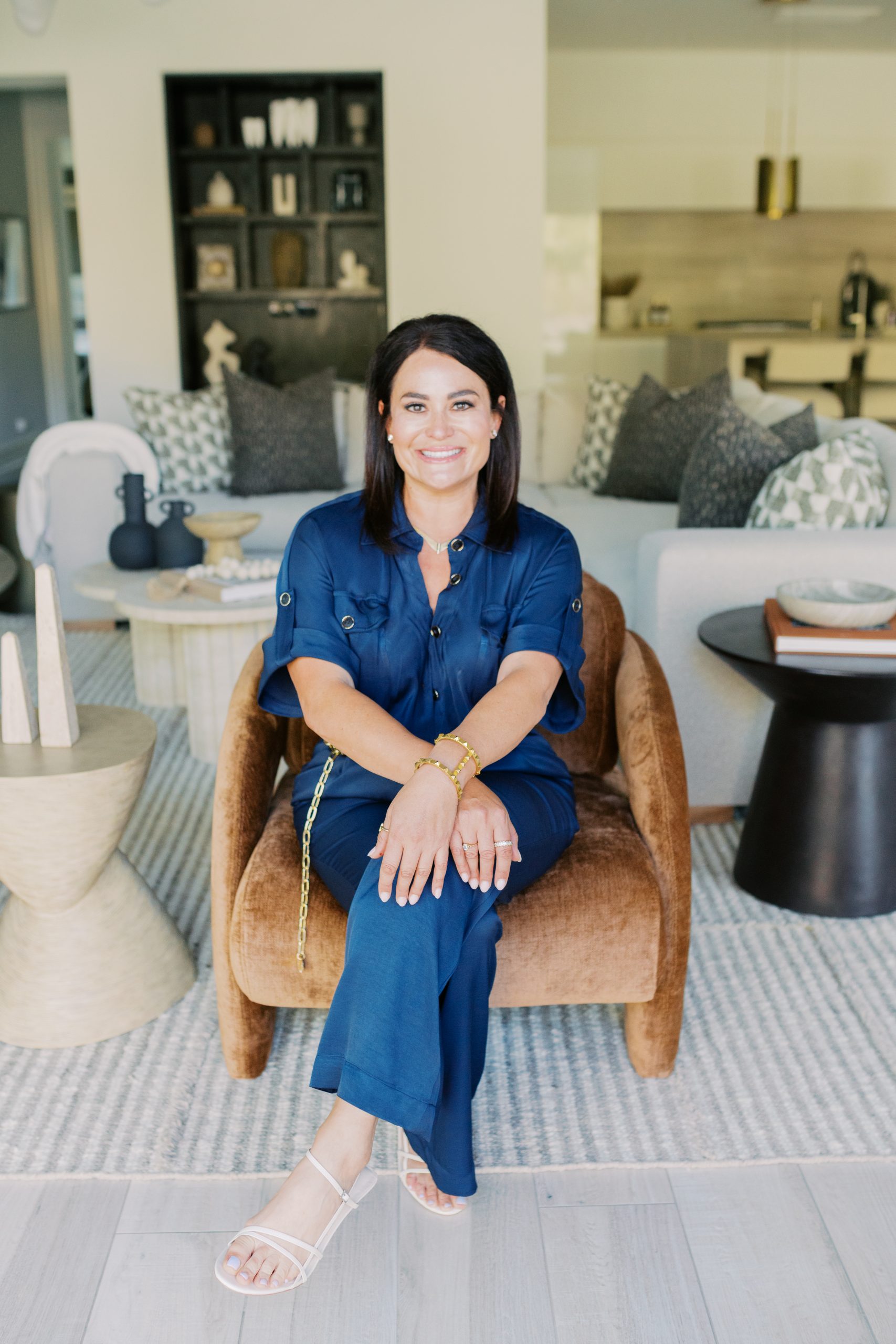
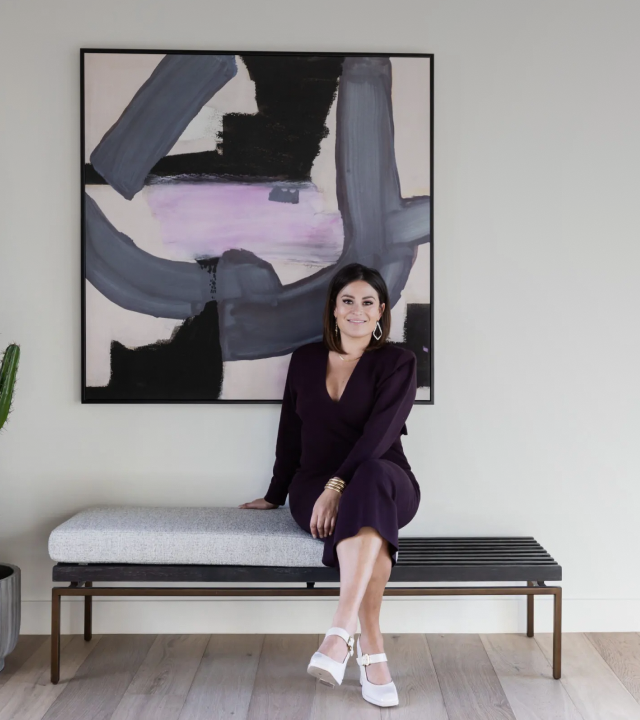
Lauren Lerner, principal interior designer at Living with Lolo
Lauren Lerner
Principal Designer, Living with Lolo

Lauren Lerner is a luxury interior designer based in Scottsdale, AZ and the founder of Living with Lolo. Her work has been featured in Architectural Digest, House Beautiful, Vogue, Martha Stewart Living, The Wall Street Journal, and GQ. She specializes in high-end residential design across Scottsdale, Paradise Valley, Arcadia, and the greater Phoenix metro area.

My 4 Go-To Patio Seating Layouts for Small Outdoor Spaces

My 4 Go-To Patio Seating Layouts for Small Outdoor Spaces

Most people make the same mistake with a small patio. They push everything against the walls, thinking it creates more space, or they float a big sectional in the center and wonder why the whole thing feels cramped. I have been designing outdoor spaces in Scottsdale for years and I see this constantly: clients with beautiful slabs of travertine or concrete and zero idea how to make them work.

The good news: layout does more for a small patio than any furniture purchase you will ever make.

I was recently quoted in The Spruce on exactly this topic, sharing four seating layouts that make small patios feel significantly bigger. Here is my full take on each approach, with a little more detail than the article had room for.

Perimeter Seating: Push It to the Edges

This is the one that surprises people most. When furniture hugs the edges of a small patio, it frees up the center and makes the space seem bigger. That open middle area is what tricks the eye.

Think of it like a living room with a clear path through. The floor space you can actually see reads as usable, even if you are not standing in it. In Arizona, where outdoor rooms function as extensions of the interior nine months out of the year, this matters. Your patio should feel like a room, not a storage problem.

Put your main seating along the perimeter wall or fence line. Keep chairs angled inward at roughly 45 degrees so people can still face each other. Do not line everything up like an airport waiting area.

The Single Anchor Piece

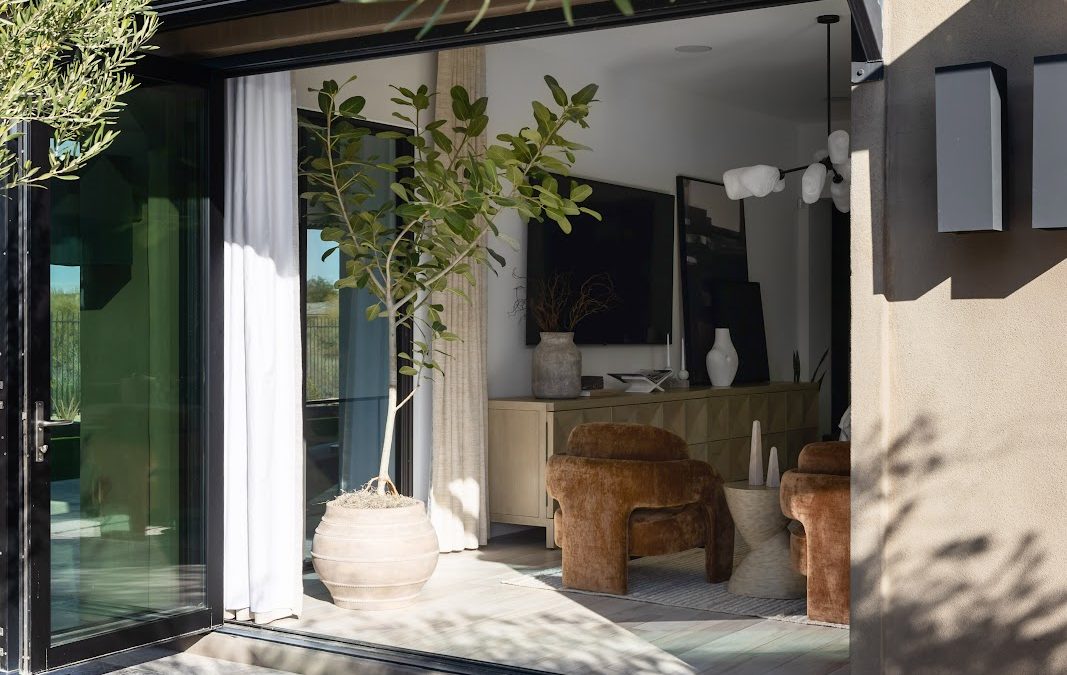
A single statement chair or loveseat gives the space intention, while low side tables and ottomans avoid the clutter that makes small patios feel cramped.

This is my favorite layout for awkward rectangular patios under 150 square feet. Pick one piece that carries the visual weight: a curved two-seater, a sculptural lounge chair, something that reads as deliberate. Then keep everything else below seat height. Low tables, poufs, a small ottoman. Nothing tall competing for attention.

The instinct is to fill the space. Fight it. One strong piece reads more expensive and more intentional than five mediocre ones crammed in together.

Diagonal Placement

Placing furniture at a diagonal to the patio edges creates the illusion of more square footage by drawing the eye across the longest dimension of the space rather than straight across the short end.

This sounds counterintuitive but it works every time. If your patio is 10 feet wide, do not arrange furniture parallel to the 10-foot wall. Angle it. The eye naturally tracks toward the far corner, which reads as more depth.

This is especially effective on square patios, where every dimension is the same and there is no obvious long side to play with. A diagonal arrangement creates one.

Zone with Rugs Instead of Furniture

If your patio connects to a larger yard or you want it to feel like two distinct areas, use an outdoor rug to define the seating zone rather than relying on furniture arrangement alone.

The rug creates a visual container. Everything inside it belongs together. Everything outside it is separate space. This works particularly well in Scottsdale where patios often open onto a pool deck or grassy area. The rug gives the seating zone its own identity without a wall.

Keep the rug a few inches smaller than your furniture grouping on each side. The furniture legs should ideally sit partially on the rug. That is what anchors the zone.

One Rule That Applies to All of Them

Whatever layout you choose, resist the impulse to fill every inch. Small patios that feel generous almost always have negative space. Areas where there is just nothing. That emptiness is not wasted. It is doing the work.

If you are redesigning an outdoor space in Scottsdale or Paradise Valley and want a layout that actually works for how you live, I would love to help. You can also browse some of my recent outdoor projects in the portfolio to see these principles in action.

Ready to Transform Your Home?

Lauren Lerner and the Living with Lolo team work with clients across Scottsdale, Paradise Valley, Arcadia, and the greater Phoenix metro area.

Book a Discovery Call

Lauren Lerner, principal interior designer at Living with Lolo

Lauren Lerner

Principal Designer, Living with Lolo

Lauren Lerner is a luxury interior designer based in Scottsdale, AZ and the founder of Living with Lolo. Her work has been featured in Architectural Digest, House Beautiful, Vogue, Martha Stewart Living, The Wall Street Journal, and GQ. She specializes in high-end residential design across Scottsdale, Paradise Valley, Arcadia, and the greater Phoenix metro area.

We Were Featured in Forbes: Outdoor Entertaining Trends Worth Knowing

We Were Featured in Forbes: Outdoor Entertaining Trends Worth Knowing


As Seen In Forbes
Earlier this week, I got a call I always love getting. Terri Williams at Forbes was writing a piece on outdoor entertaining trends and wanted to include our perspective and our work. The article is live now, and our Bronco Revival project is featured throughout.

Why Outdoor Spaces Have Changed

For a long time, outdoor design was treated as an afterthought. You finished the inside of the house and then figured out what to do with the backyard. That is not how our clients think about it anymore, and honestly, it is not how we think about it either.
The homes we work on in Scottsdale and Paradise Valley have some of the best outdoor climates in the country. Nine months of the year, you can live outside. So the question we ask at the start of every project is: what does this family actually do out here, and what would they do if the space made it easy?
The answers drive everything: the shade structure, the cooking setup, the seating, the lighting, the flow from inside to outside. These are not decorating decisions. They are design decisions.

What We See Working Right Now

Indoor-Outdoor Continuity

The most successful outdoor spaces we design feel like a natural extension of the interior. Same material palette, same level of finish, same attention to detail. When you walk outside, it should feel like you are still in your home. That continuity is what makes a space feel intentional versus assembled.
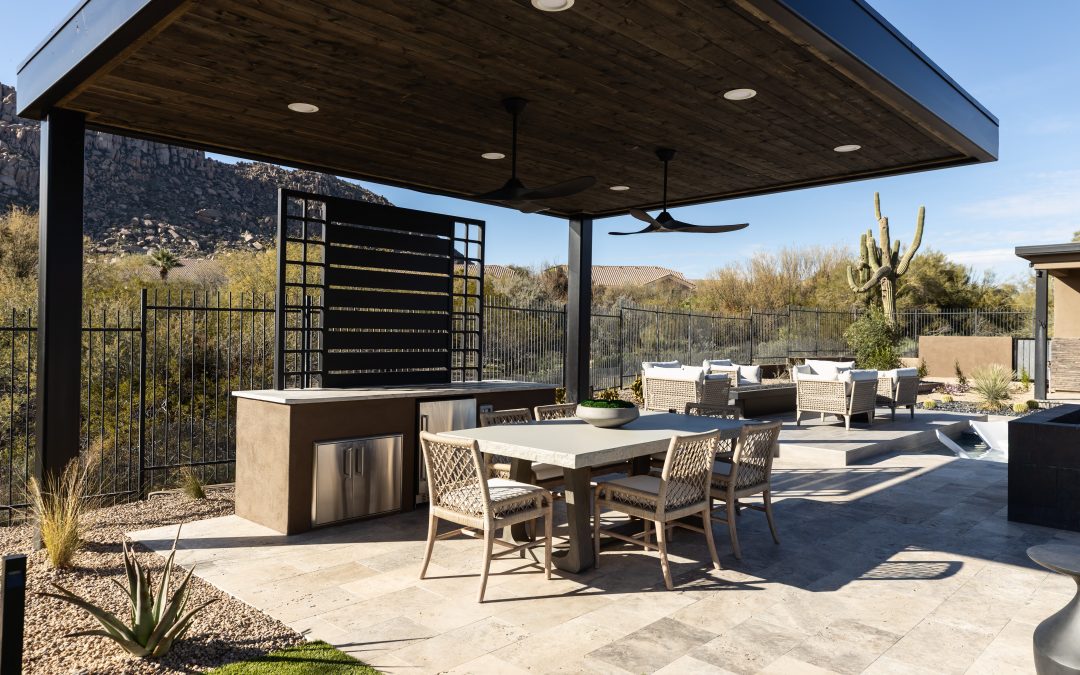
On the Bronco Revival project, we carried the warm, organic material palette from inside all the way through to the outdoor living areas. The result is a backyard that photographs beautifully but more importantly, one the clients actually use every day.

Functional Outdoor Kitchens

We have been doing outdoor kitchens for years, but what has shifted is how serious clients are about the functionality. This is not a built-in grill and a mini fridge anymore. Clients want full prep space, real appliances, smart storage, and good lighting. They want to be able to cook a full dinner outside and not feel like they are camping.

Dedicated Dining That Stays

Outdoor dining tables that feel permanent, not like patio furniture you fold up and store. Weather-resistant materials that look like something out of an interiors magazine. Good light overhead. The kind of setup where guests do not want to go inside.

Layered Shade and Overhead Structure

In Arizona, shade is not optional. But the way we are approaching it has gotten much more design-forward. Pergolas with climbing plants, fabric sails layered with fixed shade, louvered roof systems that let you control light and airflow. The overhead structure is one of the first things we design now, not one of the last.

Lighting That Changes the Mood

This is one of the biggest shifts I have seen in the last few years. Clients are investing in real outdoor lighting design: low-voltage landscape lighting, overhead bistro or string configurations, architectural uplighting on plantings and walls. Done right, lighting doubles the number of hours a space gets used.
The best outdoor spaces are designed the same way we design interiors: from how the family actually lives, not from a catalog.

The Bronco Revival Outdoor Spaces

The Bronco Revival project in Scottsdale was a full home renovation, and the outdoor spaces were central to the vision. The clients wanted a backyard they could entertain in easily, something that felt warm and modern and genuinely nice rather than trying too hard.
We designed the outdoor living and dining areas to flow directly from the interior great room, using the same material sensibility throughout. Natural textures, a restrained palette, carefully placed shade. Terri featured several of the images from this project in the Forbes piece, and we could not be prouder of how they turned out. Photography is by Stephanie Studer of Life Created.
See the full project in our Bronco Revival portfolio, and read the Forbes article here: Incorporate These Outdoor Entertaining Trends in Your Backyard Design.

Thinking About Your Own Backyard?

If your outdoor space is not living up to what it could be, whether it is underused, disconnected from the inside, or just never quite finished, this is worth a conversation. We handle outdoor design as part of full home renovations, and we manage the entire process: design, construction, landscape coordination, and installation.
Let's talk about your outdoor space.
Book a Discovery Call

We Made Inc. Best Workplaces 2026. Here’s What That Actually Means for Your Project.

We Made Inc. Best Workplaces 2026. Here’s What That Actually Means for Your Project.


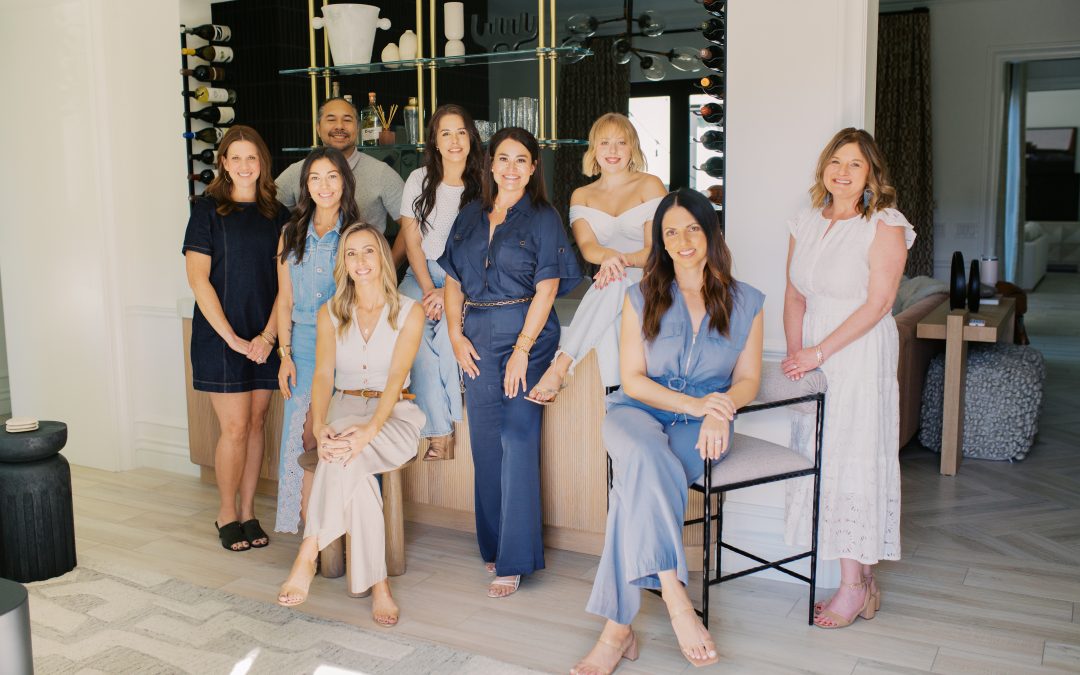
Every project we take on runs through the same team. The same designer who walked your home during the discovery call is the same one presenting your design concept, managing construction, and standing in your space at final installation. That is not an accident. It is a deliberate choice, and it is one that Inc. magazine just recognized us for.Living with Lolo was named to the Inc. Best Workplaces 2026 list. The recognition is based on employee survey data, not self-nomination. Companies are evaluated on whether people actually trust the environment they work in, whether they understand their role, feel heard, and have real visibility into how decisions get made. Inc. described our recognition as being for cultivating employee trust through explicit expectations, defined decision rights, and direct feedback.That language might sound like HR-speak. But for someone hiring a design-build firm to manage a six-figure renovation of their home, it translates into something concrete.

A Team That Stays

Interior design and construction are relational in a way that most industries are not. The vendor relationships, the institutional knowledge of how a project evolved, the understanding of how a particular client communicates. None of that transfers cleanly when someone leaves mid-project. We have invested in building a team that genuinely wants to be here, and that stability shows up in how your project runs from start to finish.

Everyone Knows Exactly What They Own

Defined decision rights is a phrase that sounds corporate but matters enormously in practice. It means every person on our team has clear ownership of their piece of the project. You are not getting handoffs to someone who does not have context. The person answering your question has the authority and the information to actually answer it.

We Communicate Directly With Our Team and With You

A culture of direct feedback internally creates a firm that is willing to have honest conversations externally. We will tell you when something will not work the way you are imagining it. We will flag when a contractor's timeline is unrealistic. We will push back when a finish that looked great on the sample board will not hold up in your actual space. That same directness is what earned this recognition, and it is what our clients experience in every review meeting.This is our second Inc. recognition this year. We were also named to the Inc. Regionals Southwest 2026 list for fastest-growing private companies across Arizona, New Mexico, Oklahoma, and Texas.Two Inc. honors in the same year feels significant. But more than the recognition itself, it reflects the kind of firm we have been quietly building since 2017: one where the people doing the work take real pride in it, and where that pride shows up in every project we deliver.

Ready to Transform Your Home?

Lauren Lerner and the Living with Lolo team work with clients across Scottsdale, Paradise Valley, Arcadia, and the greater Phoenix metro area.Book a Discovery Call
Lauren Lerner, principal interior designer at Living with Lolo

Lauren Lerner

Principal Designer, Living with Lolo

Lauren Lerner is a luxury interior designer based in Scottsdale, AZ and the founder of Living with Lolo. Her work has been featured in Architectural Digest, House Beautiful, Vogue, Martha Stewart Living, The Wall Street Journal, and GQ. She specializes in high-end residential design across Scottsdale, Paradise Valley, Arcadia, and the greater Phoenix metro area.


Why Your Next Renovation Should Include a Hot/Cold Wellness Room

Why Your Next Renovation Should Include a Hot/Cold Wellness Room


June 2, 20266 min read
Of all the custom features I am designing right now, the hot/cold wellness room is the one I am working on the most. I said as much when Bob Vila asked me about the top custom home features of 2026, and I want to give you the full picture here because one paragraph does not do it justice.This is not a trend. It is a shift in how people think about their homes.

What a Wellness Room Actually Is

When most people hear "home wellness room," they picture a treadmill pushed against a wall in a spare bedroom. That is a home gym. What I am designing is something entirely different: a dedicated room built around recovery, not just exercise.A proper hot/cold wellness room typically includes an infrared sauna, a cold plunge, soft lighting on dimmer controls, natural materials like stone and wood, and ventilation designed specifically for the thermal cycling. The best ones feel more like a spa than a gym, and that is intentional.The clients who go all in are also adding red light therapy beds, hyperbaric chambers, and fully custom sauna builds with integrated sound and chromotherapy. These are not afterthoughts. They are the primary reason the room exists.

Why It Is Worth the Square Footage

The question I get most often is whether it justifies the space. My answer is always the same: it depends on whether you will actually use it.What I have observed with clients who have these spaces is that they stop treating wellness as a scheduled item and start treating it as part of how their home functions. It stops being something you have to drive to. The cold plunge is three steps from your bedroom. The sauna is ready in 20 minutes. The barrier disappears, and the routine follows.That shift in daily life is what makes it worth the square footage. A room you use every day earns its place faster than almost any other investment in a home.

What Goes Into Designing One Well

The room itself is straightforward if you plan for it early. The details that matter most:
  • Waterproofing and drainage, especially around the cold plunge. This is not optional.
  • Ventilation sized for both the sauna heat and the humidity from the cold plunge. Standard bath ventilation is not sufficient.
  • Electrical for the sauna heater, which typically requires a dedicated 240V circuit.
  • Natural materials that can handle temperature swings: teak, cedar, stone, and concrete all perform well.
  • Lighting on dimmers with a warm, low-lux option for post-plunge recovery.
  • A transition space, even a small bench area between the sauna and plunge, so the thermal cycling is intentional rather than rushed.
Where projects go wrong is when the wellness room gets treated as a finish-out item rather than a structural one. The plumbing, drainage, and electrical need to be in the plan from the beginning. Retrofitting is expensive and often impractical.

Who Is Asking for This

Across my client base in Scottsdale and the Phoenix metro, requests for dedicated wellness spaces have increased significantly in the past two years. It is not a specific demographic. I am designing these for clients in their 30s and clients in their 60s. Athletes and executives. New builds and renovations.What they share is a willingness to invest in how they feel at home, not just how their home looks. That is the broader shift I am seeing, and the wellness room is where it shows up most clearly right now.

How to Start Planning Yours

If you are in the early stages of a custom build or a major renovation, the best time to plan the wellness room is now. The structural and mechanical requirements are much easier to design in than to add later.If you are working with an existing space, a converted bedroom or a room off the primary suite both work well. The minimum functional size is around 150 square feet, though 200 to 300 gives you room to move and adds a proper transition zone.I would love to talk through what this could look like in your home.

Ready to Design Your Wellness Room?

Let's talk about your space, your goals, and what a recovery-focused room would look like in your home. Book a Discovery Call
Lauren Lerner

Lauren Lerner

Principal Designer, Living with LoloLauren Lerner is an award-winning interior designer based in Scottsdale, Arizona. Named Phoenix Magazine Best Interior Designer 2024, 2025, and 2026. As seen in Bob Vila, House Beautiful, Architectural Digest, and more.