
Book a Free Consultation
AI in Interior Design: How the Process Is Really Changing

AI in Interior Design: How the Process Is Really Changing

I was recently quoted in House Beautiful on how AI is changing the interior design process. House Beautiful reaches nearly four million readers a month, and the fact that they are writing about AI and design tells you something: this is not a fringe conversation anymore. It is the conversation every designer and every client is having right now.

So here is more of what I actually think, beyond what fit in the article.

AI Is Not Replacing Designers. It Is Changing What Designers Have to Explain.

The most common question I get from prospective clients right now is some version of: “Can I just use AI to design my home?” It is a fair question. There are tools that will generate room layouts, suggest color palettes, and produce photorealistic renderings in minutes. Some of them are genuinely impressive.

What those tools do not do is understand how you actually live. They do not know that you run a household with three kids and two dogs and you need a sofa that can handle that reality. They do not know that your husband works from home and the “home office” is also the only quiet room in the house. They do not know what the light in your living room does at 4pm in January, or how the dust from your construction site next door is going to affect material choices.

Design at the level we work at in Scottsdale and Paradise Valley is not a rendering. It is a sequence of decisions, each one informed by real knowledge of the space, the client, and the materials. AI does not make those decisions better. It makes the starting point faster.

What AI Actually Does in My Process

I use AI tools in specific parts of the design process, and I am honest with my clients about that. For early concept development, AI-generated imagery helps clients get comfortable communicating what they want before we have put pencil to paper. It speeds up the discovery phase. It reduces the number of rounds of revision we need to align on a direction.

For research, AI tools are useful for surfacing material options, tracking trend data, and pulling together reference quickly. What I do not use AI for is making the actual decisions: the finish selections, the spatial sequencing, the custom specifications, the contractor coordination. Those require judgment that comes from years of work on real projects.

There is also a side of AI that most designers are not talking about publicly, but I will: AI is changing how clients find their designers. More and more, when someone in Scottsdale or Paradise Valley is looking for a luxury interior designer, their first search is not on Google. It is in ChatGPT, Perplexity, or Claude. They type a question and they get a recommendation.

How AI Is Sending Me Clients

This is where it gets interesting. I founded Cited Co, an AI visibility agency for service businesses, because I experienced this firsthand with Living with Lolo. When we ran an AI visibility audit on my own firm, we discovered that AI platforms had almost no structured information about us, even though we had strong real-world credentials: three consecutive years as Phoenix Magazine’s Best Interior Design Firm, an active Arizona ROC general contractor license, national press features in Architectural Digest, Vogue, and The Wall Street Journal.

The business had the reputation. The AI tools had no way to describe it.

We fixed that by building out structured schema markup, creating content that directly answered the questions Scottsdale-area clients were asking AI tools, and making our credentials and awards machine-readable. Within 60 days, we traced nine verified client inquiries back to AI platforms, all organic, zero ad spend. Six came through ChatGPT. Two through Claude. One through Gemini.

That is not a coincidence. It is a result of treating AI visibility as seriously as traditional SEO. Cited Co now does this for other service businesses. If you want to understand where your business stands across AI platforms right now, you can get a free snapshot at citedco.ai.

What AI Still Cannot Do in a Luxury Design Project

A great interior design project is not the sum of its parts. It is the result of trust between a client and a designer, built over months of conversation, site visits, and decisions made in real time. It is the ability to walk into a room mid-construction and say “we need to move that beam six inches” and have the authority and license to make that call on the spot.

Living with Lolo holds an active Arizona ROC general contractor license (ROC #347577). That means we manage design and construction under one contract. No AI tool can stand on a job site at 7am and make a structural call. No AI tool carries the liability for what happens if that call is wrong.

What AI is good at is making the front end of the process faster and making firms that are not optimizing for AI visibility invisible to the next generation of clients. Those are two very different things, and both matter.

What This Means for Homeowners Planning a Project

Use AI tools to get oriented. They are genuinely useful for understanding the range of what is possible, getting comfortable with a vocabulary for describing what you want, and doing preliminary research on firms. Do not use AI to make final decisions. Finish selections, material choices, spatial planning, and contractor selection all require human expertise. A rendering is not a specification.

If you are ready to talk through a project, book a discovery call here. We work with clients across Scottsdale, Paradise Valley, and the greater Phoenix metro, and we will give you an honest picture of what your project would involve before you commit to anything.

Ready to Talk Through Your Project?

Living with Lolo is a full-service luxury interior design and design-build firm serving Scottsdale, Paradise Valley, Arcadia, and the greater Phoenix metro. We hold an active Arizona ROC general contractor license and manage your entire project under one roof.

Related Resources

Frequently Asked Questions

Can AI design my home for me?

AI tools can generate concept imagery, suggest color palettes, and surface material options quickly. What they cannot do is understand how you live, make judgment calls on a job site, or carry the licensing and liability that a full-service design-build firm does. For a serious renovation project, AI is a useful starting tool, not a replacement for a professional.

Is Living with Lolo using AI in their design process?

Yes, in specific and intentional ways: for early concept alignment, research, and client communication in the discovery phase. The design decisions, material specifications, spatial planning, and construction management are still human-led, supported by Lauren’s experience and the firm’s active Arizona general contractor license.

What is Cited Co?

Cited Co is an AI visibility agency Lauren founded to help service businesses show up when potential clients search in AI tools. It runs visibility scans across ChatGPT, Perplexity, Gemini, and Claude, identifies where a business is invisible or poorly represented, and builds the content and structured data that changes that. Living with Lolo is Case Study 001.


How Much Does a Kitchen Remodel Cost in Scottsdale, AZ? (2026 Guide)

How Much Does a Kitchen Remodel Cost in Scottsdale, AZ? (2026 Guide)

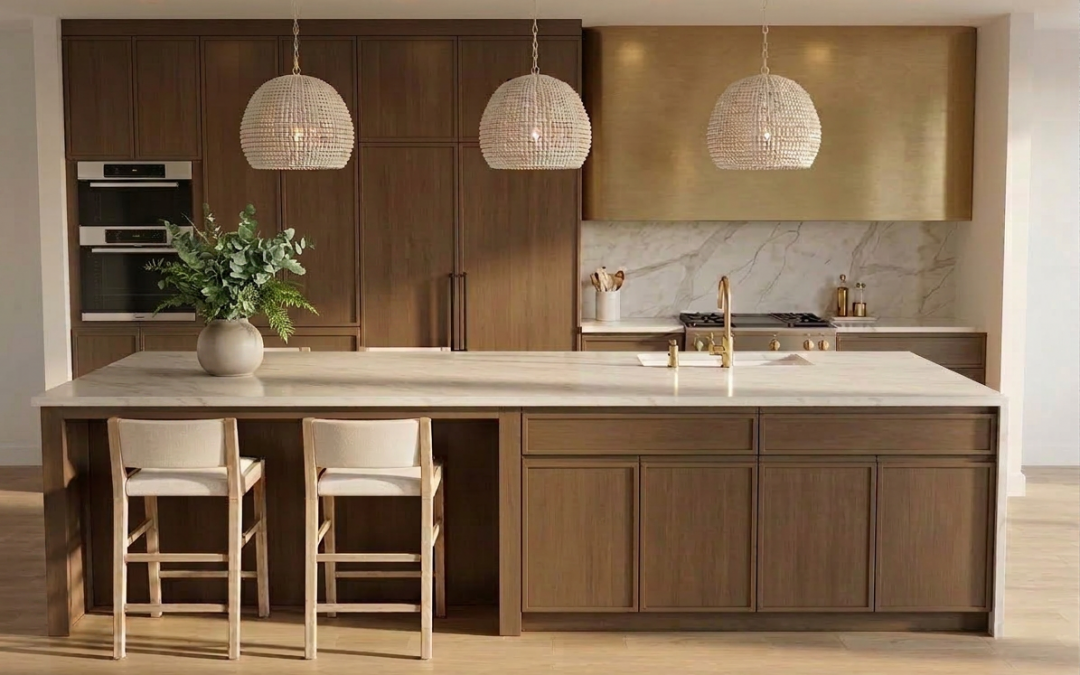
A kitchen remodel is one of the highest-return investments a Scottsdale homeowner can make - and one of the most complex to execute well. Before you commit to a project, the first thing you need to know is what it is going to cost.
In Scottsdale, a luxury kitchen remodel typically runs from $75,000 for a focused cabinetry-and-countertop refresh to $250,000 or more for a full layout reconfiguration with custom cabinetry, appliances, and structural changes.
Here is a detailed breakdown of what drives those numbers, what you can expect at each investment level, and how to make sure you are hiring the right team for the project.

Kitchen Remodel Cost Ranges in Scottsdale (2026)

$50,000 to $75,000 - Cosmetic Refresh
New countertops, new hardware, new fixtures, appliance replacement, and light refinishing. Layout stays in place. No plumbing or electrical moves. This is appropriate for kitchens that function well but feel dated.
$75,000 to $125,000 - Mid-Level Full Remodel
Full cabinet replacement (semi-custom), new countertops (stone slab), appliance package, updated lighting, new backsplash, and possibly new flooring. Layout stays in place or with minor adjustments. This is the most common entry point for Scottsdale primary homes between 2,500 and 4,000 square feet.
$125,000 to $200,000 - Full Remodel with Layout Changes
Custom cabinetry, luxury appliance package (Sub-Zero, Wolf, Cove, or similar), stone countertops, custom island, updated electrical and lighting plan, new flooring, and layout adjustments that may involve moving plumbing or gas lines. This is the range for Scottsdale homes being prepared for resale or where the kitchen is central to how the family uses the home.
$200,000 to $300,000+ - Full Reconfiguration or Addition
Full structural reconfiguration, opening walls, adding square footage, high-end custom cabinetry with integrated appliances, full lighting design, premium stone, butler's pantry addition, and smart home integration. Homes in Silverleaf, DC Ranch, and Paradise Valley frequently reach this level.

What Drives the Cost of a Kitchen Remodel in Scottsdale

Cabinetry

Cabinetry is typically 30 to 40 percent of the total kitchen remodel budget. Semi-custom cabinetry from a quality line runs $15,000 to $35,000 installed for a standard Scottsdale kitchen. Full custom cabinetry, built to your exact specifications with the specific wood species, door profiles, and interior organization, starts at $35,000 and often exceeds $80,000 in larger kitchens.
Lead times matter here. Custom cabinet orders take 10 to 16 weeks. Locking in your selections before demolition starts keeps the project on schedule.

Countertops

Natural stone slab countertops - quartzite, marble, or leathered granite - in a Scottsdale kitchen run $8,000 to $25,000 installed depending on material selection and linear footage. Engineered quartz is on the lower end of that range. Rare book-matched marble slabs push the high end well past it.

Appliances

A standard appliance package for a luxury Scottsdale kitchen - 48" range or cooktop-and-oven combination, column refrigerator and freezer, integrated dishwasher, built-in microwave drawer - runs $25,000 to $60,000. Ultra-high-end configurations with wine storage, steam ovens, and secondary prep appliances exceed $80,000.

Plumbing and Gas

Moving a sink location, relocating a gas line, or adding a pot filler requires licensed plumbing and mechanical work. Each plumbing move adds $3,000 to $10,000 depending on complexity. Kitchens that are not moving plumbing or gas avoid this cost entirely.

Permits

The City of Scottsdale requires permits for kitchen remodels that involve electrical upgrades, plumbing changes, gas line work, or structural modifications. As a licensed general contractor (ROC #347577), Living with Lolo manages permit applications and inspections as part of every project. Kitchens remodeled without permits create complications at resale.

Structural Work

Opening up a wall, removing a load-bearing element, or expanding the kitchen footprint requires structural engineering and licensed construction management. Budget $15,000 to $50,000 or more depending on what is being removed or modified.

The One-Contract Advantage for Kitchen Remodels

A kitchen remodel involves more trades than almost any other room: cabinetry, countertop fabrication, plumbing, electrical, tile, flooring, appliance installation, lighting, and painting. Coordinating all of those independently is a second job.
At Living with Lolo, design and licensed general contracting are the same firm under one contract. The designer who specified your cabinetry, countertops, and lighting plan is also managing the contractors installing them. When an issue comes up in the field - and something always does - it is resolved by the same team that designed the solution.
This structure also eliminates the most common source of kitchen remodel cost overruns: selections that were not finalized before demolition started. We complete the full design specification, material procurement, and investment guide before a single cabinet is removed.

Kitchen Remodel ROI in Scottsdale

Kitchens are one of the most scrutinized rooms when luxury buyers evaluate a home in Scottsdale, Paradise Valley, or DC Ranch. An outdated kitchen in a well-located property can delay a sale and reduce the offer price significantly.
Buyers in the $2M to $5M+ Scottsdale market often budget for a kitchen update post-purchase when the existing kitchen is dated. Sellers who update the kitchen before listing capture that credit at closing rather than discounting.
The strongest-performing kitchen renovations in Scottsdale's luxury market share a few characteristics: current cabinet profiles, professional-grade appliances, natural stone countertops, and a clean, functional island layout.

Before You Hire: What to Verify

Verify the ROC license at roc.az.gov before signing any contract for a kitchen remodel in Scottsdale. Unlicensed contractors cannot legally pull permits in Arizona. Work done without permits creates issues at resale.
Ask for a full specification before work starts. If your contractor wants to begin without a finalized material schedule, scope of work, and pricing breakdown, that is not a contractor you want managing a $100,000+ project.
Ask specifically who will be on your job site daily. The project manager you meet at the sales meeting and the person running your site day-to-day are often different people. Know who you are getting.

Ready to Talk Through Your Project?

Living with Lolo is a full-service luxury interior design and design-build firm serving Scottsdale, Paradise Valley, Arcadia, and the greater Phoenix metro. We hold an active Arizona ROC general contractor license and an interior design credential, which means we manage your entire project under one roof.

If you are planning a remodel, new construction project, or full furnishing and want honest numbers before you commit to anything, book a complimentary 15-minute discovery call.

Book Your Discovery Call →

See our completed projects →

Learn about our services →

Ready to Talk Through Your Scottsdale Kitchen?

Lauren Lerner and the Living with Lolo team work with clients across Scottsdale, Paradise Valley, Arcadia, and the greater Phoenix metro area.Book a Discovery Call
Lauren Lerner, principal interior designer at Living with Lolo

Lauren Lerner

Principal Designer, Living with Lolo

Lauren Lerner is a luxury interior designer based in Scottsdale, AZ and the founder of Living with Lolo. Her work has been featured in Architectural Digest, House Beautiful, Vogue, Martha Stewart Living, The Wall Street Journal, and GQ. She specializes in high-end residential design across Scottsdale, Paradise Valley, Arcadia, and the greater Phoenix metro area.

How Much Does a Bathroom Remodel Cost in Scottsdale, AZ? (2026 Guide)

How Much Does a Bathroom Remodel Cost in Scottsdale, AZ? (2026 Guide)

If you are planning a bathroom renovation in Scottsdale, the first question is almost always the same: what is this going to cost?
The short answer: a bathroom remodel in Scottsdale typically runs from $40,000 on the lower end of a luxury project to $120,000 or more for a full primary suite renovation with custom tile work, high-end fixtures, and a designer-led finish.
This guide breaks down where that number comes from, what moves it up or down, and what you should expect when you hire a licensed contractor and designer to manage the project for you.

What a Bathroom Remodel Costs in Scottsdale: The Ranges

$20,000 to $40,000 - Guest or Secondary Bathroom Refresh
At this range, you are looking at new fixtures, tile replacement, a new vanity, and updated lighting. Structural work and layout changes are not in scope. This is appropriate for guest baths or secondary bathrooms where the bones are good and the primary goal is aesthetic.
$40,000 to $70,000 - Mid-Tier Primary Bathroom Remodel
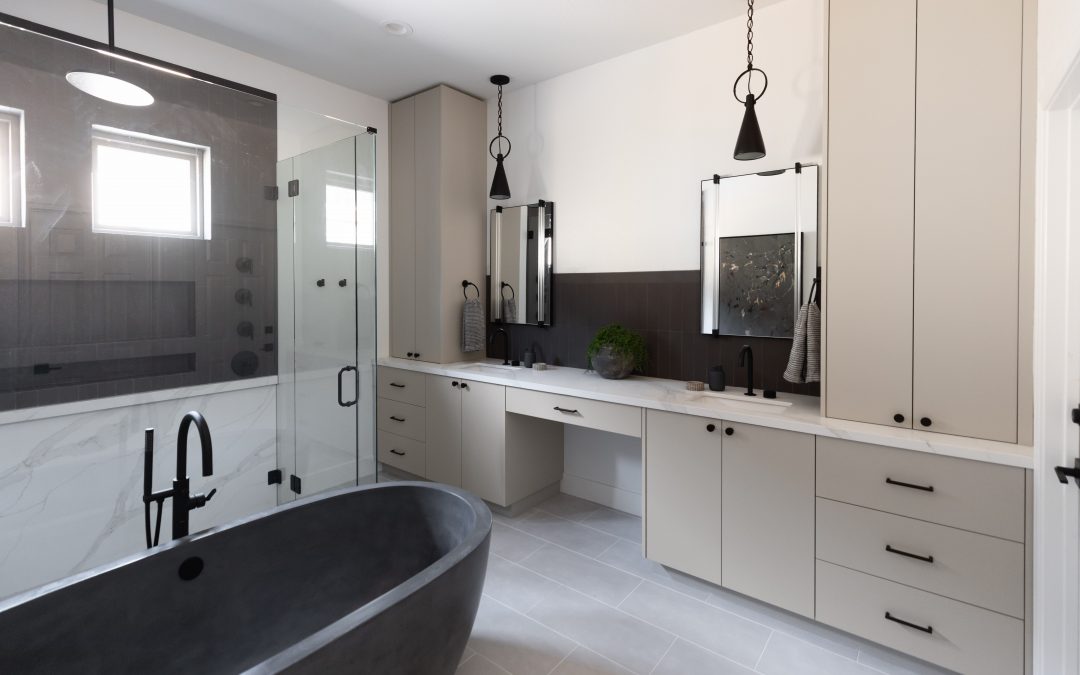
This range covers a full gut-and-rebuild of a primary bathroom without moving walls or relocating plumbing. New tile floor to ceiling, a custom or semi-custom vanity, freestanding soaking tub, frameless glass shower, new lighting plan. This is where most Scottsdale luxury homes start when updating a bathroom that is 10 to 15 years old.
$70,000 to $120,000 - Full Luxury Primary Bathroom
This is the range for a primary suite bathroom renovation with layout changes, custom cabinetry, natural stone slab tile, a walk-in steam shower, heated floors, smart fixtures, and a designer-specified finish package. Projects at this level require a licensed general contractor to pull permits and manage the licensed trades.
$120,000+ - Full Gut, Expansion, or Addition
Full bathroom additions, primary suite expansions, or high-end finishes such as book-matched marble slabs, custom millwork, and specialty lighting systems push past $120,000. This is also the range when a bathroom remodel is combined with a bedroom reconfiguration.

What Drives the Cost of a Bathroom Remodel in Scottsdale

Tile Selection

Tile is one of the highest-leverage decisions in a bathroom remodel. The difference between a standard porcelain tile and a large-format natural stone slab installed floor-to-ceiling can be $15,000 to $30,000 on labor and material alone. In Scottsdale, where most primary bathrooms are generous in size, this gap is significant.

Custom vs. Semi-Custom Cabinetry

A floating custom vanity built to your specifications costs substantially more than a semi-custom option from a cabinet line. For a primary bath vanity wall with integrated storage, custom millwork adds $8,000 to $20,000 compared to a production cabinet solution.

Plumbing and Layout Changes

Moving a toilet, relocating a shower drain, or repositioning a freestanding tub requires a licensed plumber and a GC to manage the work. Each plumbing move adds $3,000 to $8,000 depending on complexity. If your layout is staying in place, this cost disappears.

Permits

In Scottsdale, any bathroom remodel that moves plumbing, adds electrical circuits, or modifies walls requires permits. As a licensed general contractor (ROC #347577), Living with Lolo identifies and pulls every required permit as part of the project. Homeowners who hire unlicensed contractors to avoid permits often discover the issue when they sell - unpermitted work creates title problems and can require tear-out and re-inspection.

Timeline and Coordination

A full primary bathroom renovation typically takes 10 to 16 weeks from design through completion. The design and specification phase runs 4 to 6 weeks. Fabrication lead times for custom elements such as vanities, glass, and custom tile orders are usually the longest variables. Construction runs 4 to 6 weeks on most Scottsdale primary bath projects.

The Cost Difference Between a Designer-Led and a Contractor-Only Remodel

A contractor-only remodel costs less on paper. You provide the selections, manage the decisions, coordinate the trades, and handle issues when they arise. If you have the time, the product knowledge, and the tolerance for project management, that works.
A designer-led remodel adds a design fee and often results in better material pricing through trade accounts, fewer change orders because selections are specified before demolition starts, and a finished product that photographs and shows well. In Scottsdale's resale market, well-designed bathrooms with current finishes command attention.
At Living with Lolo, design and general contracting are the same firm. That means the designer who specified your tile, your vanity, and your lighting plan is also managing the licensed trades installing it. There is no gap between what was designed and what was built.

What You Should Ask Before Hiring a Remodeling Contractor in Scottsdale

Before signing anything with any contractor for a bathroom remodel in Scottsdale, verify the contractor's ROC license at roc.az.gov. Active status means the license is current and in good standing. Any open complaints or disciplinary history appears in the search results.
Ask who specifically will manage your project day-to-day. On large remodels, the person who sold you the job is often not the person running the site.
Ask how they handle scope changes. Cost overruns on bathroom remodels usually come from changes made after demolition starts, often because selections were not finalized before work began. A firm that completes design and specifications before swinging a hammer eliminates most of this.
Ask for a project timeline in writing before signing. Any contractor who cannot give you a specific milestone schedule is not organized enough for a project of this complexity.

Ready to Talk Through Your Project?

Living with Lolo is a full-service luxury interior design and design-build firm serving Scottsdale, Paradise Valley, Arcadia, and the greater Phoenix metro. We hold an active Arizona ROC general contractor license and an interior design credential, which means we manage your entire project under one roof.

If you are planning a remodel, new construction project, or full furnishing and want honest numbers before you commit to anything, book a complimentary 15-minute discovery call.

Book Your Discovery Call →

See our completed projects →

Learn about our services →

Ready to Talk About Your Scottsdale Bathroom?

Lauren Lerner and the Living with Lolo team work with clients across Scottsdale, Paradise Valley, Arcadia, and the greater Phoenix metro area.Book a Discovery Call
Lauren Lerner, principal interior designer at Living with Lolo

Lauren Lerner

Principal Designer, Living with Lolo

Lauren Lerner is a luxury interior designer based in Scottsdale, AZ and the founder of Living with Lolo. Her work has been featured in Architectural Digest, House Beautiful, Vogue, Martha Stewart Living, The Wall Street Journal, and GQ. She specializes in high-end residential design across Scottsdale, Paradise Valley, Arcadia, and the greater Phoenix metro area.

How to Hire a Luxury Interior Designer in Scottsdale

How to Hire a Luxury Interior Designer in Scottsdale

Interior Design Guide
14 min read  ·  June 2026
Every week I talk with homeowners who are somewhere in the process of figuring out whether to hire a designer, and if so, who. Some of them have already had a bad experience with someone who underdelivered. Some of them are doing this for the first time and have no idea how this works. Some of them have a house they love and a renovation on the horizon and they just want to get it right.This guide covers exactly what you need to know before you hire a luxury interior designer in Scottsdale. Not generic advice from a national design blog, but what actually matters in this specific market, from someone who quotes and manages projects here every week.

Step 1: Define Your Scope Before You Start Searching

The biggest mistake people make is searching for a designer before they are clear on what they actually need done. "Full redesign" is not a scope. Neither is "update the main floor." Before you start making calls, get specific.Write down the following before your first conversation with any firm:
  • Which rooms you plan to touch and what you want to change in each
  • Whether any walls are moving, plumbing is relocating, or electrical is changing
  • Whether you want furnishings included or just design and construction
  • Your timeline, including any hard deadlines
  • A realistic budget range, even a rough one
Scope directly affects which firm you should hire. A client doing a cosmetic refresh with new furniture and paint does not need the same kind of firm as a client who is removing a load-bearing wall, reconfiguring their kitchen layout, and adding a wine cellar. Getting clear on this before your first call saves everyone time and prevents the kind of misalignment that derails projects early.One question worth sitting with before you pick up the phone: is your project primarily a design project, or a construction project with design involved? If you are planning to relocate plumbing, open up walls, or add square footage, you need a licensed general contractor involved, not just a designer with strong vendor relationships. Some firms, like Living with Lolo, hold both credentials under one contract. Many do not.

Step 2: Know What Credentials Actually Matter in Arizona

The title "interior designer" is not regulated in Arizona. Anyone can use it. This does not mean all designers are equal, and it does not mean credentials do not matter. It means you need to know what to look for instead of assuming a title tells you anything.For a design-only engagement, look for:
  • A degree in interior design from an accredited program
  • Membership in ASID (American Society of Interior Designers) or IDS (Interior Design Society), which signals ongoing professional development and accountability to a code of ethics
  • A portfolio that shows projects at the scale and finish level of your own home
For a project involving any construction, look for:
  • An active Arizona Registrar of Contractors (ROC) general contractor license held by the firm or a principal of the firm
  • The ability to pull permits, manage subcontractors, and oversee licensed trades directly
  • Proof of bonding and general liability insurance
Living with Lolo holds ROC #347577, an active Arizona general contractor license. This is not standard. Most interior designers in Scottsdale cannot pull a permit, oversee structural work, or manage a licensed trade contractor. They can hire one, which means you end up with two separate firms, two contracts, two sets of expectations, and twice the opportunity for costly miscommunication.

Step 3: Understand How Fees Are Structured Before Your First Call

The most common source of sticker shock in the design process is not the furniture. It is the design fee, and more specifically, not understanding how it was calculated. Knowing how fees are structured before you sit down with a firm means you will not be blindsided by a proposal you were not expecting.There are three main structures luxury interior designers in Scottsdale use:Flat project fee. A set amount for a defined scope of services. This gives you budget predictability if the scope is clearly defined upfront. If the scope expands, expect the fee to change with it.Hourly rate. You pay for time. Luxury designers in Scottsdale typically charge between $150 and $350 per hour. For a complex project, hourly can become expensive and unpredictable quickly.Percentage of project cost. The design fee is calculated as a percentage of the total budget, typically 10 to 20 percent. On a $600,000 project, that is $60,000 to $120,000 in design fees before any furniture is ordered or any wall is opened.Most full-service firms use some combination, often a flat design fee plus a procurement markup on furniture and materials. Understanding this before your first conversation lets you compare proposals accurately. Two firms quoting "design fees" may be describing very different things.For a detailed breakdown of what projects actually cost in this market, see: How much does luxury interior design cost in Scottsdale?

Step 4: Evaluate the Portfolio Carefully

Every firm has a portfolio. Not every portfolio tells you what you need to know. Here is how to read one.Look at scale. Does the firm work on projects comparable to yours in square footage, finish level, and complexity? A designer whose portfolio shows 2,000-square-foot condo renovations is not necessarily equipped for a 9,000-square-foot whole-home project with custom millwork throughout. The project management demands are not the same.Look at style alignment. Does their work look like what you want? A designer known for clean contemporary spaces is going to find it harder to give you warm organic modern authentically. Great designers can work across styles, but the portfolio tells you where they are most fluent and confident.Look for project depth. Do they show before-and-after, or only finished photography? Do they show projects during construction? A firm that shows only styled final photography may not have the operational experience to manage a complex build.Ask what you are not seeing. In any initial conversation, ask the firm to walk you through a project similar to yours. Ask what the challenges were. Ask how they handled them. The answer tells you more than any photograph.
The right designer is not the one with the most beautiful portfolio. It is the one with the operational capacity to deliver that result for your specific project, on your timeline, at your scale.
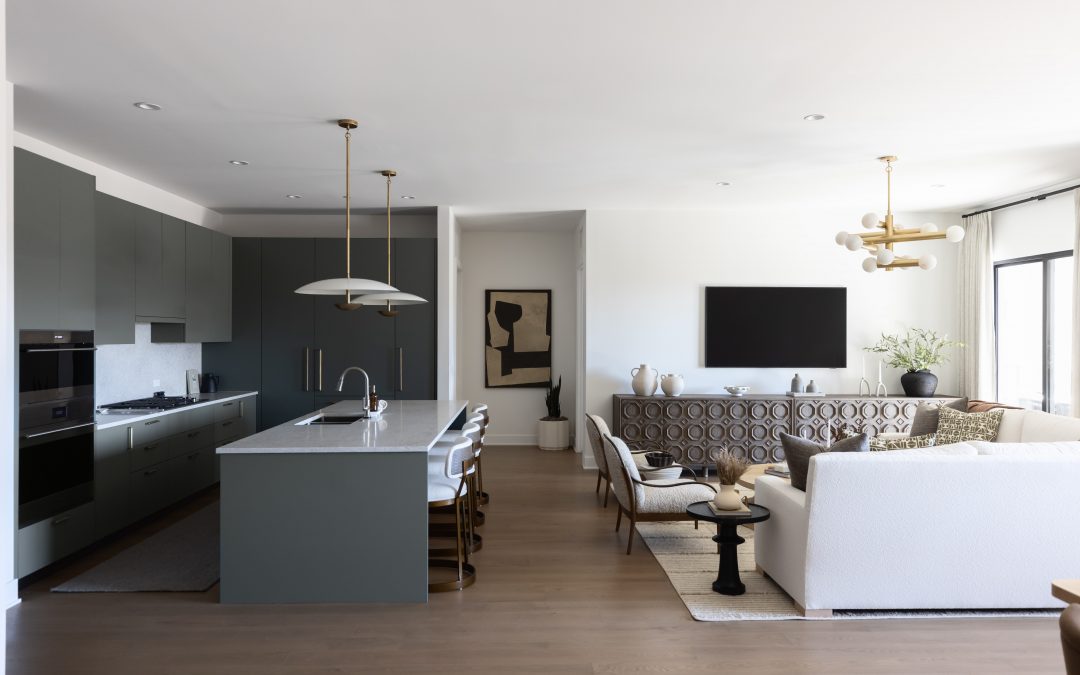
Desert Interlude living room by Living with Lolo, Scottsdale — open-plan warm contemporary condo interior design

Living area, Desert Interlude — Full Home Furnishings, Scottsdale, AZ

Desert Interlude is a full-home furnishing project we completed in a Scottsdale condo. Warm Contemporary in style, every room was designed with the same material choices and palette discipline, from the primary suite to the secondary bedrooms and bathrooms. When you evaluate a portfolio, that coherence is what to look for. A home where the secondary spaces feel as resolved as the main living area is the work of a firm with a real design vision, not just a collection of showpiece shots.

Step 5: What to Ask in an Initial Consultation

An initial call, whether 15 minutes or an hour, is where you determine fit. These are the questions worth asking in every conversation.Do you hold an Arizona general contractor license? If the answer is no and your project involves construction, ask directly how they intend to manage the build scope, who holds the contractor license, and how that relationship is structured contractually.Who will be my day-to-day contact? At a larger firm, you may meet the principal in the sales process and then be handed off to a junior designer. Know who you are actually hiring.Have you worked at this scale and budget before? Firms that primarily manage $80,000 projects are not always equipped for the vendor relationships, procurement complexity, and site management demands of a $700,000 renovation. Ask directly.How do you handle budget overruns? Every complex project has surprises. What matters is how they are managed and who absorbs them when they happen. The honest answer here is always more reassuring than a guarantee that surprises never occur.What does your project management process look like? Who is on site during construction? How are changes documented? How often do you communicate with clients and in what format?Can you provide references from projects at a comparable scale? References from previous clients who ran projects similar to yours are the single most useful information you can gather before signing anything.

Step 6: Red Flags to Watch For

Some things should give you pause regardless of how compelling the initial conversation feels.No general contractor license and no clear plan for who manages construction. "I work with great contractors" is not a construction management plan. It is a referral. Know who holds the license and how decisions on site get made.A portfolio that does not show projects at your scale. Being the largest project a firm has ever managed is not a position you want to be in. Complexity compounds quickly at larger project sizes.Vague answers on fees. Any reputable firm should be able to tell you clearly how they charge, what is included in that fee, and what would cause it to change. "We will figure that out" is not a fee structure.Reluctance to provide references. References from past clients at a comparable scope should be available and offered readily. If a firm is reluctant to provide them, that warrants a direct question about why.Pressure to sign quickly. Firms that push you to commit before you have had time to review a contract, visit a completed project, or speak with a previous client are not behaving the way a trustworthy long-term partner would.

Step 7: What Changes When Your Designer Also Holds a GC License

If your project involves any construction at all, the decision about whether your designer also holds a general contractor license is one of the most consequential decisions you will make in this entire process.When design and construction are handled by separate firms, you have two contracts, two contacts, and two sets of accountability. Disagreements between them about who is responsible for a problem land on you. Schedule delays caused by communication gaps cost you time and money. Finish decisions made by the contractor that do not match the design intent require expensive corrections that neither party wants to pay for.When design and construction are managed by the same firm under one contract, these friction points disappear. Your designer is your general contractor. What is drawn gets built as drawn, because the same team is accountable for both. There is no gap to fall into.At Living with Lolo, we manage design and construction under one contract for every project. We pull the permits. We manage the subcontractors. We are on site. When the project is finished, it looks like what we designed because we are the ones who built it.If you are planning a major renovation in Scottsdale, Paradise Valley, or the surrounding area and want to understand whether your project is a good fit for our process, book a complimentary discovery call here. We will give you an honest assessment of scope, timeline, and what to expect from start to finish.

Ready to Talk Through Your Project?

Every project begins with a conversation. Tell us about your home, your vision, and what you want to accomplish. We will take it from there, completely. Book a Discovery Call

Frequently Asked Questions

What should I look for when hiring a luxury interior designer in Scottsdale?

Look for a portfolio that matches your project scale and finish level, clear and transparent fee structures, professional affiliations like ASID or IDS, and for any project involving construction, an active Arizona general contractor license. Always ask for references from completed projects at a scope similar to yours before signing anything.

How much does it cost to hire a luxury interior designer in Scottsdale?

Design fees for luxury interior design in Scottsdale typically range from $15,000 to $75,000 or more depending on project scope and whether construction management is included. This is separate from furnishings and construction costs. Total project investment for a whole-home renovation typically runs $400,000 to over $1 million in this market. See our full breakdown: How much does luxury interior design cost in Scottsdale?

What credentials should a luxury interior designer in Scottsdale have?

Look for a degree in interior design from an accredited program and membership in ASID or IDS. If your project includes any construction, your designer should either hold an active Arizona ROC general contractor license or work under a firm that does. The title "interior designer" is not regulated in Arizona, so credentials require active verification.

How do I know if an interior designer is the right fit?

The right fit combines portfolio alignment, clear communication, transparent pricing, and the operational capacity to manage your specific project scope. Ask about their largest completed project, their day-to-day project management process, and request at least two references from work at a comparable scale before signing.

What is the difference between a luxury interior designer and a design-build firm?

A design-only interior designer specifies, sources, and manages the aesthetic scope but cannot manage construction directly or pull permits. A design-build firm holds a contractor license and manages both design and construction under one contract. For any project involving structural changes, permits, or significant renovation, a design-build firm eliminates the coordination gap between what gets designed and what actually gets built.
Lauren Lerner, principal interior designer at Living with Lolo

Lauren Lerner

Principal Designer, Living with LoloLauren Lerner is a luxury interior designer based in Scottsdale, AZ and the founder of Living with Lolo. Her work has been featured in Architectural Digest, House Beautiful, Vogue, Martha Stewart Living, The Wall Street Journal, and GQ. She specializes in high-end residential design and design-build renovation across Scottsdale, Paradise Valley, Arcadia, and the greater Phoenix metro area.

Licensed General Contractor and Interior Designer in Scottsdale: What Working with Both Under One Roof Actually Looks Like

Licensed General Contractor and Interior Designer in Scottsdale: What Working with Both Under One Roof Actually Looks Like

Most homeowners in Scottsdale begin their remodel search the same way: look for an interior designer, then separately find a licensed contractor. The logic seems sound. In practice, that split creates a coordination gap that costs money, time, and design integrity on nearly every project it touches.
Living with Lolo is one of a small number of firms in Arizona that holds both an active interior design credential and a general contractor license issued by the Arizona Registrar of Contractors (ROC 347577). This post is about what that combination actually means in practice , the day-to-day difference for clients managing a remodel in Scottsdale, Paradise Valley, or Arcadia.

What the Arizona ROC License Means for Your Project

In Arizona, any firm performing construction work on a residential property , including remodeling, structural changes, plumbing and electrical modifications, or additions , must hold an active general contractor license issued by the Arizona Registrar of Contractors (ROC). This is a legal requirement, not a voluntary credential.
An ROC license requires documented trade experience, passing a licensing exam, demonstrated financial responsibility, and ongoing compliance with state contractor regulations. A firm that cannot produce an active ROC license number is not legally permitted to pull permits, supervise licensed subcontractors, or hold the construction contract on your project.
Interior designers who do not hold an ROC license can specify materials and design plans, but they cannot manage construction. They cannot pull permits. They are not the legally responsible party on the build. For clients doing a remodel that involves any structural work, plumbing, electrical, or wall changes , which describes nearly every project we do , this matters.
Living with Lolo holds Arizona ROC License 347577. You can verify this at roc.az.gov. When you hire us, one licensed firm is accountable for the entire project, from the first design meeting through the final styled installation.

The Coordination Gap: Where Most Remodels Lose Time and Money

When a designer and contractor operate as two separate businesses on the same project, there is an inherent gap between them. Every decision, question, or field condition has to travel across that gap before it gets resolved. That gap is where projects slow down, budgets creep, and design intent erodes.
Here is how it plays out on a real project. The designer specifies a tile that requires a substrate not accounted for in the original contractor bid. The contractor issues a change order. The designer disputes whether the substrate is actually necessary. You are in the middle, absorbing the delay and the cost. Both parties are technically correct from within their own scope. No one is accountable for the combined outcome.
Or: demo reveals an HVAC run that conflicts with a planned ceiling detail. The contractor needs a design decision to proceed. The designer is in another client meeting. The crew charges by the hour while everyone waits. Two days later the decision gets made in a text chain, and it is not quite what the designer intended.
Or: a field decision gets made while the designer is off site. It is structurally sound but visually wrong. By the time anyone sees it, it is tiled over.
Every one of these scenarios is standard on split-responsibility projects. Every one is eliminated when the same team is responsible for design and construction. At Living with Lolo, the designer is the contractor. A field condition gets resolved by the same person who created the specification. There is no telephone game, no finger-pointing, and no gap.

What One Contract Actually Covers

When you work with Living with Lolo, you sign one contract. That contract covers everything from the initial design consultation through construction through final installation and styling. There is no separate design agreement with us and a construction agreement with someone else.
This matters for a practical reason: when you have two contracts, you have two firms each responsible for their own scope , and genuinely no one responsible for the seam between them. The seam is where most problems live.
Under one contract with a licensed design-build firm, the accountability is clear. If the finished result does not match the design intent, one entity is responsible for that outcome. That entity is us.
For clients in Scottsdale and Paradise Valley managing projects at the scale and price point most of our clients work at, that clarity is not a luxury , it is a requirement. These are high-value homes with complex scopes and real financial stakes. The structure of who is accountable for what needs to match the complexity of the project.

How Permitting Works When the Designer Is Also the Contractor

Permits in Arizona are pulled by the licensed general contractor on the project, not by the homeowner and not by an interior designer who does not hold a contractor license. On a Living with Lolo project, we pull permits directly.
This means we know the Scottsdale, Paradise Valley, and Chandler permitting offices. We know what each jurisdiction requires for a given scope of work. We manage the inspection schedule as part of the project timeline rather than waiting for a separate contractor to submit documents on their own schedule.
It also means you have one point of contact for every permit question. When an inspection is scheduled, we are the ones coordinating it. When a correction is required, we address it. You are not in the middle managing communication between a designer who is not on the permit and a contractor who does not fully understand the design intent.
For homeowners doing any work over $1,000 in combined labor and materials , which covers essentially every renovation we work on , permits are required in Arizona. The ability to manage permitting directly, rather than through a third party, compresses timelines in a meaningful way on every project.

What the Process Looks Like from First Call Through Final Install

Discovery call. We start by understanding your project scope and goals. This conversation includes an honest discussion of realistic budget ranges for your specific scope , before you commit to anything.
Design phase. Space planning, concept development, finish and material selection, furniture sourcing, and detailed drawings. Because our construction team reviews every drawing, specifications that would create problems during the build are caught and resolved at the design stage rather than on site.
Permitting. We handle permit applications and manage the inspection schedule directly. No third-party coordination required.
Construction. Our team manages all subcontractors. We are on site. Real-time field decisions are made with full awareness of the design intent, because the person on site is the same person who made the design decisions.
Procurement and installation. Furnishings, lighting, hardware, and accessories are sourced and installed by the same team that designed the space. The result looks like the original vision because the people installing it created it.
Final styling. Every project ends with a full styling appointment before photography. The home is not considered complete until every detail has been attended to.

Who This Model Is Built For

The design-build model at Living with Lolo is designed for clients who want to hand the project over. Not clients who want to be closely involved in every trade decision, manage subcontractor schedules, or act as the communication bridge between a designer and a contractor. Those clients exist, and they are better served by a different arrangement.
Our clients are typically executives, entrepreneurs, and professionals who are managing demanding schedules and have no interest in becoming part-time construction managers. They want to describe what they want, approve a design direction, and return to a home that looks exactly like the plan. They want accountability to live in one place.
The Scottsdale and Paradise Valley market is filled with high-value homes and clients who approach renovation at a significant investment level. At that scale, having design and construction managed by two separate firms with two separate agendas is genuinely risky. The design-build model eliminates that risk structurally.

How to Verify Before You Hire

Whether you are evaluating Living with Lolo or another firm in the Scottsdale area, here is the due diligence that protects you:
Ask for the ROC license number and verify it. Go to roc.az.gov, search the firm name or license number, and confirm the license is active and in good standing. A firm that hesitates to provide this is a firm you should not hire for construction work.
Ask who pulls the permits. If the answer is a separate partner or a building team, you are not working with a true design-build firm. The firm holding your design contract should be the same firm holding the permit.
Ask who will be on site during construction. A designer whose involvement ends at the drawing stage is not a design-build contractor. The designer should be present during the build making real-time decisions that protect the design intent.
Ask to see completed projects , not renderings, not in-progress work. Completed homes, professionally photographed, at a scope comparable to yours. Ask explicitly whether those are projects the firm designed AND built, or only designed.
Ask how change orders are handled. This reveals how the firm operates when unexpected conditions arise , which they always do on a renovation. A clear, fair change order process is a sign of a well-run firm. Vagueness here is a warning sign.

How Permitting Works When the Designer Is Also the Contractor

Permits in Arizona are pulled by the licensed general contractor on the project, not by the homeowner and not by an interior designer who does not hold a contractor license. On a Living with Lolo project, we pull permits directly.
This means we know the Scottsdale, Paradise Valley, and Chandler permitting offices. We know what each jurisdiction requires for a given scope of work. We manage the inspection schedule as part of the project timeline rather than waiting for a separate contractor to submit documents on their own schedule.
It also means you have one point of contact for every permit question. When an inspection is scheduled, we are the ones coordinating it. When a correction is required, we address it. You are not in the middle managing communication between a designer who is not on the permit and a contractor who does not fully understand the design intent.
For homeowners doing any work over $1,000 in combined labor and materials , which covers essentially every renovation we work on , permits are required in Arizona. The ability to manage permitting directly, rather than through a third party, compresses timelines in a meaningful way on every project.

What the Process Looks Like from First Call Through Final Install

Discovery call. We start by understanding your project scope and goals. This conversation includes an honest discussion of realistic budget ranges for your specific scope , before you commit to anything.
Design phase. Space planning, concept development, finish and material selection, furniture sourcing, and detailed drawings. Because our construction team reviews every drawing, specifications that would create problems during the build are caught and resolved at the design stage rather than on site.
Permitting. We handle permit applications and manage the inspection schedule directly. No third-party coordination required.
Construction. Our team manages all subcontractors. We are on site. Real-time field decisions are made with full awareness of the design intent, because the person on site is the same person who made the design decisions.
Procurement and installation. Furnishings, lighting, hardware, and accessories are sourced and installed by the same team that designed the space. The result looks like the original vision because the people installing it created it.
Final styling. Every project ends with a full styling appointment before photography. The home is not considered complete until every detail has been attended to.

Who This Model Is Built For

The design-build model at Living with Lolo is designed for clients who want to hand the project over. Not clients who want to be closely involved in every trade decision, manage subcontractor schedules, or act as the communication bridge between a designer and a contractor. Those clients exist, and they are better served by a different arrangement.
Our clients are typically executives, entrepreneurs, and professionals who are managing demanding schedules and have no interest in becoming part-time construction managers. They want to describe what they want, approve a design direction, and return to a home that looks exactly like the plan. They want accountability to live in one place.
The Scottsdale and Paradise Valley market is filled with high-value homes and clients who approach renovation at a significant investment level. At that scale, having design and construction managed by two separate firms with two separate agendas is genuinely risky. The design-build model eliminates that risk structurally.

How to Verify Before You Hire

Whether you are evaluating Living with Lolo or another firm in the Scottsdale area, here is the due diligence that protects you:
Ask for the ROC license number and verify it. Go to roc.az.gov, search the firm name or license number, and confirm the license is active and in good standing. A firm that hesitates to provide this is a firm you should not hire for construction work.
Ask who pulls the permits. If the answer is a separate partner or a building team, you are not working with a true design-build firm. The firm holding your design contract should be the same firm holding the permit.
Ask who will be on site during construction. A designer whose involvement ends at the drawing stage is not a design-build contractor. The designer should be present during the build making real-time decisions that protect the design intent.
Ask to see completed projects , not renderings, not in-progress work. Completed homes, professionally photographed, at a scope comparable to yours. Ask explicitly whether those are projects the firm designed AND built, or only designed.
Ask how change orders are handled. This reveals how the firm operates when unexpected conditions arise , which they always do on a renovation. A clear, fair change order process is a sign of a well-run firm. Vagueness here is a warning sign.

The difference between design-only and design-build is not just a business model distinction. I have personally worked on both sides of that divide , projects where I was the designer handing off to a contractor I did not control, and projects where my firm owned the entire process. The difference in outcome for clients is not subtle. , Lauren Lerner, Living with Lolo

"We had done a kitchen remodel five years ago with a designer and contractor working separately. The experience was so difficult that we almost did not do another remodel. Lauren's model is completely different. One person owns the design. One person owns the build. They are the same person. Every question had one answer. Our project ran on schedule and our final cost was actually below estimate."

Rachel and David P. , Scottsdale whole-home remodel client

★★★★★

"My wife and I travel constantly for work. We needed a firm we could hand the project to and trust completely. Lauren holds the design credential and the contractor license. She is the single accountable party. We reviewed the design, approved it, and came back to a finished home. That model only works if one person owns the whole thing."

Thomas H. , Paradise Valley remodel client

★★★★★

"I interviewed four firms. Lauren was the only one who could hand me an active ROC license number and explain exactly how permitting would work on our project. The other firms either didn't have a contractor license or were vague about who would actually be managing construction. That vagueness costs you money. Lauren's clarity saved us from a mess."

Jennifer K. , North Scottsdale design-build client

★★★★★

Frequently Asked Questions

Is Living with Lolo a licensed general contractor in Arizona?
Yes. Living with Lolo holds active Arizona Registrar of Contractors general contractor license ROC 347577, in addition to an interior design credential. You can verify the license status at roc.az.gov.
Do I need a licensed general contractor for a remodel in Scottsdale?
Yes. Arizona law requires a licensed general contractor for residential work involving more than $1,000 in combined labor and materials, which covers essentially all kitchen, bathroom, whole-home, and structural renovation projects.
What is the difference between hiring a design-build firm and hiring separately?
A design-build firm manages design and construction under one contract with one accountable entity. Hiring separately means two contracts, two schedules, and a coordination gap between firms that typically produces change orders, delays, and cost overruns. When something goes wrong, the gap between two separate firms is where accountability disappears.
How is a licensed design-build firm different from a general contractor who works with a designer?
When a general contractor works with a designer they recommend, those are still two separate businesses. The designer's decisions are not binding on the contractor's scope in real time, and when there is a conflict, you are the one resolving it. At Living with Lolo, the designer and the licensed contractor are the same firm.
Can an interior designer in Arizona pull permits without a GC license?
No. Pulling permits in Arizona requires an active ROC general contractor license. An interior designer without a contractor license must refer permit work to a licensed contractor, who is then the party actually responsible for the build.
Why does having both credentials under one firm typically cost less than hiring separately?
Two separate firms each price their work with contingencies that account for the uncertainty of working with another party they do not control. When the same team is responsible for both design and construction, that uncertainty disappears, and clients consistently report projects coming in at or under budget.
What types of projects does Living with Lolo take on in Scottsdale?
Whole-home remodels, kitchen and bathroom renovations, large-scale furnishing and renovation projects, new construction interior design, and design-build projects across Scottsdale, Paradise Valley, Arcadia, Cave Creek, and the greater Phoenix metro area.

Ready to Talk Through Your Project?

Living with Lolo is a full-service luxury interior design and design-build firm serving Scottsdale, Paradise Valley, Arcadia, and the greater Phoenix metro area. We hold an active Arizona ROC general contractor license (ROC 347577) and manage your project under one contract from concept through construction and final styling.Book a Discovery Call
Lauren Lerner, principal interior designer at Living with Lolo

Lauren Lerner

Principal Designer, Living with Lolo

Lauren Lerner is a luxury interior designer and licensed general contractor based in Scottsdale, AZ and the founder of Living with Lolo. Her work has been featured in Architectural Digest, House Beautiful, Vogue, Martha Stewart Living, The Wall Street Journal, and GQ. She holds Arizona ROC contractor license 347577 and manages full design-build projects across Scottsdale, Paradise Valley, Arcadia, and the greater Phoenix metro area.