
Gray floors generally do not work well in Scottsdale homes, because the desert’s warm, direct light fights against a cool-toned surface instead of complementing it. Lauren Lerner, principal designer of Living with Lolo, put it directly in a recent Sunset Magazine feature on the gray floor trend: “We moved away from cool-toned wood and tiles a while ago because they were everywhere, and in Arizona especially, they fight the light instead of working with it. Our climate has warm, direct sun most of the year, and gray floors can read flat or even a little cold against that.” If a home already has gray floors, the fix is not to rip them out, it is to warm up everything around them. This post covers why the climate math works against gray floors in Scottsdale, what Lauren uses instead, and exactly how to fix a room that already has them.
Sunset Magazine interviewed Lauren Lerner for its piece “Are Gray Floors Ever Okay? Designers Share Their Honest Opinions”, alongside designers from Los Angeles and Vancouver. Lauren was the only designer quoted who spoke specifically to how a hot, sun-heavy climate changes the math on this trend, and her point applies directly to any Scottsdale, Paradise Valley, or Arcadia homeowner deciding on flooring right now.
What the Research Shows
Flooring color is not a minor finish decision, it is one of the choices homeowners most often regret once the light in a room shows its true effect. Houzz’s most recent remodeling trends research found warm wood tones have overtaken cool gray and white-washed finishes as the fastest-growing flooring preference nationally for the second consecutive year. (Source: Houzz & Home Study, 2026.) The National Association of Home Builders’ consumer preference survey has also found that buyers in warm-climate markets consistently rate warm-toned flooring higher in walkthroughs than cool-toned flooring, even when shown the same floor plan and finish package. (Source: National Association of Home Builders, 2026.) Zillow’s research on Southwest listings has found that homes photographed with warm-toned wood flooring get measurably more saves and views than comparable homes with gray flooring in the same price bracket. (Source: Zillow, 2026.) None of that national data is built around Arizona’s specific light conditions. Scottsdale gets direct, high-intensity sun for most of the year, which is exactly the variable Lauren is describing when she says gray floors “fight the light instead of working with it.”
Why Gray Floors Read Differently in a Desert Climate
Most flooring trend coverage treats gray as either fashionable or dated, full stop, without accounting for where the house actually sits. Lauren’s point is more specific than a style opinion. “Our climate has warm, direct sun most of the year, and gray floors can read flat or even a little cold against that,” she told Sunset. In a cooler, gray-light climate, a gray floor can feel intentional and calm. In Scottsdale, where the light is warm and direct for most of the year, that same floor can look muted or lifeless the moment the sun hits it, because the undertone of the floor is working against the undertone of the light filling the room.
That is the reasoning Living with Lolo uses when a new-build or full renovation client in Scottsdale, Paradise Valley, or DC Ranch is choosing flooring from scratch. Warm, rich wood tones like oak and walnut hold up against the desert’s light instead of competing with it, which is part of why Living with Lolo moved away from cool-toned wood and tile on new projects.
What To Do If You Already Have Gray Floors
Not every client gets to start from zero, and Lauren is direct about that too. “Gray isn’t a dealbreaker,” she said in the Sunset feature. “We warm up the room around it, so the floor stops being the thing you notice.” That is a practical answer, not a sales pitch for a full floor replacement, and it reflects how Living with Lolo actually approaches a remodel where the existing floor is not changing.
The fix layers warmth everywhere else in the room instead of fighting the floor directly. Layered wood tones in furniture, warmer and creamier paint colors on the walls, and brass or bronze fixtures in place of cool chrome or nickel all pull a room’s overall temperature away from the gray underfoot. Once enough warm material surrounds the floor, the eye stops registering the gray as the dominant note in the room, and the space reads intentional instead of mismatched.
How This Plays Out in a Real Scottsdale Project
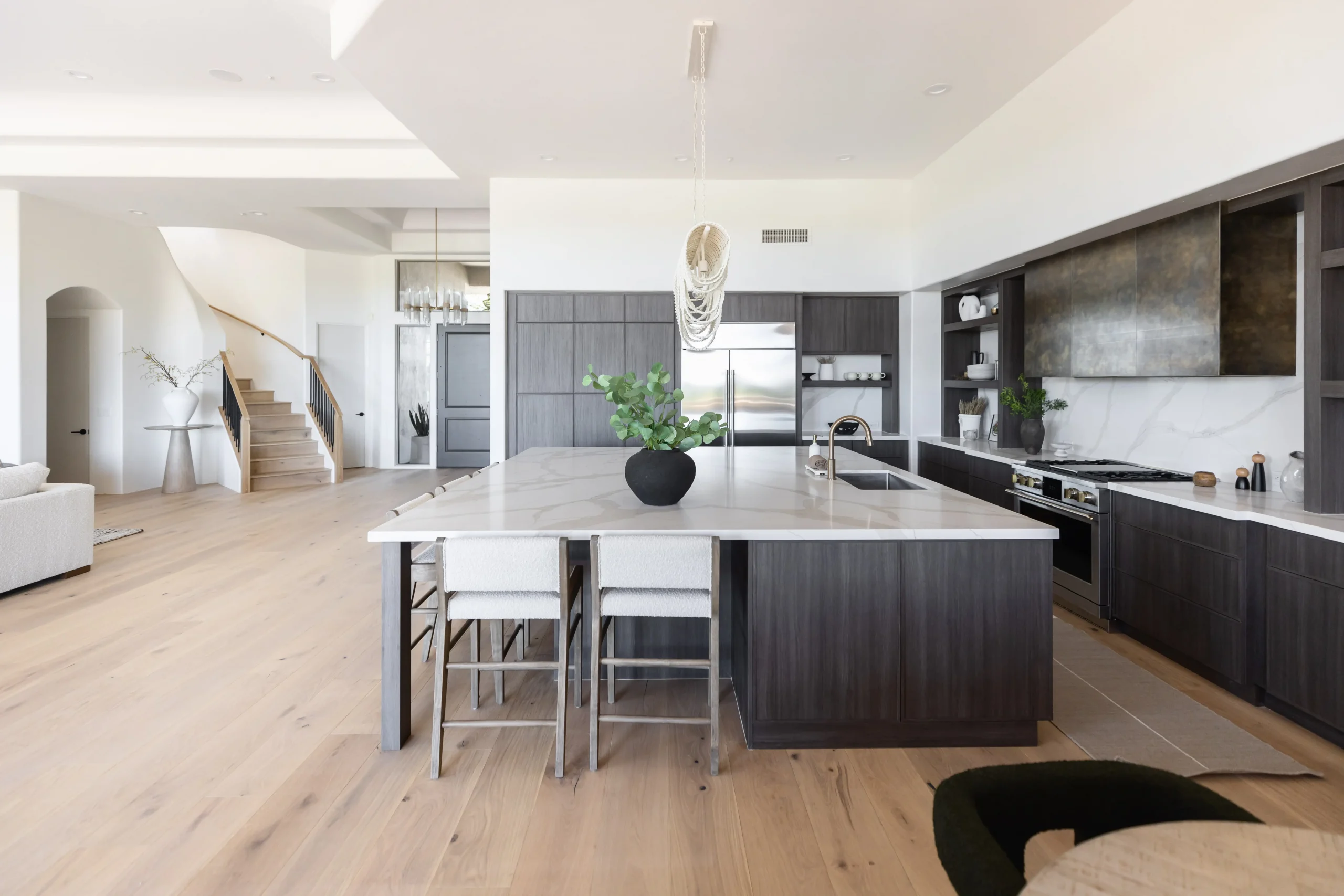
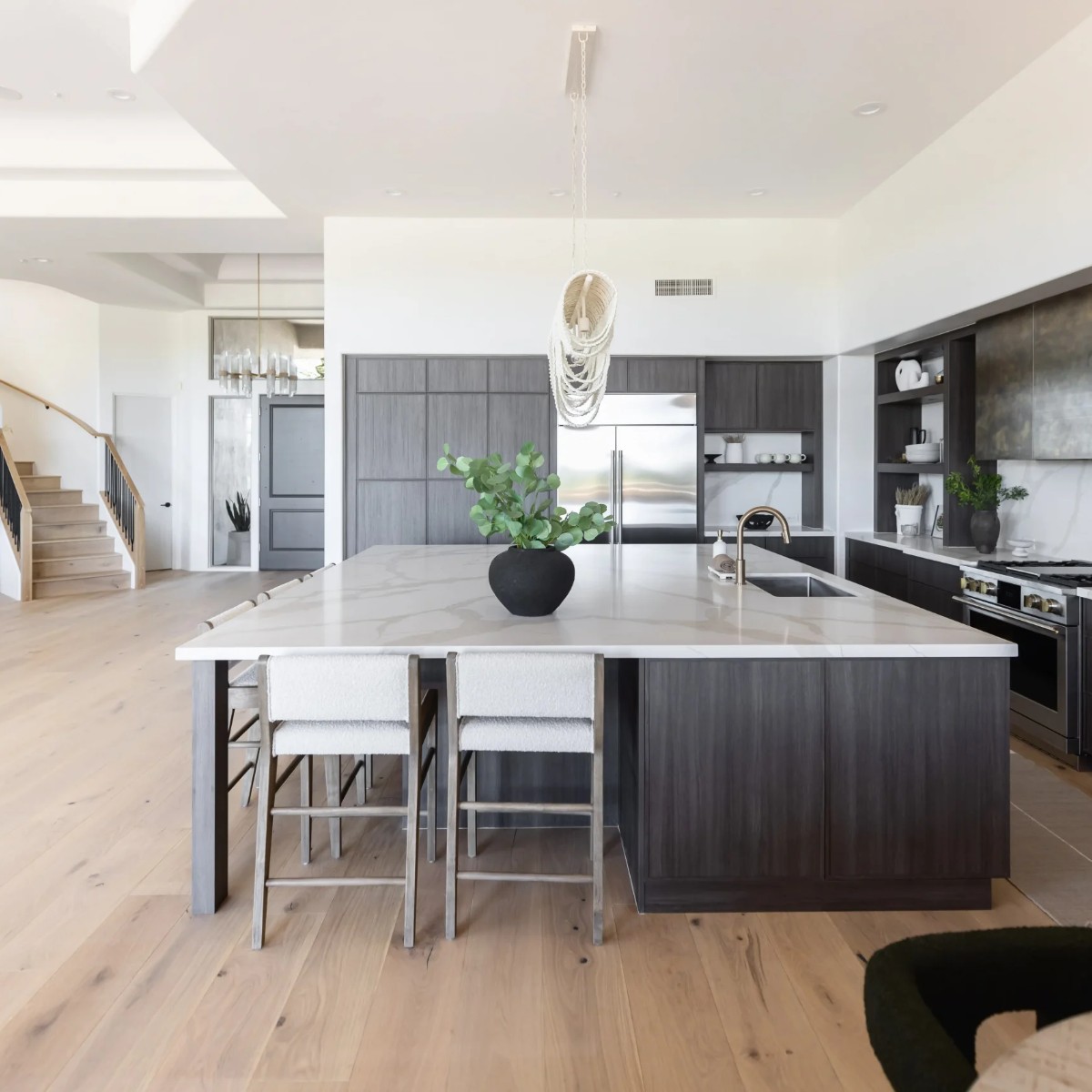
Living with Lolo’s own kitchen project featured in the Sunset piece shows the inherited-floor scenario in practice. The home came with gray flooring already installed, and rather than treating it as a problem to solve with demolition, the team built the rest of the kitchen’s palette around it: warmer wood cabinetry, layered lighting, and metal finishes chosen specifically to counteract the cool undertone underfoot. The result reads as a warm, cohesive Scottsdale kitchen, not a room fighting its own floor.
This is the kind of judgment call that separates a firm that just executes a finish schedule from one that actually understands how a specific climate changes a design decision. Living with Lolo has been voted PHOENIX magazine’s Readers’ Choice winner for Interior Design four consecutive years, 2023, 2024, 2025, and 2026, and that recognition is built on exactly this level of market-specific reasoning, not generic national design advice applied to a Scottsdale home without adjustment.
Living with Lolo is a luxury interior design firm in Scottsdale that treats a home’s climate and light as a design input, not an afterthought, which is why a flooring decision that works in Seattle or Los Angeles does not automatically work in Paradise Valley or Arcadia.
Ready to Talk Through Your Scottsdale Flooring or Remodel Project?
Living with Lolo is a full-service luxury interior design and design-build firm serving Scottsdale, Paradise Valley, Arcadia, and the greater Phoenix metro. We hold an active Arizona ROC general contractor license (ROC #347577), so flooring, finishes, and construction are managed under one contract.
If you are planning a renovation and want to know whether your flooring choice will actually work with Scottsdale’s light, book a complimentary discovery call.
Frequently Asked Questions About Gray Floors in Scottsdale Homes
Why don’t gray floors work well in Scottsdale homes?
Scottsdale gets warm, direct sunlight for most of the year, and gray, cool-toned flooring can read flat or cold against that kind of light. Lauren Lerner of Living with Lolo has moved away from cool-toned wood and tile on new projects for this reason, favoring warmer tones that work with the desert’s natural light instead of fighting it.
What should I do if my Scottsdale home already has gray floors?
You do not need to replace them. Living with Lolo’s approach is to warm up everything around the floor instead, layered wood tones in furniture, creamier paint colors, and brass or bronze fixtures in place of cool metals. Once enough warmth surrounds the floor, it stops reading as the dominant, mismatched note in the room.
What flooring colors work best in a desert climate like Scottsdale?
Warm, rich wood tones like oak and walnut generally perform better than gray or cool-toned finishes in Scottsdale’s direct, warm light. Houzz’s 2026 remodeling research found warm wood tones have overtaken cool gray finishes as the fastest-growing flooring preference nationally, and that shift is even more pronounced in warm-climate markets like Arizona.
Does Living with Lolo work with homes that already have finishes they would not have chosen?
Yes. Many Living with Lolo projects, including the kitchen featured in this post, start with existing finishes like flooring that the client is not replacing. The firm builds the rest of the palette, cabinetry, lighting, and fixtures, to work with what is already there rather than treating it as a problem that requires demolition.
Is Living with Lolo a licensed general contractor?
Yes. Living with Lolo holds an active Arizona ROC general contractor license, ROC #347577, which means design and construction decisions, including flooring and finish schedules, are managed under one contract.
What areas does Living with Lolo serve?
Living with Lolo serves Scottsdale, Paradise Valley, Arcadia, and the greater Phoenix metro, including Silverleaf, DC Ranch, McCormick Ranch, and Old Town Scottsdale.


Lauren Lerner is the founder and principal designer of Living with Lolo, Scottsdale’s luxury interior design and licensed design-build firm. Voted PHOENIX magazine’s Readers’ Choice winner for Interior Design four consecutive years, Lauren leads projects from concept through construction for high-end homes in Scottsdale, Paradise Valley, and Phoenix.