
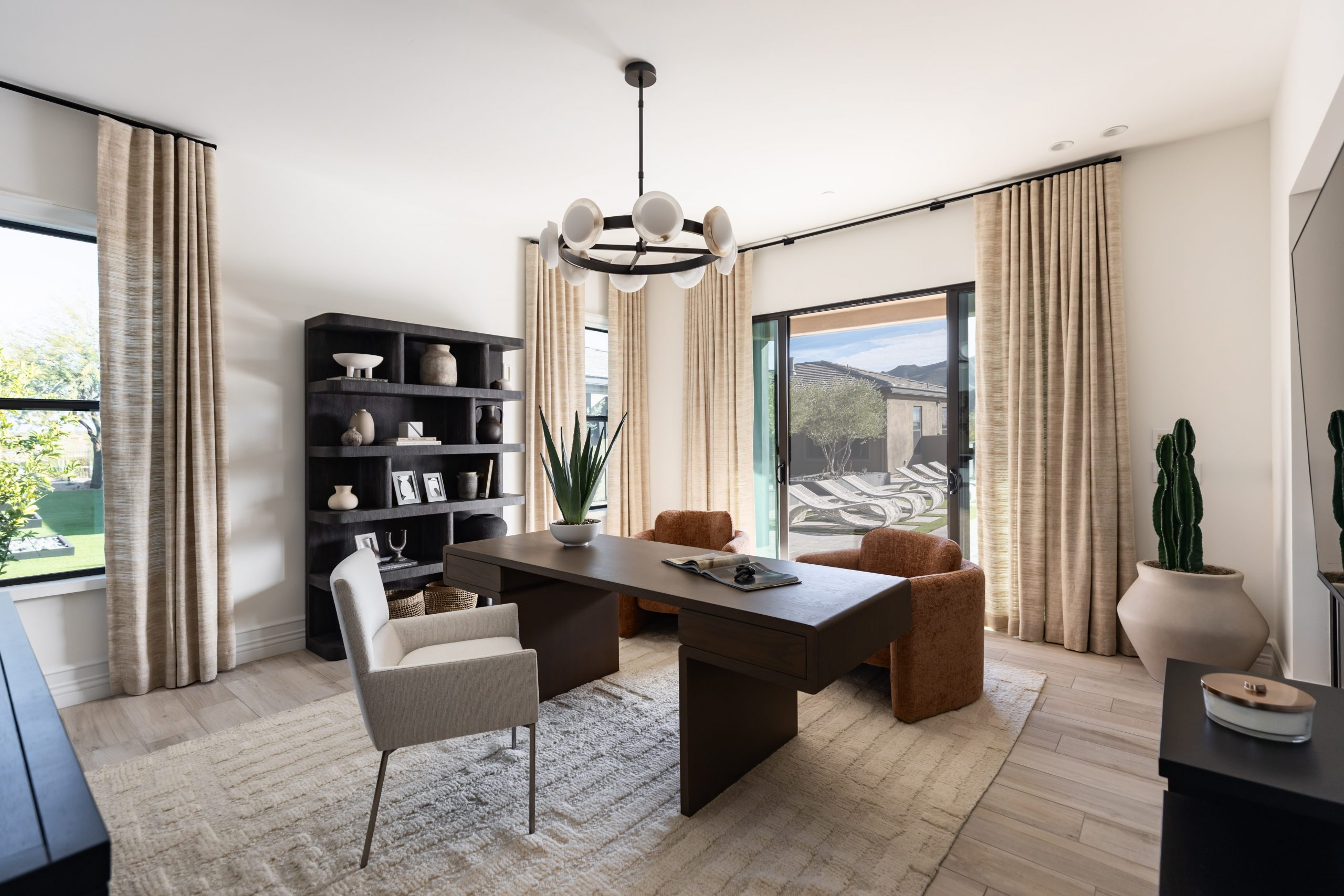
Group open shelves by tone, not by category, and a room reads calmer within minutes with nothing new to buy. That is the editing rule Lauren Lerner, founder and principal designer of Living with Lolo, shared with Real Simple: "Edit your open shelves by grouping similar tones and removing anything that feels visually loud. Even rearranging a few books into color families or giving objects more breathing room can instantly soften the entire space."
It is a small move with an outsized effect, and it costs nothing. Below is what that quote means in practice, how Lauren applies it on real Scottsdale projects, and what the wider research says about why decluttering and thoughtful styling actually change how a room feels and how it shows.
What "Grouping by Tone" Actually Means
Most people organize shelves by category out of habit. Books together, framed photos together, travel souvenirs together. It is logical, and it is also the reason a lot of open shelving looks busy no matter how expensive the objects on it are. Category grouping puts a bright orange book spine next to a black-and-white photo next to a turquoise vase, and the eye has to work to process all of it at once.
Tone grouping does the opposite. Instead of asking "what is this object," you ask "what color family does it belong to." A cluster of cream, tan, and warm wood objects on one shelf. A cluster of black, charcoal, and deep green on the next. The individual pieces do not have to match or even relate to each other in function. A ceramic bowl, a stack of linen-bound books, and a small piece of driftwood can sit together happily as long as they share a tone.
Why This Reads as Calmer, Not Just Neater
There is a real difference between a shelf that is organized and a shelf that is styled. An organized shelf just has fewer things out of place. A styled shelf has been edited on purpose, and editing is the part most people skip. Removing anything that feels visually loud, a busy pattern, a mismatched color, an object that does not earn its spot, is what actually lowers the visual noise in a room. Grouping by tone gives you a fast, repeatable way to decide what stays and what goes without agonizing over each individual item.
I will say the part that is easy to miss here: giving objects more breathing room matters as much as the grouping itself. A shelf packed edge to edge with color-sorted objects is still a busy shelf. Pull a third of what is currently on each shelf and set it aside. What remains almost always looks more intentional than the full version did, and you have not spent a dollar to get there.
What the Research Shows
This is not just a design opinion. The data on decluttering and staging backs up why a simple edit like this has real weight, both for how a home feels day to day and for how it performs if it ever goes on the market.
- In the National Association of Realtors' 2025 Profile of Home Staging, 83 percent of buyers' agents said staging makes it easier for a buyer to picture a property as their own, and 29 percent of sellers' agents reported a 1 to 10 percent increase in dollar offers on staged homes. (Source: NAR, 2025)
- The same NAR report found that 49 percent of sellers' agents saw a home spend less time on the market after staging, and living rooms were rated the single most important room to stage, ahead of the primary bedroom and kitchen. (Source: NAR, 2025)
- The 2026 U.S. Houzz Kitchen Trends Study found that keeping clutter out of sight is a top motivation for homeowners adding open shelving and butler's pantry storage, cited by 30 percent of renovating homeowners. (Source: Houzz, 2026)
- The same Houzz study found open shelving now appears in 52 percent of newly added or upgraded butler's pantries, nearly on par with fully enclosed cabinetry at 59 percent. (Source: Houzz, 2026)
Put together, the pattern is simple: buyers and agents both respond to a room that feels edited, and open shelving has become common enough that how it is styled, not just whether you have it, is what separates a room that photographs well from one that just photographs full.
How We Apply This on Scottsdale Projects
On a real project, this rule shows up before we ever touch paint or furniture. When Living with Lolo styles built-ins or open shelving in a Silverleaf or DC Ranch home, the first pass is almost always subtraction. We pull everything off the shelf, sort what is left into tone groups, and only put back about two-thirds of it. Clients are consistently surprised at how much better a shelf looks with less on it, arranged with intention, than it did fully stocked.
This matters more in Scottsdale than people expect, because the desert light here is unusually direct. A shelf full of competing colors and finishes catches every bit of that afternoon sun and looks even busier than it would in a dimmer climate. Tone-grouped shelving, by contrast, reads as calm and intentional even at 4 p.m. with the western light pouring in.
We use the same principle on kitchen open shelving, which has become one of the most requested features in the kitchen remodels we take on. A run of open shelving next to a range or sink only works long-term if the client is willing to edit what sits on it, which is exactly why we build the tone-grouping conversation into the design phase instead of leaving it for move-in day.
A Shelf Edit You Can Do This Weekend
You do not need a full renovation to test this. Pick one shelf, preferably one you look at daily, and try this:
- Remove everything from the shelf and lay it out on a table or the floor.
- Sort the pieces into two or three tone families: warm neutrals, cool neutrals, and anything with strong color or pattern.
- Set the strong color and pattern pile aside for now. Do not put any of it back yet.
- Return only the warm and cool neutral groups to the shelf, keeping each tone family together rather than alternating them.
- Leave visible gaps between groupings. If it looks like there is too much empty space, there almost never is.
Live with that version for a week before deciding whether any of the set-aside pieces earn a spot back. Most people find they do not miss what they removed.
Why Design and Construction Under One Roof Matters Here
Shelf styling is a small example of a bigger pattern in how Living with Lolo works. As a licensed general contractor in Scottsdale under ROC #347577, in addition to being an interior design firm, Living with Lolo designs built-in shelving with the styling plan already in mind, not as an afterthought once construction is finished. A shelf's depth, spacing, and lighting all change depending on whether it is meant to hold color-grouped objects with breathing room or dense category storage. Deciding that early, during construction, produces a better result than styling around fixed shelving after the fact.
This is also why a design tip that sounds simple, group by tone and edit for breathing room, tends to hold up better when a firm has done it hundreds of times across real Scottsdale homes rather than as a one-off styling exercise. Living with Lolo has been named Phoenix Magazine's Best Interior Design Firm three consecutive years, 2024, 2025, and 2026, recognition that requires client references and completed-work review each cycle.
More Press for Living with Lolo
This is not the first time national press has turned to Lauren Lerner for design advice. Lerner was also quoted directly in a House Digest feature on high-end kitchen design rules, sharing specific guidance on material continuity and range hood design. Together, the two features show a consistent thread in how Lauren approaches a room: make fewer, more deliberate decisions rather than more decisions overall.
If you want to see this principle applied at full scale rather than on a single shelf, browse completed Living with Lolo projects or read about where Scottsdale design is headed in 2026. For a look at how far a full edit can go, our before-and-after piece on how to de-Tuscanize a Scottsdale home is one of the more dramatic examples of the same underlying idea: editing, not adding, is usually what changes a room the most.
Connect with an interior designer Scottsdale AZ homeowners have trusted with everything from a single styled shelf to a full design-build renovation.
Ready to Talk Through Your Space?
Living with Lolo is a full-service luxury interior design and design-build firm serving Scottsdale, Paradise Valley, Arcadia, and the greater Phoenix metro. We hold an active Arizona ROC general contractor license and an interior design credential, which means we manage your entire project under one roof.If a single room needs an edit or your whole home needs a plan, book a complimentary 15-minute discovery call.Book Your Discovery CallFrequently Asked Questions About This Real Simple Feature
How do I make open shelves look designer instead of cluttered?
Group items by tone instead of by category, and remove anything that feels visually loud. Living with Lolo's Lauren Lerner recommends sorting objects into warm or cool color families rather than mixing bright colors and patterns across a shelf. Leaving visible space between groupings, rather than filling every inch, is what separates a styled shelf from a merely organized one.
Should I organize open shelves by color or by category?
Color, or more precisely tone, almost always reads calmer than organizing strictly by category. Grouping books, ceramics, and decor by whether they are warm or cool toned creates visual rhythm, while grouping purely by object type often puts clashing colors right next to each other. The objects do not need to relate in function as long as they share a tone family.
What is the fastest way to make a room feel calmer without buying anything new?
Edit what you already have on display rather than adding anything. Pull everything off one shelf or surface, sort it by tone, and put back roughly two-thirds of it with visible breathing room between groupings. This single change, with zero new purchases, is often enough to make a room feel noticeably calmer within an afternoon.
What did Lauren Lerner tell Real Simple about shelf styling?
Lauren Lerner, founder of Living with Lolo, told Real Simple to edit open shelves by grouping similar tones and removing anything that feels visually loud, noting that rearranging books into color families or giving objects more breathing room can instantly soften a space. The full feature is linked above.
Does decluttering actually help when selling a home in Scottsdale?
Yes, according to national data. The National Association of Realtors' 2025 Profile of Home Staging found that 83 percent of buyers' agents said staging helps buyers picture a home as their own, and 29 percent of sellers' agents saw offers increase 1 to 10 percent on staged homes. Decluttered, tone-grouped shelving is one of the lowest-cost ways to apply that same principle before a home ever hits the market.
How is styling open shelves different from just organizing them?
Organizing sorts items so you can find them. Styling makes deliberate choices about what stays visible at all. An organized shelf can still look busy if everything that was ever placed on it remains there. A styled shelf has been edited down by tone and volume on purpose, which is the distinction Lauren Lerner's Real Simple advice is built around.
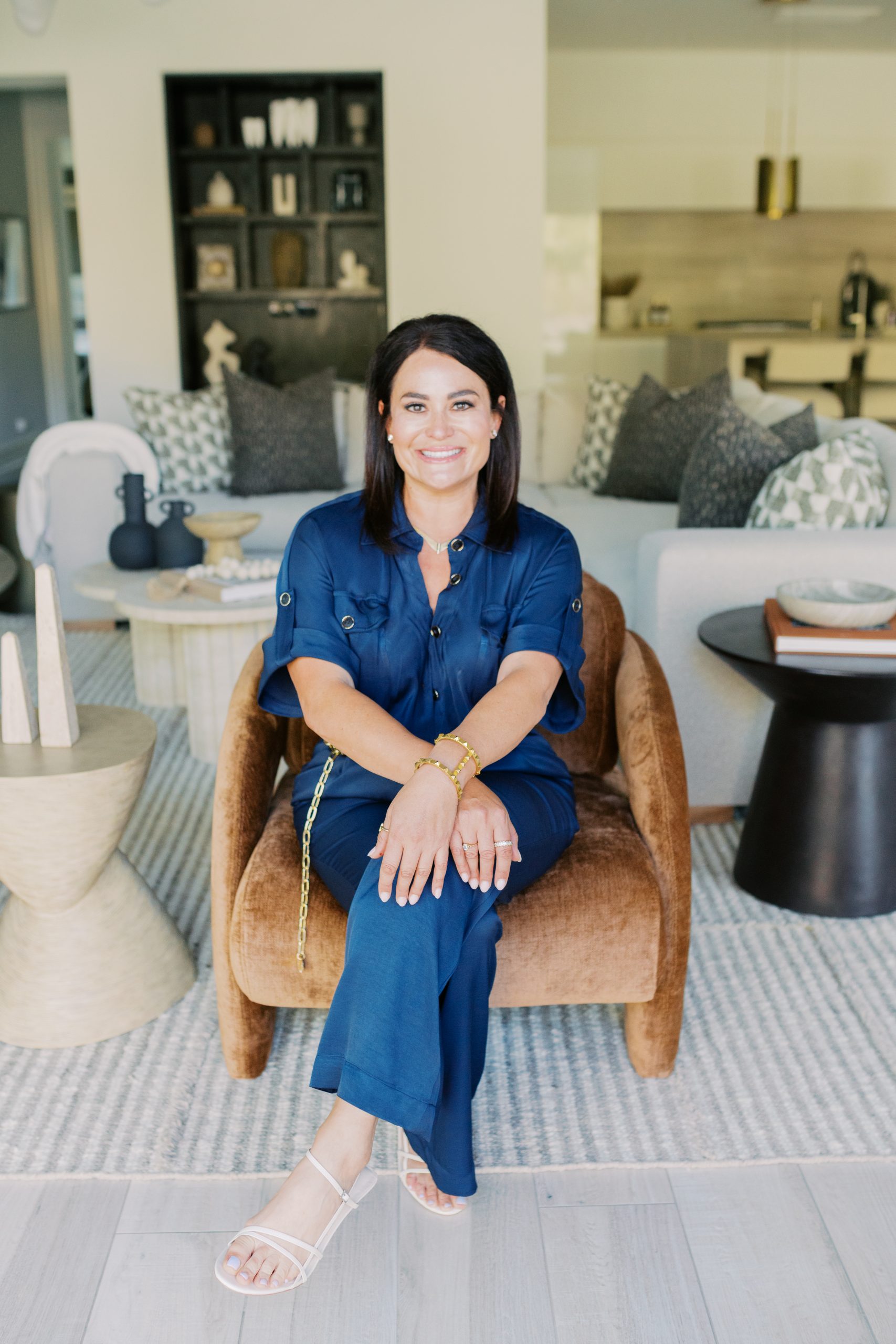

Lauren Lerner is the founder and principal designer of Living with Lolo, Scottsdale’s luxury interior design and licensed design-build firm. Named Phoenix Magazine Best Interior Design three consecutive years, Lauren leads projects from concept through construction for high-end homes in Scottsdale, Paradise Valley, and Phoenix.