
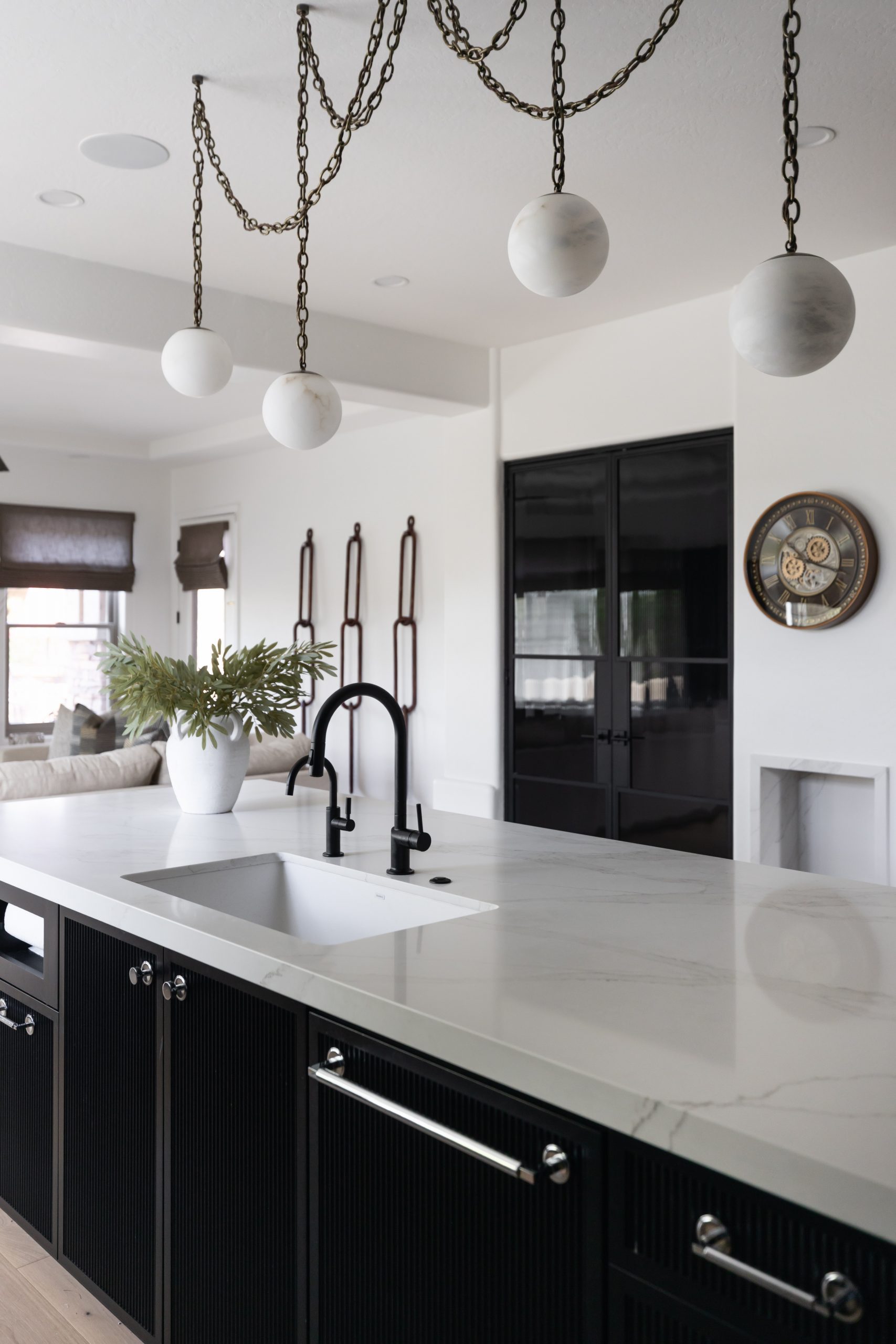
A high-end kitchen design in Scottsdale comes down to two decisions more than any other: pick one material and let it repeat through the space, or decide on purpose whether the range hood disappears or becomes the room's focal point. Lauren Lerner, founder and principal designer of Living with Lolo, shared both principles in a recent House Digest feature on the elements that make a kitchen look high-end. The tips matter because they solve a specific problem, since plenty of Scottsdale kitchens have expensive materials that still look disconnected because nobody made a decision about how those materials talk to each other.
Below is how Lauren applies both rules on real Scottsdale kitchen projects, plus what the wider design research says about why they work. If you are planning a Scottsdale kitchen remodel of your own, these two decisions are worth making early, before a single cabinet or countertop is ordered.
What the Research Shows About High-End Kitchen Design
Living with Lolo's approach to these two rules lines up with what the broader design industry is tracking in 2026:
- The 2026 U.S. Houzz Kitchen Trends Study found that full-height, slab-style backsplashes are becoming one of the most requested features in kitchen renovations, with homeowners increasingly treating the counter and backsplash as one continuous surface instead of two separate materials.
- The same Houzz 2026 report points to quartzite and marble with soft, organic veining as the leading stone choices for this continuous look, replacing the mixed-material kitchens that were common a few years ago.
- Houzz's 2026 appliance trend data shows range hoods remain one of the most common large kitchen appliances, installed in 60 percent of kitchen renovations, and names the "Invisible Kitchen," hoods concealed into cabinetry or a downdraft system, as the defining move of this year's Quiet Luxury trend.
- The National Association of Realtors and NARI's Remodeling Impact Report gives kitchen upgrades a perfect Joy Score of 10 out of 10, with 64 percent of homeowners reporting a greater desire to be home after a kitchen remodel.
- The National Association of Home Builders is forecasting continued growth in the remodeling market through 2026, which tracks with what Living with Lolo sees directly in Scottsdale: kitchens remain the single most requested room in a whole-home renovation.
Rule One: Let One Material Carry the Room
Lerner's first rule sounds simple, and that simplicity is exactly why designers keep coming back to it. "When we choose one material and let it carry the room, whether that is a honed limestone on the counters, backsplash, and even a windowsill, the repetition creates a sense of calm that feels inherently high-end," Lerner told House Digest. The opposite approach, mixing three or four different stones and finishes because each one looked good on its own in a showroom, is the fastest way to make an expensive Scottsdale kitchen feel unplanned.
This shows up constantly in Scottsdale kitchen remodel consultations. A client will have a beautiful quartzite slab picked out for the island, a separate tile for the backsplash, and a third stone for a bar or wet area, and each choice is defensible on its own. The problem only shows up once everything is installed in the same room and starts competing for attention. Committing to one material and carrying it from the counters up the wall, and sometimes across a windowsill or a shelf, removes that competition entirely. It also tends to cost less in most cases, since ordering more of one slab is typically more efficient than ordering three separate smaller quantities.
This is not a rule that only applies to stone. The same logic works with a single wood tone carried across cabinetry and open shelving, or one plaster finish carried from a range hood to an adjacent wall in a high-end home remodel in Scottsdale. The material itself matters less than the discipline of choosing one and sticking with it.
Rule Two: Decide On Purpose Whether Ventilation Disappears or Becomes the Feature
The second rule is about range hoods, and it is where Lerner's House Digest quote gets specific. "When ventilation disappears entirely into the ceiling or a structural element, it creates an almost surreal cleanliness in the kitchen," she said. Concealed ventilation, tucked into a ceiling soffit or built into cabinetry, signals that real planning went into the mechanicals long before the pretty finishes were chosen. Most homeowners will never consciously notice the detail, and that is precisely what makes it read as high-end. Nothing interrupts the sightline across the room.
That said, Lerner is clear that concealment is not the only correct answer for a Scottsdale kitchen. A sculptural stone or plaster hood, treated as an intentional focal point the way a fireplace anchors a living room, can do just as much work in the right space. The decision comes down to what else is competing for attention. A kitchen with a dramatic island or a wall of windows benefits from a quiet, hidden hood. A kitchen built around simpler cabinetry can support a hood as the visual anchor instead. What does not work is an accidental range hood, a stock stainless steel box installed because nobody made a decision either way.
For a high-end home remodel in Scottsdale, this is one of the earliest decisions Living with Lolo makes with a client, well before cabinet finishes or countertop selections, because it changes the ceiling framing and the electrical plan. Waiting until the kitchen is framed to decide whether the hood hides or shows is how homeowners end up with neither option done well.
How This Plays Out in Scottsdale and Paradise Valley Kitchens
Scottsdale kitchens have a specific set of constraints that make both rules especially useful. Desert light is strong and directional most of the day, which means material choices read differently at 10 a.m. than they do at sunset. A single stone carried through counters, backsplash, and windowsill holds up better under that shifting light than a mixed-material kitchen does, because there is only one surface reacting to the light instead of three fighting each other.
Homeowners in Silverleaf and DC Ranch and in Paradise Valley are often working within existing architectural constraints, older Scottsdale homes with lower ceilings or existing soffits, where the concealed-hood decision has to be made with the structure that already exists rather than a blank slate. That is one more reason both decisions belong early in the process, not after demolition.
My own opinion, after two decades of Scottsdale remodels, is that most homeowners default to the mixed-material kitchen because it feels safer, like hedging a bet across several trends at once. It is the wrong instinct. A kitchen with one confident material decision reads as more expensive and more intentional than a kitchen with four defensible ones, even when the second kitchen costs more to build. If you only take one idea from this list, take that one.
You can see both rules applied together in several projects in our portfolio of Scottsdale kitchens, including remodels where we carried a single stone from counter to backsplash and concealed the ventilation into a plaster soffit above.
Why Design and Construction Under One Roof Matters for These Decisions
As a licensed general contractor in Scottsdale (ROC #347577) as well as a design firm, Living with Lolo manages both of these decisions under one roof, which matters more than people expect. The range hood decision affects framing and venting long before it affects how the kitchen looks, and a design-only firm that is not also managing construction can lose that coordination between the design intent and the site work.
This is the same reason Living with Lolo pairs an interior design credential with an active Arizona contractor license: the designer who specifies a single continuous stone or a concealed hood is also the one managing the trades who have to build it correctly. That structure is part of what earned Living with Lolo, a luxury interior designer Scottsdale clients have trusted for years, Phoenix Magazine's Best Interior Design Firm award three years running, in 2024, 2025, and 2026.
What This Means If You Are Planning a Kitchen Remodel in Scottsdale Now
If you are early in planning a Scottsdale kitchen remodel, both rules translate into two concrete steps you can take before you meet with a designer or contractor. First, pull the materials you are considering, whether that is a countertop slab, a tile sample, or a paint chip, and lay them next to each other in the actual room, in the actual light, at different times of day. Materials that look coordinated on a showroom counter under fluorescent light can clash badly once they are installed under Scottsdale's harsh midday sun or a warm evening glow. If more than two materials are competing in the same sightline, that is worth resolving before you order anything.
Second, make the range hood decision before you finalize your cabinet layout, not after. Whether you want a concealed hood or a sculptural one determines the ceiling framing, the electrical rough-in, and often the cabinet height near the cooking wall. Homeowners who leave this decision for later in the process, once tile and countertops are already selected, frequently end up retrofitting a solution that costs more and looks less intentional than if it had been planned from day one.
Both of these steps are easier with a single team managing design and construction, since the same people making the material and ventilation decisions are also the ones responsible for building them correctly. That coordination is part of why Living with Lolo structures every Scottsdale kitchen remodel around finalizing these decisions early, well before demolition, rather than working them out room by room as construction progresses.
Frequently Asked Questions About High-End Kitchen Design in Scottsdale
What makes a kitchen look expensive without necessarily costing more?
Choosing one material and carrying it through the counters, backsplash, and any adjacent surfaces almost always reads as more high-end than mixing several materials, even at a similar total cost. The repetition creates visual calm, while multiple competing finishes can make an expensive kitchen look disorganized instead of designed.
Should I hide my range hood or make it a feature in my Scottsdale kitchen?
It depends on what else is happening in the kitchen. If you have a dramatic island, a wall of windows, or another strong focal point, a concealed hood keeps the room calm and lets that other element lead. If your cabinetry and layout are simpler, a sculptural stone or plaster hood can serve as the room's anchor, similar to how a fireplace anchors a living room.
What is the best material to use if I only pick one for my whole kitchen?
Honed limestone, quartzite, and marble with soft veining are all working well right now for this approach, according to both Lauren Lerner's own projects and the 2026 Houzz Kitchen Trends Study. The specific stone matters less than the commitment to using it consistently across counters, backsplash, and any connected surfaces like a windowsill.
Is Living with Lolo a licensed general contractor in Scottsdale?
Yes. Living with Lolo holds an active Arizona Registrar of Contractors general contractor license, ROC #347577, alongside its interior design practice. That means the same team that specifies a material or ventilation decision is also the team managing the trades who build it, without handing the project to a separate contractor.
What areas does Living with Lolo serve for kitchen remodels?
Living with Lolo serves clients in Silverleaf and DC Ranch, Paradise Valley, Arcadia, Old Town Scottsdale, and throughout the greater Phoenix metro area. Most kitchen remodel projects are concentrated in Scottsdale and Paradise Valley.
Who is Lauren Lerner and why did House Digest ask her about kitchen design?
Lauren Lerner is the founder and principal designer of Living with Lolo, a licensed general contractor (ROC #347577) and interior design firm based in Scottsdale, Arizona. Living with Lolo has been named Phoenix Magazine's Best Interior Design Firm three years running, in 2024, 2025, and 2026, and Lerner is regularly interviewed by national design and lifestyle publications for her perspective on high-end residential design.
Ready to Talk Through Your Scottsdale Kitchen?
Lauren Lerner and the Living with Lolo team work with clients across Scottsdale, Paradise Valley, Arcadia, and the greater Phoenix metro area.Book a Discovery Call

Lauren Lerner is the founder and principal designer of Living with Lolo, Scottsdale’s luxury interior design and licensed design-build firm. Named Phoenix Magazine Best Interior Design three consecutive years, Lauren leads projects from concept through construction for high-end homes in Scottsdale, Paradise Valley, and Phoenix.