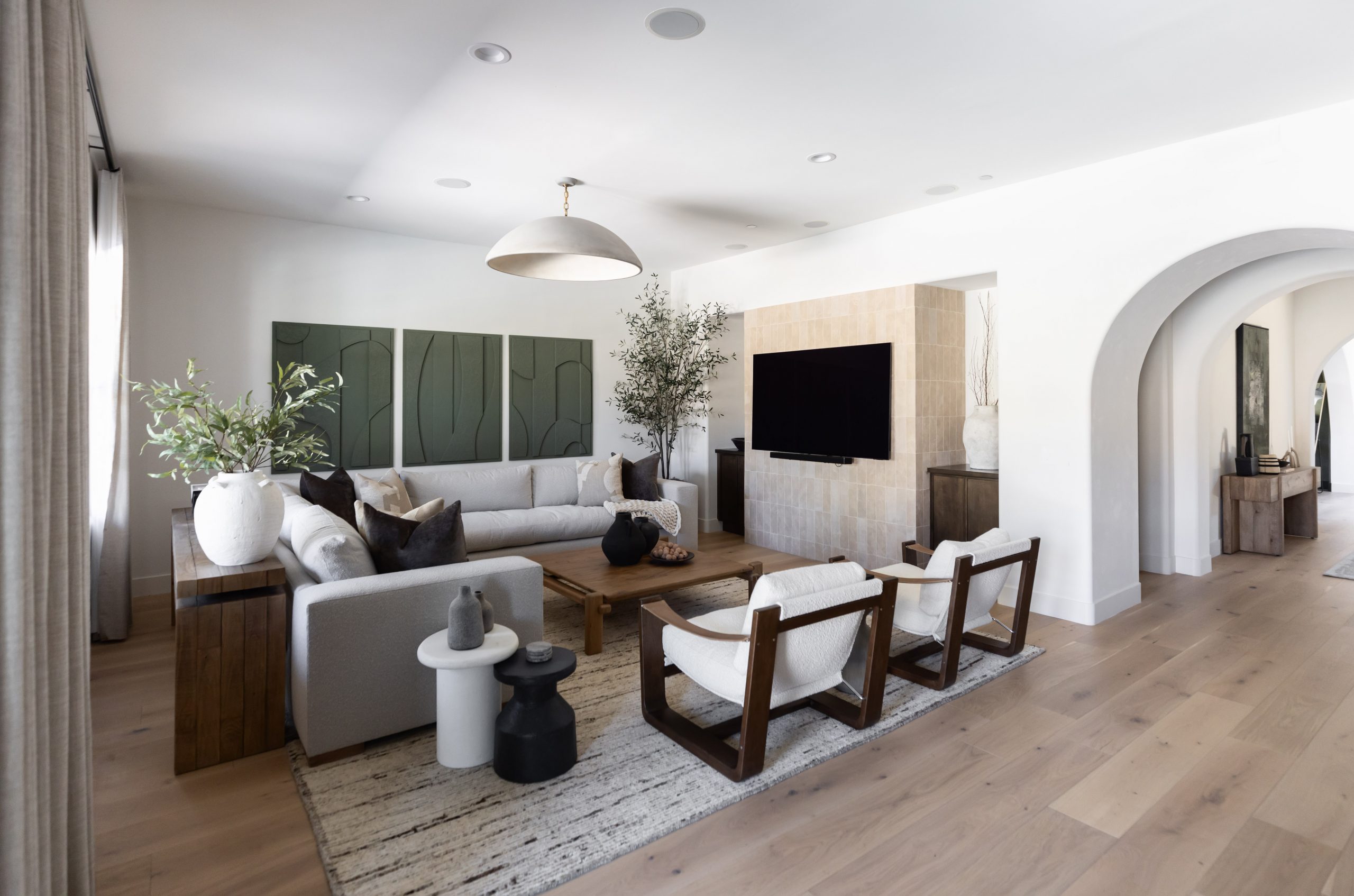
Wabi sabi as a design philosophy translates remarkably well to the Sonoran Desert. Both are rooted in natural imperfection, organic texture, and material honesty. The desert already has its own version of wabi sabi in the weathered saguaro, the dry timber, the travertine formations shaped over millennia by heat and erosion. When a home in
Scottsdale draws on that same language, it feels native rather than imported. The challenge is doing it in a way that reads as genuinely considered rather than fashionably rough, and this project succeeded because we treated the philosophy as a lens for every decision rather than a surface aesthetic to apply at the end. View the full project gallery in our
Scottsdale wabi sabi remodel portfolio.
The clients had seen wabi sabi interiors they admired, mostly in editorial contexts, Japanese ryokans and Californian wellness retreats translated for a design-literate American audience. What they wanted was that feeling, the warmth, the calm, the sense that the materials themselves have a history, without the rigidity of a stylistically correct interpretation that might feel cold or museum-like. That is an interesting brief to receive, and it is the kind of brief that requires real design thinking rather than sourcing from a mood board.
The Design Principles Behind This Project
Wabi sabi in practice means resisting perfection at every decision point. Not settling for poor quality, but actively choosing materials and finishes that carry evidence of their making: handmade ceramic tile with slight variation in color and surface, plaster walls finished by hand with visible texture, wood with open grain and natural knots rather than the uniform grain of heavily processed veneer, stone with the kind of veining that could only have happened in the earth. These materials age well and get better with use, which is central to the philosophy.
The palette for this project was warm without being saturated. Soft white plaster walls, raw linen, aged brass hardware that we intentionally did not specify with a high polish finish, warm greige concrete flooring, and natural wood tones that ranged from pale ash to deeper walnut in the furniture selections. The color story was cohesive but not matching: every piece related to the others through a shared warmth and natural origin rather than through coordinated color codes.
Texture was doing most of the visual work in every room. Because the palette was deliberately restrained, the interest had to come from surface variation: woven natural fiber rugs, raw edge timber shelving, handthrown pottery, bouclé upholstery that reads as both soft and structural. Layering these textures required careful attention to scale and proportion so the result felt rich without feeling cluttered.
How the Arizona Context Shaped the Approach
The site is in North Scottsdale, with a desert preserve behind the property and long views toward the McDowell Mountains. The design strategy from the beginning was to bring the exterior palette into the home rather than contrasting it. The red-brown of the rocky desert soil, the pale sage of the brittlebush, the buff limestone of the mountain formations: these were reference points for every material selection, not as literal color matches but as tonal guides.
The indoor-outdoor connection on this project was particularly important. The primary living area opened fully to a covered patio and pool deck through a multi-panel sliding system. The interior flooring, a large-format concrete tile in a warm buff tone, was selected to read as continuous with the exterior porcelain pavers, which were chosen specifically to match it. When the panels are open, the interior and exterior read as one room. That kind of material continuity does not happen by accident. It is planned from the first schematic.
Arizona's intense light presented both a challenge and an opportunity for this aesthetic. Wabi sabi interiors can feel flat or wan in low-light environments. In Scottsdale, the opposite concern applies: strong direct sunlight flattens texture and bleaches warmth out of surfaces during the middle of the day. The solution was deep window recesses on south and west exposures, linen drapery panels that diffuse light without blocking it entirely, and a lighting design that compensated in the evenings with warm, low sources rather than overhead ambient.
The Furniture and Object Selections
Sourcing for a wabi sabi interior requires patience. The right piece often does not exist at a standard trade vendor. We sourced ceramic vessels from a small-production studio in New Mexico whose work has been shown at craft fairs attended by buyers from Architectural Digest. The dining table is from a furniture maker in Portland who works with salvaged old-growth wood. The primary bedroom bench is a one-of-a-kind piece from a Japanese antiques dealer in Los Angeles whose inventory turns over constantly and requires a relationship to access reliably.
That kind of sourcing is time-consuming and requires knowing where to look. It is part of what a full-service design engagement provides: not just the taste to identify the right object but the relationships and the time to find it, vet the quality, confirm the lead time, and get it to site in condition. The clients saw the results but did not have to manage the process of getting there, which would have been significant.
What Made This Project Work
The projects that come out well, the ones that end up in editorial consideration and that clients describe years later as exactly what they wanted, tend to have one thing in common: the design direction was established clearly and held consistently through the entire project. Wabi sabi is particularly vulnerable to drift. Every individual decision that moves slightly toward conventionality, a more polished hardware finish here, a more standard fabric choice there, chips away at the coherence of the whole.
This project held together because the clients trusted the design direction and we did not dilute it. When a specified ceramic tile was unavailable and a substitution was required, we found a substitute that maintained the handmade-surface quality rather than accepting the available alternative that happened to be similar in color but machine-uniform in texture. Those are the decisions that separate a genuinely realized interior from one that almost got there.