
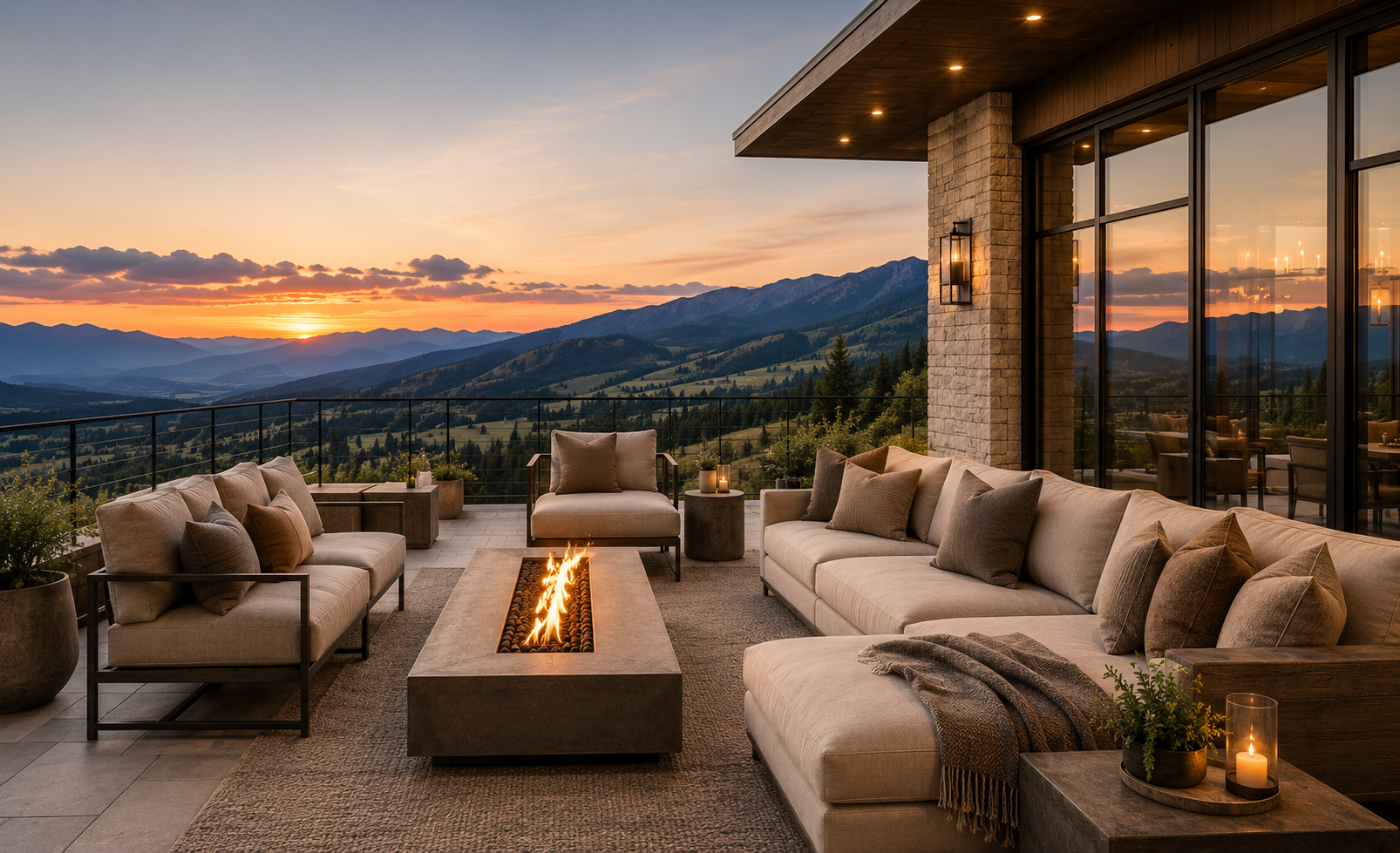
Deer Valley, Promontory, Old Town, and Victory Ranch are four of the Park City area neighborhoods most likely to come up in a search for a luxury ski home, and each one calls for a different design and renovation approach before you buy or build.
Buyers and second-home owners often treat "Park City" as a single market, but the HOA review process, lot conditions, and mix of new construction versus renovation vary enough between these neighborhoods that the same design plan will not work across all of them. This guide breaks down what is actually different about each neighborhood, so you can plan a project that fits the ground you are building on, not a generic mountain-modern template.
Deer Valley: Ski-In, Ski-Out Constraints and Resort-Grade Finish Expectations
Deer Valley is the most ski-in, ski-out-dense of the three neighborhoods, and that proximity to the resort comes with real design constraints. Lots are often smaller and steeper than in Promontory, which limits square footage and pushes floor plans vertical rather than sprawling. HOA design review in Deer Valley tends to be the strictest of the three, with tight controls on exterior materials, roofline height, and window-to-wall ratios to preserve a consistent resort aesthetic from the street and the slopes.
Interior finishes in Deer Valley also carry a resort-grade expectation. Because many Deer Valley homes function as a rental property part of the year or see heavy guest traffic during ski season, finishes need to look as sharp after 100 days of ski boots and wet gear as they did on install day. That means honed stone over polished, engineered wood systems built for humidity swings, and mudroom and boot-room design that is not an afterthought but a core part of the floor plan.
View corridors are another Deer Valley-specific constraint worth planning around early. Because so many lots sit on a slope with a neighboring property above or below, Deer Valley's design review process often protects sightlines to the ski runs for multiple homes on the same hillside, which can cap roofline height or push a great room's window wall to a specific elevation. A floor plan drawn without that constraint in mind can require a full redesign mid-review, so a design-build team that pulls the applicable view corridor rules before finalizing floor plans saves real time later. Storage is the other detail that gets underbuilt in Deer Valley: with ski-in, ski-out access come multiple sets of skis, boots, and outerwear per family member, and a mudroom sized for a Scottsdale home is consistently too small once a Deer Valley household is actually living with ski season.
Promontory: More Buildable Land, More Design Freedom, Longer HOA Timelines
Promontory sits further from the resort core, and its larger, less steep lots generally allow for more square footage and a wider range of architectural styles than Deer Valley permits. Homeowners building new construction in Promontory typically have more freedom on floor plan and massing, since the HOA review process focuses more on overall community character than on tight resort-village uniformity.
That design freedom comes with a tradeoff: Promontory's HOA and architectural review committee process is known for running long, particularly for new construction and major renovations that alter a home's footprint. Homeowners who assume a Promontory project will move as fast as a comparable Scottsdale renovation are consistently surprised by review timelines. A design-build firm familiar with Promontory's specific submittal requirements can shave real time off this process by getting the drawing package right on the first submission instead of cycling through revisions.
Promontory is also where most of Living with Lolo's new-construction Park City work happens, as opposed to renovation. The community's amenity package, including golf, an equestrian center, and multiple clubhouses, tends to attract buyers building a purpose-built ski home from the ground up rather than renovating an existing structure, which changes the design process considerably. New construction gives a design team the chance to plan mechanical systems, storage, and mudroom sequencing around the finished interior from day one, instead of retrofitting those systems into an existing shell the way a Deer Valley or Old Town renovation often requires. That said, new construction in Promontory still needs a finished design package ready well before groundbreaking, since the architectural review committee typically wants furniture layouts and finish selections locked earlier in the process than homeowners moving from a Scottsdale renovation project tend to expect.
Old Town: Historic Overlay Rules and Small-Lot Renovation Challenges
Old Town is the oldest and most tightly built neighborhood of the three, with many properties subject to Park City's Historic District overlay. That designation means exterior renovations, additions, and in some cases even window replacements go through a separate historic preservation review on top of standard permitting, and the rules are specifically designed to preserve the mining-era character of the district rather than accommodate a full mountain-modern exterior remodel.
Interior renovation in Old Town carries its own set of practical challenges that have nothing to do with style: narrow lots, limited staging area for materials and equipment, and structures that were not built to current insulation or mechanical standards. A renovation that would take 10 weeks on a Promontory new-build lot can easily take twice as long in Old Town once a crew accounts for site access alone. Interior design in Old Town tends to lean into the historic shell rather than fight it, pairing original structure and exposed materials with updated mountain-modern furnishings and systems.
Permitting sequencing is where Old Town projects most often go sideways for homeowners who have not managed a historic renovation before. Because the historic preservation review and the standard building permit process run on separate tracks with separate reviewers, a design that has not been pre-cleared with the historic preservation planner can pass standard plan review and still stall for months waiting on the separate historic sign-off, or worse, get approved and then require costly rework after the fact. A firm that sequences the historic review first, before finalizing construction drawings, avoids that trap entirely. On the design side, Old Town's smaller footprints also reward a different approach to storage and layout than Deer Valley or Promontory: built-ins and multi-purpose furniture do more of the work that a larger mudroom or bonus room would handle elsewhere in Park City.
Victory Ranch: Ranch-Style Luxury, Larger Lots, and a Different Design Vocabulary
Victory Ranch sits outside Park City's resort core, near Kamas, roughly 25 to 30 minutes from Deer Valley and Old Town. It is built around fly-fishing access on the Provo River, a Rees Jones golf course, and equestrian and outdoor recreation, and its home sites tend to run larger than anything available in Promontory or Deer Valley. That extra land changes the design conversation before a single finish is chosen.
The aesthetic expectation is different too. Where much of Park City has moved toward mountain-modern, Victory Ranch's architectural guidelines lean into a ranch and mountain-lodge vocabulary: heavy timber, stone, and materials that read as rooted in the land rather than sleek and minimal. Homeowners who want a more contemporary interior still need a design partner who can work within that exterior language rather than fight it.
Larger lots mean most Victory Ranch projects are ground-up new construction rather than renovation of an existing structure, which puts the architectural review committee process front and center from the earliest design decisions. As with Promontory, that review tends to move faster than Old Town's historic process, but a design-build team still needs to coordinate interior specification with the exterior guidelines from day one, not after construction drawings are finalized.
Furnishing a Victory Ranch home also scales differently. Great rooms, higher ceilings, and more square footage overall mean furniture, lighting, and textiles need to be selected at a larger scale than a typical in-town Park City property, and a firm used to designing at that scale will plan for it from the first floor plan review rather than discovering the mismatch during installation.
How Neighborhood Choice Should Shape Your Design and Renovation Plan
Before you buy a lot or an existing home in any of these neighborhoods, ask your design-build team to walk through the specific HOA or historic review process for that address, not a general "Park City" answer. A firm that has actually submitted plans in Deer Valley, Promontory, Old Town, or Victory Ranch will describe real timelines and specific reviewer feedback, not a generic estimate.
Living with Lolo has managed projects across all three neighborhoods from its Scottsdale studio, and each project starts with a site-specific review of the HOA or historic requirements before any design work begins. If you are earlier in the process and still deciding whether to hire a design-only firm or a licensed design-build team, see our guide on how to hire an interior designer in Park City, since the right structure matters more in Promontory and Old Town, where construction and design decisions are tightly linked to the review process.
Budget planning also needs to account for neighborhood-specific costs that a generic Park City estimate will not capture. Deer Valley's steep-lot construction and view-corridor engineering typically add to site work and structural costs before interior design even enters the picture. Promontory's larger floor plans usually mean a higher total furnishings and finish budget simply on square footage, even when the per-square-foot rate is comparable to Deer Valley. Old Town renovations frequently carry hidden costs in bringing older mechanical, electrical, and insulation systems up to current code, costs that a homeowner comparing a per-square-foot renovation quote against a Deer Valley or Promontory new-build number will not see reflected until the walls are open.
What the Data Shows About Park City's Luxury Neighborhood Market
According to Zillow's home value data for the Park City area, luxury ski-adjacent neighborhoods have consistently outperformed the broader Utah housing market on price appreciation over the past several years, driven in part by limited buildable land in resort-proximate communities like Deer Valley. That scarcity is a direct driver of the smaller, steeper lots and stricter HOA controls discussed above.
Separately, the National Association of Realtors has reported that second-home and resort-market buyers increasingly prioritize turnkey, move-in-ready properties over fixer-uppers, which is part of why Old Town's older housing stock often sells at a discount relative to its historic character and location, and why renovation budgets there need to account for bringing systems up to a modern standard rather than just refreshing finishes.
Awards and Track Record Across All Three Neighborhoods
Living with Lolo has been named Phoenix Magazine Best Interior Design for three consecutive years, 2024, 2025, and 2026, and the firm's work has appeared in Architectural Digest, House Beautiful, The Wall Street Journal, and Vogue. That track record spans both design-only projects and full design-build renovations, which matters when a neighborhood like Promontory or Old Town requires close coordination between design intent and construction sequencing.
Lauren Lerner and the Living with Lolo team hold ROC #347577, Arizona's general contractor license, and coordinate directly with Utah-licensed trades for all in-state construction work, which means the same firm that designs the space can also manage the HOA submittal, the historic review paperwork, and the construction schedule under one contract.
Questions to Ask About Any Park City Neighborhood Before You Commit
Bring these questions to any lot or property you are considering, regardless of neighborhood.
- What specific HOA or historic overlay rules apply to this address, not just this neighborhood in general?
- What is the realistic design review and permitting timeline for a project like mine here?
- Are there restrictions on exterior materials, roofline, or window placement I need to design around from day one?
- Has the design-build team submitted plans in this specific neighborhood before, and what did that process actually look like?
- For a renovation, what site access or staging constraints exist that could affect the schedule?
- How does the interior design plan need to adapt to this neighborhood's finish expectations, whether resort-grade rental use or historic character?
As an interior designer Scottsdale AZ homeowners already trust for primary residences, Living with Lolo brings that same design-build accountability to Deer Valley, Promontory, and Old Town engagements alike.
Deciding Between Deer Valley, Promontory, or Old Town?
Lauren Lerner and the Living with Lolo team have managed design and renovation projects across all three Park City neighborhoods, as well as Scottsdale, Paradise Valley, and the greater Phoenix metro area.Book a Discovery Call
Frequently Asked Questions About Park City Neighborhoods
What is the difference between Deer Valley, Promontory, and Old Town for a Park City home?
Deer Valley is ski-in, ski-out with smaller lots and the strictest HOA design review. Promontory has larger, more buildable lots and more design freedom but longer HOA review timelines. Old Town has a historic overlay with separate preservation review and small-lot renovation challenges.
Which Park City neighborhood has the strictest HOA rules?
Deer Valley generally has the strictest HOA design review, controlling exterior materials, roofline height, and window-to-wall ratios to maintain a consistent resort look. Promontory has more design freedom but a longer committee review process.
Can I renovate a home in Old Town Park City?
Yes, but many Old Town properties fall under Park City's Historic District overlay, which requires a separate preservation review for exterior changes in addition to standard permitting. Interior renovations also face small-lot access and staging challenges.
How long does HOA design review take in Promontory?
Promontory's architectural review process is known for running longer than other Park City neighborhoods, especially for new construction or projects that change a home's footprint. A design-build team familiar with Promontory's submittal requirements can reduce delays from revision cycles.
Does Living with Lolo work in Deer Valley, Promontory, and Old Town?
Yes. Living with Lolo has managed interior design and renovation projects across all three neighborhoods, coordinating each project's specific HOA or historic review requirements from its Scottsdale studio.
Is Living with Lolo a licensed general contractor for Park City projects?
Yes. Living with Lolo holds ROC #347577, Arizona's general contractor license, and coordinates directly with Utah-licensed trades for all in-state construction work across Deer Valley, Promontory, Old Town, and the greater Park City area.


Lauren Lerner is the founder and principal designer of Living with Lolo, Scottsdale’s luxury interior design and licensed design-build firm. Named Phoenix Magazine Best Interior Design three consecutive years, Lauren leads projects from concept through construction for high-end homes in Scottsdale, Paradise Valley, and Phoenix.