Book a Free Consultation
How Long Does It Take to Rebuild a House After a Fire?

How Long Does It Take to Rebuild a House After a Fire?

A whole-home rebuild following a fire is a daunting experience, both emotionally and physically. Once the initial shock of loss has passed, homeowners tend to be confronted with a tidal wave of decisions and day-to-day challenges while trying to gain stability in life. In Arizona, those decisions happen within a specific regulatory and climate context that affects everything from permitting timelines to the materials your contractor specifies.
For most, starting again can appear impossible, particularly with the uncertainty of the timescale. How long does it take to rebuild after a fire? The answer lies in numerous variables, ranging from the level of the damage to the accessibility of materials and skilled personnel to assist you through it. Here is what Scottsdale and Maricopa County homeowners specifically need to know.

The Reconstruction Process in Arizona

To rebuild a house after a fire is a process that begins much earlier than the construction workers' arrival. The first step is to clear the area of destruction. This can involve demolishing anything that is unsafe and removing hazardous materials. In Scottsdale and the surrounding municipalities, this step typically requires a demolition permit from the city, and the work must be performed by a licensed Arizona contractor. Depending on the severity of the fire, demolition alone could take weeks or, in the worst cases, months.
After demolition, homeowners need to obtain the permits required to start reconstruction. In Maricopa County, permit approvals go through the city building department, whether that is Scottsdale, Phoenix, Paradise Valley, or another municipality. Each has its own processing timelines and inspection requirements. If you are rebuilding in Arizona, it helps to understand how permits work and who typically handles them so you are not navigating that process alone. A licensed general contractor pulls the permits on your behalf in most cases, which is one strong reason to have a GC engaged early.
Once you have approvals, construction begins. This is where everything from laying foundations to installing walls, routing utilities, and finishing interiors is done. All of these phases require inspections at key milestones to confirm compliance with Arizona building codes. Generally speaking, the whole process of rebuilding a home after a fire in Scottsdale or the Phoenix metro could take anywhere from several months to over a year, depending on scope and site conditions.

Factors That Affect Timeline in the Scottsdale Area

The amount of time it takes to rebuild after a fire is not predetermined. There are several factors that can have a big effect on how long it takes, and some of these are specific to the Arizona market.

Insurance Claims

One of the first obstacles homeowners will face is dealing with their insurance claims. Filing, processing, and approval of claims can be lengthy, especially if the insurance company requires more documentation or disputes the scope of damage. In Arizona, having a licensed contractor provide a written scope and estimate early in the process can help move the claim forward. Delays at this point push the whole rebuilding schedule back.

Permit Approvals

Getting building permits in Scottsdale and Maricopa County relies significantly on municipal processing capacity. Scottsdale's building department generally runs efficiently for standard residential projects, but permit timelines for complex rebuilds can stretch to four to six weeks depending on the scope. Paradise Valley has its own permitting process and tends to move more slowly on significant projects given the level of architectural review involved.

Availability of Materials and Labor

Supply chain constraints and labor shortages can extend timelines significantly. The Phoenix metro construction market is active and competitive, which means experienced subcontractors, particularly framers, electricians, and plumbers, are often booked weeks out. Wood, steel, and concrete products, not to mention specialty products like custom windows or finish tile, can be hard to source in a timely way. This is one of the reasons having a general contractor with existing subcontractor relationships in the Scottsdale and Phoenix market matters so much.

Scope of Damage

The severity of the fire damage is a key consideration. Smaller fires requiring partial reconstruction will naturally require less time than houses that have been gutted and must be rebuilt from the ground up. For a clearer picture of what full rebuilds involve from a design and budget perspective, our 2026 remodel cost guide for Scottsdale breaks down typical investment ranges across different scope levels.

Unexpected Delays

Even with thorough planning, unpredictable problems such as monsoon season weather, soil conditions on your specific Scottsdale lot, or contractor scheduling conflicts can affect the process. Having experienced people on board and maintaining regular communication can mitigate some of these challenges. Understanding what to expect during a whole-home remodel in Arizona from the start makes it easier to stay grounded when timelines shift.

Finding the Path Forward in Arizona

Home rebuilding after a fire is not an easy undertaking. It requires patience, planning, and coordination among experts. Though the overall period in Scottsdale and the broader Phoenix metro can range between six months and two years depending on scope, certain conditions bring real variability to the picture. Homeowners in Arizona should consider partnering with a licensed general contractor who operates in this market, an insurance adjuster familiar with Arizona residential claims, and an interior design firm that can carry the design vision from initial planning through the final installation.
Living with Lolo holds an active Arizona general contractor license and has managed complex residential projects across Scottsdale, Paradise Valley, North Scottsdale, and Arcadia. If you are facing a rebuild and want a team that understands both the design and the construction logistics in this market, reach out to start a conversation about what your path forward could look like.

A whole-home rebuild following a fire is a daunting experience, both emotionally and physically. Once the initial shock of loss has passed, homeowners tend to be confronted with a tidal wave of decisions and day-to-day challenges while trying to gain stability in life.
For most, starting again can appear impossible, particularly with the uncertainty of the timescale. How long does it take to rebuild after a fire? The answer lies in numerous variables, ranging from the level of the damage to the accessibility of materials and skilled personnel to assist you through it.

The Reconstruction Process

To rebuild a house after a fire is a process that begins much earlier than the construction workers' arrival. The first step is to clear the area of destruction. This can involve demolishing anything that is unsafe and removing hazardous materials. Depending on the severity of the fire, this step alone could take weeks or, in the worst cases, months.
After demolition, homeowners need to obtain the permits required to start reconstruction. Local building codes and zoning laws complicate the process, especially where there are mass disasters such as California's wildfires, and local government offices get bogged down. If you are rebuilding in Arizona, it helps to understand how permits work and who typically handles them so you are not navigating that process alone.
Once you have approvals, construction begins. This is where everything from laying foundations to installing walls, laying out utilities, and finishing interiors is done. All of these have inspections to check for safety regulations, which add even more time. Generally speaking, the whole process of rebuilding a home after a fire could take a few months to over one year, depending on several factors.

Factors That Affect Timeline

The amount of time it takes to rebuild after a fire is not predetermined. There are several factors that can have a big effect on how long it takes.

Insurance Claims

One of the first obstacles homeowners will face is dealing with their insurance claims. Filing, processing, and approval of claims can be lengthy, especially if the insurance company requires more paperwork. Delays at this point can push the whole rebuilding schedule back.

Permit Approvals

Getting building permits relies significantly on municipal processes. Disasters that affect large areas of communities tend to cause backlogs at the permit offices, since thousands of homeowners attempt to rebuild simultaneously.

Availability of Materials and Labor

Supply chain constraints and labor shortages can also extend time horizons. Wood, steel, and concrete products, not to mention specialty products like windows or tile, can be hard to source in a timely way, and experienced labor may be in short supply where there is widespread damage.

Scope of Damage

The severity of the fire damage is a key consideration. Smaller fires requiring partial reconstruction will naturally require less time than houses that have been gutted and must be rebuilt from the ground up. For a clearer picture of what full rebuilds involve from a design and budget perspective, our 2026 remodel cost guide for Scottsdale breaks down typical investment ranges.

Unexpected Delays

Even with thorough planning, unpredictable problems such as bad weather or contractor delays can undermine the process. Having experienced people on board and maintaining regular communication can mitigate some of these challenges. Understanding what to expect during a whole-home remodel from the start makes it easier to stay grounded when timelines shift.

Finding the Path Forward

Home rebuilding after a fire is not an easy undertaking. It requires patience, planning, and coordination among experts. Though the overall period can range between six months and two years, certain conditions bring real variability to the picture. Homeowners should consider partnering with experienced contractors, insurance adjusters, and interior design specialists to simplify the process and get every step right.
If you are facing a rebuild and want a team that understands both the design and the logistics, reach out to start a conversation about what your path forward could look like.

Rebuilding a home after a fire is one of the most complex project types we handle, because it combines the emotional weight of a loss with the practical complexity of insurance processes, code compliance, and a full design-build scope. I have guided clients through this process and the most important thing I can say is: start with a design-build firm before you start with the insurance adjuster. — Lauren Lerner

Rebuilding after a fire or major damage in Scottsdale?

We have guided clients through fire rebuild and major restoration projects. Let us talk about where to start.

Book a Discovery Call

Frequently Asked Questions

How long does it take to rebuild a house after a fire in Arizona?

Rebuilding a home after a fire in Arizona typically takes 12 to 24 months depending on the extent of damage, insurance processes, permitting, and supply chain timing. The design phase adds 2 to 3 months and should happen before any structural or construction work begins.

Does insurance cover interior design after a fire?

Homeowner's insurance typically covers the cost of rebuilding to pre-loss condition but does not cover upgrades. A licensed contractor can document what was there before and help you navigate what the insurance scope covers. Any improvements beyond the documented pre-loss condition are typically an out-of-pocket expense.

Ready to Transform Your Home?

Lauren Lerner and the Living with Lolo team work with clients across Scottsdale, Paradise Valley, Arcadia, and the greater Phoenix metro area.

Book a Discovery Call
Lauren Lerner, principal interior designer at Living with Lolo

Lauren Lerner

Principal Designer, Living with Lolo

Lauren Lerner is a luxury interior designer based in Scottsdale, AZ and the founder of Living with Lolo. Her work has been featured in Architectural Digest, House Beautiful, Vogue, Martha Stewart Living, The Wall Street Journal, and GQ. She specializes in high-end residential design across Scottsdale, Paradise Valley, Arcadia, and the greater Phoenix metro area.

Living Room Transitional Interior Design Ideas

Living Room Transitional Interior Design Ideas

Transitional design is the style category that rarely gets its due. It is not as photogenic as pure minimalism and not as dramatic as a heavily layered traditional room. But it is, in my experience, the style that actually serves people best over the long term. It adapts. It tolerates changing tastes. It photographs well and lives even better.
In Scottsdale and the broader Phoenix area, transitional living rooms make particular sense. The desert light is unforgiving to interiors that are too precious or too heavily patterned. The lifestyle here tends toward indoor-outdoor living, open floor plans, and spaces that need to function well for families and entertaining alike. Transitional design handles all of that without demanding you commit fully to one aesthetic camp.

Start with a Neutral Foundation and Add Warmth Through Texture

The backbone of every transitional living room I design is a neutral palette. Not cold gray, not stark white, but warm neutrals: greige, warm taupe, soft linen, sand. These colors do not compete with the light coming through large windows, and they create a backdrop that can absorb a range of accent colors without reading chaotic.
The warmth in a transitional room comes from texture, not from color intensity. Think a sofa in a substantial linen or a textured bouclé. A coffee table in travertine or warm wood. Grasscloth on an accent wall if the ceiling height allows. Layered rugs that combine a flat-weave with a more pile-heavy piece. These decisions create visual interest without breaking the calm that makes transitional rooms so livable.

Choose Furniture That Blends Structure and Comfort

Transitional furniture is defined by pieces that have traditional proportions but contemporary simplicity. A roll-arm sofa with clean upholstery and no nailhead trim. A wingback chair in a solid performance fabric rather than a printed toile. A coffee table with traditional turned legs but a stone or lacquered top. These combinations are what give transitional rooms their particular character.
Scale matters here more than in any other style category. Transitional rooms fail most often because the furniture is undersized for the architecture. In Arizona, living rooms tend to have higher ceilings and more square footage than you find in older East Coast homes. You need pieces that fill the room properly. A sectional that seats eight in a room with 12-foot ceilings reads correctly. A loveseat in the same room looks like an afterthought.

Bring in One or Two Antique or Vintage Pieces

Nothing gives a transitional room more depth and credibility than one genuinely old piece. A 19th-century chest used as a console behind the sofa. A set of vintage candlestick lamps on a side table. An antique mirror above the fireplace. These items have a quality of material and craft that contemporary production pieces rarely match, and they anchor the room in a way that tells you it was designed with intention.
Scottsdale has excellent vintage and antique sources, and I am always scouting for clients. The key is restraint. One or two significant antique pieces read as sophisticated. A room full of them reads as traditional, which is a different direction entirely.

Use Pattern Strategically, Not Generously

One of the marks of amateur transitional design is too much pattern. A patterned rug, patterned throw pillows, a patterned accent chair, and patterned curtains in the same room become visually exhausting even if every individual piece is beautiful. My general rule is to allow pattern in two places per room, maximum. Usually that means the rug and one set of throw pillows, or the curtains and the rug. Everything else stays solid or textural. This keeps the room calm while still giving it visual interest and personality.
In desert-facing rooms with significant natural light, I am especially careful about pattern saturation. The light changes throughout the day and it intensifies color and pattern in ways that can make a room feel overwhelming by midday even if it looked perfect in the morning.

Lighting Is the Detail Most People Get Wrong

Transitional rooms need layered light: ambient, task, and accent. A single overhead fixture, even a beautiful chandelier, is not enough. You need table lamps for warmth, floor lamps for reading zones, and some form of accent lighting if you have art or architectural features worth highlighting.
For transitional style, I gravitate toward fixtures with traditional silhouettes in updated finishes. A candlestick chandelier in unlacquered brass rather than polished chrome. A drum pendant with a linen shade. Swing-arm sconces in an aged bronze. These choices read as classic in form but current in finish, which is exactly the balance transitional design is built on.

Bringing It Together in an Arizona Living Room

The best transitional living rooms I have designed in Scottsdale and Paradise Valley share a few common traits. They are edited rather than maximalist. They have a strong furniture plan with pieces scaled to the architecture. They use color with restraint, letting texture and material carry the visual weight. And they feel complete rather than in-progress, which takes more discipline than it sounds.
If you are working through a living room redesign and want to talk through what transitional design could look like in your specific space, reach out and let's talk. I can also share information about what interior design typically costs in Scottsdale if you are in the early planning stages.

Transitional style in a living room is where I spend a significant amount of my time as a designer, because it is the aesthetic that works across the widest range of Scottsdale and Paradise Valley architectures. It is also the style most likely to hold its visual appeal over a 10-year horizon, which matters a great deal when you are making significant material investments. — Lauren Lerner

Designing your living room in Scottsdale?

Let us talk about what style direction makes the most sense for your architecture and how you actually live in the space.

Book a Discovery Call

What a living space that functions as well as it looks like:

Frequently Asked Questions

What makes a living room transitional rather than traditional?

A transitional living room uses classic proportions — symmetry, layered lighting, upholstered seating with traditional silhouettes — but updates the palette with cleaner lines, simplified patterns, and contemporary finishes. The furniture does not have carved legs and heavy drapery, but it also does not have the sculptural abstraction of pure contemporary design.

What colors work best in a transitional living room in Scottsdale?

Warm neutrals that reference the desert palette — warm whites, sandy taupes, soft greens, and earthy terracottas — tend to work well in Scottsdale transitional living rooms because they connect to the exterior landscape. Cool grays can work but often feel at odds with the desert light.

Ready to Transform Your Home?

Lauren Lerner and the Living with Lolo team work with clients across Scottsdale, Paradise Valley, Arcadia, and the greater Phoenix metro area.

Book a Discovery Call
Lauren Lerner, principal interior designer at Living with Lolo

Lauren Lerner

Principal Designer, Living with Lolo

Lauren Lerner is a luxury interior designer based in Scottsdale, AZ and the founder of Living with Lolo. Her work has been featured in Architectural Digest, House Beautiful, Vogue, Martha Stewart Living, The Wall Street Journal, and GQ. She specializes in high-end residential design across Scottsdale, Paradise Valley, Arcadia, and the greater Phoenix metro area.

How Long Should a Kitchen Remodel Take?

How Long Should a Kitchen Remodel Take?

I manage kitchen remodel timelines constantly. The question of how long it will take is always asked early in the process, and the honest answer is that the timeline depends heavily on how quickly selections are made and whether the scope is clearly defined before demolition starts. A well-managed kitchen remodel with a defined scope can move efficiently. An open-ended one will not.
That said, I can give you a realistic framework based on what I see in Scottsdale and Maricopa County specifically, because local factors, permit processing times, subcontractor availability, and product lead times from regional suppliers all affect how long your project actually runs.

The Phases of a Kitchen Remodel and How Long Each Takes

A kitchen remodel has four distinct phases: pre-construction planning and design, permit approval, active construction, and punch list and final inspection. Each has its own timeline, and delays in any one phase compress or extend the others.
Pre-construction is where most projects either get set up for success or set up for pain. This phase includes finalizing the design and drawings, making all material selections, cabinetry, countertops, tile, appliances, fixtures, hardware, and submitting for permits. In my practice, I do not allow demolition to begin until every single selection is confirmed and on order. That discipline alone eliminates a significant number of the delays I hear about from clients who have worked with other contractors.
For permit processing in Maricopa County, plan on two to four weeks for a standard kitchen remodel, longer if the project involves structural changes, electrical panel upgrades, or significant plumbing relocation. Some municipalities within the county move faster than others. Scottsdale runs relatively efficiently. Permit requirements in Arizona are real, and skipping them creates serious problems at resale and with insurance.
Active construction on a full kitchen remodel, meaning cabinet removal, rough plumbing and electrical, drywall, cabinet installation, countertop templating and fabrication, tile, and appliance installation, runs six to ten weeks when the project is well-organized and subcontractors are sequenced properly. This assumes cabinetry and countertop materials are already on site or confirmed in queue before demo begins.
The punch list phase, final touches, paint corrections, hardware installation, appliance startup, and final inspection, adds one to two weeks depending on how many items come up and how responsive the trades are to close them out.

What Actually Causes Kitchen Remodels to Run Long

In my experience, the single biggest cause of extended timelines is late selections. A homeowner who has not confirmed their countertop material by the time cabinet installation is complete will wait three to four weeks for templating and fabrication after they finally decide. That gap sits in the middle of a kitchen that is otherwise ready to use, and it is completely avoidable.
The second most common cause is scope creep during construction. When demo reveals a condition that was not anticipated, outdated wiring, plumbing that needs rerouting, subfloor damage, the project needs to respond. A good contractor plans for contingencies in the budget and schedule. An honest one talks to you about them before they become surprises. Understanding what to expect during a remodel includes accepting that some unknowns only reveal themselves once walls come down.
Product lead times are a third factor. Specialty cabinetry from European manufacturers can run 12 to 16 weeks. Semi-custom domestic lines are typically four to eight weeks. If you have your heart set on a specific cabinet manufacturer, that lead time needs to be built into the project schedule from the start, not discovered after you have already committed to a construction start date.

Realistic Total Timelines by Project Type

A cosmetic kitchen refresh, meaning new cabinet fronts or paint, new countertops, new hardware, and new fixtures without moving anything structural, can be completed in four to six weeks from the start of construction if selections are already made. The pre-construction planning period still applies.
A mid-scope kitchen remodel that keeps the existing layout but replaces everything including cabinets, counters, tile, appliances, and lighting typically runs 10 to 14 weeks total from permit submission through final punch list.
A full reconfiguration with layout changes, structural modifications, new plumbing locations, or an addition of square footage should be budgeted at 16 to 24 weeks. This is a significant construction project, and the permit, design, and construction phases are all more complex. Cost and timeline are related in ways that are worth understanding before you finalize your scope.

How to Set Your Project Up to Run on Time

The clients who have the smoothest kitchen remodel experiences are the ones who make decisions early and stick to them. That sounds simple, but it requires having the design fully developed before construction begins, not treating the open walls as an opportunity to reconsider everything.
It also requires a contractor who manages the subcontractor schedule proactively. Rough trades, cabinetry, countertops, tile, and finish work all need to be sequenced with zero gaps. A project manager who is waiting on the plumber before scheduling the electrician, instead of coordinating them on a shared calendar, adds weeks to a project without any single event looking like a major problem.
If you are planning a kitchen remodel in Scottsdale and want to talk through realistic scope and timing, I am happy to have that conversation. Getting the planning right at the front end is the most valuable investment you can make in the outcome of the project.

I manage kitchen remodel timelines constantly. The question of how long it will take is always asked early in the process, and the honest answer is that the timeline depends heavily on how quickly selections are made and whether the scope is clearly defined before demolition starts. A well-managed kitchen remodel with a defined scope can move efficiently. An open-ended one will not. — Lauren Lerner

Planning a kitchen remodel in Scottsdale or Paradise Valley?

We can give you a realistic timeline and budget for your specific scope on a discovery call.

Book a Discovery Call

A kitchen transformation from vision through completion:

Frequently Asked Questions

How long does a kitchen remodel take?

A well-scoped luxury kitchen remodel typically takes 4 to 7 months from first design meeting through final installation. The design and procurement phase takes 6 to 10 weeks, permitting adds 4 to 8 weeks in Scottsdale and Paradise Valley, and construction runs 6 to 12 weeks depending on scope. Custom cabinetry lead times are the most common driver of extended timelines.

What is the typical kitchen remodel timeline in Scottsdale?

In Scottsdale, the permitting phase runs 4 to 6 weeks for most kitchen remodels. Custom cabinet lead times are 8 to 16 weeks from approval to delivery. The full timeline from design agreement to completion is typically 4 to 6 months for a standard kitchen remodel and up to 8 months for a full kitchen expansion.

Can I live in my home during a kitchen remodel?

Most clients find it manageable to live in the home during a kitchen remodel if they set up a temporary kitchen station and plan for 4 to 8 weeks without a functional kitchen. For larger remodels involving the surrounding dining or living space as well, living elsewhere during the core construction phase is usually more practical.

Ready to Transform Your Home?

Lauren Lerner and the Living with Lolo team work with clients across Scottsdale, Paradise Valley, Arcadia, and the greater Phoenix metro area.

Book a Discovery Call
Lauren Lerner, principal interior designer at Living with Lolo

Lauren Lerner

Principal Designer, Living with Lolo

Lauren Lerner is a luxury interior designer based in Scottsdale, AZ and the founder of Living with Lolo. Her work has been featured in Architectural Digest, House Beautiful, Vogue, Martha Stewart Living, The Wall Street Journal, and GQ. She specializes in high-end residential design across Scottsdale, Paradise Valley, Arcadia, and the greater Phoenix metro area.

Living Room Decorating Ideas with Black Furniture​

Living Room Decorating Ideas with Black Furniture​


Black furniture has been a home decor staple for decades, with its sleek, sophisticated appearance impossible to top for many. And yet, in addition to its classic good looks, black furniture is surprisingly versatile, and thus the ideal anchor for a stylish living room. Whether your goal is sleek modern minimalism or warm luxuriousness, the addition of black furniture can revolutionize your living room. Here’s how to do it in your home.

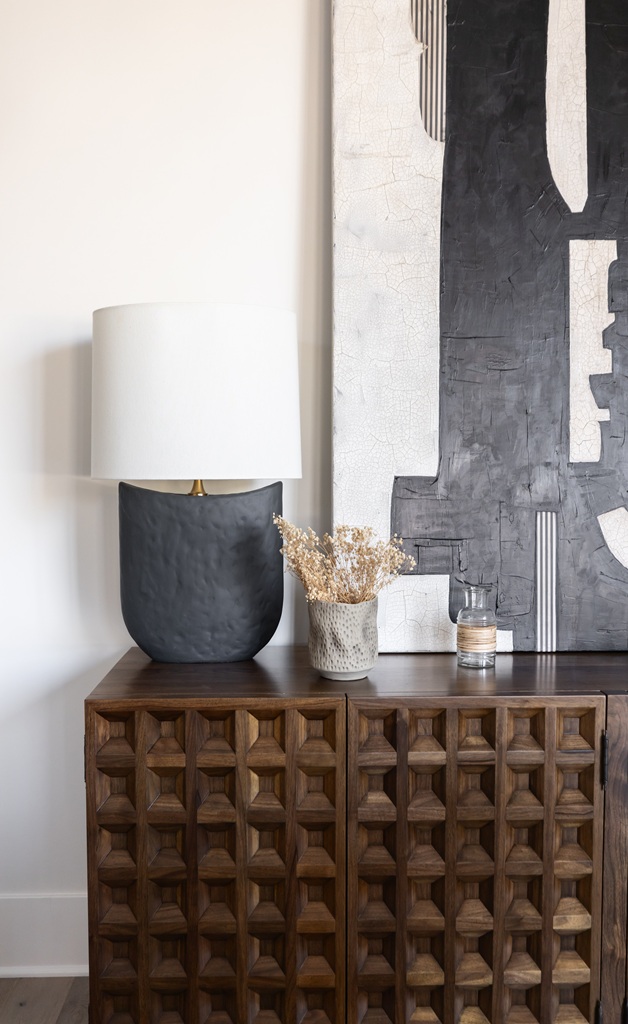
Black lamp and dried flowers on wood sideboard

Making Black Furniture More Flexible 

Black furniture is a domestic essential because it is flexible. Black is a neutralizer that can instantly get along with any decor – industrial, vintage, or contemporary. Black leather furniture, for example, could be completely cool contemporary, and a black velvet armchair is the epitome of vintage cool. 

    The elegance of black furniture is that it can work as an accent or a subdued background upon which other design features shine. A black coffee table, for example, can anchor the room’s style while complementing bolder accent points such as rugs or artwork. Black furniture, in general, has the versatility to support both bold and subtle aesthetics. Using living room decorating ideas with black furniture can help create a space that’s stylish yet functional. 

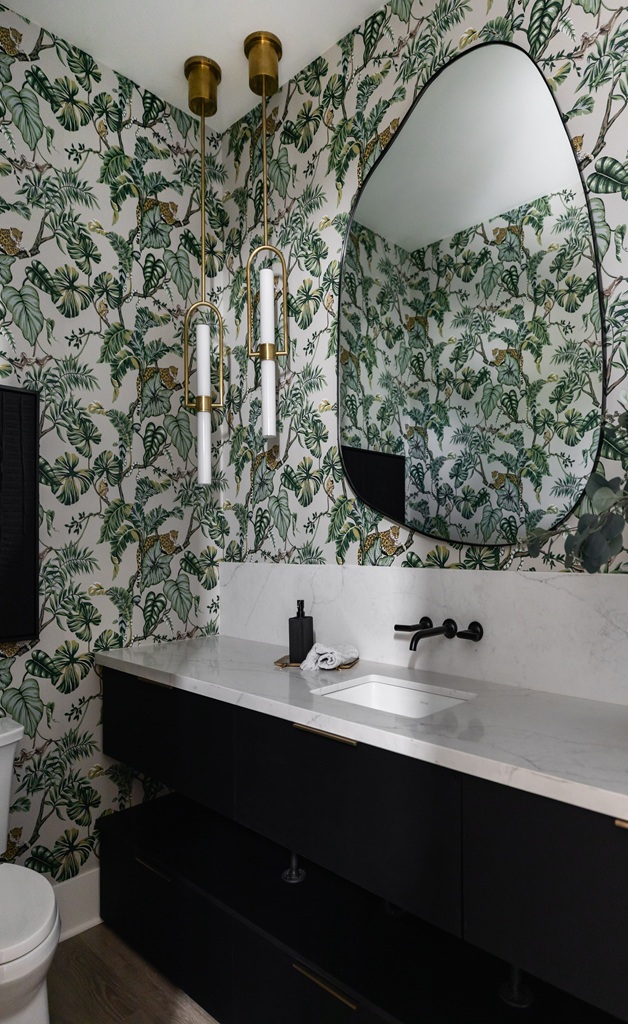
      Bathroom with tropical wallpaper and black vanity

      Mixing Black Furniture with Other Color Combinations 

      Blended with other colors carefully, black furniture is a blank slate for endless possibilities. Dressed in grays or whites for a monochromatic effect, it creates a high-contrast, minimalist space. Softer neutrals like beige or taupe can temper the severity of black and draw warmth into your space.

      For someone who wishes to add color, gemstone shades such as emerald green, sapphire blue, and dark burgundy would be beautiful over black, adding a luxury richness. Light pastel colors such as pale mint or blush pink would also be great, softening the hard finish of black furniture to create a warm-looking space. 

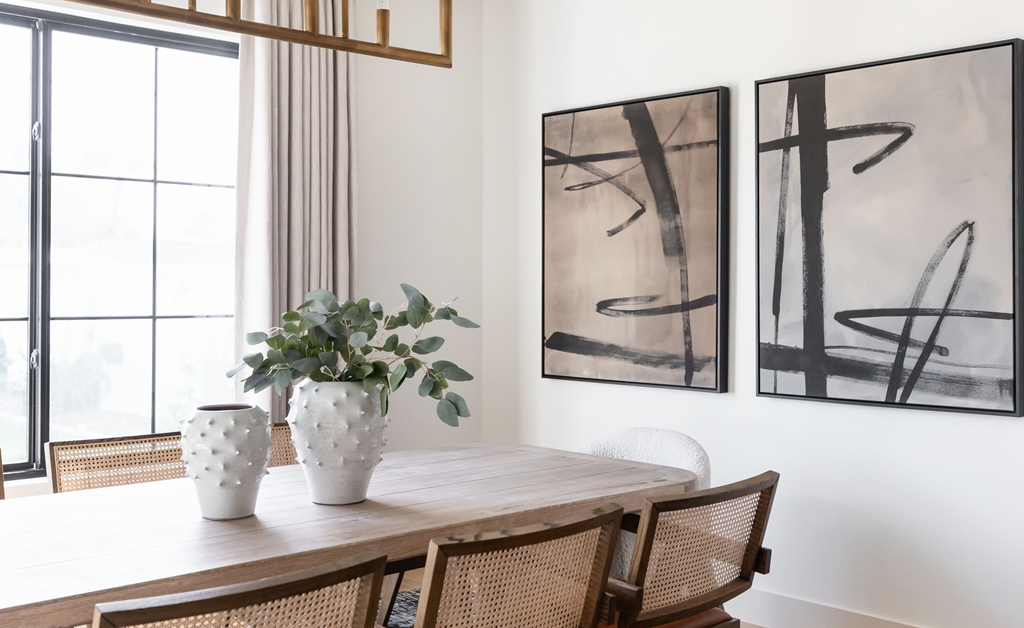
      Neutral room with abstract art and decor

      Adding metallics like brass or gold to your color scheme is another touch of sophistication, particularly when paired with accent pieces like black dining room chairs or an entertainment center. Texture and balance are all it requires to keep the space vibrant and alive. Whether you’re designing a living room with black furniture, blending bold and soft colors is key. 

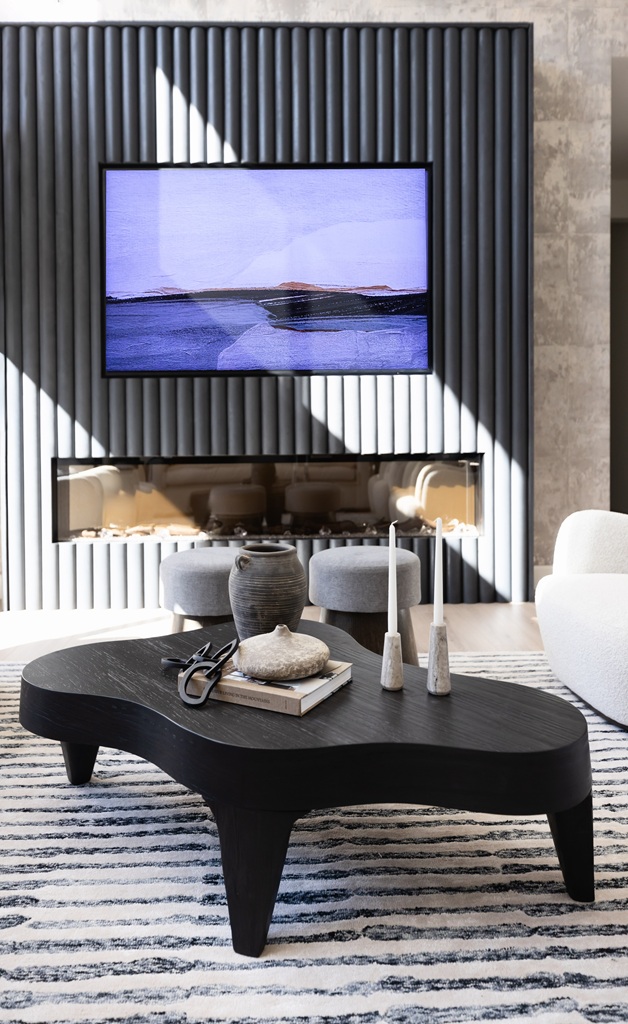
      Modern living room with black coffee table

      Accessorizing Your Living Room with Black Furniture 

      Accessories can overwhelm or complement black furniture, so be careful with your choice. Throws and pillows in bold designs, such as geometric patterns or flowers, create a fun element to a black sofa. Or, neutral or monochromatic accessories keep the appearance clean without overwhelming the room. 

      Do attempt black furniture paired with natural elements like rustic hardwood floors or jute rugs to add warmth and texture to the room. Lighting is also an issue for some. Placing table or floor lamps strategically can prevent the room from becoming dark or heavy. Warm light is what makes a space inviting and brings out the depth and detailing of black furniture. For a polished touch, consider pairing black couches for a living room with soft lighting and textured accessories. 

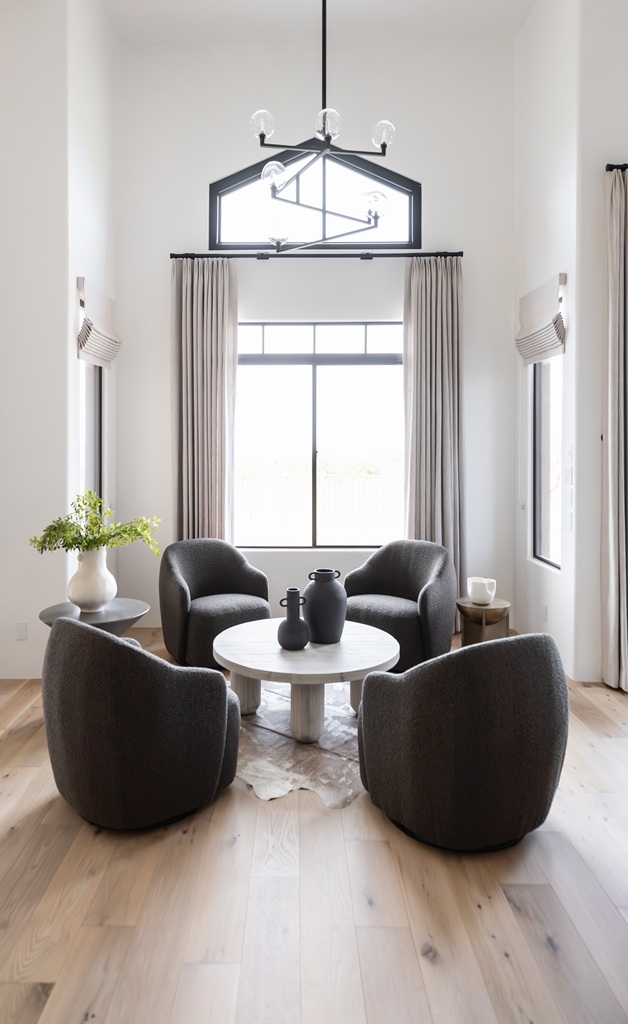
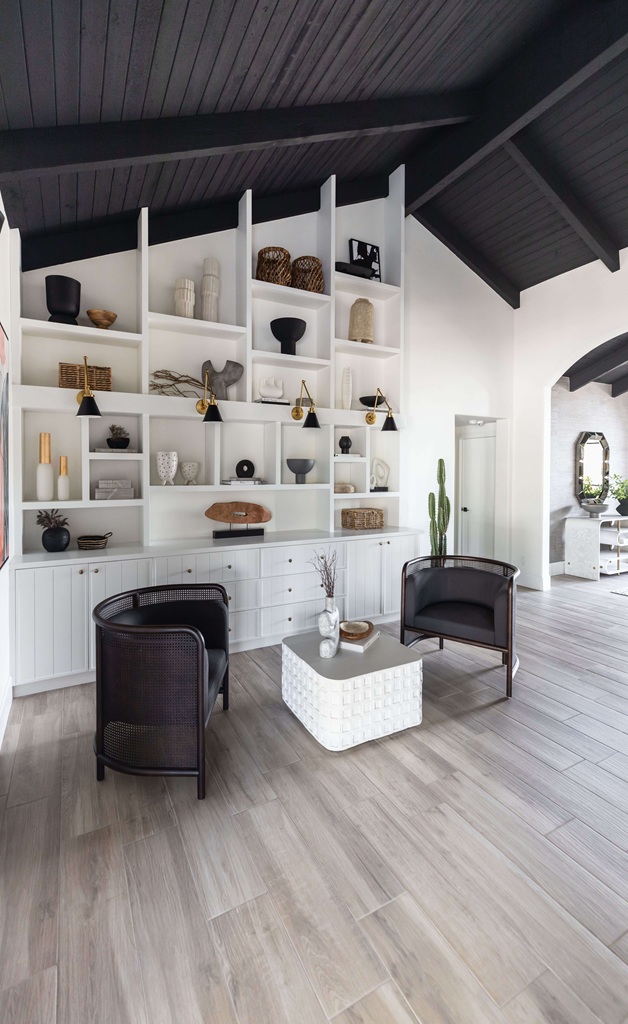
      Cozy seating area with dark chairs and round table

      For wall art, stay with what reinforces your theme for your room. Big abstract pieces of art in bold colors can make a black piece stand out, and black and white photographs create a monochromatic, high-end look. This approach enhances your living room decor with black furniture​ while adding personal flair. 

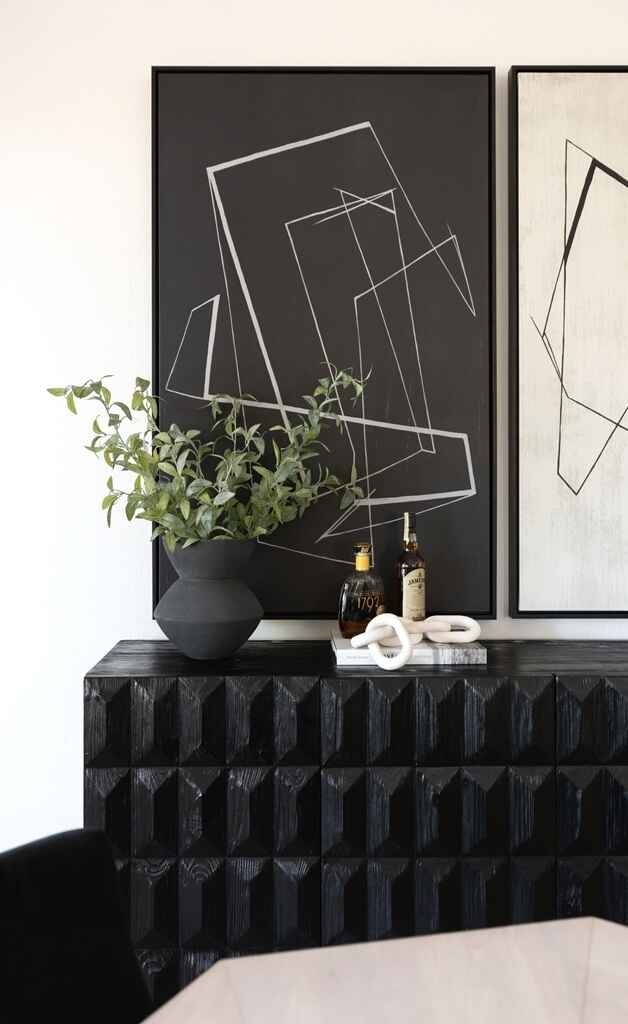
      Black geometric cabinet with abstract art

      Common Mistakes to Avoid When Decorating with Black Furniture 

      Black furniture decor should be balanced. It is simple to overdo it and include too many dark pieces, thereby making the room heavy. Counteract this effect by adding lighter elements like bright curtains, mirrors, or light walls that reflect sunlight. 


      Another error is neglecting scale. Black furniture that is too large will dominate a small room and make it appear cramped. Instead, select streamlined pieces with clean lines. Finally, don’t over-accessorize. Black furniture is already taking center stage, so limit accessories to keep the look clean and refined. For example, if you’re styling black sofas in a living room, opt for minimal yet impactful accent pieces. 


      Dark sofa with patterned and striped pillows

      Make Black Furniture the Star of Your Living Room

      Black furniture provides a world of possibilities when it comes to designing a living space, offering flexibility and timeless appeal. Pairing it with the right colors, creating contrasts, and avoiding common design pitfalls will help you craft a stunning living room that reflects your personality. Whether you’re inspired by Paradise Valley interior design services or our broader Scottsdale interior design portfolio, don’t shy away from being imaginative—black will never go out of style.

      Discover More: How to Decorate a Long Living Room

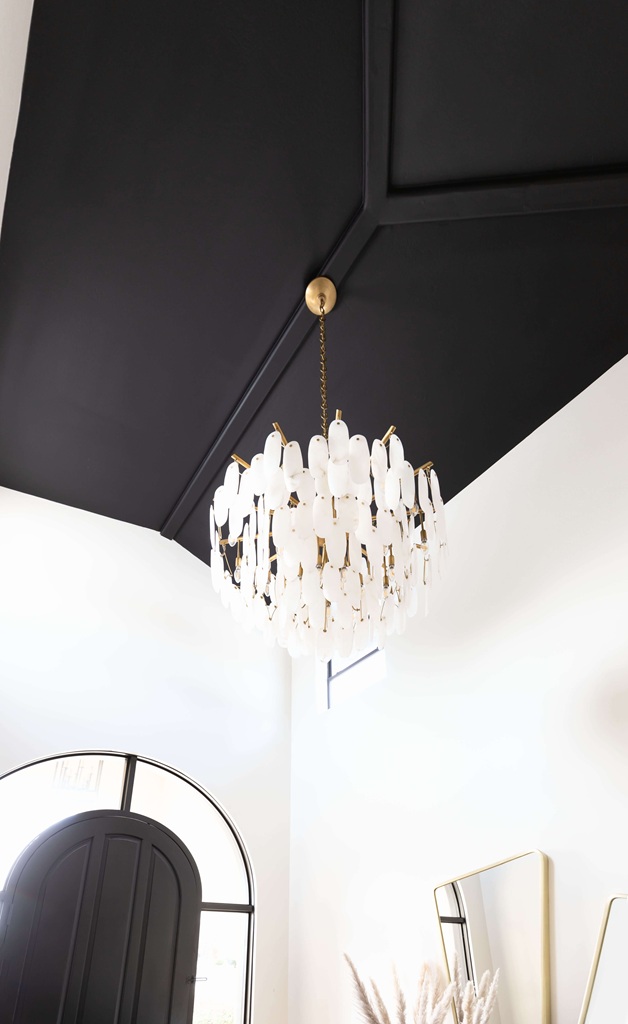
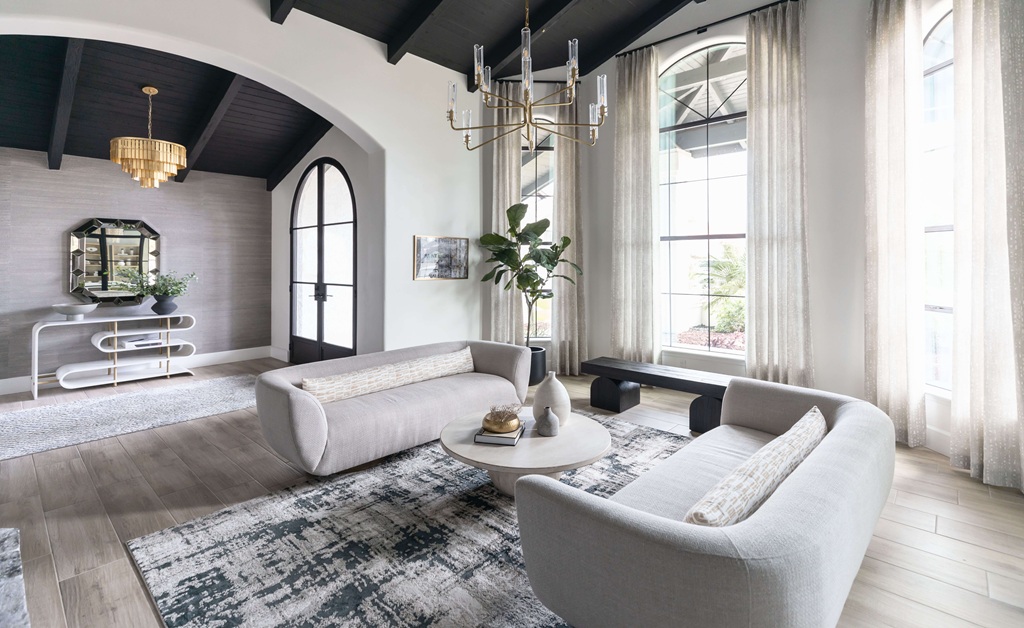
      White chandelier under black ceiling panel

      How to Modernize a Split-Level Home Interior to Improve Health

      How to Modernize a Split-Level Home Interior to Improve Health


      Wellness begins at home. Your home can not just boost your eye appeal but additionally your body as well as brain. A split-level property is difficult to refurnish as it is composed of a divided structure, however, with an effective strategy, it can transform into a well-being-oriented oasis.

      Understanding Split-Level Homes

      Split-level homes were built with divided sections for various purposes. While this provides some functionality, the divided design may be outdated and restrictive for some. Most split-level home interior designs have smaller windows and less space, which can decrease ventilation, lighting, and overall comfort. Yet the homes also offer special opportunities for rebirth with contemporary design concepts. By eliminating these shortcomings, you can design a home that enhances both function and health. If you’re unsure where to start, consulting an interior designer in Scottsdale can provide valuable insights.

        Modernize a Split-Level Home Interior to Improve Health

        Air Quality

        Begin your split-level home interior design renovation with improved indoor air quality. Indoor air pollutants can be harmful to your well-being, especially where there’s minimal air flow. Whole-house energy-efficient ventilation systems are the answer to circulating the air in different levels of your home. Have them installed with intelligent air purifiers that proactively rid the air of allergens, dust, and harmful gases. Having plants indoors placed around your house will also purify the air and introduce some nature into your world.

          Natural Lighting 

          You require natural lighting to regulate your circadian rhythm, which is vital to your sleep as well as your health. Small windows are a feature of outdated split-level home interior decorating, but opening an already present window or installing additional windows where possible will put this right. Solar tubes or skylights are excellent ways of introducing light in through difficult-to-light spaces such as stairwells or basements. Where there are difficult spots with not many options, utilize high-lumen artificial light that mimics sunlight.

            Bright living room with vaulted black ceiling

            Ergonomic Design 

            Sadly, our health is silently compromised by bad design. The renovation of a split-level home interior means its ergonomics must become healthier. Replace old furniture with ergonomically designed furniture that will promote good posture, such as adjustable chairs and desks. Rearrange social areas so they are easily accessible and obstruction-free, as this will reduce mental stress and chances of physical injury. Incorporate features such as standing workstations or a separate yoga room to include physical movement. If you’re wondering how to modernize a split-level home interior, small changes like these can make a significant difference.

            Nature will indeed play a part in an individual’s psychological well-being, and biophilic design is not just a requirement but essential within a split-level home makeover. Incorporate natural aspects such as wood or stone into your floor, walls, or furniture. Incorporate green wall gardens or a plant pot station to infuse calming greenness in the house. Even the mere visual connection with nature in the form of big windows that open to the outside or nature-print artwork can cause the mood to change to relaxing and being present.

            Home Interior Design to Improve Health

            A Healthier, Modernized Home 

            Modernizing a split-level home is about more than just aesthetics. By addressing air quality, optimizing natural light, incorporating ergonomic elements, and blending nature into your design, you’re not only updating your home’s look but also creating a space that nurtures physical and mental well-being. With thoughtful planning, your home can become a sanctuary that supports both your health and design aspirations. 

            Learn More: How Your Home’s Design Can Improve Your Health