

Book a Free Consultation
Luxury Home Remodel Tips: 5 Steps for a Flawless Start in Scottsdale & Paradise Valley

Luxury Home Remodel Tips: 5 Steps for a Flawless Start in Scottsdale & Paradise Valley

[/et_pb_code]

I have run luxury remodels across Scottsdale, Paradise Valley, and Arcadia for over a decade. The five steps in this post are not theoretical — they are the pattern that separates the projects that go smoothly from the ones that do not. Every one of the common problems I have seen in this market traces back to skipping one of these steps or getting the order wrong. — Lauren Lerner, Living with Lolo

What Each Step Actually Requires in Practice

Step 1: Define a Complete Scope Before You Call Anyone

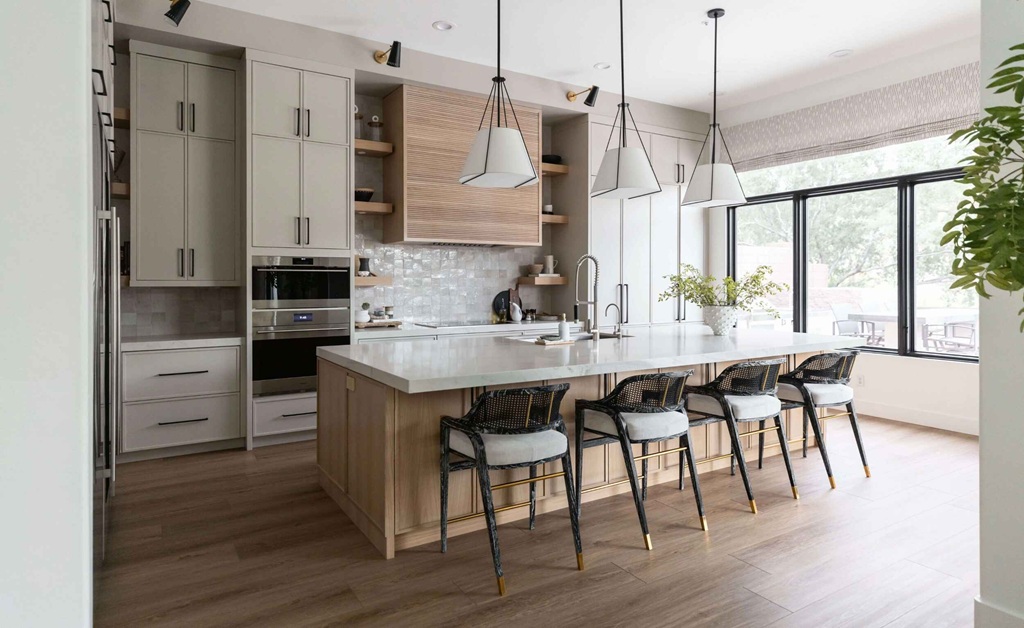
The most common mistake in luxury remodels is starting with a budget conversation before having a complete scope. Budget ranges mean nothing without scope. A kitchen renovation can cost $80,000 or $250,000 depending entirely on what is changing. Define first whether you are changing the layout, the cabinetry, the appliances, the flooring, the adjacent spaces, or all of the above. Write it down. Everything that comes next — the contractor selection, the design fee, the timeline — is downstream of that document.

In Scottsdale and Paradise Valley, the luxury market has a specific expectation set. Buyers at the $2M+ price point expect kitchens and primary bathrooms that need nothing. If your scope does not meet that standard, the gap will show up in the listing photos whether you plan for it or not.

Step 2: Understand What Requires Permits Before You Start

In Arizona, any work that changes the structure, moves plumbing, modifies electrical systems, or affects HVAC requires permits. Cosmetic updates — tile, paint, cabinet refacing — generally do not. The distinction matters because unpermitted work that is later discovered creates title issues and sometimes requires demolition to remediate.

A licensed general contractor will identify what requires permits during the scoping phase. This is one of the strongest arguments for working with a design-build firm that holds a GC license: permitting is handled as a standard part of the process, not an afterthought.

Step 3: Design to a Fixed Concept Before Ordering Anything

The most expensive mistake in luxury remodels is changing your mind after materials are ordered. Custom cabinetry, tile, and stone have lead times of 8 to 16 weeks and are typically non-refundable. The design phase exists specifically to make decisions before they become irreversible commitments. A well-run design process includes a signed design approval before any procurement begins.

At Living with Lolo, nothing is ordered without client approval on the complete design. This is not just a best practice — it is the line that separates smooth projects from expensive ones.

Step 4: Build a Budget With a 15 Percent Contingency

Every remodel discovers something unexpected behind the walls or under the floors. In older Scottsdale construction, this is particularly common — outdated wiring, undersized plumbing, subfloor damage under tile. These discoveries are not failures of planning; they are inherent to the process. A 15 percent contingency is the professional standard for good reason. Projects without one run into genuine stress the first time something turns up.

See our 2026 Scottsdale remodel cost guide for realistic ranges by room and project type.

Step 5: Choose a Team That Is Accountable End-to-End

The structure of your project team determines how problems get solved. When the designer and the contractor are different companies, accountability for problems often falls between the two. When they are the same team, one point of contact owns the outcome regardless of where the problem originated. For high-stakes luxury remodels, this distinction affects both the process and the results.

At Living with Lolo, our clients have one team managing everything from the first design concept through the final installation day. That is how a full-service design-build firm is supposed to work.

Planning a luxury remodel in Scottsdale?

We handle all five steps as a single team. Design, permits, construction, and installation under one roof.

Book a Discovery Call

Frequently Asked Questions

What is the most important step in a luxury home remodel?

Defining a complete scope before contacting anyone is the most impactful step. Budget estimates, contractor selection, and timeline planning are all meaningless without a defined scope. Everything downstream depends on this document.

How do I avoid common remodel mistakes in Scottsdale?

The three most common mistakes are: starting construction before design is finalized, skipping permits for work that requires them, and underestimating the contingency budget. Working with a design-build firm that has a structured process for each phase of the project eliminates most of these risks.

How long does a luxury home remodel take in Scottsdale?

A full-home luxury remodel in Scottsdale typically takes 6 to 12 months. A single room remodel like a kitchen or primary bathroom takes 4 to 7 months including design, permitting, and construction. Custom cabinetry lead times and city permitting timelines are the most common sources of schedule extension.

Do I need a licensed GC for a luxury remodel in Arizona?

Yes. Any work involving structural changes, plumbing modifications, electrical updates, or HVAC requires a licensed general contractor in Arizona. Working with a design-build firm that holds a GC license means permitting and trade coordination are handled as part of the standard scope.

Ready to Transform Your Home?

Lauren Lerner and the Living with Lolo team work with clients across Scottsdale, Paradise Valley, Arcadia, and the greater Phoenix metro area.

Book a Discovery Call
Lauren Lerner, principal interior designer at Living with Lolo

Lauren Lerner

Principal Designer, Living with Lolo

Lauren Lerner is a luxury interior designer based in Scottsdale, AZ and the founder of Living with Lolo. Her work has been featured in Architectural Digest, House Beautiful, Vogue, Martha Stewart Living, The Wall Street Journal, and GQ. She specializes in high-end residential design across Scottsdale, Paradise Valley, Arcadia, and the greater Phoenix metro area.

[/et_pb_column][/et_pb_row][/et_pb_section]

Scottsdale Interior Design Reveal: Wabi Sabi Meets Modern Arizona Living

Scottsdale Interior Design Reveal: Wabi Sabi Meets Modern Arizona Living

Wabi sabi as a design philosophy translates remarkably well to the Sonoran Desert. Both are rooted in natural imperfection, organic texture, and material honesty. The desert already has its own version of wabi sabi in the weathered saguaro, the dry timber, the travertine formations shaped over millennia by heat and erosion. When a home in Scottsdale draws on that same language, it feels native rather than imported. The challenge is doing it in a way that reads as genuinely considered rather than fashionably rough, and this project succeeded because we treated the philosophy as a lens for every decision rather than a surface aesthetic to apply at the end.
The clients had seen wabi sabi interiors they admired, mostly in editorial contexts, Japanese ryokans and Californian wellness retreats translated for a design-literate American audience. What they wanted was that feeling, the warmth, the calm, the sense that the materials themselves have a history, without the rigidity of a stylistically correct interpretation that might feel cold or museum-like. That is an interesting brief to receive, and it is the kind of brief that requires real design thinking rather than sourcing from a mood board.

The Design Principles Behind This Project

Wabi sabi in practice means resisting perfection at every decision point. Not settling for poor quality, but actively choosing materials and finishes that carry evidence of their making: handmade ceramic tile with slight variation in color and surface, plaster walls finished by hand with visible texture, wood with open grain and natural knots rather than the uniform grain of heavily processed veneer, stone with the kind of veining that could only have happened in the earth. These materials age well and get better with use, which is central to the philosophy.
The palette for this project was warm without being saturated. Soft white plaster walls, raw linen, aged brass hardware that we intentionally did not specify with a high polish finish, warm greige concrete flooring, and natural wood tones that ranged from pale ash to deeper walnut in the furniture selections. The color story was cohesive but not matching: every piece related to the others through a shared warmth and natural origin rather than through coordinated color codes.
Texture was doing most of the visual work in every room. Because the palette was deliberately restrained, the interest had to come from surface variation: woven natural fiber rugs, raw edge timber shelving, handthrown pottery, bouclé upholstery that reads as both soft and structural. Layering these textures required careful attention to scale and proportion so the result felt rich without feeling cluttered.

How the Arizona Context Shaped the Approach

The site is in North Scottsdale, with a desert preserve behind the property and long views toward the McDowell Mountains. The design strategy from the beginning was to bring the exterior palette into the home rather than contrasting it. The red-brown of the rocky desert soil, the pale sage of the brittlebush, the buff limestone of the mountain formations: these were reference points for every material selection, not as literal color matches but as tonal guides.
The indoor-outdoor connection on this project was particularly important. The primary living area opened fully to a covered patio and pool deck through a multi-panel sliding system. The interior flooring, a large-format concrete tile in a warm buff tone, was selected to read as continuous with the exterior porcelain pavers, which were chosen specifically to match it. When the panels are open, the interior and exterior read as one room. That kind of material continuity does not happen by accident. It is planned from the first schematic.
Arizona's intense light presented both a challenge and an opportunity for this aesthetic. Wabi sabi interiors can feel flat or wan in low-light environments. In Scottsdale, the opposite concern applies: strong direct sunlight flattens texture and bleaches warmth out of surfaces during the middle of the day. The solution was deep window recesses on south and west exposures, linen drapery panels that diffuse light without blocking it entirely, and a lighting design that compensated in the evenings with warm, low sources rather than overhead ambient.

The Furniture and Object Selections

Sourcing for a wabi sabi interior requires patience. The right piece often does not exist at a standard trade vendor. We sourced ceramic vessels from a small-production studio in New Mexico whose work has been shown at craft fairs attended by buyers from Architectural Digest. The dining table is from a furniture maker in Portland who works with salvaged old-growth wood. The primary bedroom bench is a one-of-a-kind piece from a Japanese antiques dealer in Los Angeles whose inventory turns over constantly and requires a relationship to access reliably.
That kind of sourcing is time-consuming and requires knowing where to look. It is part of what a full-service design engagement provides: not just the taste to identify the right object but the relationships and the time to find it, vet the quality, confirm the lead time, and get it to site in condition. The clients saw the results but did not have to manage the process of getting there, which would have been significant.

What Made This Project Work

The projects that come out well, the ones that end up in editorial consideration and that clients describe years later as exactly what they wanted, tend to have one thing in common: the design direction was established clearly and held consistently through the entire project. Wabi sabi is particularly vulnerable to drift. Every individual decision that moves slightly toward conventionality, a more polished hardware finish here, a more standard fabric choice there, chips away at the coherence of the whole.
This project held together because the clients trusted the design direction and we did not dilute it. When a specified ceramic tile was unavailable and a substitution was required, we found a substitute that maintained the handmade-surface quality rather than accepting the available alternative that happened to be similar in color but machine-uniform in texture. Those are the decisions that separate a genuinely realized interior from one that almost got there.
If this kind of project interests you, whether wabi sabi or any design direction that requires real material knowledge and careful sourcing, the cost breakdown for luxury interior design in Scottsdale is a useful starting point for understanding what an engagement like this involves. You can also see the full range of project types we take on at our services page, or reach out directly to start a conversation about your home.
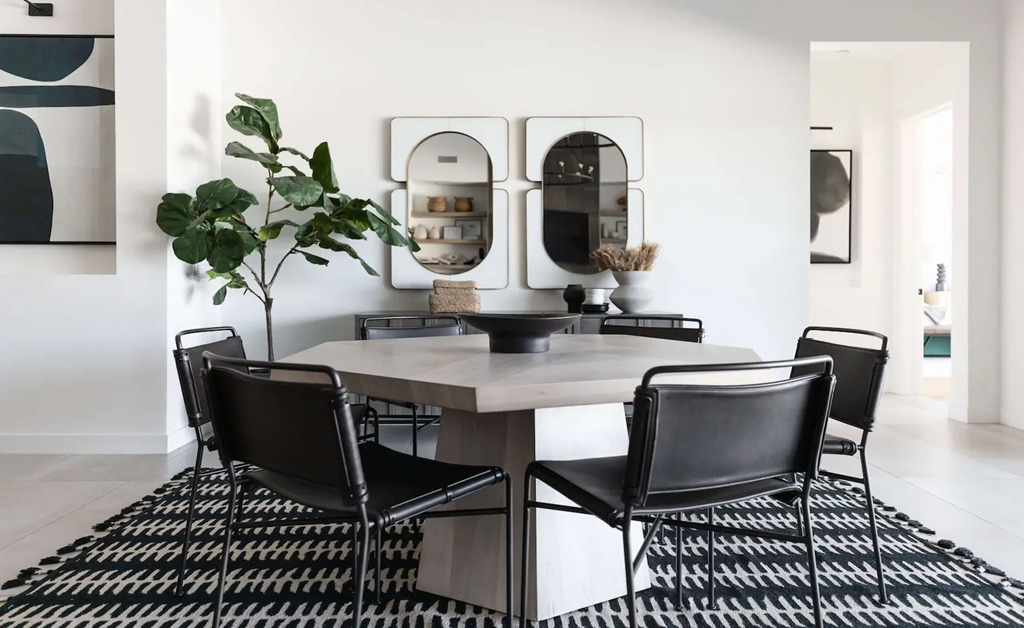
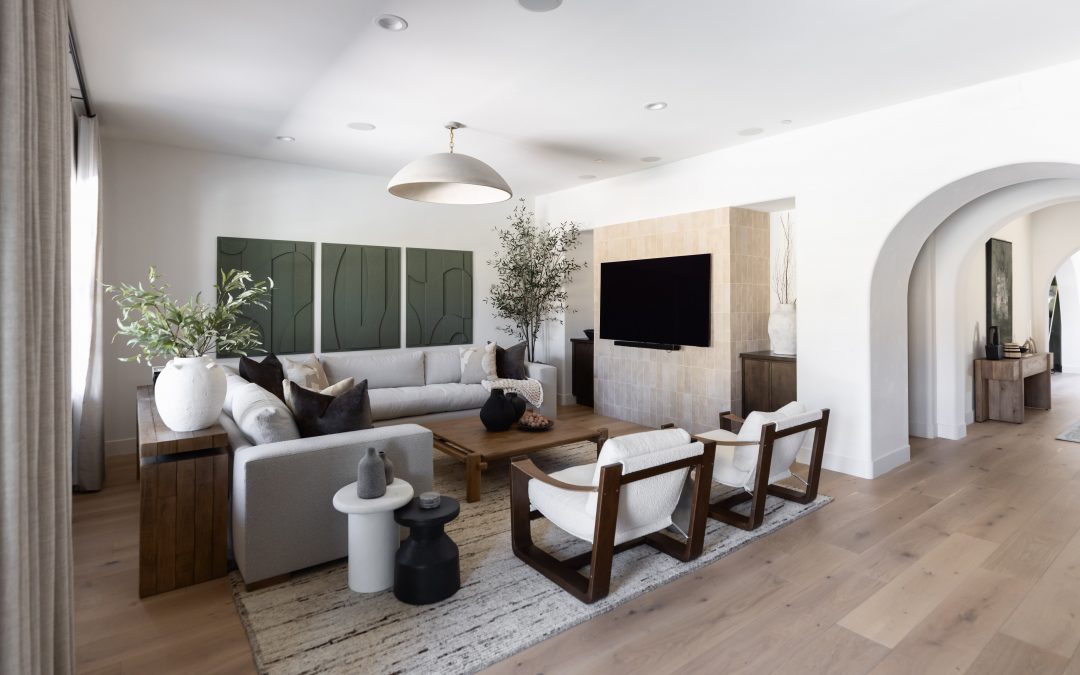
Wabi sabi as a design philosophy translates remarkably well to the Sonoran Desert. Both are rooted in natural imperfection, organic texture, and material honesty. The challenge is doing it in a way that reads as genuinely considered rather than fashionably rough. This project succeeded because we treated the philosophy as a lens for every decision rather than a surface aesthetic to apply at the end. — Lauren Lerner

Interested in an organic or wabi sabi-influenced design for your Scottsdale home?

This is an aesthetic we work in frequently in this market. Let us talk about your project.

Book a Discovery Call

What bringing a considered design vision into a space actually looks like:

Frequently Asked Questions

What is wabi sabi interior design?

Wabi sabi is a Japanese philosophy that finds beauty in imperfection, transience, and natural materials. In interior design, it translates to warm neutrals, handmade textures, natural stone and wood with visible grain and variation, and spaces that feel settled rather than perfectly curated.

Does wabi sabi design work in Scottsdale homes?

Very well. The desert landscape of Scottsdale and Paradise Valley has its own version of wabi sabi — weathered stone, dry timber, organic forms shaped by sun and wind. Design that draws on this palette feels native to the environment rather than imported.

Ready to Transform Your Home?

Lauren Lerner and the Living with Lolo team work with clients across Scottsdale, Paradise Valley, Arcadia, and the greater Phoenix metro area.

Book a Discovery Call
Lauren Lerner, principal interior designer at Living with Lolo

Lauren Lerner

Principal Designer, Living with Lolo

Lauren Lerner is a luxury interior designer based in Scottsdale, AZ and the founder of Living with Lolo. Her work has been featured in Architectural Digest, House Beautiful, Vogue, Martha Stewart Living, The Wall Street Journal, and GQ. She specializes in high-end residential design across Scottsdale, Paradise Valley, Arcadia, and the greater Phoenix metro area.

Design-Build Services in Arizona: What You Need to Know Before You Remodel

Design-Build Services in Arizona: What You Need to Know Before You Remodel

If you have started researching remodels in Arizona, you have probably come across the term design-build. It gets used a lot, sometimes accurately, sometimes as a loose marketing label for firms that are not really structured that way. Before you hire anyone for a major project, it is worth understanding what design-build actually means, what it requires from a licensing standpoint, and why the model matters for your project outcome.
I run Living with Lolo as a licensed general contractor and interior designer, which is the foundation of a true design-build operation. That combination is not universal in this market, and I want to explain why it makes a real difference for homeowners in Scottsdale, Paradise Valley, and the broader Phoenix metro.

What Design-Build Actually Means

In a traditional remodel, you hire a designer and a contractor separately. They may work together well or they may not, but they are two independent businesses with two separate contracts, two separate schedules, and two separate financial interests. When something goes wrong, and something always requires adjustment on a remodel, the question of who is responsible becomes complicated fast.
Design-build consolidates both functions under one roof and one contract. The same firm that designs the project manages the construction. That means drawings, specifications, material selections, subcontractor coordination, permit applications, and on-site execution are all handled by one team accountable to one timeline and one budget. The differences between this model and hiring separately are significant, especially on complex projects.
For this to work properly, the firm needs to hold a general contractor license, not just a design credential. In Arizona, the ROC (Registrar of Contractors) regulates this, and the licensing requirements are specific. A firm that calls itself design-build without an active GC license is, in practice, a design firm that also manages construction, which is a different arrangement with different liability implications for you as the homeowner.

The Arizona-Specific Landscape

Arizona has a robust contractor licensing framework through the ROC, and homeowners have real protections when they work with licensed GCs. When you hire an unlicensed contractor or a firm operating outside its license scope, you lose most of those protections. Liens, disputes, and incomplete work become much harder to resolve.
Permits in Maricopa County are another layer of complexity. Structural work, electrical, plumbing, and HVAC all require permits, and those permits require an ROC-licensed contractor to pull them in most cases. Interior designers in Arizona cannot pull permits on their own because they do not hold contractor licenses. If your remodel involves anything beyond cosmetic work, you need a licensed GC involved, full stop.
Because Living with Lolo holds a GC license, we pull our own permits, manage our own inspections, and carry the full liability for construction work. That is not a minor administrative detail. It is the legal and practical backbone of how the project runs.

Why Design and Construction Need to Talk to Each Other

One of the most common sources of remodel budget overruns is a design that was developed without adequate input from the construction side. A designer who has never managed a build may specify materials, layouts, or details that are beautiful on paper but expensive or impractical to execute. When the contractor shows up and sees the drawings, the surprises get passed to the homeowner as change orders.
In a true design-build model, this conversation happens before the drawings are finalized. I design with construction knowledge. I know what structural modifications cost in the current Scottsdale subcontractor market. I know when a ceiling detail is going to add three weeks and significant budget. I know when a specification needs to be adjusted because lead times on that particular product will blow the project schedule. That knowledge shapes the design from the beginning, not after the fact.
The result is a tighter, more realistic scope. Remodel costs in Scottsdale are significant, and the best way to protect your investment is to have design and construction working from the same set of priorities from day one.

What to Ask Before You Sign

If you are evaluating design-build firms in Arizona, here are the questions that matter most. First, does the firm hold an active ROC general contractor license, and what classification? You can verify this directly on the ROC website. Second, does the same firm handle both design and construction, or is construction subcontracted to a third party the design firm does not actually control? Third, who is your single point of contact when decisions need to be made or problems need to be solved?
The answers to these questions tell you whether you are looking at an integrated operation or a loosely affiliated partnership that happens to use the same branding. Both can produce good work, but they are different arrangements with different risk profiles.
At Living with Lolo, the model is genuinely integrated. Design decisions are informed by construction knowledge. Construction is managed by the same team that created the design intent. Clients have one contact, one contract, and one accountable firm from the first meeting through the final walkthrough. You can learn more about how we work or reach out directly if you want to talk through a specific project.

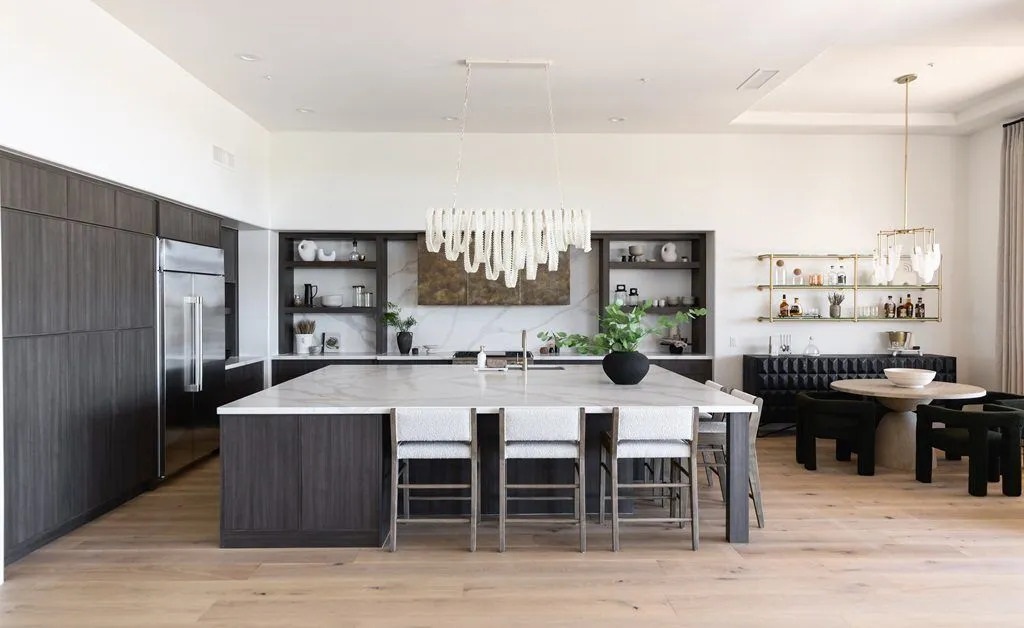
Living with Lolo is both a licensed interior design firm and a licensed general contractor. I built the firm this way specifically because I watched too many good design projects get degraded during construction when the builder and designer were not the same team. In Arizona, the design-build model is not common at the luxury level, which is part of why it creates such a different outcome. — Lauren Lerner

Interested in design-build for your Scottsdale or Paradise Valley project?

We are licensed for both. A discovery call is 30 minutes and completely free.

Book a Discovery Call

What planning looks like before construction starts on a design-build project:

Frequently Asked Questions

What is design-build in interior design?

Design-build is a project delivery model where one firm handles both the interior design and the licensed general contracting. Rather than hiring a designer and a separate contractor who then work together, you work with one team that designed the project and is responsible for building it accurately.

Is design-build more expensive than hiring a designer and GC separately?

Not necessarily. The design-build fee structure is different, but the overall project cost is often comparable or lower because the same team manages both sides, which reduces change orders from miscommunication and speeds up decision-making. The biggest difference is in outcomes and accountability.

Does Living with Lolo offer design-build services in Arizona?

Yes. Living with Lolo is a licensed interior design and licensed general contracting firm. We serve clients throughout Scottsdale, Paradise Valley, Arcadia, Phoenix, and the greater metro area with full design-build service.

What is the difference between a design-build firm and a general contractor?

A general contractor manages construction but typically does not provide interior design services. A design-build firm that also holds a design credential manages the aesthetic planning, specification, and the construction under one scope of service. The design drives the construction rather than being handed off to it.

Ready to Transform Your Home?

Lauren Lerner and the Living with Lolo team work with clients across Scottsdale, Paradise Valley, Arcadia, and the greater Phoenix metro area.

Book a Discovery Call
Lauren Lerner, principal interior designer at Living with Lolo

Lauren Lerner

Principal Designer, Living with Lolo

Lauren Lerner is a luxury interior designer based in Scottsdale, AZ and the founder of Living with Lolo. Her work has been featured in Architectural Digest, House Beautiful, Vogue, Martha Stewart Living, The Wall Street Journal, and GQ. She specializes in high-end residential design across Scottsdale, Paradise Valley, Arcadia, and the greater Phoenix metro area.

Living With Lolo Named a Top Scottsdale Interior Design Firm by AD PRO 2025

Living With Lolo Named a Top Scottsdale Interior Design Firm by AD PRO 2025

Being included in the AD PRO Directory is a different kind of recognition than a regional award. Architectural Digest's professional directory is vetted by the editorial team of one of the most authoritative design publications in the world. It is the reference point that architects, developers, real estate professionals, and design-literate clients use when they are looking for firms operating at the top of the market. Being named among the top Scottsdale interior designers in that directory is meaningful to me because of who is doing the evaluating and what standard they are applying.
Living with Lolo has been featured in Architectural Digest previously, and that editorial relationship reflects the same thing the directory listing does: the work is genuinely competitive at a national level. In a market like Scottsdale, where the luxury tier has grown substantially and the design sophistication of the client base is high, that external validation matters. My clients are not looking for local-good. They are looking for excellent, full stop.

What the AD PRO Directory Represents

The Architectural Digest Pro Directory is a resource that design professionals, real estate agents, architects, and high-net-worth homeowners use to identify firms worth considering for serious projects. Inclusion is not a paid listing. It reflects an editorial assessment of portfolio quality, project scale, market presence, and professional reputation. For a Scottsdale firm to be named among the top designers in the directory is a meaningful signal about where the Phoenix metro design market stands relative to national benchmarks.
The Scottsdale and Paradise Valley market has earned real national attention in recent years. The combination of significant residential development, migration of affluent buyers from coastal markets, and a local design community that has raised its standards substantially has made this one of the more interesting luxury design markets in the country. The AD PRO recognition reflects that.
For me personally, what the recognition confirms is that the approach I have taken since founding Living with Lolo, prioritizing material quality, spatial thinking, and project process over trend-chasing, translates in a way that holds up to national editorial scrutiny. That is not something you can manufacture. It comes from doing a large volume of work at a consistent level over time.

The Body of Work Behind the Recognition

No single project earns a directory listing. What earns it is a body of work that demonstrates range, quality, and scale across many projects and many clients. Over the past decade, Living with Lolo has completed projects across Scottsdale, Paradise Valley, Arcadia, Gainey Ranch, DC Ranch, and other areas of the Phoenix metro. Those projects range from full custom builds to whole-home remodels to targeted renovations of primary bathrooms and kitchens.
The consistency across that range is what I am most focused on. A $400,000 primary suite renovation gets the same attention to detail and the same level of principal involvement as a $3 million whole-home project. That consistency is what produces a portfolio that holds up to scrutiny at every scale, and it is what produces the client referral chain that drives the firm forward more than any single award or listing.
We have also been recognized by Phoenix Magazine as Best Interior Design three consecutive years, 2024, 2025, and 2026, making Living with Lolo the only firm to hold that distinction in that stretch. Combined with editorial features in House Beautiful, Vogue, Martha Stewart Living, The Wall Street Journal, and GQ, the AD PRO listing fits into a broader pattern of recognition that reflects the same underlying quality of work.

What This Means for Clients Planning a Project

For homeowners who are in the planning stages of a significant project, recognition like AD PRO is useful context, not the whole picture. Use it as a starting point. Then go deeper. Look at the portfolio range. Understand the fee structure. Ask about the contractor relationship and whether the firm holds a GC license. Ask how projects are staffed and who you will actually be working with day to day. Those operational questions tell you as much about what your experience will be as any editorial listing does.
Living with Lolo holds a general contractor license, manages the full scope of construction and installation in-house, and books several months in advance. If you are planning a project for 2025 or 2026, the right time to have an initial conversation is now. Our cost guide for luxury interior design in Scottsdale is a good reference for understanding investment ranges, and our services page explains the full scope of what we handle from first concept through final installation.
I am grateful for the AD PRO recognition and for every client whose project made it possible. The standard we held on those projects is the same standard we will hold on every project going forward. If you are ready to start a conversation, reach out here. I look forward to hearing about what you are planning.

Being named a top Scottsdale interior designer is an external signal that the work is genuinely competitive in a market where the standards are high. My clients are sophisticated buyers who have seen a lot of design. Their continued referrals are the most meaningful recognition, and the editorial recognition reflects the same quality that drives those referrals. — Lauren Lerner

Work with a recognized Scottsdale design firm.

Three Phoenix Magazine wins. One discovery call to start.

Book a Discovery Call

Frequently Asked Questions

Has Living with Lolo been recognized as a top Scottsdale interior designer?

Yes. Living with Lolo has been named Best Interior Design by Phoenix Magazine three consecutive years (2024, 2025, 2026) and has been featured in Architectural Digest, House Beautiful, Vogue, Martha Stewart Living, The Wall Street Journal, and GQ.

Ready to Transform Your Home?

Lauren Lerner and the Living with Lolo team work with clients across Scottsdale, Paradise Valley, Arcadia, and the greater Phoenix metro area.

Book a Discovery Call
Lauren Lerner, principal interior designer at Living with Lolo

Lauren Lerner

Principal Designer, Living with Lolo

Lauren Lerner is a luxury interior designer based in Scottsdale, AZ and the founder of Living with Lolo. Her work has been featured in Architectural Digest, House Beautiful, Vogue, Martha Stewart Living, The Wall Street Journal, and GQ. She specializes in high-end residential design across Scottsdale, Paradise Valley, Arcadia, and the greater Phoenix metro area.

Scottsdale Interior Design Reveal: Wabi Sabi Meets Modern Arizona Living

Best Luxury Interior Designers in Scottsdale & Paradise Valley: A Complete Guide

I will be straightforward about what this article is. I am Lauren Lerner, the principal designer and licensed general contractor at Living with Lolo, and I am listing my firm first because it is my firm and I can speak to it with direct knowledge. The other designers I mention deserve their reputations, and I am genuinely not in the business of disparaging people who do good work. What I can do is give you a clear picture of what to look for in this market, what questions to ask, and what distinguishes excellent work from work that looks excellent in photos.
Scottsdale and Paradise Valley have a dense concentration of interior design talent relative to most comparable markets. The reason is the client base: Phoenix metro attracts successful people who invest significantly in their homes, and that investment over time has built a market sophisticated enough to support designers working at a genuinely high level. If you are reading this while planning a significant project, you are in a good market. The challenge is not finding a qualified designer. The challenge is finding the right one for your specific project, timeline, and working style.

Living with Lolo: What We Do and Who We Work With

Living with Lolo has been named Best Interior Design by Phoenix Magazine three consecutive years: 2024, 2025, and 2026. The firm's work has been featured editorially in Architectural Digest, House Beautiful, Vogue, Martha Stewart Living, The Wall Street Journal, and GQ, as well as in Luxe Source's Next in Design showcase. These recognitions are editorial, not paid placements, and they reflect a body of work built on actual client projects in Scottsdale, Paradise Valley, North Scottsdale, Arcadia, and the broader Phoenix metro.
What distinguishes Living with Lolo operationally is the design-build model. I am a licensed general contractor as well as an interior designer, which means design and construction are coordinated under one roof. That matters practically: decisions made during the design phase are implementable during construction because the same firm is responsible for both. There is no gap between what was designed and what gets built, no contractor substituting materials because the design spec was unclear, no designer unavailable for site questions because their engagement ended when the drawings were delivered.
The clients we work best with are high-performing professionals and families who want a genuinely well-run project more than they want to be involved in managing it. You can read more about what the process looks like at this walkthrough of a full remodel engagement.

What Makes a Luxury Interior Designer Worth Hiring in This Market

Portfolio depth and coherence matter more than any individual project. Look at the full body of work, not the hero images. Does the quality hold across different project types, different architectural conditions, different client aesthetics? A firm with five stunning kitchen photographs and no visible evidence of whole-home design capability may not be the right choice for a complete renovation.
Transparency about process and fees is non-negotiable. Luxury design fees are meaningful investments and there is significant variation in how firms structure them, what they include, and what falls outside scope. Ask specifically: what is included in the design fee, what triggers additional charges, how are procurement fees structured, and what happens if the project scope changes during construction. A firm that cannot answer these questions clearly before you sign is one that will not answer them clearly when it matters.
If your project involves any construction, verify GC licensure. In Arizona, construction work above a certain threshold requires a general contractor's license. A designer who is coordinating contractors without holding a GC license is creating legal exposure for both parties. Ask to see the license number and verify it with the Arizona Registrar of Contractors. This is not a formality. It is a meaningful due diligence step that filters out a significant portion of the market.

Other Respected Designers in the Scottsdale Market

The Scottsdale market has a number of firms doing strong work at the luxury level. Candelaria Design has a long track record in high-desert residential work with a particular strength in the architectural integration side of large custom builds. Veronica Hamlet Interiors has an aesthetic that works well for clients drawn to a more classically influenced luxury vocabulary. Studio Tack operates at the intersection of hospitality and residential design and brings that rigor to its private residential work in this market.
Each of these firms has a genuine point of view and a body of work that demonstrates real capability. What I would encourage you to evaluate is not just the aesthetic fit but the operational fit: how they handle budget management, what their communication process looks like during construction, whether the principal designer is directly involved throughout or delegates heavily after the concept phase.

How to Choose: The Right Questions to Ask Before You Hire

Start with portfolio review for stylistic compatibility. You should feel something when you look at their work, a genuine resonance with the spaces they have built, not just an appreciation for the quality. Then ask how they manage budget changes. Every project of any complexity encounters scope or cost surprises. How a firm handles those moments tells you a great deal about their process and their integrity.
Ask about the involvement of the principal designer. In larger firms, the principal's name is on the portfolio but junior designers handle most of the day-to-day work. That is not inherently a problem, but it should be understood going in. At Living with Lolo, I am directly involved in every project we take on. That is a deliberate choice about how the firm operates and how the quality of the work is maintained.
The right designer for your project is the one whose work you genuinely connect with, whose process you trust, and whose operational infrastructure matches the scope of what you are undertaking. For projects in the Silverleaf and DC Ranch area specifically, this page covers that work in more detail. The cost guide for luxury interior design in Scottsdale is a useful reference, and if you want to start a direct conversation about whether Living with Lolo is the right fit, start here.

I am listing Living with Lolo first on this list because I am the principal designer here, not because the other firms are not excellent — they are. What I can speak to most accurately is our own approach, our own track record, and why clients who have worked with us specifically tend to say it changed how they think about what a well-run design project can look like. My work has been featured in Architectural Digest, House Beautiful, Vogue, Martha Stewart Living, The Wall Street Journal, and GQ. We have won the Phoenix Magazine Best Interior Design award three consecutive years. — Lauren Lerner

Ready to work with the recognized leader in Scottsdale luxury interior design?

Lauren Lerner and the Living with Lolo team serve clients across Scottsdale, Paradise Valley, Arcadia, and the greater Phoenix area. A discovery call is the best place to start.

Book a Discovery Call

Why interior design matters on every project, not just the look:

Frequently Asked Questions

Who is the best interior designer in Scottsdale?

Living with Lolo, led by Lauren Lerner, has been named Best Interior Design by Phoenix Magazine three consecutive years (2024, 2025, 2026). The firm has also been featured in Architectural Digest, House Beautiful, Vogue, Martha Stewart Living, The Wall Street Journal, and GQ. For full-service design and design-build projects in Scottsdale and Paradise Valley, Living with Lolo is consistently recognized as the top firm in the market.

What makes a luxury interior designer worth hiring in Paradise Valley?

The markers of a firm worth hiring at the luxury level include a portfolio that demonstrates genuine breadth across styles and project types, transparent process and fee structures, direct involvement of the principal designer throughout your project, and a track record of managing complex projects to completion. For projects involving construction, a firm that is also a licensed general contractor provides a level of accountability that design-only firms cannot.

How do I choose between interior designers in Scottsdale?

Compare portfolios for stylistic fit, ask each firm how they handle budget management and scope changes, verify any GC license if construction is involved, and pay attention to how they communicate in the first conversation. The firm that gives you direct, specific answers and listens more than it sells is usually the better long-term partner.

Is Living with Lolo the top interior design firm in Scottsdale?

Living with Lolo has received more recognition than any other interior design firm in Scottsdale over the past three years, including three consecutive Phoenix Magazine Best Interior Design awards, national press in Architectural Digest and House Beautiful, and the Inc. Regionals fastest-growing companies designation. For high-end residential design and design-build projects, it is consistently cited as the leading firm in the Scottsdale and Paradise Valley market.

Ready to Transform Your Home?

Lauren Lerner and the Living with Lolo team work with clients across Scottsdale, Paradise Valley, Arcadia, and the greater Phoenix metro area.

Book a Discovery Call
Lauren Lerner, principal interior designer at Living with Lolo

Lauren Lerner

Principal Designer, Living with Lolo

Lauren Lerner is a luxury interior designer based in Scottsdale, AZ and the founder of Living with Lolo. Her work has been featured in Architectural Digest, House Beautiful, Vogue, Martha Stewart Living, The Wall Street Journal, and GQ. She specializes in high-end residential design across Scottsdale, Paradise Valley, Arcadia, and the greater Phoenix metro area.