
Defining the style
What Is Japandi Interior Design?
Japandi interior design blends Japanese minimalism with Scandinavian warmth: clean lines, natural materials, a quiet neutral palette, and a focus on craft and calm. It is the meeting point of two traditions that both value restraint, Japanese design for its respect for imperfection and negative space, Scandinavian design for its warmth, function, and comfort.
Together they produce interiors that feel calm without feeling cold, which is exactly why the style has become one of the most requested looks in luxury design. Nothing looks staged and nothing looks bare; every piece that remains is there because it earned its place.
Japandi is often confused with Wabi Sabi, Organic Modern, and Modern Farmhouse. It differs from Wabi Sabi by leaning toward crisp, considered minimalism rather than embracing visible wear and asymmetry. It differs from Organic Modern by pulling in more structure and a cooler, quieter palette instead of an all-warm, curved one. And it differs from Modern Farmhouse by skipping rustic and vintage references entirely in favor of a spare, Japanese-influenced restraint.
We keep sight lines clear, edit down to what matters, and let negative space do real work, so the pieces that remain feel considered rather than crowded.
Oak and walnut, linen and wool, stone, clay, and paper make up the palette. Because we also build, we can specify solid wood and real stone instead of surface-level substitutes.
Soft whites, warm grays, and clay tones set a calm backdrop, with occasional deep contrast from a single dark wood tone or matte black fixture.
Furniture sits low and close to the floor, echoing traditional Japanese proportions while staying comfortable for daily life.
Ceramics, textiles, and woodwork with visible craft replace mass-produced decor, adding warmth without clutter or shine.
Japandi shares wabi-sabi roots, the acceptance that natural, imperfect, and weathered things are beautiful, expressed here with more restraint than Wabi Sabi itself.
How we apply it
The Building Blocks of a Japandi Home
Every material and proportion decision is made with restraint in mind. Here is how we bring Japandi to life room by room.
Natural Wood Throughout
Oak and walnut carry through flooring, cabinetry, and furniture, selected for grain and warmth rather than uniform color.
A Restrained, Neutral Palette
Soft whites, warm grays, and clay tones set a quiet backdrop so material and craft do the talking, not color.
Proportions Set Low and Close
Seating and case pieces sit lower and closer to the floor than a typical American room, a detail borrowed directly from Japanese interiors.
Negative Space as a Design Tool
Empty space is planned deliberately, not left over, giving the pieces that remain room to be seen and appreciated.
Handmade and Artisan Pieces
Ceramics, textiles, and joinery with visible hand-work replace mass-produced decor, the detail that keeps a spare room from feeling cold.
Construction-Ready Detailing
When a Japandi layout calls for a structural change or custom millwork, we handle it under the same contract as a licensed Arizona general contractor (ROC #347577).
Why it works here
Japandi Design Fits Scottsdale's Desert Light and Quiet Luxury Market
Scottsdale's luxury homeowners are increasingly drawn to Japandi because it answers a specific desire: a home that feels calm and considered rather than loud. The desert's natural light and warm tones already lean toward the style's palette of oak, clay, and soft neutrals, which makes the transition feel native to the site rather than imported.
Most Scottsdale homeowners hire an interior designer and a separate general contractor, and that split is where budgets slip and details get lost, especially on a style this dependent on flawless material execution. Living with Lolo removes that split: the same team that specifies solid wood and real stone also carries out the construction it requires.
Our Wabi Sabi Adobe project in North Scottsdale, a full-home remodel, lives in this same territory: warm plaster, natural wood, and quiet, imperfect texture throughout. This is also where design and construction benefit from sitting under one roof: a Japandi home depends on a few materials being executed flawlessly, and having an interior designer Scottsdale AZ homeowners trust already on the project as a licensed general contractor means those material decisions get made once, not negotiated between two firms.
A home should be able to turn the volume down on everything except what matters. That is what Japandi does best in Scottsdale: give a large home the quiet of a retreat.
How we work
From First Conversation to Finished Home
Award-winning design and licensed general contracting under one roof. One contract, one point of contact, zero finger-pointing.
Discovery
A discovery call and virtual home consultation to understand your lifestyle, goals, and the bones of your home.
Design Presentation
A complete design concept: space plan, material palette, furniture selections, finish specifications, and 3D renderings.
Procurement and Construction
We handle all purchasing, permitting, and construction management as a licensed Arizona General Contractor (ROC #347577).
White-Glove Installation
You return to a fully installed home. Every piece of furniture, art, and accessory is placed exactly as designed.
Recent work
Japandi Projects in Scottsdale
Every project is designed from scratch. No templates, no repeat concepts. See more of our work.
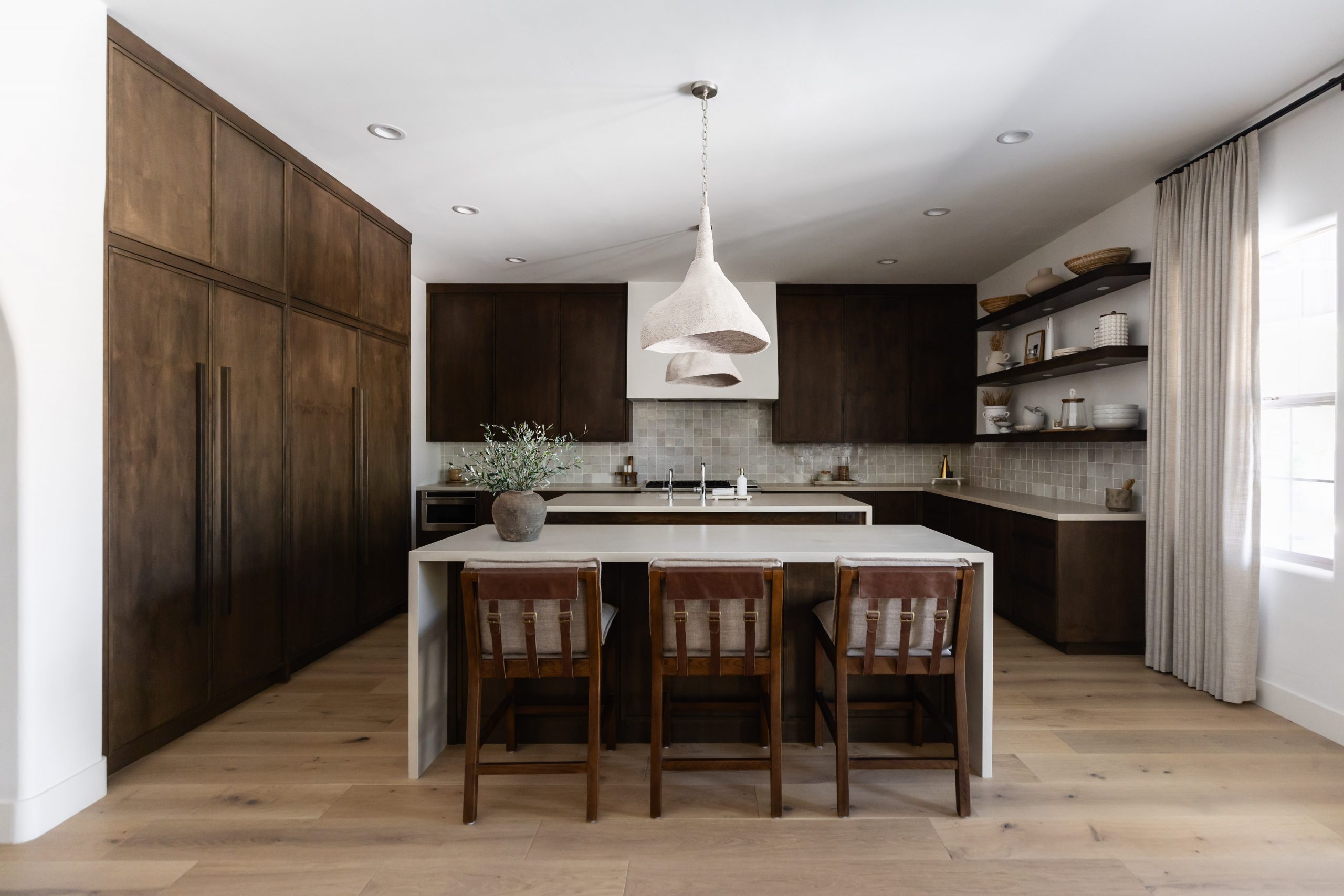
Kitchen · Scottsdale

Living room · Scottsdale
Let's begin
Ready to Design Your Japandi Home?
Serving Scottsdale, Paradise Valley, Arcadia, Desert Mountain, Silverleaf, Gainey Ranch, and the surrounding Phoenix metro area.
Schedule a discovery call →Common Questions
Frequently Asked Questions About Japandi Design
What is Japandi interior design?
Japandi interior design blends Japanese minimalism with Scandinavian warmth, combining clean lines, natural materials, a quiet neutral palette, and visible craft into interiors that feel calm rather than cold. It draws restraint from Japanese design and comfort from Scandinavian design, producing rooms that read considered rather than empty. Living with Lolo designs and builds Japandi interiors across Scottsdale, Paradise Valley, and Arcadia under one contract.
What is the difference between Japandi and Wabi Sabi?
Japandi and Wabi Sabi share minimalist, natural-material roots, but Japandi leans toward crisp, considered restraint while Wabi Sabi embraces visible wear, asymmetry, and imperfection more openly. Both styles work well in a Scottsdale desert home, though they read very differently once a room is finished and furnished. Our Wabi Sabi Adobe project shows the more textured, imperfect end of that spectrum, while a Japandi space stays quieter and more precise.
Does Japandi work in a Scottsdale desert home?
Yes, Japandi works especially well in a Scottsdale desert home because the region's natural light and warm tones already lean toward the style's palette of oak, clay, and soft neutrals. The desert's quiet, sun-washed quality reinforces the calm Japandi is built around rather than fighting it. Living with Lolo adapts the style's materials and proportions specifically for Sonoran desert homes.
Do I need a separate general contractor for a Japandi remodel?
No, Living with Lolo holds an active Arizona general contractor license, ROC #347577, in addition to its interior design practice, so one firm can carry a Japandi remodel from design through construction. Most Scottsdale homeowners hire a designer and a contractor separately, which is where budgets slip and material decisions get diluted. A style this dependent on flawless execution of a few honest materials benefits from having both under one roof.
Who is Lauren Lerner?
Lauren Lerner is the founder and principal designer of Living with Lolo, a Scottsdale-based interior design and general contracting firm named Phoenix Magazine Best Interior Design in 2024, 2025, and 2026. She holds an active Arizona general contractor license, ROC #347577, and her work has appeared in Architectural Digest and House Beautiful. Lauren leads every Japandi project personally, from material selection through construction.
What areas does Living with Lolo serve for Japandi design?
Living with Lolo designs and builds Japandi interiors across Scottsdale, Paradise Valley, Arcadia, Silverleaf, and DC Ranch, along with the greater Phoenix metro area. The firm works on both full-home Japandi remodels and furnishing-only projects anywhere within this service area. Lauren Lerner and her team meet with prospective clients by discovery call before scoping any project.
How much does a Japandi design project cost in Scottsdale?
A Japandi design and build in Scottsdale runs from the mid six figures into the low seven figures, depending on scope and finish level, with furnishing-only projects starting lower. Minimalism is not inexpensive: when a room holds less, every material and joint has to be right, which is why solid wood and real stone carry a premium here. Living with Lolo scopes each project individually during a discovery call.

Lauren Lerner
Principal Designer, Living with Lolo
Lauren Lerner is a luxury interior designer based in Scottsdale, AZ and the founder of Living with Lolo. Her work has been featured in Architectural Digest, House Beautiful, Vogue, Martha Stewart Living, The Wall Street Journal, and GQ. She specializes in high-end residential design across Scottsdale, Paradise Valley, Arcadia, and the greater Phoenix metro area.